
 Australia
 New Zealand
 United Kingdom
 Canada
 Singapore
 Malaysia





The ultimate employee onboarding and induction guide
Published
The ultimate employee onboarding and induction guide
Growing a business is hard and finding the right people to help grow your business is even harder. So, when you’ve found exceptional talent for your business and you’re ready to welcome your new team member, how can you make their first impression a great one?
The answer? A stellar onboarding process that makes new hires feel like they belong, even before their first day.
What’s in this new employee onboarding guide?
This ultimate guide to employee onboarding will show you the best practices in creating a great employee onboarding process and will cover:
- The ins and outs of an effective employee onboarding process
- Common mistakes in onboarding programs to watch out for
- A new employee onboarding checklist
- A 30-60-90 day onboarding plan
Download The Ultimate Employee Onboarding and Induction Guide now.
What is an employee onboarding process?
Onboarding is often an underrated part of the employment process, but it’s a critical one. Your onboarding process can set the tone for your new employee’s career with your business. It has the potential to fast-track a person’s transition into a business or slow it way down. All of this is to say, there are a few core goals to consider regarding your onboarding process:
- Kick-starting employee engagement: your new hires should feel that the business is invested in their success, they should have a good understanding of the business’ values and company mission, and how they can contribute.
- Practical administrative support: your people shouldn’t be wasting time filling out endless new hire paperwork or setting up. A good onboarding process will have these practicalities sorted beyond the start date.
- Instilling workplace culture: having a sense of belonging is crucial for new hires to do their best work. They need to feel empowered around relationship building and team camaraderie from day one.
With three essential goals of onboarding to manage, you’ll need a great onboarding process to make sure everything’s covered. This free guide can help you establish just that. Read more: Employee Induction and Onboarding Checklist Template
What is the difference between induction and onboarding in HR?
Induction is typically a shorter and more focused process that occurs immediately after an employee joins the organisation. The primary goal of induction is to provide new employees with basic information and essentials they need to start working effectively. It’s a brief introduction to the company including the immediate work environment. The key features of induction include:
- Introduction to the company’s mission, vision and values.
- An overview of company policies, rules and regulations.
- Introduction to the workplace and essential facilities.
- Basic information about employee benefits and perks.
- Completion of essential paperwork and formalities, such as tax forms and employment contracts.
Onboarding, on the other hand, is a more comprehensive and extended process that takes place over weeks or months. It’s designed to help new employees get involved in the company culture, understand their roles in depth and establish relationships within the business. The main objectives of onboarding are:
- Introducing new employees to their teams, colleagues and supervisors.
- Providing a deeper understanding of the company’s structure, processes and goals.
- Facilitating the development of job-specific skills and knowledge.
- Clarifying performance expectations and setting goals.
- Offering ongoing support and guidance to ensure a smooth transition into the new role.
- Address any questions or concerns the new employee may have.
Why is a good onboarding experience important?
1. It can set new hires up for success from their first day
Your new team members can say farewell to the first day jitters. An effective employee onboarding process will help make sure that new hires are feeling happy and productive from their first day on the job. The most successful onboarding programs are supported by great communication with new hires before their first day, to make sure that they have everything they need in the lead-up. This way, they can embrace everything about your business from day one, with no time lost to admin or confusion.
2. It can help you collect essential information about your new hire
When you’re following a structured onboarding process, there’s no need to fear that you’ve missed out on acquiring important information from your new employees. An onboarding checklist (like the one in this guide), will make sure that you collect all necessary payroll, HR and personal information. Whether you’re doing this manually or with the help of an HRIS, you can be confident that you have everything you need to employ your new person compliantly.
Read more: Your complete guide to taking HR digital
3. It can help you communicate essential information to your new hire
On the flip side, an effective onboarding process can also help your employees receive all the important information that they need. Whether it’s communicating company policies, an employee handbook, dress code information or the details of an onboarding buddy; it all happens in the onboarding process.
4. It can help your new employee understand your company mission and values
What powers your team and your whole business, towards success? It’s not the break room coffee (although that can really help), it’s your company’s mission and values. And these should be communicated to your new hires from day one. Sharing your mission and values with new employees won’t only motivate them and have them eager to get started, it will also make sure that their work will be immediately aligned with the company’s goals.
5. It’s a powerful motivational tool
Sharing your company values and mission aren’t the only things that can get your new hire feeling excited and ready to hit the ground running. During onboarding, many teams also show their new hires the great work they’ve been producing lately or share the details of exciting projects coming up. It’s onboarding processes like this that can get your new employees excited about their contribution.
6. It can help new hires feel like they belong
A study from BetterUp found that workplace belonging can lead to an estimated 56% increase in performance, a 50% reduced risk of turnover and a 75% drop in sick days. With stats like these, why wouldn’t you prioritise belonging from day one? No one likes to be the new person, but a positive onboarding experience can do a lot to help your new hire feel welcomed and part of a team. It’s an essential time for building relationships and creating a united work environment.
7. It can get new hires acclimated to their new role and key responsibilities
A job description can only do so much. New employees need to understand not only what their job entails, but how it fits into the larger picture of the entire company. Onboarding is the perfect opportunity to give new employees a bird’s eye view of their department, how it works with other departments and what the company’s overarching goals are.
8. It can put them on the path to long-term success
When new employees feel supported and valued, they are less likely to look for other opportunities. Foundations are everything, right? To feel valued within a business, you need to feel like you’re being invested in from day one. This all starts with onboarding. The experience that your new hire has during their first week can put them on a path to long-term success at your company.

Best practices for starting or improving your employee onboarding experience
So what makes an onboarding experience positive or not? Let’s look at the best practices
1. Make them feel supported
From the moment a new employee accepts their job offer you need to make them feel informed and empowered. This means regular and effective communication every step of the way to get them up and running smoothly.
2. Get the administrative tasks out the way
Ensure all the necessary paperwork (e.g. providing personal and payroll information, logging certifications, acknowledging policies and signing contracts) is sorted prior to their start date so they can focus on getting acclimatised to their new role.
3. Embed them in slowly
Make them feel welcome into the company and team and ensure there’s a good mix of learning and one on one time. During this induction, the new team member should ideally feel inspired and motivated by the company’s values and mission. A proactive approach will see onboarding reach beyond day one. The first week and the first month should still have plenty of learning opportunities, getting-to-know you sessions and knowledge sharing.
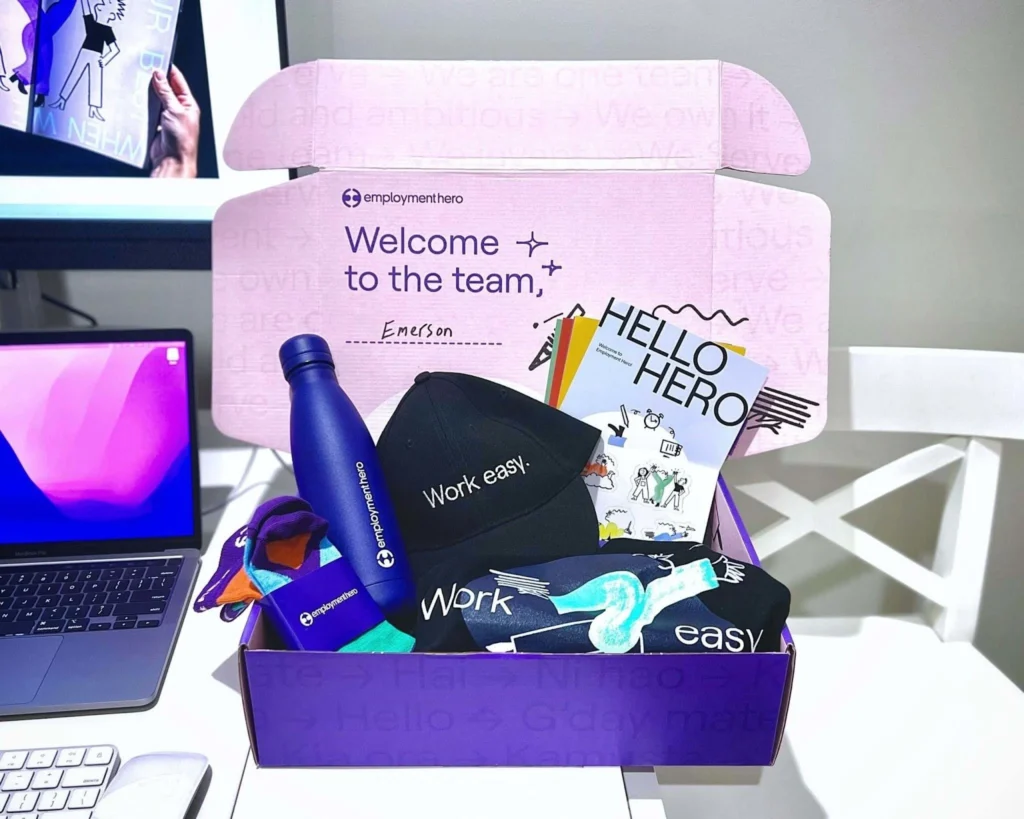
4. Have a welcome pack
A well-designed welcome pack can enhance the onboarding experience, making new hires feel valued from day one. Discover 10 welcome pack ideas to make your new employees feel special.
5. Regularly review your onboarding process
You’re always looking for better ways to run your business and your onboarding process needs to be part of those considerations. Track the positive impact of your onboarding over time; do new hires seem to be embracing the business and their roles, resulting in great productivity, minimal absenteeism and a good rate of new hire retention? There are plenty of people analytics you can use to get a better sense of the employee experience within your business. From the data and feedback that you collect, you can start to make tweaks to optimise your process. We recommend reviewing your process annually or biannually to make sure that the experience is evolving at the same rate as your business.
6. Get feedback with anonymous surveys
If you’re unsure on how to best collect feedback to review your onboarding process, we have a simple solution. Ask your new hires. How can you make sure that you’re getting honest responses? Issue an anonymous survey. This is your best way to source feedback that will be properly actionable.
With Employment Hero’s anonymous survey feature, you can collect actionable data quickly and easily. Your employees can fill out their survey on the desktop or mobile app, delivering you results in one centralised location. What questions should you consider asking? Here are a few of our favourites to get you started…
- On a scale of 1-10, how satisfied are you with your onboarding experience?
- Did you feel like you were given all of the tools and information to embrace your new job effectively?
- Did you feel like you were properly introduced to our company culture?
- Did you feel welcomed by your teammates and the business’ HR leaders?
- Do you feel inspired to pursue career development with us based on your onboarding experience?
- If you were to design the process, is there anything you would change when onboarding employees?
- Are there any onboarding practices you remember fondly from old workplaces? What were they and why did you like them?
Create anonymous surveys with personalised questions with Employment Hero.
7. Automate the employee onboarding process
Functionality that’s changing the way businesses think about employee onboarding admin is automation, enabled through automated hr systems (like Employment Hero).
Automation creates a new onboarding process flow that can relieve HR teams from admin and reduce human error. Most importantly, it gives your team valuable time back to focus on welcoming your new hire.
At its core, automation alleviates the headache of organising and completing new hire paperwork. It works by triggering a series of actions when you enter a new employee into the system. When your employee accepts their job offer, they will be sent a link to create an employee profile on the platform. From there, they can access their digital employment contract which will be stored on-platform and be able to begin uploading their personal HR and payroll information. They’ll also be instantly assigned policies, training and more.
All information is then stored securely on the employee onboarding platform. Employees can acknowledge company policies before they start.
8. Create a central source of truth
Great onboarding programs will require a team effort. But, to avoid the chaos and make the most of everyone’s time, you need to create a structured program located in a central source of truth.
This generally refers to having one location where important information is stored and updated. Everyone working on a project (which, in this case, is welcoming a new employee) can see the status of tasks and communicate updates or flag important details.
With everyone having full visibility over the same process, your team can easily avoid the double-handling of tasks and make sure that nothing is missed. With our smart, cloud-based software, the involved members of your team can be assigned relevant checklist tasks, look at due dates and have visibility over a new employee’s entire onboarding process.
9. Start your employees mid-week
This is one of our favourite onboarding hacks at Employment Hero. Start your new hire on a Wednesday. This incredibly simple change to an onboarding program can make a big difference to your team and your new hires.
By doing this, you reduce the risk of overwhelming your new team members by limiting their information intake to three days and giving them the weekend to digest everything they’ve learned.
You also help your existing team by giving them time early in the week to dedicate to important tasks, with the second half of the week cleared for supporting new employees. Give this easy hack a try and watch several onboarding pain points melt away. It’s definitely worked for us.

What role does an onboarding software play in successful onboarding?
Here’s the breakdown of how Employment Hero can help. Our Employment Operating System offers:
- Certifications
- Digital contracts
- Induction content
- Organisational charts
- Paperless onboarding
- Employee self-service
- Onboarding checklists
- Seamless induction tools
- Secure policies and policy tracking
Download our guide and seamlessly welcome new employees today.
The information in this article is current as at 30 June 2026 and has been prepared by Employment Hero Pty Ltd (ABN 11 160 047 709) and its affiliates (Employment Hero). The views expressed in this article are general information only, are provided in good faith to assist employers and their employees, and should not be relied on as professional advice. Some information is based on data supplied by third parties. While such data is believed to be accurate, it has not been independently verified and no warranties are given that it is complete, accurate, up to date or fit for the purpose for which it is required. Employment Hero does not accept responsibility for any inaccuracy in such data and is not liable for any loss or damages arising directly or indirectly as a result of reliance on, use of or inability to use any information provided in this article. You should undertake your own research and seek professional advice before making any decisions or relying on the information in this article.
Register for the onboarding guide
Related Resources
-
 Read more: Mastering employee wellbeing beyond R U OK? Day
Mastering employee wellbeing beyond R U OK? Day
Watch our free webinar to learn how to manage psychosocial hazards and build a year-round employee wellbeing strategy beyond R…
-
 Read more: Managing cross-state workforce compliance: your complete guide
Managing cross-state workforce compliance: your complete guide
The complete guide to managing long service leave, public holidays, workers’ compensation and more across multiple states in Australia. Download…
-
 Read more: The guide to navigating modern awards with confidence
The guide to navigating modern awards with confidence
Download our guide to modern awards compliance. Learn where the risk sits at scale and get a practical checklist to…


