 New Zealand
  United Kingdom
  Singapore
  Malaysia
  Canada (Français)
 Australia





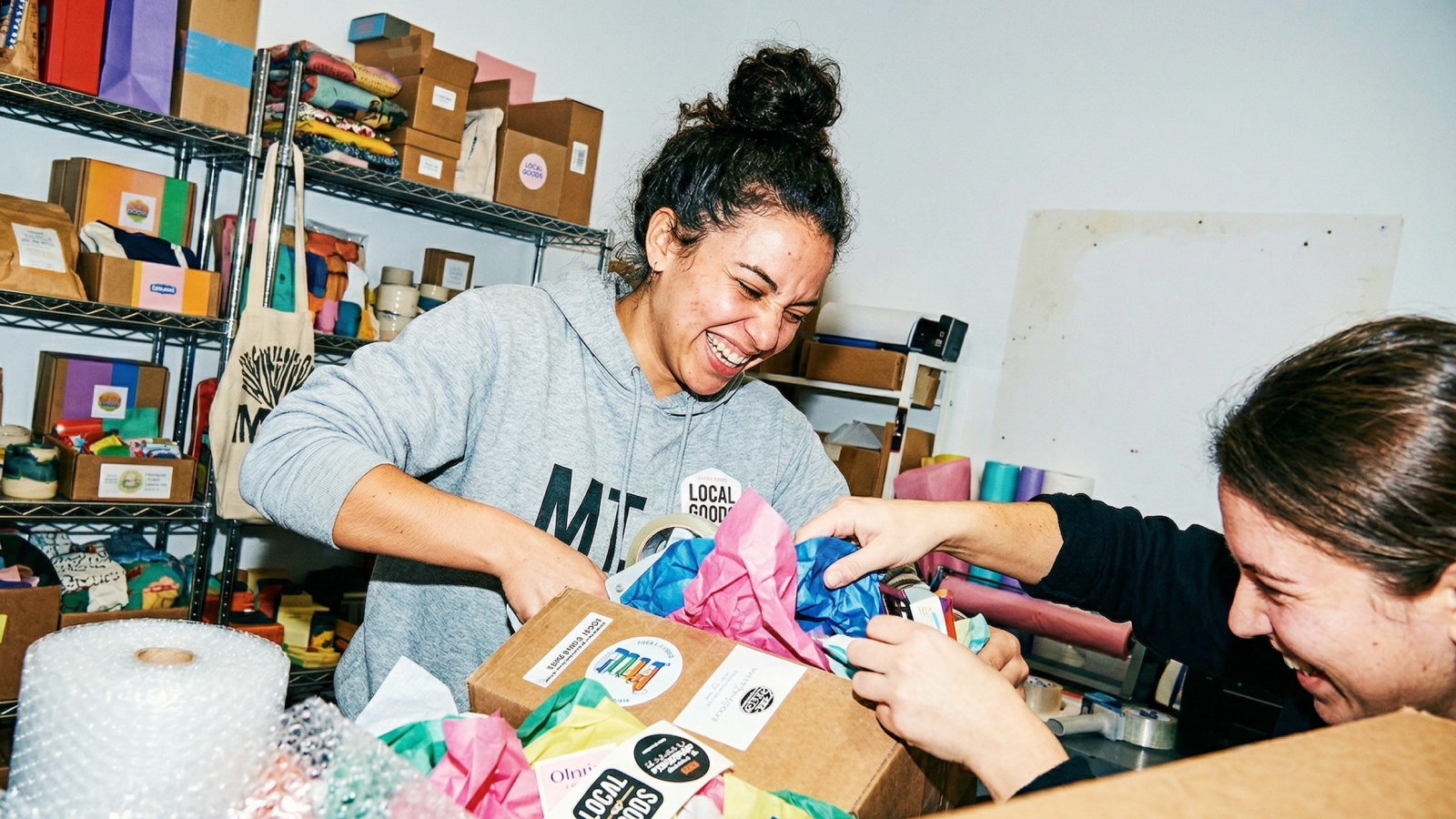
Change has always been a constant in small business, but nowhere have the rules changed more quickly, and dramatically, than in the online space. Strategies that guaranteed reach and success in the Golden Age of e-commerce have lost their lustre in a new landscape of fragmented platforms and spiralling costs.
Author Bernadette Schwerdt has not only witnessed this evolution, she’s among the business owners who’ve been forced to adapt. Two books she wrote about online business in 2015 and 2018 focused on a digital world that is almost unrecognisable from the one SMEs are navigating today. “The world has completely changed,” Schwerdt says. “Social media didn’t really exist in my first book, and AI, of course, has changed the game.”
The business strategist, ghost writer and podcaster has spent the past year interviewing 40 businesspeople for a new book on building an online business in the AI era. The central finding from Secrets of the New Online Entrepreneurs is counterintuitive: the businesses holding their ground now are not the ones chasing bigger audiences or bigger budgets. They are going smaller, more focused and more human.
The Original Digital Marketing Playbook Is Broken
Schwerdt’s interviews unearthed a near-universal experience of modern-day digital visibility. “It’s so impossible now, unless you pay, and even when you pay, it’s no guarantee you’re going to get traction,” she says, adding that costs have become particularly prohibitive for smaller operators.
The change is even harder to swallow for early adopters of digital marketing. “10, 15 years ago, Google was a Wild West, but you could at least build a business off the back of it,” Schwerdt notes. “Now, it’s really difficult to do that.”
Indeed, Hootsuite data suggests organic reach on Facebook has collapsed from 16 per cent in 2012 to just 1-2 per cent today — meaning a business that spent years building an audience of 10,000 followers can now expect fewer than 200 of them to see any given post. Reach is also significantly harder to achieve on LinkedIn and Instagram.
Schwerdt says business owners are now questioning whether pursuing mass audiences is still worth it. “They don’t want to pay to play anymore,” she explains. “They don’t want to chase the clicks. They had to sell themselves out to some degree in order to play this game, and they weren’t even enjoying it anymore. They weren’t even making as much money as they were when they had 10 employees.”
Finding A Thousand True Fans And Find Success
The alternative Schwerdt presents is borrowed from the influential “1,000 True Fans” concept, which argues that creators do not need mass audiences to build sustainable businesses, but can thrive with a core group of dedicated supporters.
“They might actually not go for the hundreds of thousands of customers, but maybe just focus on a smaller group, indeed the 1,000 customers, and service them really well,” she says. “Be niche, give them exactly what they want and know them intimately.”
Schwerdt says mass appeal now means competing for attention in an increasingly expensive and fragmented marketplace. The original digital marketing model assumed customers could be reached in one or two places. Now they are spread across Facebook, Instagram, TikTok, YouTube, LinkedIn and a growing list of other platforms, each demanding its own strategy, its own content and its own budget, rather than concentrating energy where it compounds. “You have to be niche now, unless you’ve got endless dollars to pay-to-play and advertise,” she says.
Building relationships in any niche requires authenticity, Schwerdt says. She argues that the advent of AI means the only true differentiator left for a small business is raw human experience. “Write what you know, sell what you know, find a problem that you’ve experienced in your own life, and try and solve that.”
This is why she is confident business owners will still turn to books for advice over posing questions on ChatGPT. “The chat can’t tell you why Adam Schwab from Luxury Escapes has a zero inbox policy,” she explains. “Chat can’t tell you the emotional toll that being cancelled took on George Colombaris.” This human element will help small businesses stand out in a noisy internet.
Build Connection Through A Personal Brand
Schwerdt has observed that many business owners delay building the public profile required for connection until it becomes urgent. “One man I wrote a book for was happy spending his life being invisible behind the scenes, pulling the strings, but at a certain point he wanted to write a book, which meant he needed a profile,” she cites as an example. “The message is to start building your brand earlier — write that book, create that content, get on that speaking stage — because you will need it if you do want to create a legacy.”
The logic is commercial as well as personal. “People buy the person behind the business as much as they do the business,” she says. “Use social media to drive traffic to your email list, because the email list is what you own.”
Schwerdt acknowledges that building a personal brand requires vulnerability that some founders may not have the time or headspace to accommodate. But she says the motivation to promote the business comes most naturally when the owner has a strong sense of purpose. She highlights the drive in Masterchef regular Kirsten Tibballs, known as The Chocolate Queen, who founded a world-renowned patisserie school. “She had health issues, she left school at 15, and she went on to become a baking queen knowing that this was her passion. She just knew this is what she had to do,” Schwerdt explains. “So, when you get clear about your ‘why,’ you can overcome some of those obstacles.”
It Pays For Business Owners To Have An Exit Plan
In studying how online businesses succeed, Schwerdt also wanted to find out what makes them fail. She cites the research of business improvement specialist Kobi Simmat, who believes every business should have an exit strategy built in from the start.
“If you want to sell your business in, say, 10 years’ time, then why not build it with that in mind?” Schwerdt recalls Simmat saying. Goals and targets can be reverse engineered. “There’s a whole bunch of metrics that you can use at the very beginning to work out what is my cost per acquisition, what is my revenue, my churn rate, what is the annual subscription revenue? Then you can build it with that in mind.”
Concentrating on sustainable metrics rather than temporary measures, like online clicks, allows business owners to create a framework that can run smoothly without them. “The first thing they would do is step away from the business themselves, so bring in a CEO, a COO or manager so that they can become the visionary that they want to be, not be attached to the business,” Schwerdt says.
Every plan for the future should include AI, says Schwerdt, advocating strongly for AI adoption in SMEs. “If you’re not using it, you’re at a serious disadvantage,” she argues. “There are so many processes now that can be fast forwarded and automated.”
She points to digital marketer Ben Fewtrell, whose client, a tow truck company, implemented an AI-powered phone system to better serve customers stranded on the side of the road during peak periods. “All that Google advertising to get on page one [of search results] was wasted because the phone calls were not being answered,” she explains. “They implemented this phone system where the chat bot answers, it takes the call, the address, the requirements, books the tow truck and keeps them updated. This is the world we live in.”
But Schwerdt’s most resonant message for overwhelmed business owners comes from her TEDx talk on “bumbling” on the way to success. “Accept that in those early phases of doing something, you’ll be bumbling, and just know that it will get done, it might not be perfect, but you’ll rise to another level of competence, and then you think, oh, that was so easy, you know? What was I thinking?”
This philosophy carries through every successful entrepreneur she has studied. “They never let setbacks set them back,” she notes. “They always just kept on moving.”