 New Zealand
  United Kingdom
  Singapore
  Malaysia
  Canada (Français)
 Australia

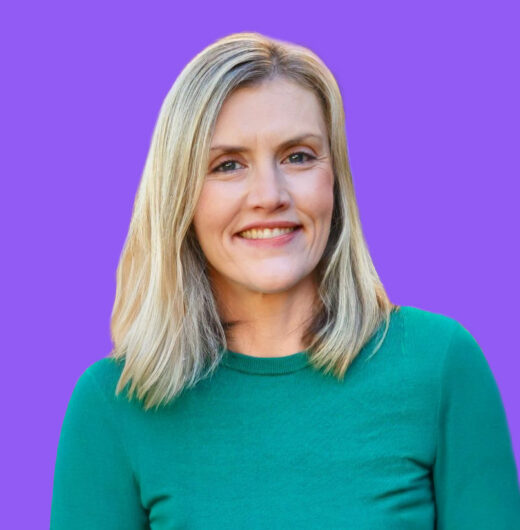

Small business owners are more depleted than ever and the wellness industry is making things worse, says executive health coach Jessica Spendlove. She argues the answer is not another ten-step morning routine, but an operating system built for the busiest days.
Optimisation culture promises small business owners an edge as they attempt to punch above their weight on the big stage. But instead of being able to do more with less, they are often left running on empty.
The relentless pursuit of self-improvement can feel like yet another task on the to-do list for a leader already juggling payroll, compliance and hiring on top of other duties. Even when business owners find time to read books and listen to podcasts, they often lack the capacity to put these learnings into practice.
Jessica Spendlove has watched this pattern play out at all levels of business, and in elite sport. A high-performance dietitian and executive health coach, she’s tired of seeing people being saddled with unrealistic regimens when they’re already at capacity. “I’ve worked with over 1000 elite athletes, seven professional sporting teams. I’ve also consulted to the Special Forces for the last seven years. And even at that level, other than a small minority, most of them are still trying to work on mastering the basics consistently,” Spendlove says.
In her book For The Long Run, she argues that optimisation culture fails business owners because its recommendations are impractical and not tailored to their realities. Instead of wholesale changes, she prefers practical tweaks that even the busiest entrepreneur can adopt.
Doing More Is Not The Answer To Better Performance
Whether it’s start-up founders, players from the Cronulla Sharks, GWS Giants and Sydney Kings, or Special Forces soldiers, Spendlove’s clients tell her they’ve received the same advice: success begins well before dawn.
“It’s nearly become: we need to run a marathon, have an ice bath, read a book, write in a journal before we get to work, and so we’re exhausted before we get there,” she laments. Her critique is not aimed at people who genuinely thrive on a 5AM protocol, but on the notion that the solution suits everyone.
While humans are wired to add rather than subtract in pursuit of improvement, Spendlove pushes back on the idea that a more elaborate routine is the answer for people already feeling crushed by the weight of responsibilities and expectations. “We just continue to add, whether that’s personally, professionally,” Spendlove says. “And what we don’t do – because we don’t have the time or energy – is to reassess or figure out what actually works.”
Spendlove has spent her career identifying what moves the needle and believes the answer lies in the gap between people knowing what they need to do and actually doing it. Accumulating theory does not close the gap.
“I want to bring that to small business owners like myself, or people running teams and businesses, and help them understand that they’re not failing, they’re not behind. It’s just the messaging that they’ve been told isn’t actually a fit. If anything, I want to push back on optimisation culture,” she says.
Instead of protocols and routines, Spendlove believes in customised practical pathways. “That’s how it’s going to stick and work because it considers them, their life, where they’re starting from, where they want to go, and what their day to day looks like.”
A Daily Operating System Built on Structured Flexibility
Business owners who are struggling to optimise their lives are battling more than busy schedules. They’re up against behavioural science that dictates how many changes humans can make at once. “Behavioural science shows us that it’s one to three things maximum,” she says. “If it’s simple, maybe three. If it’s complex, one. And it takes us a lot longer to embed that habit than what we think.”
Indeed, research suggests establishing a new automatic behaviour takes anywhere from 18 to 254 days, with an average of 66 days. Spendlove advocates for upgrades rather than overhauls via a delivery mechanism small business owners will find familiar: the daily operating system.
She draws a parallel with operating systems like phones and computers that, once they’re in place, provide a small business with structure but go unnoticed. That’s the concept she wants to bring to health and wellbeing. “It’s four walls, guardrails,” she explains. “It invites each person to think, okay, what are one or two really important things in my day that help me have more energy, or help me recover or help me have more focus and make me feel like I’m prioritising myself and my health.”
Importantly, it isn’t rigid. “It is bringing this concept of structured flexibility, which I really believe is a key to it fitting your life,” Spendlove says. She recommends leaders ask themselves what they could manage on their busiest days and start from there. “That becomes what you aim for, because then that becomes manageable.”
The Five Rhythms And Two Habits Worth Starting With
Spendlove organises the operating system around five rhythms of sustainable high performance: nutrition, exercise, stress and recovery, sleep and connection.
“They are behaviours we all do every single day,” she explains. “They are high leverage points and they’re things which we can upgrade or tweak to both positively impact each other. It’s not about adding more things, because we’re already doing them. It’s about having an understanding on how you can really get them working together.”
For small business owners with limited bandwidth, targeting stress and recovery offers the single biggest opportunity for improvement. She has a specific prescription. “Two to three intentional stimulant-free breaks across the day. Don’t take your phone. Don’t make calls. Don’t check your emails. Don’t listen to a podcast in that time. Just actually give your brain space to think and your stress response an opportunity to come down.”
While longer breaks are preferable, Spendlove says 5 to 10 minutes of downtime is still effective. Research shows micro-breaks play a small but significant role in alleviating fatigue and promoting recovery at work, without sacrificing momentum. “If we can build micro moments of recovery, that is the thing that gives more energy, expands capacity, allows us to work smarter, not harder.”
She finds entrepreneurs often are unfamiliar or uncomfortable with the notion of a time out. “I have a lot of people saying, ‘Yeah, but just then I have all the thoughts in my head,’ and my point is, ‘Brilliant! Because if you’re having those thoughts in your head across the day, you’re not going to have them at 2AM or 3AM when you’re probably waking at night with them.’” She says brain breaks double as a sleep intervention, benefitting the more than two-thirds of Australians who report sleep issues.
Link Between Nutrition And Well-Being Provides Food For Thought
An accredited dietitian, Spendlove sees nutrition as a high-performance tool that is too readily overlooked. Like sleep, it’s one of the few behaviours humans do every day so it makes sense to maximise its impact on energy and focus.
She always recommends business owners identify their nutrition rhythm: when do they start and finish eating each day, do they have the same gaps between meals and snacks, and is the size of those meals and snacks consistent? “I can nearly guarantee anyone reading this, their habits are chaotic,” she says from experience. “They’re letting their day and their meetings and their commitments dictate when they have space to eat, and they’re probably also doing it quite reactively.”
For leaders whose diet depends on their diary, inconsistency leads to uneven blood sugar levels and cravings. But introducing breakfast can have a big impact if standardised to within the same 30-minute window each day.
“Not stabilising that morning and setting it up with a strong foundation impacts their energy, focus, decision-making, recovery across their days, weeks, and months,” she explains. “You really want to make sure you have a high protein breakfast, so that would be 20 to 40 grams of protein, which then has a knock-on effect.”
A Leader’s Wellbeing Becomes Contagious
Spendlove also emphasises the role of connection in wellbeing. She extends the definition beyond social connection or the connection between employers and employees to include a leader’s connection to their values and purpose. She finds small business owners cope better when their purpose and output are aligned and the personal sacrifice feels worth it.
But she warns against taking that sacrifice too far, imploring business owners to prioritise their own wellbeing. “Small business owners aren’t sitting there going, ‘I’m putting myself last,’” she observes. “That’s not a conscious, deliberate decision they’re making, but it’s an unintentional one by putting the business and the team and family and everything else ahead of themselves,” she says.
She encourages them to change their mindset and stop thinking that time away from the business – even if measured in minutes – comes at a cost. “It’s a win-win,” she insists. “It’s called the contagion effect. Not only do you benefit, but there is a knock-on effect for your business, your teams, your family, everyone around you.”
Spendlove also recommends a mindset shift when it comes to goals. The most important mindset shift underneath the system is the benchmark owners set for themselves. High achievers, she says, tend to compare their current output to their most productive season, not their current one. “Small and medium business owners are pretty high achieving and the thing I know about high-achieving people is we’re really good at benchmarking against our best days, which are a different season of life,” she says. It might be before they had a family or were in a different phase of their career.
She recommends keeping benchmarks updated. “It’s really an invitation to go, ‘Where are they at now?’ Because that’s where the opportunity exists. Finding a way to really leverage those foundations consistently in a way that works for their life.”