

















Essential HR documentation checklist for employee management
Published
Essential HR documentation checklist for employee management
Published
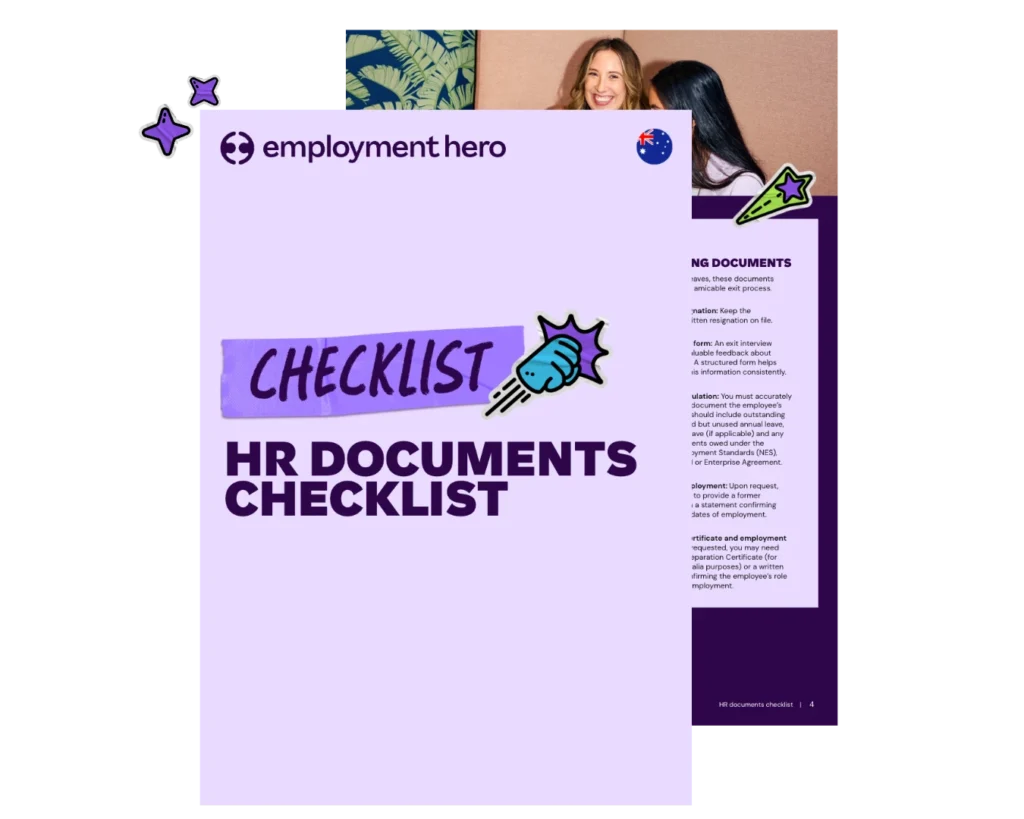
Keeping track of employee documents can quickly become a huge task. From the moment you hire someone to the day they leave, there’s a long paper trail of forms, agreements and policies to manage. For growing Australian businesses, getting this right is essential.
It goes beyond simple compliance with the Fair Work Act and National Employment Standards. Strong HR documentation helps you protect your business, set clear expectations and create a fair, consistent workplace for everyone.
This guide walks you through the essential HR documents every Australian employer should have in place, explaining what each document is for and why it matters.
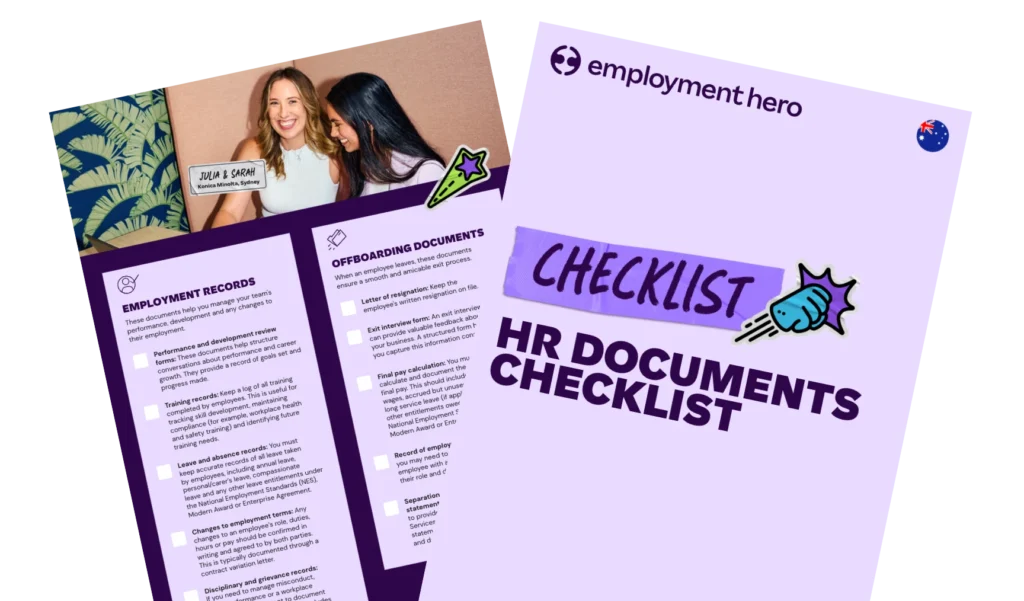
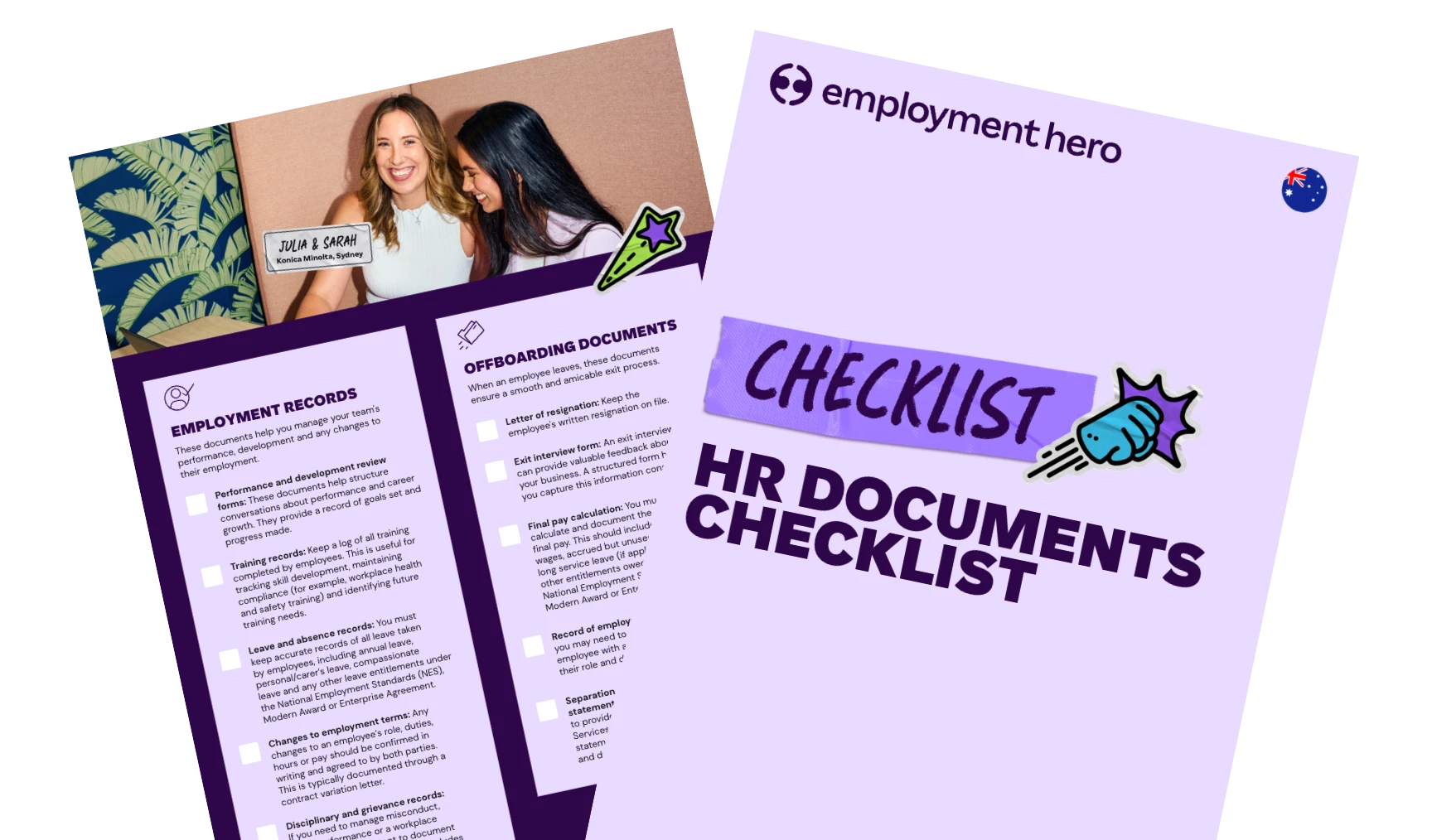
Download the checklist and learn about the essential documents you need for each employee and role in your business, including:
- Recruitment documents
- Onboarding documents
- Employment records
- Offboarding documents
Download the HR documents checklist by filling in the form on the right.
Why are HR documents so important?
Everyone knows that paperwork isn’t the most exciting part of running a business. But having the right documents in place is an essential part for managing your team and building a solid foundation for growth.
Without proper documentation, you’re flying blind. You risk legal disputes, compliance breaches and a disjointed employee experience. Clear documentation sets expectations and protects your business by providing a paper trail if things go wrong. More importantly, it empowers your team by giving them clarity on their rights, responsibilities and your company culture.
When you have your HR documents in check, you stop fighting fires and start building a workplace where everyone knows where they stand.
HR documentation checklist
This is your toolkit. Whether you’re auditing your current files or starting from scratch, these are the non-negotiables.
Employment contract
This is the core document of your relationship with your employee. It outlines the terms and conditions of employment, ensuring clarity and legal protection for both parties. It covers pay, hours, type of employment (casual, full-time, etc.) and notice periods. If you want a comprehensive list of what to include, download our Employment Contract Checklist here.
Job description
Don’t hire in the dark. A clear job description defines the responsibilities, skills and expectations for each role, giving employees and managers a shared understanding of what success looks like. It’s essential for performance reviews later down the track. Our Job Description Template can help you put one together.
Employee handbook
An employee handbook serves as the go-to resource for company policies, culture and employee rights and responsibilities. It’s your workplace culture manifesto and rulebook rolled into one.
Confidentiality agreement
Your IP is your competitive advantage. A confidentiality agreement (or NDA) protects sensitive business information and clarifies how employees should handle company data, ensuring trade secrets stay secret.
Code of conduct
This sets out expected professional behaviours and values, ensuring a unified workplace culture. It defines what is acceptable and what crosses the line, covering everything from dress code to ethical behaviour.
Attendance policy
Details rules around working hours, breaks, punctuality and absence reporting. Clarity here prevents disputes about “flexible” interpretations of start times.
Paid time off (PTO) policy
Outlines how employees can accrue and use vacation, sick leave and personal days. In Australia, this must align with the National Employment Standards (NES). If you need some guidance, download our Leave Policy Template.
Anti-discrimination and harassment policy
Promotes a fair and safe environment, outlining how your company addresses and resolves complaints. This is critical for compliance and for fostering a psychological safe workplace. Download the Workplace Harassment and Bullying Policy.
Performance review template
Provides a consistent framework for evaluating employee performance and supporting development. It moves performance management from “gut feel” to structured growth. If you’re looking to improve your performance review process, take a look at our Performance Review Template for some inspiration.
Onboarding checklist
Ensures new starters complete all required paperwork, training and introductions for a smooth transition. First impressions count; don’t waste them on scrambling for forms. Get up to speed with everything you need and download our employee induction onboarding checklist.
Offboarding checklist
Guides the process when an employee leaves, including handovers, exit interviews and the return of company property. A strong offboarding process protects your security and your reputation. Want to make sure everything is covered when an employee leaves? Download our employee departure checklist.
Health and safety policy
Describes procedures for ensuring a safe workplace and meeting compliance obligations. Compliance with Australian WHS laws also means conducting regular risk assessments and providing ongoing training to make sure safety standards are met for every employee.
Data privacy policy
Clarifies how personal and company data is collected, used and protected. With cyber security threats rising, you need to be transparent about how you handle employee data. Australian businesses must comply with the Privacy Act 1988, making sure employee information is stored securely and only accessed by authorised personnel.
Disciplinary and termination policy
Explains the steps taken for dealing with misconduct and the process for ending employment. Procedural fairness is key here to avoid unfair dismissal claims. Australian businesses must follow the correct procedures to ensure all disciplinary actions and terminations are handled lawfully and transparently.
Compliance documents
Collects key forms and records needed to meet legal and regulatory requirements, such as tax file number declarations and superannuation choice forms. Regular audits and updates of these can help reduce your risk of non-compliance and help you stay protected if questions ever arise.

Key HR policies every business should have
While the points above cover specific documents, your policies are the broader rules of engagement. These foundational policies help you manage your team effectively and create a fair workplace.
At a minimum, you need policies that cover Conduct (Code of Conduct, Social Media Policy, Drug and Alcohol Policy), Leave and Time (Annual Leave, Sick Leave, Parental Leave) and Safety and Security (WHS, Anti-discrimination, IT Usage).
These aren’t just documents to sign and forget. They need to be living parts of your business, accessible to everyone and updated as laws change.
A comprehensive guide to the employee lifecycle
From hiring to offboarding, these are the documents you’ll need to manage each stage of an employee’s journey with your company.
- Recruitment: Job descriptions, interview notes, offer letters.
- Onboarding: Employment contracts, tax forms, superannuation forms, bank details, policy acknowledgments.
- Development: Performance review records, training logs, probation review forms.
- Retention: Benefit enrollment forms, leave requests, employee survey results.
- Offboarding: Resignation letters, exit interview notes, termination checklists.
Managing this lifecycle manually is a recipe for burnout. Papers get lost, versions get confused and compliance dates get missed.
Tools to simplify your HR document management
If reading that checklist gave you a headache, we have good news. You don’t need a filing cabinet the size of a small car to stay compliant.
Software platforms like Employment Hero help you streamline HR processes and keep your documents organised. We replace the paper shuffle with a secure, cloud-based platform. With our Employment Operating System, you can access:
- Paperless onboarding: Send contracts and policies digitally. New hires sign them on their phone before day one.
- Centralised records: Every document lives in the employee’s digital file. Secure, searchable and safe.
- Template library: Don’t write policies from scratch. Access a library of HR templates written by employment experts.
- Audit trails: See exactly who signed what and when. Perfect for proving compliance.
Keen to learn more about how we can help? Get in touch with one of our business specialists now.

How to manage compliance and data privacy with confidence
Staying on top of rules and regulations is tough. In Australia, awards change, tax rates shift and WHS laws evolve.
Manual compliance is high-risk. One missed update to a pay rate or an outdated contract template can lead to hefty fines. By using a platform that updates automatically with Australian legislation, you remove the question marks.
Data privacy is equally critical. Storing tax file numbers and medical certificates in an unlocked filing cabinet (or a messy Google Drive) is a security risk. Purpose-built HR software encrypts this data and ensures only authorised personnel have access.
How to build an HR department from the ground up
If you’re a growing business, you might be the owner, the CFO and the HR manager all at once. Here is a simple roadmap for establishing a human resources function that supports your company’s culture and goals.
- Start with compliance: Get your contracts and HR documents sorted first. This is your safety net.
- Define the culture: Write your Code of Conduct and Employee Handbook. Decide “how we do things here.”
- Implement systems: Don’t wait until you have 50 employees to get software. Implement recruitment, HR and payroll software early to scale with you.
- Focus on people: Once the admin is automated, focus on performance reviews, engagement and training.
You don’t need a huge team to have a world-class HR function. You just need the right tools.
Download the checklist now by filling out the form.
The information in this article is current as at 23 February 2026 and has been prepared by Employment Hero Pty Ltd (ABN 11 160 047 709) and its related bodies corporate (Employment Hero). The content is general information only, is provided in good faith to assist employers and their employees, and should not be relied on as professional advice. Some information is based on data supplied by third parties. While such data is believed to be accurate, it has not been independently verified and no warranties are given that it is complete, accurate, up to date or fit for the purpose for which it is required. Employment Hero does not accept responsibility for any inaccuracy in such data and is not liable for any loss or damages arising directly or indirectly as a result of reliance on, use of or inability to use any information provided in this article. You should undertake your own research and seek professional advice before making any decisions or relying on the information in this article.
Register for the checklist
Related Resources
-
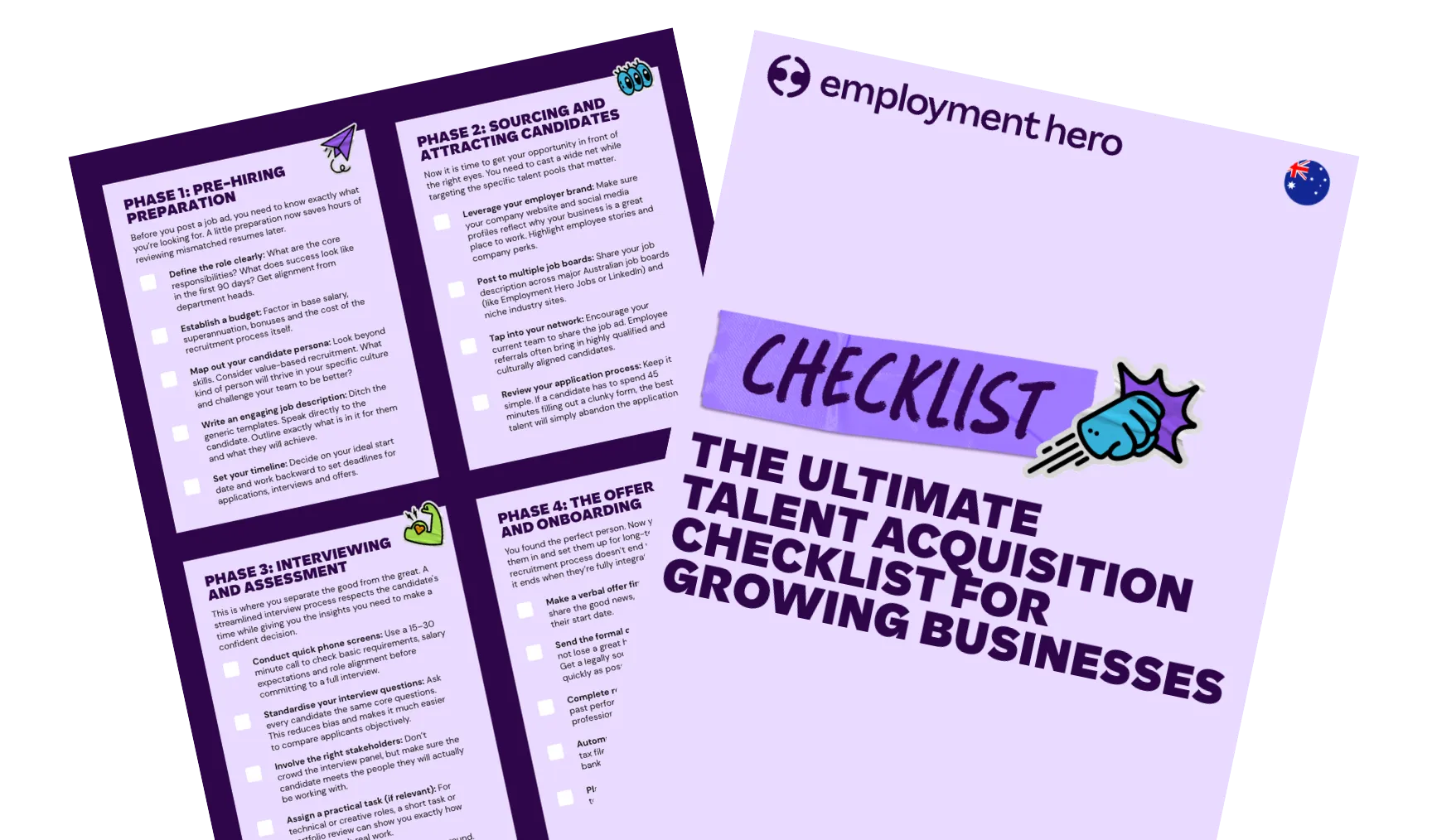 Read more: Talent acquisition audit checklist
Talent acquisition audit checklist
A talent acquisition audit is your secret weapon to cut costs, find better candidates and build the team of your…
-
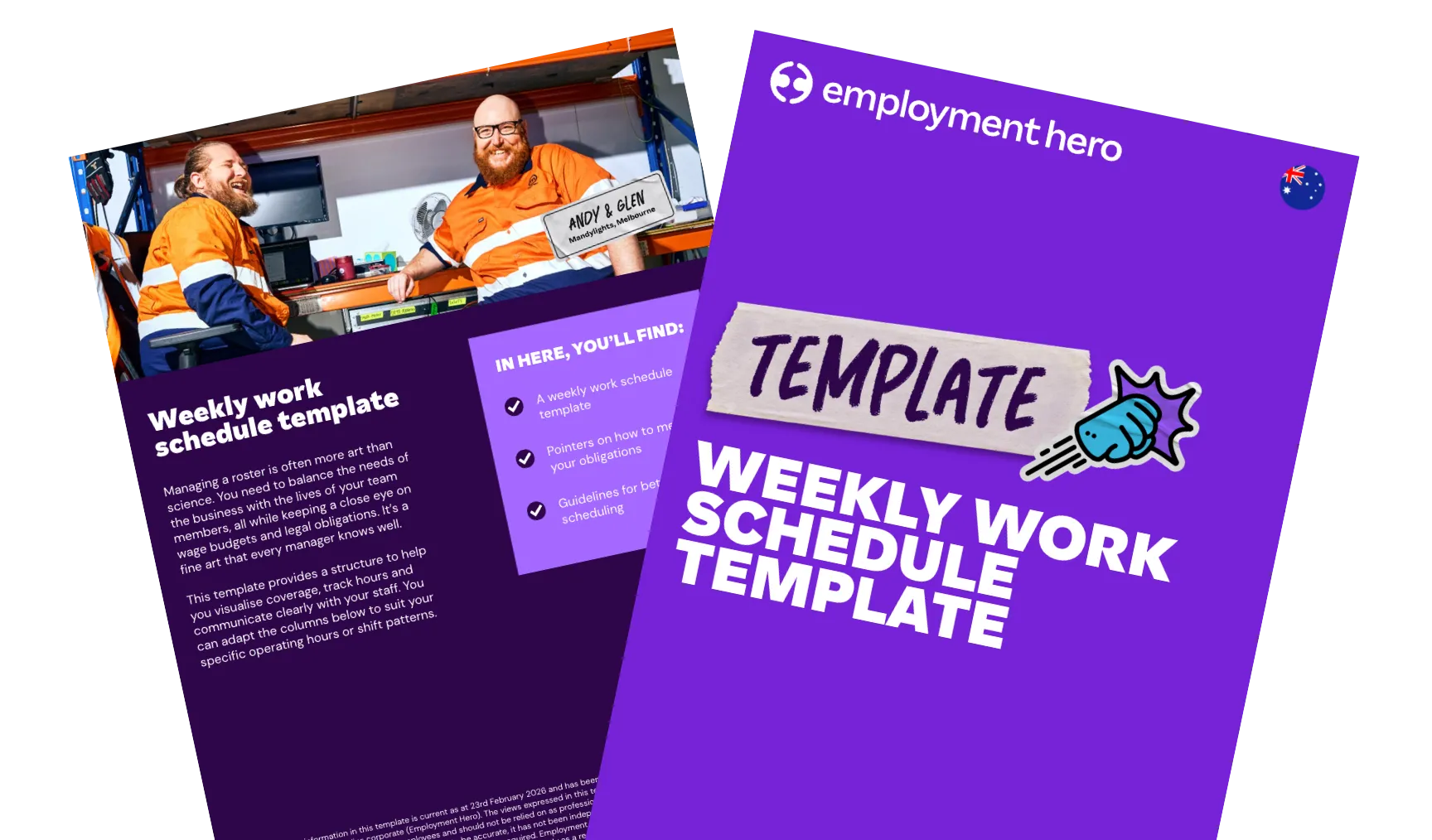 Read more: Designing an employee work schedule: template and guide
Designing an employee work schedule: template and guide
Learn how to create a flexible work schedule that can boost productivity among your employees.
-
 Read more: Essential HR documentation checklist for employee management
Essential HR documentation checklist for employee management
Use our HR documentation checklist to figure out what you’re missing, then download our free templates to close the gaps.

