Australians Are Confident Yet Conflicted In AI Paradox
The AI Paradox Report reveals Australians feel guilty and vulnerable about AI in the workplace but are embracing productivity benefits and jobs creation.
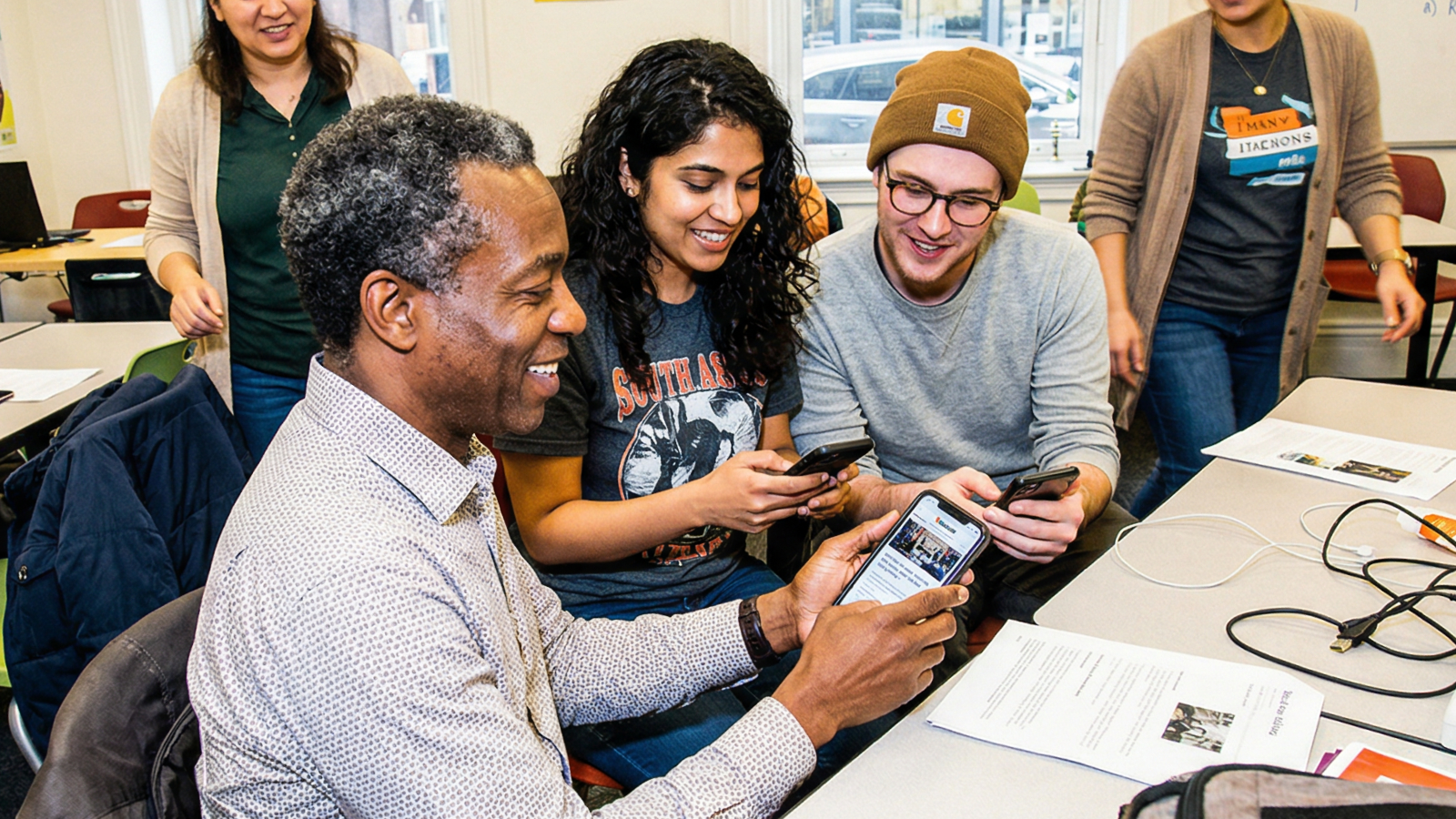
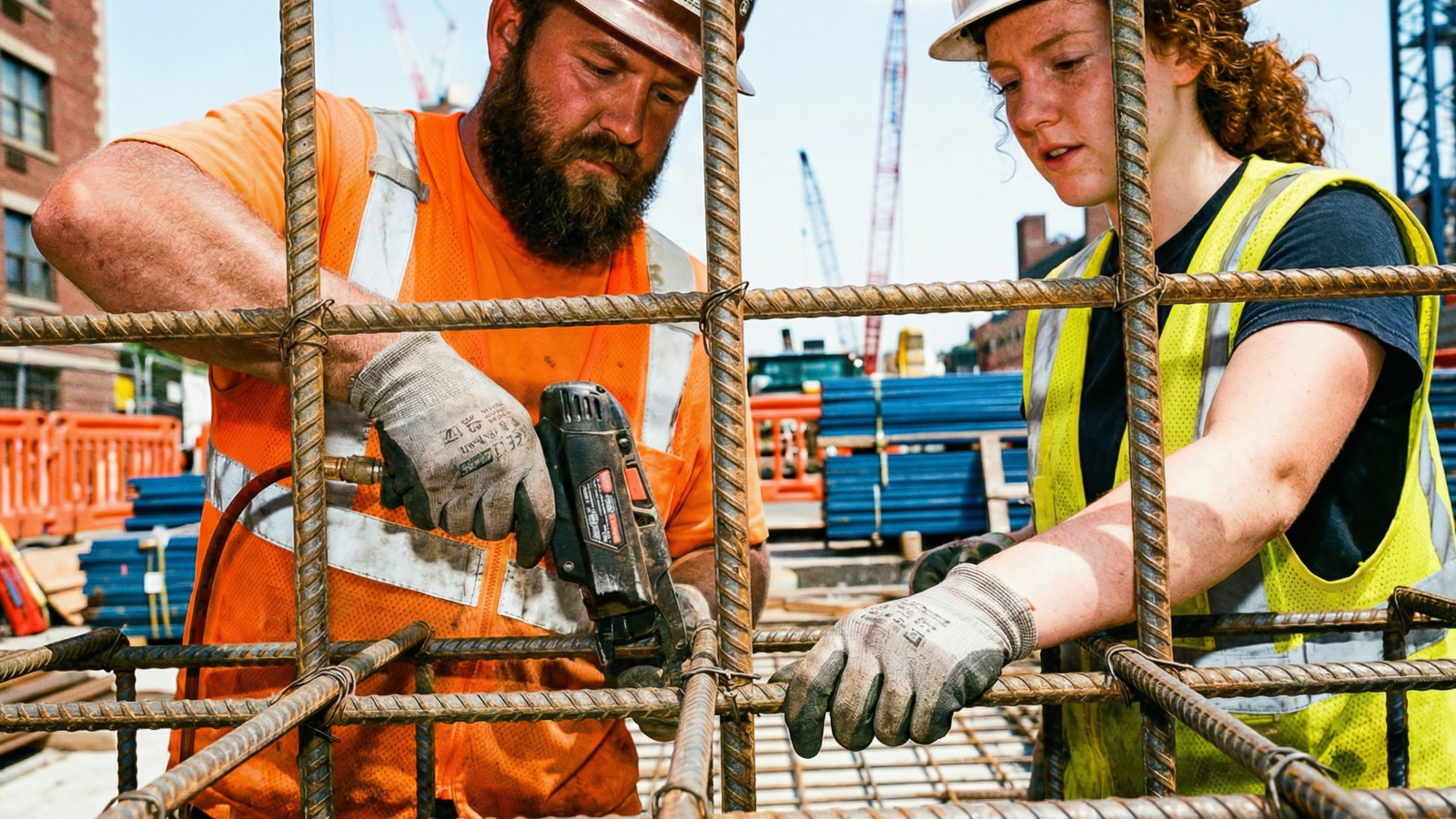
This image was created using AI. It does not depict a real person or event.
URL copied for sharing!
Australia’s most AI-advanced small and medium businesses are creating, rather than culling, junior jobs, while existing staff feel guilty about AI use, according to a wide-ranging survey into artificial intelligence in the workplace.
Findings from Employment Hero’s AI Paradox Report push back against the popular “jobs doom” narrative with a more nuanced snapshot of how AI is shaping hiring, training and productivity at ground level.
Built on insights from almost 9,000 leaders and workers across Australia, New Zealand, the UK and Canada, the report identifies five paradoxes surrounding AI adoption. The findings outline a workforce in transition, where employers value AI skills but don’t offer training, AI tools save time yet create work, and people are more productive but feel uncomfortable about their output.
“One of the most surprising findings was that the people getting the most value from AI are often the ones feeling the most conflicted about using it,” says Employment Hero APAC Managing Director James Keene. “They’re using AI to do better work, learn faster and take on more but many are still wondering whether they’re relying on it too much or whether others will judge them for using it.”
AI-Adopting Firms Are Growing Headcount And Adapting Hiring
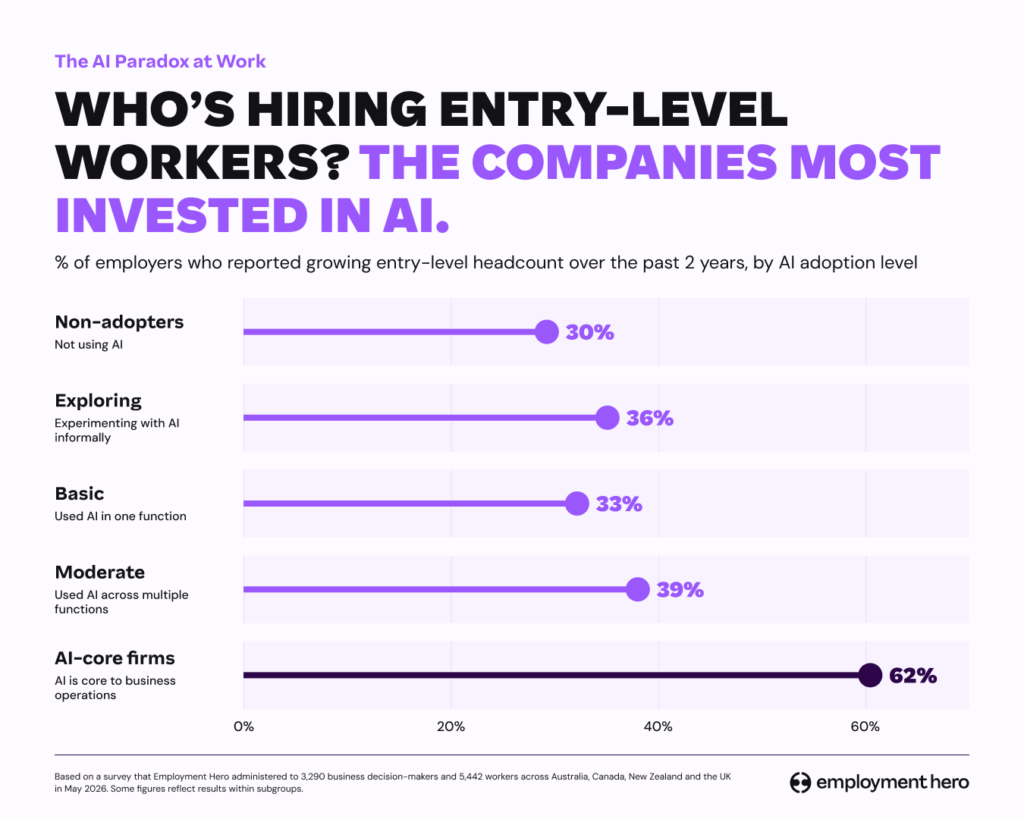
The headline fear that AI will hollow out graduate jobs is challenged by data that shows 42 per cent of companies grew their entry-level headcount over the past two years. Among businesses where AI is core to operations, that figure jumps to 62 per cent, more than double the 30 per cent rate of companies yet to adopt the technology.
A smaller group, 16 per cent, did reduce junior roles and cited automation as the cause. But the dominant pattern remains: the firms on the AI frontline are generally hiring more people, not fewer.
AI is also influencing recruitment, with AI skills now ranked sixth among overall hiring criteria, behind work ethic, communication and quick learning, but ahead of holding a university degree.
In Australia, 30 per cent of employers already list AI proficiency as a criterion for entry-level roles and 18 per cent regard AI skills in candidates as essential. 58 per cent of businesses have updated their hiring frameworks to give AI competency greater weight. AI platform ‘Claude’ has become the fastest-growing term in job ads posted on Employment Hero’s platform.
Workers Can Feel Guilty About Using AI
The report reveals a paradox between what people achieve with AI and how they feel when they use it, courtesy of a perception gap: 60 per cent of employers think their staff view AI positively, when in reality their relationship with the technology is complicated.
75 per cent of Australian employees who use AI say it has boosted their productivity, which appears positive on the surface. Yet many modern workers are struggling with the guilt of taking ownership of its output: 43 per cent say it feels like cheating.
1 in 3 go so far as to employ AI covertly, keeping their usage hidden from managers and colleagues. This enhances the risk of shadow AI usage, where staff adopt tools without organisational oversight or feed proprietary information into personal accounts, creating genuine data security and governance risks.
Dr Anna Kiaos, Founder and Director of Mind Culture Life Australia, says this pattern points to a confidence and permission gap rather than a compliance problem. “AI is already making people better at their jobs: more productive, doing higher-quality work and developing new skills,” she says. “The thing holding the workforce back now isn’t the technology, it’s uncertainty about whether employees are actually allowed to use it, in the ways that work for them.”
Keene adds that the conversation is shifting from whether people should use AI to how organisations can help them use it confidently and responsibly. “Most employees are already finding value in these tools. They just need clarity around what’s encouraged and what’s expected,” he says.
There are benefits for workers who feel they are operating with permission. 61 per cent say AI is helping them build more valuable skills, the highest figure of any market in the study, while 74 per cent agree it has improved the quality of their work. Australia is also the country where workers are most likely to redirect time saved by AI toward higher-value strategic work rather than simply absorbing a greater volume of tasks.
Many Workers Are Training Themselves In AI
While employers want their employees to have AI skills, not all are investing in training.
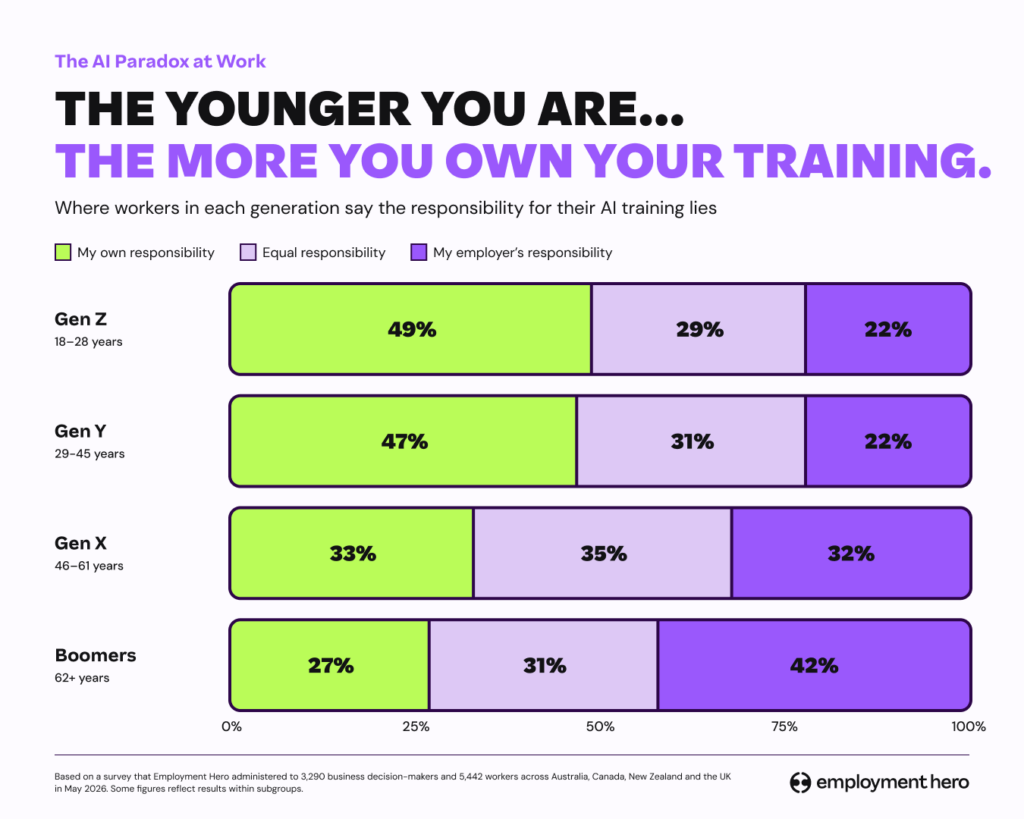
Half of all workers surveyed say their employers do little to help them develop AI skills. Only 38 per cent of businesses run any form of formal AI training program, although this rises to 2 in 3 for AI-core firms.
In the absence of employer-led education, workers have filled the void themselves. Many don’t resent this obligation: 41 per cent consider upskilling their own responsibility rather than their employer’s. 51 per cent of Australian workers admit to learning AI skills through YouTube, TikTok, Reddit and Discord rather than through a structured workplace resource. These platforms are outside employer control, meaning businesses have limited visibility into the quality or appropriateness of the AI practices their teams are adopting.
For small and medium business owners, this gap represents both a risk and a competitive opening. The risk is a workforce building AI habits without governance or connection to business objectives. The opportunity is that even basic structured training could differentiate an employer in a market where many are offering nothing.
Separate to the issue of entry-level job security, the report highlights a paradox surrounding the confidence of AI-advanced workers. Despite recording the highest productivity gains, this group also feels the most replaceable. 54 per cent of self-described AI experts believe they could be substituted by the technology, compared with 40 per cent of the broader workforce. These same workers report the highest anxiety about potential layoffs: 47 per cent versus 38 per cent. In other words, the more clearly they see the promise and gains AI is giving them, they also see the threat.
How To Close The Gaps And Maximise Gains
65 per cent of small and medium business owners say AI is driving efficiencies in their operations, with 39 per cent experiencing cost savings as a result. That’s almost on par with larger businesses, at 41 per cent, suggesting the playing field is levelling.
But harnessing those efficiencies is proving challenging for some: 27 per cent of workers are redirecting the hours AI unlocks into strategic or creative work, but 26 per cent say freed-up time is absorbed by additional tasks and 14 per cent spend it managing the AI tools themselves. 12 per cent say they have experienced no time savings at all.
63 per cent of workers claim AI has actually created more work, primarily through the effort required to check and verify outputs. Of those experiencing productivity gains, only 1 in 4 describe them as significant.
Each of the AI paradoxes may be seen as a sign adoption has run well ahead of maturity in small and medium businesses, producing three clear takeaways for owners.
Close the visibility gap
To maximise the potential of AI within their businesses, leaders are encouraged to audit the tools and workflows that are already in place, both authorised and unauthorised. Finding out how people are using AI, without judgment, is the first step in preventing shadow AI use, Keene says.
Give permission
By giving explicit permission to use AI, employers can eliminate the guilt that acts as a handbrake on innovation, says Dr Kiaos. “The workforce has already voted for AI with their behaviour and now it is the leadership’s job to make it official by talking about it openly, confidently and with support. When leaders use AI openly and show their teams ‘this is how we work now,’ the guilt and shame fall away and the gains start to compound.”
Keene says workers who hide their AI use are rarely trying to break the rules. “More often, they’re simply unsure whether it’s genuinely encouraged,” he says. “For leaders, it’s about removing that uncertainty and giving people the confidence to use these tools safely.”
He offers a personal example. “We went through this shift ourselves last year when we made AI-first a company value: the biggest shift wasn’t the tools, it was leadership using them in front of everyone first.”
Invest in capability, not just tools
Keene says AI adoption should extend beyond installing software to providing specific training, adding that, although daunting, it’s crucial that employers guide AI adoption within their businesses. “It’s understandable that many businesses are still working out what AI should look like in their workplace,” he says. “The technology is evolving quickly and there isn’t a one-size-fits-all approach but what we’re seeing is that when employers provide clear guidance and practical support, people are far more confident using AI in ways that benefit both the business and their own development.”
 New Zealand
  United Kingdom
  Singapore
  Malaysia
  Canada (Français)
 Australia