 Australia
  New Zealand
  Singapore
  Malaysia
  Canada (Français)
 United Kingdom







The Prime Minister’s commitment to technical education reform has come as white-collar graduate jobs may shrink, new data shows.
In an announcement on Tuesday 28 July, Andy Burnham set out the reforms to the education system, which involve giving students in Year 10 (age 14) the ability to combine core academic subjects (English, maths and science) with technical education linked to local jobs, work experience and direct employer contact. With a goal to roll out the programme from September 2028, the government has not said which pupils will make up the first cohort to go through it.
According to Employment Hero’s research, drawn from over 3,300 real-time employee records across more than 120 banking and finance businesses, that commitment couldn’t be more timely. Employment growth in white collar roles have been on the decline over the past few months, with banking and finance falling 1.6% month on month in June and down 5.7% compared to three months ago.
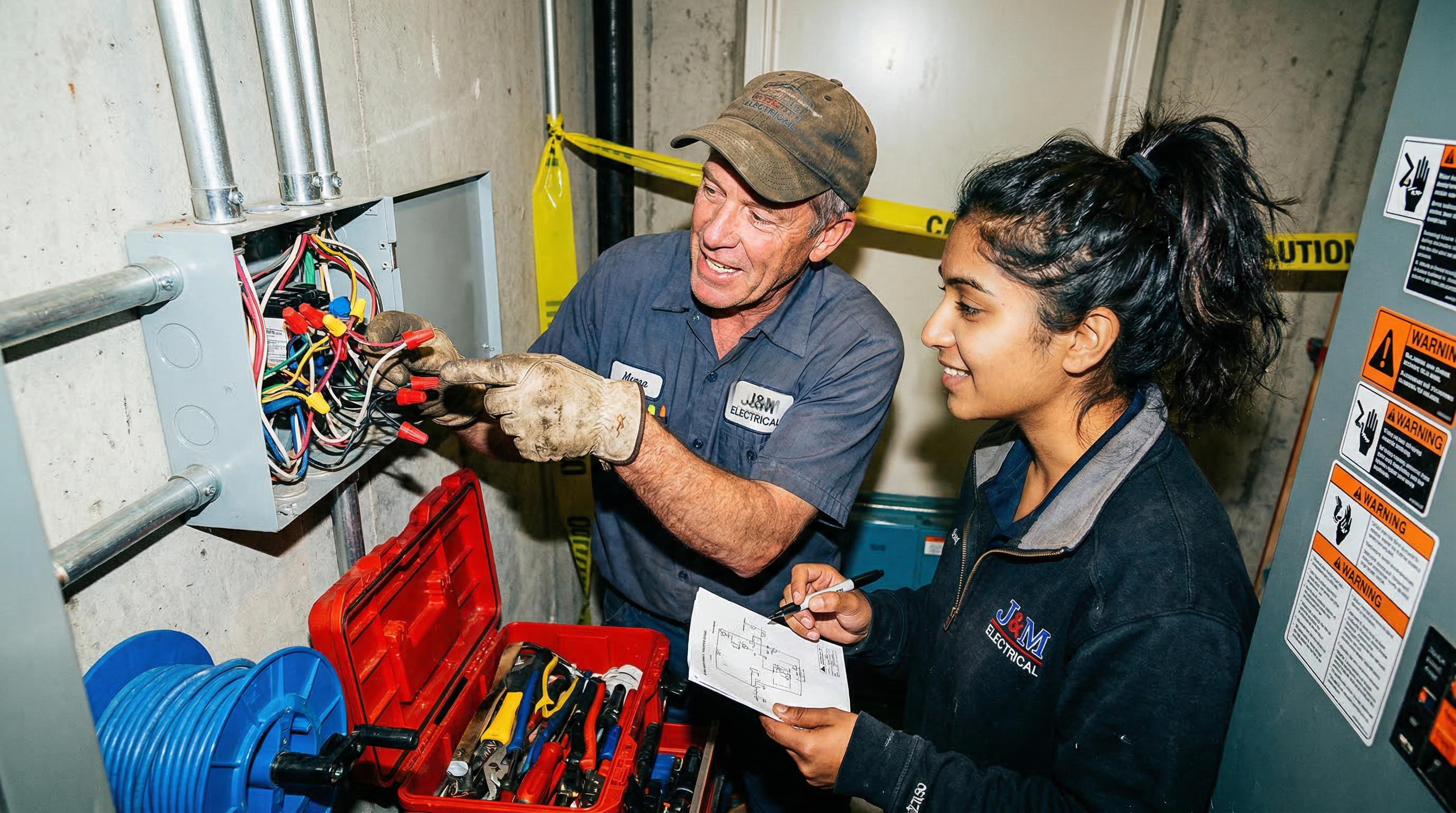
Wages in the sector too, have fallen 4.9% year-on-year, the only sector with negative wage growth that month. Over the same period, employment growth in construction rose 2.1% month-on-month and 8.3% over three months, led by Gen Z workers, whose growth in the sector hit 5.5% month-on-month.
Elaborating on his proposal and the education system’s structural issues with prioritising academia over trade routes, the Prime Minister said:
“For too long in this country, students have been told that you must take the academic path to do well and to be respected. I want an education system based on parity between academic and technical which gives all young people a clear path in life. From today, Britain will value the hard hat every bit as much as the graduation cap.”
“Whether you choose construction, coding or classics, or maths, manufacturing or mechanics, you’ll get the skills you need and be given the respect you deserve,” he added.
The reforms come after the previous Government, under Keir Starmer, announced similar intentions to improve young people’s access to work, including a £3,000 Youth Jobs Grant for employers and a wider Youth Guarantee aimed at getting more young people into education, training or a job.
The Skills Gap Behind Burnham’s Technical Education Push
Prime Minister Andy Burnham’s move has also arrived against the backdrop of more than a million people aged 16-to-24 in the UK being out of education, employment and training (Neet), the highest level in over 12 years, according to ONS data published in May.
Alan Milburn, whose interim review into that very issue is still ongoing, previously warned of a “lost generation” if the Neet trend isn’t addressed, and welcomed the reform, saying: “A million young people are being failed by a system that isn’t creating the opportunities for them to progress in life.
“The changes the PM is announcing today are very welcome. They are a big step in the right direction and consistent with the findings of my review.”
Youth apprenticeship starts have fallen 40% over the past decade, according to the Government’s figures, and ministers are pledging 50,000 more as part of the push, a target Sir Keir Starmer’s Government first announced in December 2025 and which today’s reform reaffirms. As part of the same announcement, Ofsted will also change how it inspects and measures schools, to give more weight to the quality of technical and vocational education and how well pupils are prepared for work, though neither the Government nor Ofsted has set out how that will work in practice.
AI skills are also part of the Government’s technical education push, which squares with research which shows more employers find such skills desirable. As uncovered in Employment Hero’s June AI Paradox report, nearly two thirds (64%) of UK employers told Employment Hero that AI has changed what they look for when hiring, while “AI skills” have entered the top five attributes they screen for, above prior experience.
What Businesses Say They Need Before 2028
Polly Dhaliwal, Chief Operating Officer of Enterprise Nation, the small business network, said small businesses can act well before the Government’s reforms kick in if they want to increase opportunities to work with young people.
“Small businesses don’t have to wait until 2028,” she said.
“Many are already creating opportunities through apprenticeships, work experience, mentoring and entry-level roles. Our latest Small Business Barometer shows around 40% of small businesses that employ staff expect to take on more people over the next 12 months, down slightly from 44% in 2025, but still a real opportunity for young people.”
Welcoming the reform as “another step in the right direction”, Kate Shoesmith, director of policy at the British Chambers of Commerce, noted that 75% of businesses trying to recruit say they struggle to find the people they need.
“Through our work on Local Skills Improvement Plans, we have seen the positive changes possible when all parts of the system work well together, employers, educators and local authorities,” she added.
The real obstacle to getting more small businesses involved, Enterprise Nation’s Polly Dhaliwal points out, however, “isn’t willingness, it’s capacity”.
“Small business owners wear every hat, so any programme has to be simple, flexible and easy to navigate: less admin, clearer guidance, and strong partnerships with schools and colleges to help coordinate placements,” she adds.
Rain Newton-Smith, chief executive of the CBI, meanwhile, stressed that the mismatch between employer demand and youth opportunity has to close.
“Businesses need skills. Young people need opportunity. But right now, the system is not joining those two things up.
“Our members are ready to partner with the government and regional leaders to remove barriers to hiring and build pathways for young people into fulfilling work.”
Some educational bodies stressed the need for more detail. Pepe Di’Iasio, general secretary of the Association of School and College Leaders, told the BBC that schools “could face capacity issues” given tight budgets, and The Independent that announcing the plan over the summer holidays was “unfortunate,” given how little detail has been shared so far.
It’s an issue Polly believes could be improved by involving more SMEs in reforms like these.
“They certainly want a stronger voice. They’re closest to the challenge of finding talent, yet conversations can be dominated by larger employers with dedicated HR teams. That’s a missed opportunity, 96% of UK businesses are micro and small, and they’re often where people get their first experience of work. Local skills planning needs to reflect that.”
Speaking to the “shift in the UK’s labour market” and Employment Hero’s findings about the uptake in construction roles among graduates, Kevin Fitzgerald, UK Managing Director at Employment Hero, said: “It is no surprise to see that many young people are changing tack, taking up more vocational roles in sectors where apprenticeships are more common. We expect that this will continue, and any ambition to reindustrialise Britain may contribute further to the upward trend.”
Employment Hero’s research also found that 46% of small businesses now value apprenticeships and degrees equally, while 37% value the vocational route more, and 48% of workers say their university education is irrelevant to today’s workforce.
The pathways Andy Burnham announced on 28 July won’t reach the labour market until September 2028 at the earliest and businesses say the gap between now and then is theirs to manage. But construction and trade skills are already on the rise and Gen Z workers are leading that shift, a change that may be well underway long before the reform itself catches up.