 Australia
  New Zealand
  Singapore
  Malaysia
  Canada (Français)
 United Kingdom





When 23-year-old Gen-Z business owner Salome Tirado Okeze left school in 2020, the career that she would eventually embark on felt like a stroke of good fortune.
“I call it luck because I received a random email from my school advertising the apprenticeship”, she told Employment Hero.
After completing her degree apprenticeship, she spent a year at PwC and later went on to join an AI research and development startup as Marketing Lead. In February, she took the leap to focus full time on her own business.
“During my third year, I realised it wasn’t really what I wanted to be doing. I wanted to do something a bit more impactful, at least helping people, or something a bit more hands-on than the consulting world.”
Several years later, she built something of her own: Tones, a production, media and events company and YouTube podcast platform for marginalised Gen Z groups, an endeavour she came to after leaning into her passion for “speaking to and getting to know different people in different cultures”.
For the Gen-Z students collecting their A-level, AS-Level, T Level and Level 3 VTQ results this week, getting a foot on the career ladder in similar ways will be an immediate concern, if it wasn’t already. There’s little wonder why.
July figures from the Office for National Statistics show UK youth unemployment has reached 16.2%, its highest rate in more than a decade, with 743,000 people aged 16 to 24 unemployed in that period, 112,000 more than the year before.
Rewriting the Old Playbook
It’s a landscape that Shola West, a 26-year-old Gen-Z career coach who works with young creatives, knows well. Like increasing numbers of young people today, she went the apprenticeship route before eventually establishing a business.
“I didn’t have A-levels; I didn’t go to uni. I started with multiple unpaid internships whilst working in retail, then did an apprenticeship, worked in media, moved into different roles, experienced redundancy, and eventually ended up building my own business,” she told Employment Hero.
Speaking to the current mood of Gen-Z clients she works with, the 2024 Forbes Europe 30 Under 30 honoree said she’s seen a mixture of ambition and anxiety in recent years.
“The young people I speak to still have big goals, they want to work in media, fashion, music, tech, creative industries, but there’s definitely a feeling of, ‘How am I supposed to get experience if every job asks for experience?’”
The Advice Gap Facing This Year’s Leavers
Numbers alone don’t explain why some leavers will navigate this market more easily than others. New analysis of the Prospects Early Careers Survey, reported by FE News, found more than a third (35%) of A-level students in 2025/26 didn’t use their school or college’s careers service at all. Students considering an apprenticeship were the least likely group to have sought it out, at 58% compared with 70% of those applying to university.
Whether students got that support directly shaped how confident they felt about their plans: nearly three-quarters (73%) of students who used careers support said they were certain about their plans, against 63% of those who didn’t. More than a quarter (27%) of students who skipped their careers service said they didn’t know it existed in the first place.

That gap in guidance is something Salome recognises well.
“I didn’t realise how much I didn’t know – people from more privileged backgrounds get taught the value of networking and internships from such a young age, whereas everybody else just gets told to do well in school and it’s going to work out.”
She pointed to how unevenly distributed that early access is: “I saw a statistic recently that something like 53% of prime ministers went to Oxford University. It’s not just about the school you went to for learning, it’s about the connections and the networking that come with it.”
Salome has seen a similar pattern from the other side, too. At a recent roundtable she convened with senior black leaders from firms including PwC and Chanel, alongside young people, to discuss the state of the UK jobs market, one theme kept surfacing: “Good grades alone will not get you into the job you’d like. You need all these other soft skills as well that they don’t teach.”
She said people fixated on getting a first-class degree sometimes did worse than those who “got a 2:1 or have done so many other things” – it was networking, and reaching out to recruiters directly rather than only applying, that came up again and again.
Why Employers Are Advertising Fewer Entry-Level Roles
On the other side of the hiring process, some employers are quietly narrowing what “entry-level” means. Felicity Halstead, founder and CEO of youth employment charity GoodWork, told Employment Hero the reasons her organisation hears from small business employers are largely financial.
“National Insurance rises have made it more expensive to hire and impacted many businesses, often making offshoring roles appealing – particularly for administrative or customer service-type jobs that are well-suited to entry-level hires”, she says.
“We’ve also seen employers concerned about geopolitical instability affecting costs, leading to hiring freezes.”
What has shifted, she said, isn’t the underlying financial pressure but who ends up getting hired instead: “One of the more worrying things we’re seeing is that employers aren’t hiring entry-level candidates for entry-level roles because the job market is so tough, that they’re being inundated with overqualified candidates.

“While the roles might still be advertised as ‘entry-level’, in reality they’re not, and so it’s becoming harder and harder for young people who don’t have access to networks to help them gain experience to then get a foot on the ladder. This inevitably affects those from low income backgrounds the most.”
That squeeze is compounded by how young applicants present themselves on paper. Felicity said employers looking to hire genuine first-jobbers are typically after behaviours such as “proactivity and resilience, as well as basic communication, digital literacy and things like timekeeping” rather than prior experience, but young people often struggle to demonstrate that on a CV: “Unfortunately we see a lot of people relying on very generic, AI-generated statements because they think it’s what employers want to hear. Employers are then inundated by almost identical job applications, and it makes it even harder for them to avoid hiring overqualified candidates, because there’s such a high volume and not much to differentiate between applications.”
For the young people GoodWork has helped into work over the past year, she said the outcome has been mixed: “For some of them, yes, but for others it’s been incredibly difficult. It’s been harder than ever for us to help young people into the roles they want to be in this year. Competition for roles is so fierce and there just isn’t enough opportunity out there.” Her advice to leavers navigating that competition is to stay open to routes they hadn’t originally considered, and to focus on building transferable skills and experience wherever they can find it.
What This Year’s Leavers Should Do Next
For leavers who don’t get the results they were hoping for, Shola said the most important thing is not to treat a temporary disappointment as a permanent verdict.
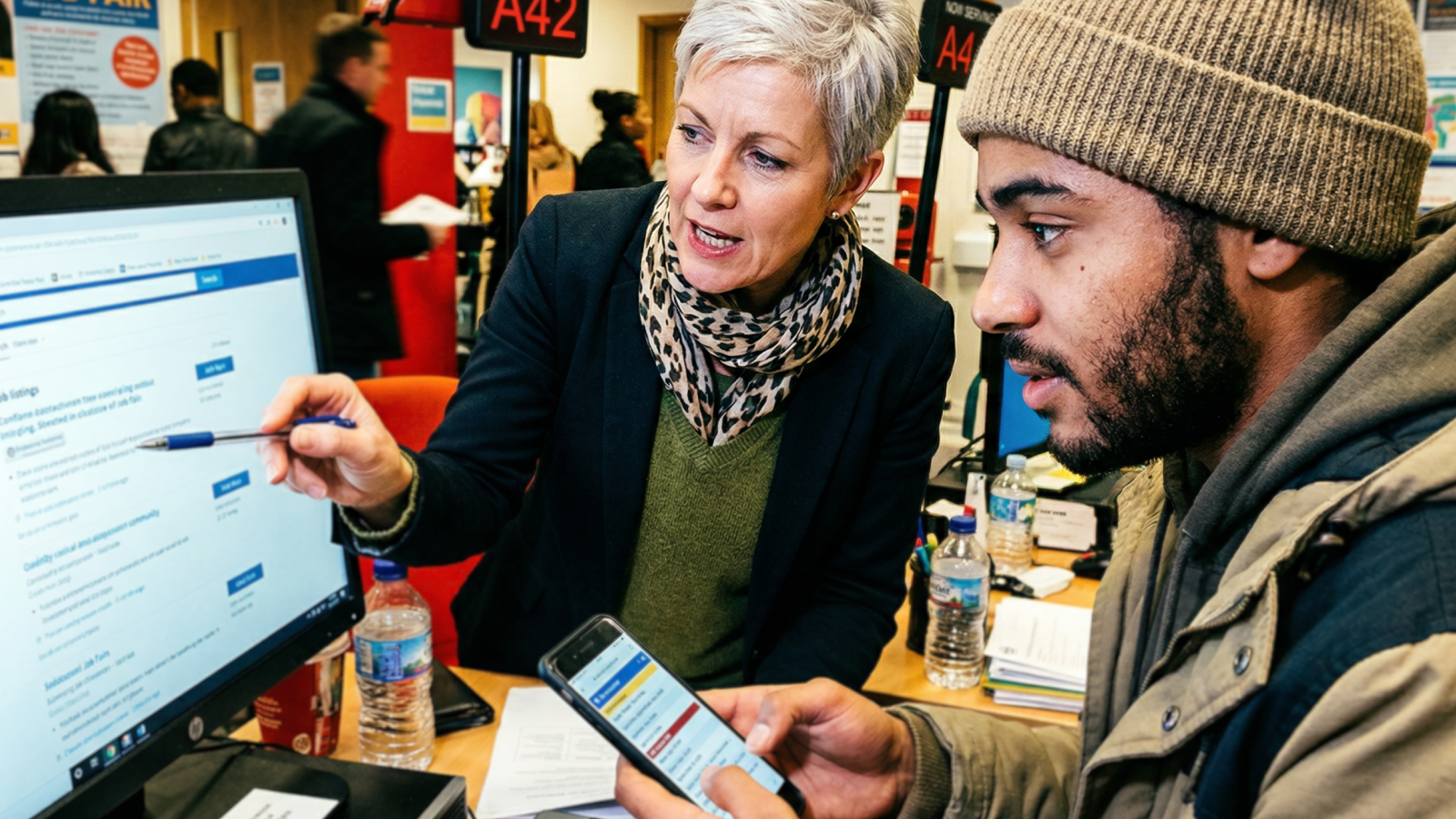
“Results day can feel like the end of the world because you’ve spent years being told that these grades determine your future. They don’t.” Her advice is to “speak to teachers, careers advisers, universities, employers and people actually working in the industries you’re interested in. Look at clearing, apprenticeships, alternative qualifications and entry-level routes, but also think about what you can start doing independently.”
She pointed to building visible evidence of interest, whether that’s designing websites, making content, or learning how favourite brands market themselves, rather than just saying an ambition out loud.
Salome too believes that turning a first opportunity into something bigger is less about following a fixed formula and more about genuine interest: “Practically, it looks like the apprenticeship route, it looks like building out who you know as well. But I think you’ll go further if you do something you’re actually passionate about, because you need to go in deep.”
She said the connections that mattered most to her, including with people from Chanel and PwC, came from simple curiosity rather than formal networking: “Whenever people ask me how I network, I always just say I was just talking to people, because I found it interesting.”
“Instead of seeing it as daunting or scary, see it as an opportunity. Everything has become a little bit more level.”
Salome points to AI specifically as something that has narrowed the gap between people with resources and people without them.
“Something like building a website used to take so long, or you needed to know how to code. Now you can use AI to at least get a starting point.”
The Trades Are Pulling in More Gen Z Leavers
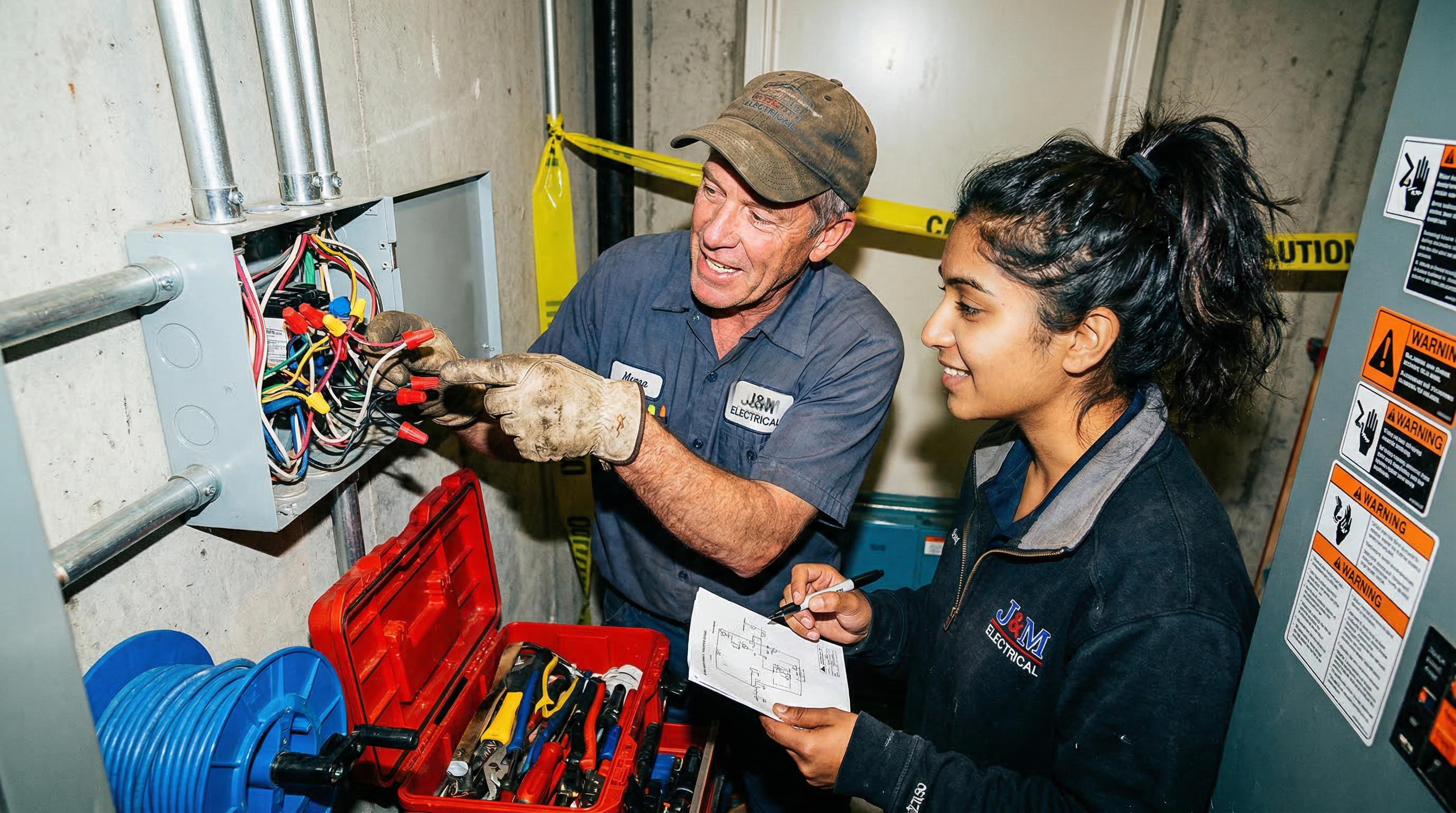
One part of the market is bucking the wider slowdown. Employment Hero data shows Gen Z employment in construction and trade rose 10.8% in July compared with April, ahead of manufacturing’s 10% growth and education and training’s 5.6% over the same period.
The research also reveals the attitudes around this shift. According to internal data, nearly half of SMEs (46%) now value apprenticeships and degrees equally, while 37% place greater value on apprenticeships specifically. Almost half of UK workers (48%) go further, saying their university education is irrelevant to today’s workforce.
What Support This Year’s Leavers Can Access
Not every scheme aimed at young people will help this year’s leavers equally, or immediately. But those taking up an apprenticeship this autumn are in a good position to benefit straight away. Since April 2026, the Government has covered 100% of training costs for small businesses hiring apprentices.
The £3,000 Youth Jobs Grant, by contrast, only applies to 18 to 21-year-olds who have already been out of work for six months or more, so it won’t reach this week’s leavers unless and until they’ve spent half a year without a job. The Prime Minister’s technical education reform, announced in July, won’t help this specific cohort either (it’s built for pupils currently in Year 10, and won’t reach the labour market until September 2028). Even still, while the routes available to this year’s leavers may not be the most obvious, there are a number of paths available. The best place for them to start is by asking questions.