

















Leave without pay: An employer’s guide
Published
Leave without pay: An employer’s guide
Published
Managing employee leave can feel like a juggling act, especially when requests fall outside standard paid entitlements.
Leave without pay (LWOP) is one of those grey areas that can leave even the most seasoned business owners scratching their heads. You want to support your team, but you also need to keep the business running smoothly. The good news is, handling these requests doesn’t have to be a headache. They can be handled easily when you understand the rules, are consistent and have a clear policy.
This guide is your partner in navigating the world of unpaid leave. We’ll give you the straightforward information you need to handle LWOP requests.
What’s in this leave without pay factsheet?
This guide breaks down everything employers need to know about leave without pay. We’ll cover:
- What is leave without pay?
- When does leave without pay apply?
- Your legal obligations
- How to manage requests
You’ll learn how it impacts employee entitlements, payroll and why documenting everything is so important.
We’ll also walk you through best practices for managing requests and highlight situations where seeking legal advice is a smart move.
Download the leave without pay factsheet now by filling out the form.
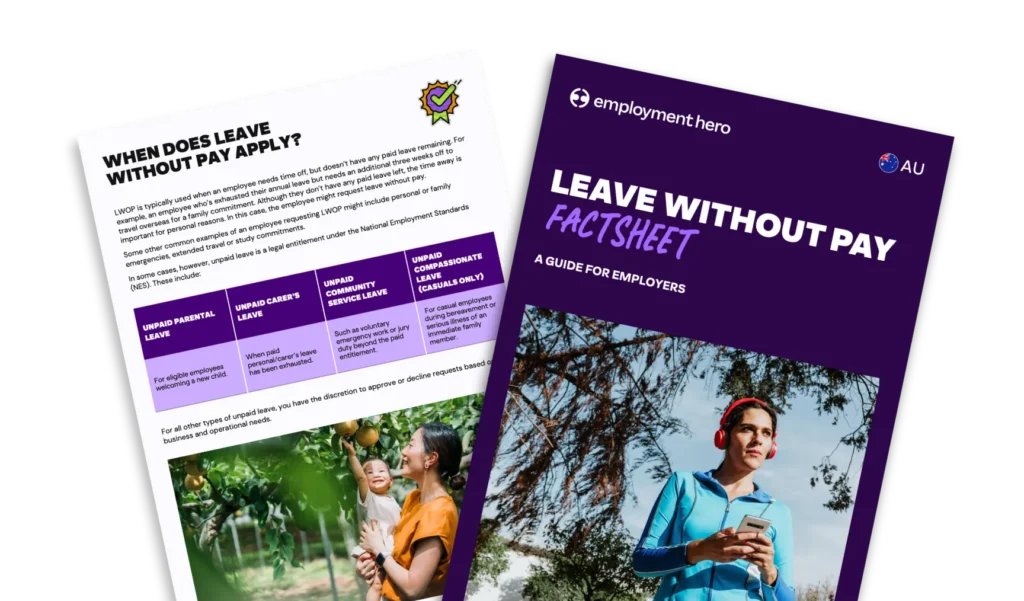
What is leave without pay?
Leave without pay, often called unpaid leave, is where an employee takes approved time away from work but does not receive their usual salary or wages for that period. Unlike annual leave or sick leave, which are paid entitlements, LWOP is generally a discretionary arrangement. It’s a tool you can use to offer flexibility when an employee has a compelling reason to be away from work but has exhausted their paid leave balances.
The most common requests for LWOP stem from personal circumstances. An employee might need an extra few weeks off to travel for a family wedding, pursue a short-term study opportunity or manage a personal emergency. In these cases, they aren’t entitled to the time off, but granting it can be a powerful way to build trust and support your team’s wellbeing.
When can an employee take leave without pay?
While most unpaid leave is granted at your discretion, there are specific situations where it is a legal entitlement under the National Employment Standards (NES). These are non-negotiable and it’s essential to know them.
Legally entitled unpaid leave includes:
- Unpaid parental leave: For eligible employees to care for a new child.
- Unpaid carer’s leave: When an employee needs to care for an immediate family or household member and has exhausted their paid personal/carer’s leave.
- Unpaid community service leave: For activities like voluntary emergency management or jury duty, beyond any paid entitlement.
- Unpaid compassionate leave: Available to casual employees for bereavement or to care for an immediate family or household member with a serious illness or injury.
For all other requests, you have the discretion to approve or decline them based on your business needs. This is where having a clear internal policy becomes your best friend, ensuring every request is handled consistently and fairly.
Is leave without pay legally required?
Outside of the specific NES entitlements mentioned above, the short answer is no. You are generally not legally obligated to grant leave without pay. The power to approve or deny a request usually rests with the employer, unless a specific provision is included in a modern award, enterprise agreement or an employee’s employment contract.
This discretion is a vital part of managing your workforce and operations. It allows you to weigh the employee’s request against the needs of the business, such as project deadlines, team workloads and staffing levels. However, this power must be wielded responsibly to maintain a fair and positive workplace culture.
Employer discretion and decision-making
When a request for discretionary unpaid leave lands on your desk, your decision should be guided by fairness and a clear-headed assessment of the business impact. An ad-hoc approach can lead to feelings of favouritism and damage team morale.
When assessing a request, consider:
- The reason for the leave and its duration.
- The employee’s performance, role and tenure.
- The operational needs of the business and staffing levels.
- The potential impact on the rest of the team.
- Whether any alternatives, like using accrued annual leave, are possible.
A consistent process, guided by a written LWOP policy, makes sure every employee is treated equitably. It also gives you a clear framework for saying “no” when a request is unreasonable or would place too much strain on the business.
How leave without pay impacts employment entitlements
If an employee is on unpaid leave, it will generally not “break” their continuity of service. That is, if someone has been employed for six months and then takes a period of unpaid leave of three months, they are not classified as having no service accrued.
However, for most entitlements a period of unpaid leave generally does not count as service. This means that there is no accrual of entitlements during this period and if (for example) they have not reached their qualifying period for unfair dismissal, it pushes the date back by the amount of leave they took. It will also not count as ‘service’ when calculating certain entitlements such as the employees entitlement for redundancy pay. In effect, their period of service is “paused”.
When approving LWOP, it’s important to double check how LWOP will affect other entitlements before the leave begins. You should also communicate this clearly in your written agreement and HR and payroll software.
For more insights, check out this detailed guide on the power of automated payroll.
Documenting leave without pay
Never underestimate the power of putting things in writing. A verbal agreement is easily forgotten or misinterpreted. A formal, written agreement for any period of LWOP protects both parties and confirms that everyone is on the same page.
Your written communication approving the leave should include:
- The start and end dates of the unpaid leave.
- Confirmation that the leave is unpaid.
- A clear explanation of how the leave will affect their entitlements and continuity of service.
- Any expectations regarding their return to work.
This document serves as a crucial record in your HR files, minimising the risk of future disputes.
Leave without pay under employment law
Navigating employment law can be tricky, but understanding the basics around unpaid leave is a must. Here’s what to watch out for.
Fair Work or local employment legislation
In Australia, the Fair Work Act 2009 sets out the National Employment Standards, which include the specific unpaid leave entitlements we covered earlier. The Act also governs stand-down provisions, which are a form of unpaid leave an employer can direct an employee to take when work cannot be performed for reasons outside the employer’s control (like a natural disaster). This is different from discretionary LWOP, as entitlements generally continue to accrue during a stand-down.
Award, agreement or contract implications
Always check any applicable modern awards, enterprise agreements or employment contracts. These industrial instruments can contain specific clauses about unpaid leave that may provide additional entitlements or outline a required process for managing requests.
Best practice for handling requests
To champion a better way of working, handle LWOP requests with a blend of empathy and business sense. Assess each request on its merits against your company policy. Communicate your decision clearly and respectfully, whether it’s an approval or a denial. Applying your policy consistently is the key to demonstrating fairness and avoiding claims of discrimination.
When employers should seek legal advice
While you can handle most LWOP requests with a solid policy and clear communication, some situations are more complex. It’s wise to seek legal advice if a request is tied to a medical issue, involves potential discrimination risks or relates to an employee on a work visa. Getting expert input in these scenarios helps you manage compliance and mitigate risk.
If you’re looking for HR advice, get in touch with our HR Advisory service.
Download your leave without pay factsheet
Managing leave shouldn’t take you away from growing your business. For more detailed information, our Payroll Guide is packed with expert guidance.
If you’re ready to stop managing leave with messy spreadsheets and manual processes, it’s time for a better way. Explore our Managed Payroll services and see how we can take employment admin off your plate, giving you more time to focus on what you do best.
Download the leave without pay factsheet now.
The information in this factsheet is current as at 17 November 2025, and has been prepared by Employment Hero Pty Ltd (ABN 11 160 047 709) and its related bodies corporate (Employment Hero). The content is general information only, is provided in good faith to assist employers and their employees, and should not be relied on as professional advice. Some information is based on data supplied by third parties. While such data is believed to be accurate, it has not been independently verified and no warranties are given that it is complete, accurate, up to date or fit for the purpose for which it is required. Employment Hero does not accept responsibility for any inaccuracy in such data and is not liable for any loss or damages arising directly or indirectly as a result of reliance on, use of or inability to use any information provided in this factsheet. You should undertake your own research and seek professional advice before making any decisions or relying on the information in this factsheet.unication in place, employers can protect both their finances and employee trust.
Register for the factsheet
Related Resources
-
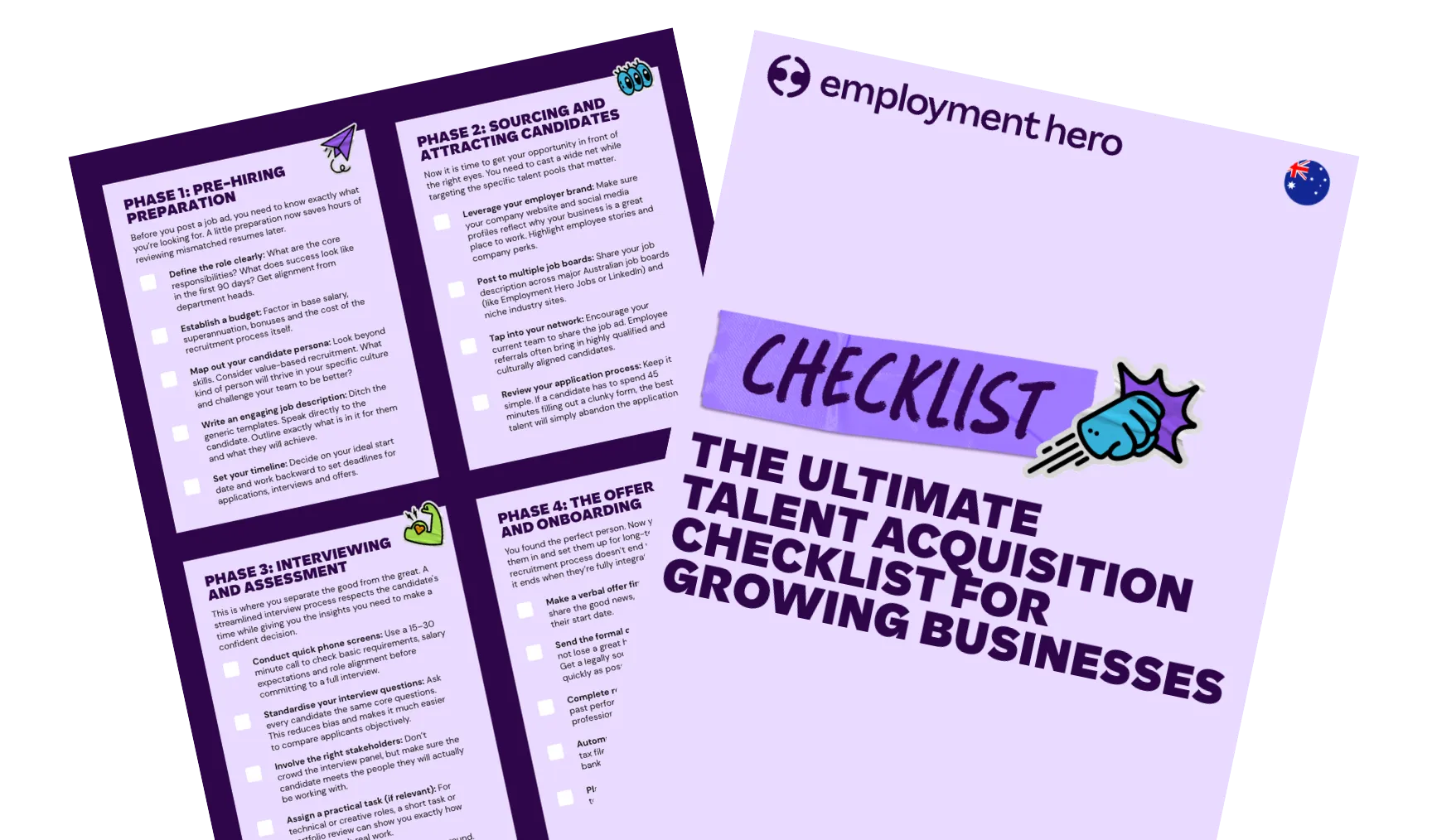 Read more: Talent acquisition audit checklist
Talent acquisition audit checklist
A talent acquisition audit is your secret weapon to cut costs, find better candidates and build the team of your…
-
 Read more: Designing an employee work schedule: template and guide
Designing an employee work schedule: template and guide
Learn how to create a flexible work schedule that can boost productivity among your employees.
-
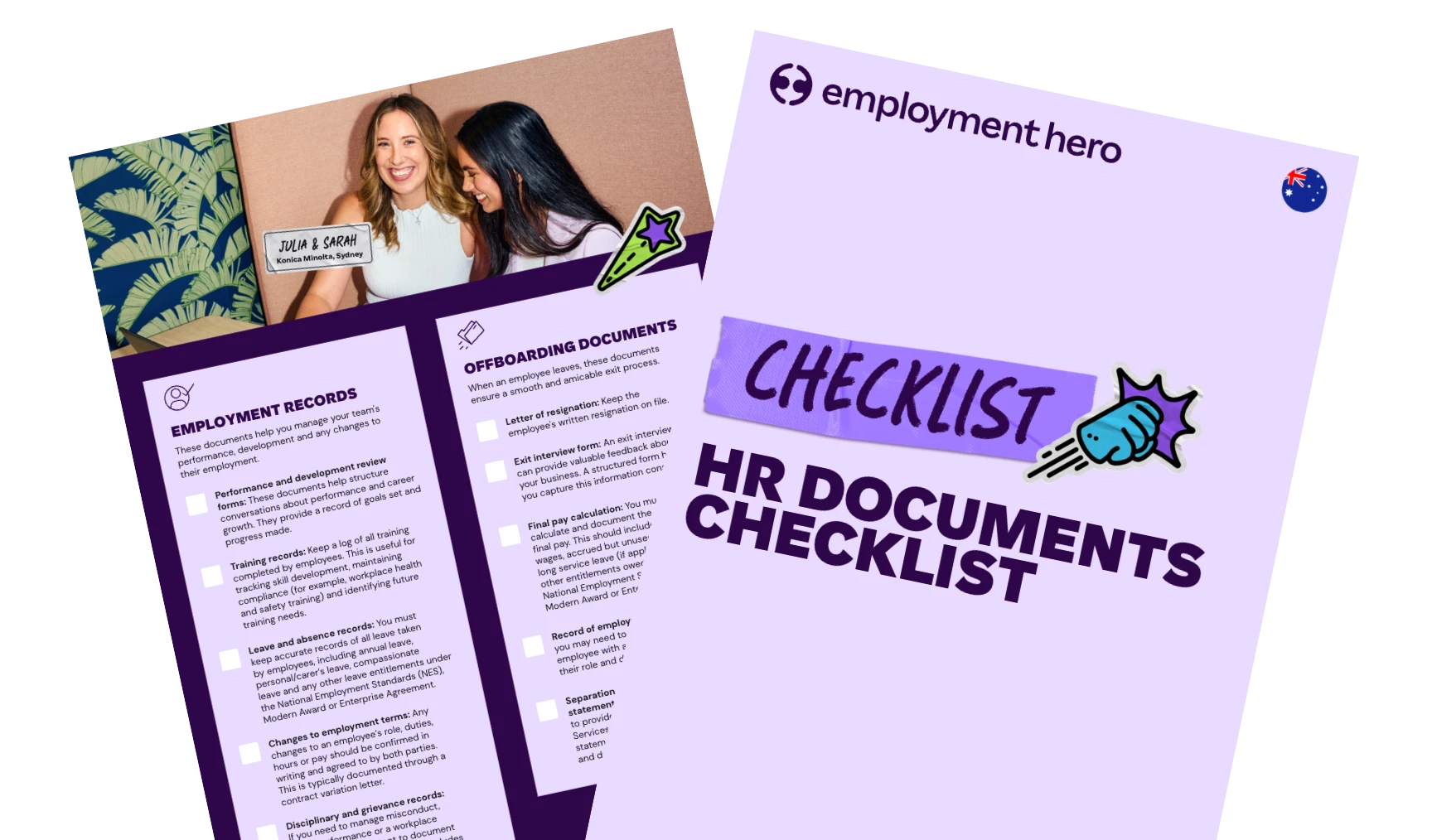 Read more: Essential HR documentation checklist for employee management
Essential HR documentation checklist for employee management
Use our HR documentation checklist to figure out what you’re missing, then download our free templates to close the gaps.

