 New Zealand
  United Kingdom
  Singapore
  Malaysia
  Canada (Français)
 Australia






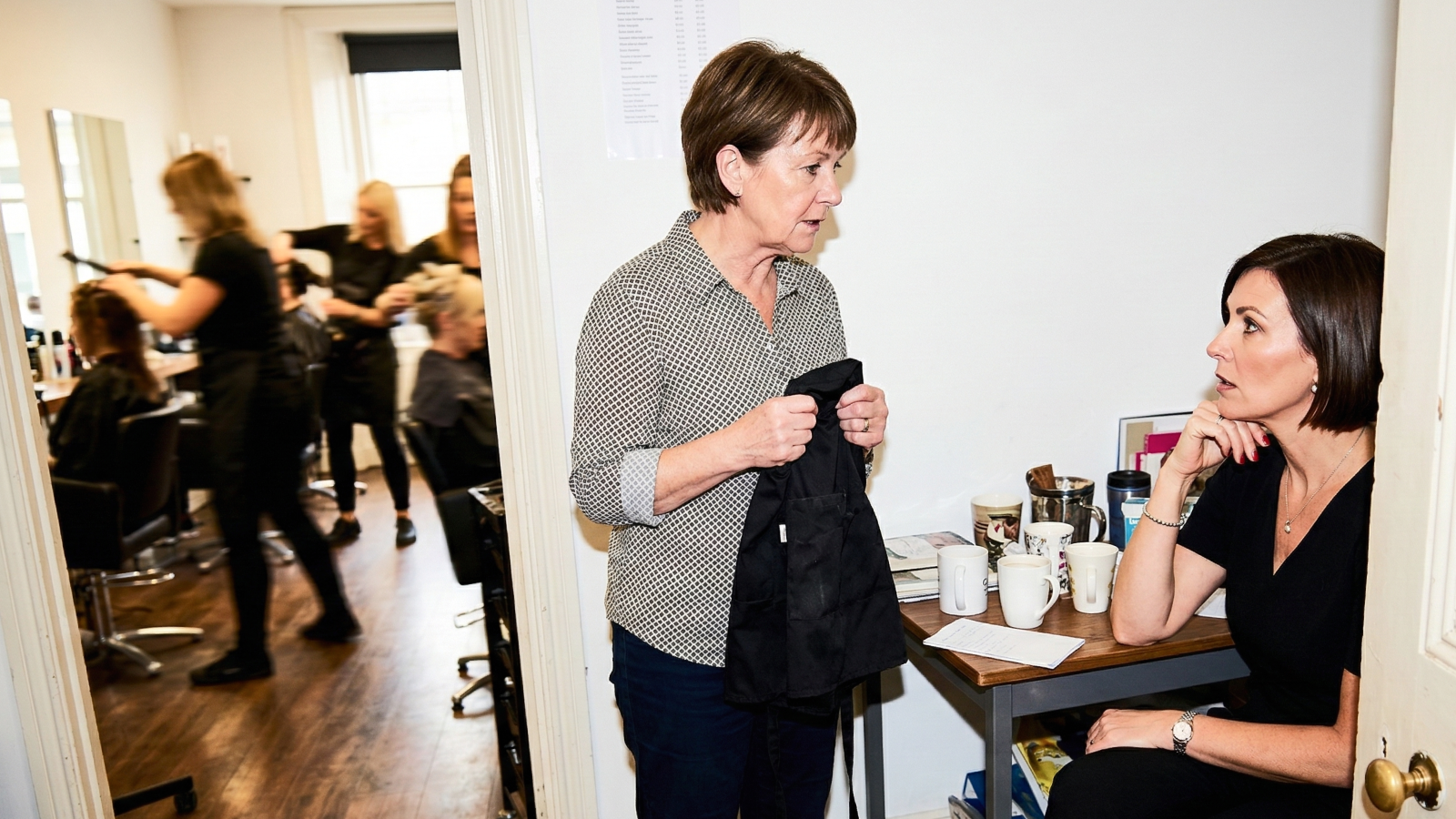
Small and medium business owners are calling in external help to solve a problem that can’t be addressed with AI or software: teaching their staff how to get along.
While standards for professional conduct may have once been taken for granted, many employers find baseline assumptions about behaviour no longer apply, and fewer workers have the ability to resolve conflict or engage in difficult conversations.
Communication expert and author Leah Mether is seeing this trend unfold in businesses ranging from SMEs to blue-chip companies, and blames a lack of investment in human skills. “Because we are under so much pressure at the moment, the cracks are showing in a lot of businesses,” she explains. “I am seeing an increase in conflict, in incivility. Really basic incivility.”
Mether argues the consequences of a broken culture extend beyond low morale. “Your business can fail off the back of humans not working together well,” she says.
People Forget The Workplace Is Not High School
Mether understands why so-called ‘soft skills’ have traditionally taken a backseat in hiring. “For a really long time, we’ve hired and promoted on the back of technical skills and experience: ‘Do you have the job specific skills to do the task that I’m hiring you for?’” she explains. “We’ve almost treated those human skills as the fluffy extra. They’re nice to have, but not as important.”
But now she’s observing a genuine shift. “Businesses are really waking up to the fact that we do need to focus on those essential human skills, because people drive performance.”
One of Mether’s key messages as a consultant seems obvious but, she says, people need it reinforced. “The workplace is not high school.” She finds too many workers become as swept up in office politics as they did in schoolyard dramas. She adds it’s no surprise they default to drama when the communication skills required to avoid it are generally assumed rather than taught.
She dismisses the notion that people are either born good communicators or they’re not. “That’s rubbish. Communication is a skill set. It can be learned, improved, and developed if you’re willing to learn, and if you’re willing to do the work,” she insists. “If we don’t hire for it, teach for it, and really prioritise this in our workplaces, it can turn into a hot mess really quickly.”
This Is What Poor Communication Looks Like
Mether argues the advent of social media ‘keyboard warriors’ and the modern global political landscape have fundamentally changed people’s relationship with conflict.
“Outrage is fueling the algorithm, and people are forgetting – or never learnt in the first place – how to disagree with respect and debate ideas with respect,” she explains. While this is important in any workplace, it’s critical in SMEs where people work shoulder-to-shoulder. Says Mether: “It is essential for small businesses, because to make a good decision, we have to be able to consider different opinions, to thrash out an issue and come to a better outcome. I think people are losing the ability to do that, and it comes at a cost.”
She observes many people don’t know how to disagree without attacking or how to regulate themselves under pressure. “For some people, they come in too hot, they’re aggressive, and they have no awareness that they’re putting people offside,” she says.
Mether says by the time clients call her, they’re already paying a price. “The businesses that come to me have realised that it is costing them an enormous amount in sick leave, turnover of staff, HR complaints, all of those really messy people problems,” she says.
The impact of culture on a business’s bottom line is well-documented. She cites a report from the Australian Royal College of Surgeons that found up to 90 per cent of preventable deaths in surgery are not medical mishaps but are caused by failures in communication and teamwork. NASA came to a similar conclusion and trains astronauts to deal with tension.
“If we extrapolate those two examples to a small business context, it’s having the skills to speak up, to challenge ideas, to raise concerns, to empathise and care with each other, to work well together as a team,” she explains. “These have been dismissed as soft skills and we haven’t put the emphasis on them, but these can make and break your business, absolutely.”
Being Unsafe Is Not The Same As Being Uncomfortable
The idea that employees should feel free to share opinions and raise concerns at work falls under the umbrella of psychological safety, a concept identified by Google’s Project Aristotle as the single most important factor in team effectiveness. However, Mether argues that the recent legislative focus on psychosocial hazards has led to the terms being misinterpreted and, in some cases, weaponised.
“People are confusing feeling unsafe with feeling uncomfortable, and those two things are really different,” she explains. Employees can find it hard to differentiate between appropriate and inappropriate forms of friction. “People are saying, ‘Oh, I don’t want this feedback because I’m feeling unsafe,’ when in fact it may just be that they don’t want to hear your feedback, because they don’t like your feedback and it makes them uncomfortable. That’s very different to feeling unsafe,” she says.
The distinction matters enormously for SME owners attempting to maintain a healthy culture while also allowing for constructive criticism. Mether says many leaders find such feedback almost impossible to deliver and avoid the conversations altogether.
She believes genuine psychological safety should have the opposite effect. “Done well, psychological safety should be promoting difficult conversations,” she says. “If you genuinely have that in your business, you are able to have the tricky conversations well with care and respect.”
How to Reclaim the Difficult Conversation
When Mether suggests business owners invest in human skills, she is often met with objections. “One of the common pushbacks I hear from small business owners is, ‘I don’t have time for that, Leah,’ or ‘I don’t have the budget.’” That’s when she reminds them of the link between culture and retention, and the considerable burden of replacing unhappy staff. “My response is, ‘You don’t have time not to, because what it will cost you far exceeds the investment.’”
The good news, Mether stresses, is that communication skills can be learned by any employer or employee willing to do the work.
For leaders approaching difficult conversations, she offers a practical framework. “Two great questions to ask yourself ahead of a challenging conversation are: what outcome do I want, and how do I best tailor my communication to give me the best chance of achieving that outcome?” Some leaders forget their messages need to land. “Communication is only effective if it’s received. You can talk into the abyss forever and if it’s not received, it’s ineffective.”
When the conversation begins, Mether’s advice is to show intent. “Your feedback should always be delivered in a way that is aimed at helping,” she says. “Your aim should be to support, assist and encourage development, learning or growth. It should never be to blame, shame or punish, even if it’s really hard feedback. You should be hard on the issue, soft on the person.”
Mether says employers can go in armed with a script: “Hey, the reason I’m having this conversation with you is because I really want you to be successful in this role, which is why I need to talk to you about X.” Her experience suggests people are less likely to get defensive with this explanatory approach. “If you just jump straight into the conversation, don’t be surprised when it goes sideways very, very quickly,” she warns.
When it comes to preventing conflict between employees, Mether suggests enforcing a rule as standard: you don’t have to like everyone you work with, but you do have to be able to work with them. Leaders should also be role models. “If you want to improve the communication within your business, if you want to improve the behaviour of the people within your business, you need to make sure you are modelling what good looks like,” she insists.
She believes the role of a business owner in shaping and maintaining a healthy and constructive workplace cannot be overstated. “Culture is the behaviour that is supported, rewarded, tolerated, and makes people feel included,” Mether says. “That old cliche of ‘you lead by example’ is absolutely crucial to success, and it starts there. So, I would say to leaders, before you really get into focusing on your people, make sure your own house is in order first.”