 New Zealand
  United Kingdom
  Singapore
  Malaysia
  Canada (Français)
 Australia






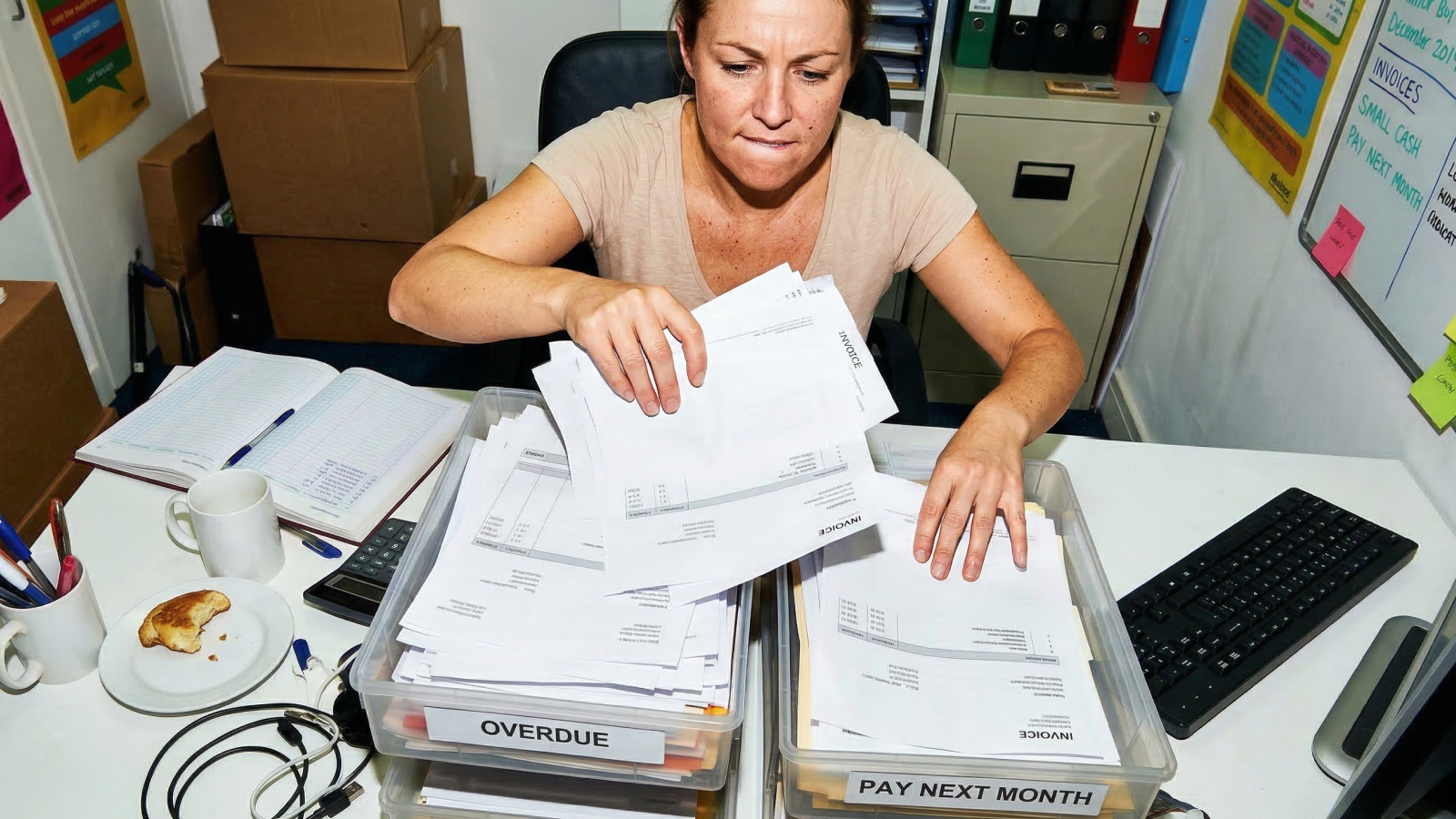
Small and medium businesses are often referred to as the engine room of the economy yet these days many are running on fumes. Higher inflation, energy costs and interest rates have eroded margins, leaving some businesses struggling to pay bills while desperately relying on clients to pay on time.
Late payments are at a 6-year high and account for 35 per cent of complaints made to the Australian Small Business and Family Enterprise Ombudsman.
For business owners struggling with labour costs, being confronted by unpaid invoices can feel like a personal slight. But the reality behind most overdue bills is usually less dramatic than it seems, according to Scott Lambert, an Associate in the Commercial Litigation team at PCL Lawyers. He often fields calls from business owners convinced a client has gone rogue or gone broke, only to find there is a simple explanation. “There’s 1,001 reasons why you’re not getting paid,” he says. The key is knowing which problems can be solved with an email and which require outside help.
The Mundane Truth Behind Many Unpaid Invoices
From his clients’ experience, Lambert’s observation is that late payments can often be blamed on technology, like an overzealous spam filter, or assumptions about what’s happened at the debtor’s end.
“9 times out of 10, it’ll be something so simple,” he says. “For example, your emails are going to their junk box, or the person has left the organisation or Accounts Receivable simply does not have the invoice.”
Sometimes payments are accidentally sent to the wrong company in a drop-down menu or a transaction is missed in a bank reconciliation. He notes bank statement search functions can be “a bit clunky” and payments can easily appear invisible.
When the non-payment is deliberate, sometimes it’s the result of a dispute and payment is being withheld until the dispute is resolved, Lambert says.
There are also cases where the client business cannot afford to pay, possibly due to trading while insolvent. “Insolvent trading is unlawful, but it’s very common. Businesses run insolvent all the time,” Lambert observes. Insolvencies are on the rise this year, most commonly in construction and hospitality. Particularly vulnerable are SME owners who’ve put their own money on the line – almost a third of all personal insolvencies are now business-related.
Decide What the Relationship Is Worth Before Acting
Deciding how to approach an unpaid invoice should be based on strategy, not emotion, Lambert says.
“In business, there’s 3 types of relationships: those you want to improve, those you want to maintain, and those you want to dissolve,” he explains. “You have to identify whether this is someone you want to have an ongoing relationship with.”
That assessment will shape tactics, but Lambert stresses preliminary inquiries should always come first, regardless of the relationship type. If the late payment is innocent, phone calls and emails to the debtor’s accounts department may be time-consuming but will often pay dividends.
There’s also the option of an email framed as a standard internal check, not a demand or accusation. He suggests something like: “Dear [client], our accounts receivable department is experiencing difficulty in locating payment of the attached invoice and we suspect that the invoice is still outstanding. If the invoice has been paid, could you kindly send us a remittance? Alternatively, please process the invoice at your soonest convenience.”
At this point, Lambert’s advice is to focus on the process and remain calm. “The biggest mistake I see is people become emotional and they overreact, so they go zero to hero,” he says. “They feel a feeling of resentment and they get emotional about it.” The goal should be to not take it personally.
As an aside, Lambert offers a practical tip for building goodwill with the people who actually process payments: “Send them a Christmas card and a bottle of wine at Christmas.” This serves a dual purpose. If there is a dispute and an invoice is marked not to be paid, they should be able to tell you. Or, if cash flow is tight and creditors are being prioritised, they may be more likely to return a favour. “If they’re going to string someone out, they’ll make sure it’s not the people who remembered them,” he says.
How To Know When It’s Time To Escalate
For business owners wondering when to draw the line and escalate, Lambert defines the turning point: “You’ve chased it several times and now they’re not answering your emails, they’re not answering your calls, you’re just getting crickets.”
Commencing legal proceedings against a client that an owner wants to keep working is best avoided, he says. But in cases where there is ongoing silence or an unresolvable dispute, the relationship with the debtor is usually irreconcilable.
Options at this stage include a statutory letter of demand under the Corporations Act or filing a liquidated claim – a formal request for a court to order payment of a specific, undisputed amount. The right mechanism depends on the debtor’s business structure, whether they are a company, sole trader or other entity.
“You probably want to consult legal advice before you go down that path,” Lambert says. “If you’re savvy enough, you can do it yourself. But I say to my clients, if you need brain surgery or heart open surgery, you wouldn’t try to do a DIY at home.”
Calling in a debt collection agency is also a possibility at this stage, if the amount owing is undisputed. “There’s a saying in business, if you don’t know something, it’ll cost you money,” Lambert says. “It’s always good to just let the professionals do it.”
Prevention Is Always Better Than Recovery
To avoid reaching the stage of professional recovery, Lambert argues prevention is better than cure. “Try to never put yourself in a situation where you’re going to have big, outstanding debts,” he says.
Amid tougher economic conditions, he notes business owners can choose to tighten credit controls with notice. Strong pushback against losing credit may hint at insolvent trading, he adds, and serve as a warning against future non-payment. Owners can also ask for a director’s personal guarantee in a credit application.
His recommended approach for new clients is graduated credit: start with a prepaid account, move to 7-day terms, then 14-day terms, and eventually 30-day end of month terms if payment behaviour is consistent. “That’s a real great tester to see how this person is going to pay their bills,” he says.
He also stresses the distinction between ‘30-day terms’ and ‘30-day end of month terms.’ Standard 30-day terms require the debtor to check their ledger and process payments every day. 30-day end of month terms mean the debtor pays all suppliers once a month, on a single day. Although it’s a common reason for late payments, he says it’s widely misunderstood.
“If you’re a small business owner with 30-day terms, you have to process those payments every day. The contrast, 30-days end of month, means you’re only doing your billing and payments for accounts once a month,” he explains. “For small businesses, that is huge in terms of time, because people are time poor.”
Reducing that administrative burden matters, with small business owners facing a significant increase in payroll obligations and cash flow pressure since July 1.
“SMEs are also having to cope with new obligations to pay superannuation on the same day as they pay their employees, rather than paying super quarterly in arrears. This has a major impact on cashflow,” says Simon Obee, Head of HR Advisory at Employment Hero. “In addition, there has been an increase in minimum wages from between 4.75 per cent and 6 per cent that took effect on the same date, which makes the costs of employing staff seem more expensive than ever.”
In the end, Lambert says business owners are least stressed when they treat debt recovery as admin and keep a cool head. “Essentially, business is a game and there are rules to the game. You don’t want to breach any of those rules.”