 New Zealand
  United Kingdom
  Singapore
  Malaysia
  Canada (Français)
 Australia
Examples of AI in business: How real companies are using AI in 2026

Contents
Most Australian business owners have heard plenty about artificial intelligence by now. The think-pieces, the LinkedIn posts, the conference keynotes, the list goes on…. And yet, for many, there’s still a gap between understanding that AI is important and knowing what to do with it on a Monday morning.
That’s where real-life examples can make a difference.
Seeing how a business like yours, with the same size constraints, hiring headaches and pressure on margins, has used AI to solve a real problem is what finally makes it click. It shifts the question from “should I care about AI?” to “where do I start?”
That’s exactly what this blog is for. Across customer service, HR and employment, marketing, software development and training, we’ve pulled together concrete examples of AI at work in 2026. All of them point to the same conclusion, being that the businesses that are building AI into their everyday operations are pulling ahead.
Let’s get into it.
AI in customer service: faster responses, lower costs
The promise of AI in customer service is already being realised. Customers want fast answers and staffing for that 24/7 expectation is expensive. AI bridges the gap.
Klarna, the global payments platform, made headlines when it revealed that its AI-powered support assistant now handles the equivalent workload of 700 full-time customer service agents. More telling than the headline figure are the operational numbers behind it. The average resolution time dropped from 11 minutes to under 2 minutes, repeat enquiries fell significantly and customer satisfaction scores held steady throughout.
What changed? Klarna didn’t just bolt a chatbot onto its existing support setup. It deployed AI that could actually resolve issues end-to-end, such as processing refund requests, updating account details or answering billing queries. The result was a meaningful reduction in support costs without a corresponding drop in customer experience.
For Australian businesses, the lesson isn’t that you need Klarna’s scale. Affordable AI support tools are now accessible to SMEs and can handle the routine, high-volume enquiries that eat up your team’s time. If your support team is spending hours answering the same ten questions, AI can take most of that load off. Your people have more time for the conversations that genuinely need a human.
AI in HR and employment: Employment Hero in practice
For a lot of small and medium businesses, HR runs on a combination of spreadsheets, email threads and institutional memory. The system can be intensely fragile. A hiring surge, compliance question at the wrong moment or an onboarding process that misses a key step can cause real issues.
This is exactly the problem Employment Hero is built to solve. AI is central to how it does it.
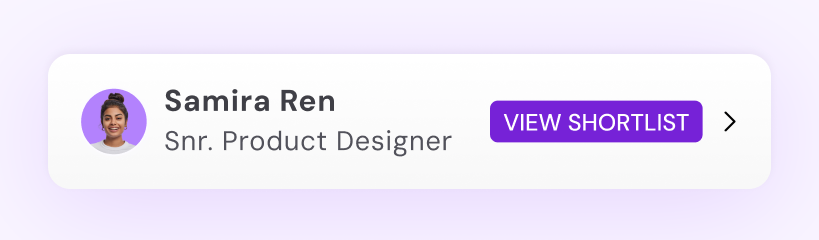
Take hiring. For a retail business with 30 staff, finding a new store supervisor typically means writing a job ad, posting it manually across multiple platforms, sifting through dozens of applications and trying to find interview time in an already packed calendar. Employment Hero’s AI recruitment features change that workflow from the ground up. It automatically matches open roles against a talent pool of over 2.3 million candidates, screens and scores applicants based on role fit and creates a shortlist before a hiring manager has had to read a single CV. What used to take two to three weeks can now happen in days.
Curious? Take a look at our AI recruitment agent below.
Once a candidate is selected, Employment Hero’s AI-powered onboarding takes over. New hire paperwork, employment agreements, policy acknowledgements and compliance checklists are automated and tracked, so nothing gets missed.
On the payroll side, Employment Hero’s platform stays across Australia’s employment regulations and flags compliance issues before they become problems. For a business owner who isn’t a payroll specialist, that kind of built-in intelligence is incredibly valuable. It’s an additional quality check for your compliance responsibilities.
The Employment Hero model illustrates what the best AI tools do. They don’t replace the judgement of a good manager or HR professional, but remove the administrative drag that stops those people from doing their best work.
AI in marketing: generating content and targeting audiences
Marketing teams are under constant pressure to produce more content, more campaigns and more personalisation with the same or fewer resources. AI is changing what’s possible.
Coca-Cola’s recent AI-assisted campaigns offer a useful global example. By using AI tools to generate creative assets, prototype campaign concepts and produce variations for different markets and channels, their creative teams were able to compress production timelines from weeks to days. The AI didn’t replace the creative directors. It handled the volume work, freeing the strategists to focus on brand direction and quality control.
The same dynamic is playing out for smaller businesses using content creation tools integrated into workflow. A marketing manager at an Australian professional services firm, for example, might use AI to draft a month’s worth of LinkedIn posts, generate email subject line variations to A/B test and build out a targeted nurture sequence, all in an afternoon.
Where AI is delivering particularly strong ROI in marketing is in audience targeting and campaign optimisation. Platforms like Meta and Google have been using machine learning to optimise ad delivery for years, but the newer generation of tools goes further, analysing customer behaviour data to ensure campaigns will resonate with their audience.
The businesses seeing the best results aren’t using AI to replace their marketing instincts. They’re using it to test faster, personalise at a scale that was previously impossible and spend their budget where it’s most likely to convert.

AI in software development: writing and reviewing code
You don’t need to run a tech company for this one to be relevant. If your business has a development team, even a small one, AI coding tools are already changing how fast and how safely they can ship.
GitHub Copilot is the most widely adopted AI coding assistant in the market. It works alongside developers in their coding environment, suggesting code completions, writing test cases, explaining complex functions in plain English and flagging potential security vulnerabilities. GitHub’s own research found that developers using Copilot completed tasks up to 55% faster and reported feeling significantly less frustrated with routine coding work.
For non-technical business owners, the practical implication is that the same development team can deliver more features, fix bugs faster and reduce the risk of security issues without needing to hire additional engineers. In a market where senior developers are expensive and hard to find, that productivity multiplier has a huge dollar value.
AI in learning and development (L&D)
L&D has long been the part of HR that gets squeezed first when things get busy. Generic e-learning modules, low completion rates and development plans that get filed and forgotten. AI is giving businesses a way to do training differently and actually see it stick.
IBM provides a well-documented example at scale. Their AI-powered learning platform analyses each employee’s role, current skill level, career goals and learning history, then recommends personalised development pathways. The outcome has been measurable improvements in course completion and, more importantly, in skills actually being applied on the job.
The same logic is now available to businesses of any size through various learning management platforms, which use machine learning to surface relevant learning content based on what an employee is working on, what skills gaps their performance data reveals and what career direction they’re moving toward.
For HR teams in Australian SMEs, the most immediate benefit is time savings. Building personalised development plans manually is time-intensive. AI tools can do the analytical heavy lifting, identifying skill gaps, recommending content and tracking progress, so that HR can focus on the coaching conversations and culture work that can’t be automated.
Employment Hero’s learning management features sit within the same platform as payroll and HR, which matters more than it might seem. When learning and development data lives alongside performance and employment data, you get a more complete picture of how your team is growing and where to invest next.
What are the key benefits of AI in business?
Across the examples above, a few consistent themes emerge about what AI actually delivers in practice.
Time savings
This is the most immediate and tangible benefit. Whether it’s automated CV screening that compresses a two-week hiring process into two days or an AI chatbot that handles 60% of support enquiries without human intervention, AI gives time back. For SME owners and managers who wear multiple hats, recovered hours are genuinely valuable.
Cost reduction
Fewer manual processes mean lower overhead. Klarna’s support savings, GitHub Copilot’s developer productivity gains and Employment Hero’s automation of payroll compliance and onboarding admin all help reduce the labour cost of routine, high-volume work. The savings aren’t always dramatic but they compound over time.
Smarter decisions
AI tools are particularly good at processing large amounts of data and surfacing patterns that would take humans hours to identify. In HR, that means spotting potential retention risks before an employee hands in their notice. In marketing, it means knowing which audience segments are most likely to convert before you’ve spent your full budget. Better information leads to better calls.
Improved experience for employees and customers
When the repetitive, frustrating parts of a job are handled by AI, the people left doing the work tend to enjoy it more. Developers are writing interesting problems, support agents handle complex cases and HR managers can coach, rather than chase paperwork. Better employee experience and better customer experience often arrive together.
Employment Hero ties many of these benefits together in a single platform, which is worth noting because fragmented tools create fragmented workflows. When hiring, onboarding, payroll, performance and learning all sit in one AI-powered system, the benefits compound.

How to start implementing AI in your business
Knowing where to begin is the biggest barrier for most business owners. Here’s a practical approach that doesn’t require a large budget.
1. Identify your most time-consuming, repetitive tasks
The best starting point isn’t the most exciting AI application. It’s the most painful manual process in your business right now. Is it answering the same customer questions over and over? Reviewing CVs? Building reports from multiple spreadsheets? Start there. The ROI is clearest when you’re replacing a known time-sink.
Our Human + AI workflow map can help you identify those opportunities. Download it here.
2. Choose tools that integrate with what you already use
Standalone AI tools that require a separate login and manual data transfer often get abandoned. Look for AI features built into platforms you’re already using or that connect cleanly to them. Employment Hero’s AI features work within the same system your team uses for payroll and HR, so adoption is far more likely.
3. Run a small pilot before committing at scale
Pick one team, one workflow or one process to test. Measure against a clear success metric, like response time, hours saved, cost per hire or completion rate. A pilot removes the risk of a big commitment and builds internal confidence with real data.
4. Involve your team early
AI adoption stalls when it’s imposed from the top without explanation. Be transparent about what you’re implementing and why. Frame it around what’s in it for your people, less time on admin and more time on meaningful work, rather than purely as a cost-saving exercise. Teams that understand the ‘why’ adopt faster and use tools more effectively.
The businesses seeing the most benefit from AI in 2026 aren’t the ones who waited until they had the perfect plan. They’re the ones who started with one use case, learned from it and kept going.
See AI in action across your employment lifecycle
Employment Hero’s Employment Operating System brings together AI-powered hiring, onboarding, payroll and learning tools in one platform, built for Australian businesses of every size.
Book a demo today and see how much time your team could get back.
The information in this article is current as at 4 September 2026 and has been prepared by Employment Hero Pty Ltd (ABN 11 160 047 709) and its affiliates (Employment Hero). The views expressed in this article are general information only, are provided in good faith to assist employers and their employees, and should not be relied on as professional advice. Some information is based on data supplied by third parties. While such data is believed to be accurate, it has not been independently verified and no warranties are given that it is complete, accurate, up to date or fit for the purpose for which it is required. Employment Hero does not accept responsibility for any inaccuracy in such data and is not liable for any loss or damages arising directly or indirectly as a result of reliance on, use of or inability to use any information provided in this article. You should undertake your own research and seek professional advice before making any decisions or relying on the information in this article.
Related Resources
-
 Read more: Changes to Junior Pay Rates in Retail, Fast Food and Pharmacy Awards from 1 December 2026
Changes to Junior Pay Rates in Retail, Fast Food and Pharmacy Awards from 1 December 2026
Junior pay rates for 18, 19 and 20 year olds in retail, fast food and pharmacy are changing. Here’s what’s…
-
 Read more: Build on Employment Hero’s HR API and get more out of every client relationship
Build on Employment Hero’s HR API and get more out of every client relationship
Learn how developers, consultants and software vendors build on Employment Hero’s HR API and earn recurring revenue through the Referral…
-
 Read more: Changes to the Health Professionals and Support Services Award from 1 October 2026
Changes to the Health Professionals and Support Services Award from 1 October 2026
The Health Professionals and Support Services Award changes from 1 October 2026. Here’s what employers need to know.


