













Inside the Future of Super 2026
New research reveals a readiness gap ahead of the 1 July 2026 reforms and what it means for employers, employees and retirement outcomes.
With the July 2026 deadline approaching, new data points to a critical gap in business and employee readiness for Payday Super. Employment Hero research found 58% of Australian businesses and 80% of employees are unaware of the change, despite the law taking effect 1 July 2026.
Inside the Future of Super: 2026 Report explores the evolving relationship between super and employment and why frequency and visibility are about to change everything. It brings together employer and employee perspectives on awareness, confidence, operational readiness, and the real cash-flow implications of moving from quarterly to payday-aligned super payments.

Inside the Future of Super: 2026 Report
Download the full report for the latest research, charts and analysis on how Australians engage with super today and what more frequent payments from 1 July 2026 could mean for visibility, confidence and cash flow for both employees and employers.
The headline findings
Findings from Inside the Future of Super: 2026 report suggest the reform will raise expectations on timeliness, accuracy and visibility and expose process gaps faster

Super knowledge
- Nearly half (46%) of businesses report that there is a lack of employee engagement in super.
- This is reflected in what employees know…
- Only half of the workforce say they have good knowledge about superannuation.
- 90% are aware there is a choice, but only 36% actively chose their current fund
- Only 18% of employees check their super at every pay cycle.
- 7 in 10 (69%) businesses agree that staying on top of regulatory changes is a concern.
- 2 in 3 perceive superannuation as a valuable benefit for their financial future. But 1 in 3 do not see it in this way, instead something that reduces their take-home pay.

Pressure at Payday
- 60% are concerned about their current super processes under Payday Super.
- But 75% of businesses do believe they can adapt and adhere in the first six months.
- 36% of employees have concerns about their employers ability to implement upcoming changes.
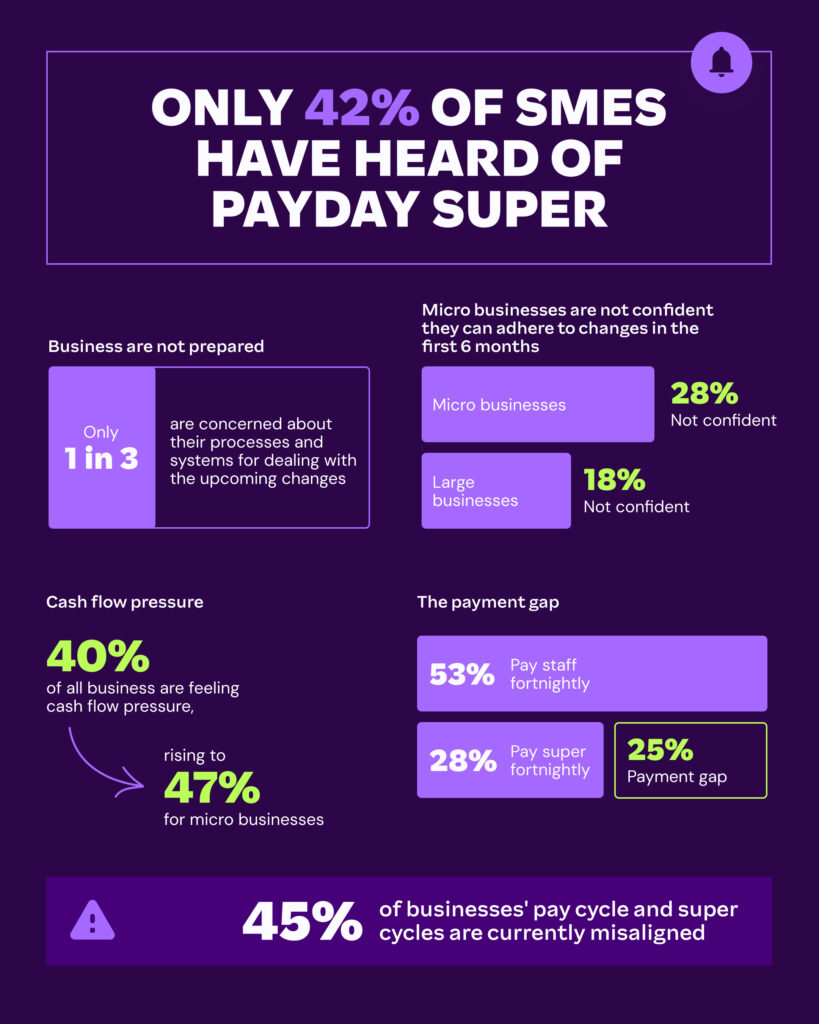
- Almost half (45%) of all businesses will require operational shifts to meet payment frequency rules of Payday Super.
- 75% of employees are paid weekly or fortnightly, but only 39% receive super on the same schedule.
- Timing pressures is the number one perceived impact for businesses.
- Visibility will add further pressure…
+33% projected uplift in employees checking their super at every payday.

System Frustrations
- Frustration lies on both sides… 84% of businesses report at least one frustration with current super processing.
- And most employees don’t find it easy… 68% experience challenges when engaging with their super fund.

Awareness of Payday Super
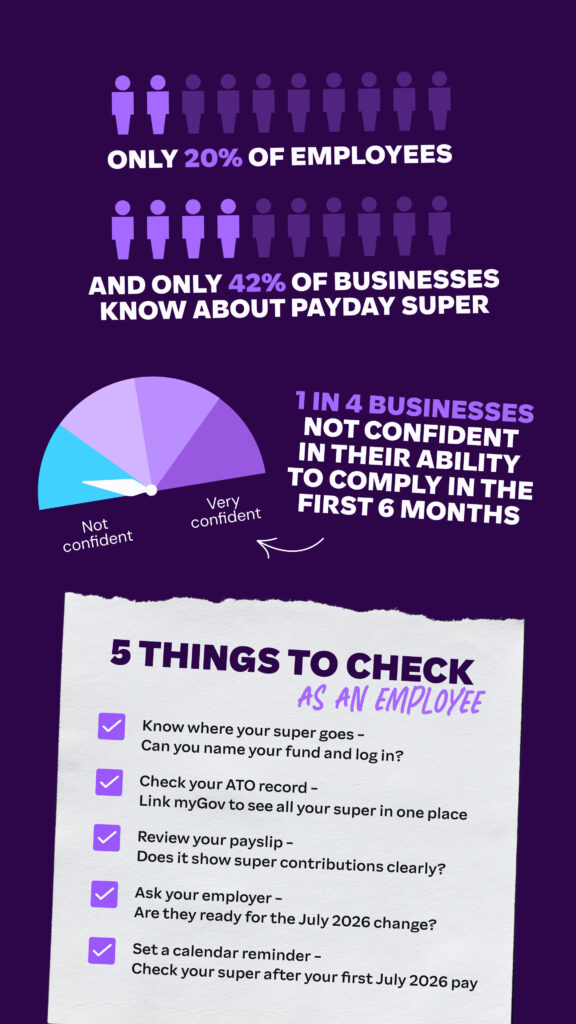
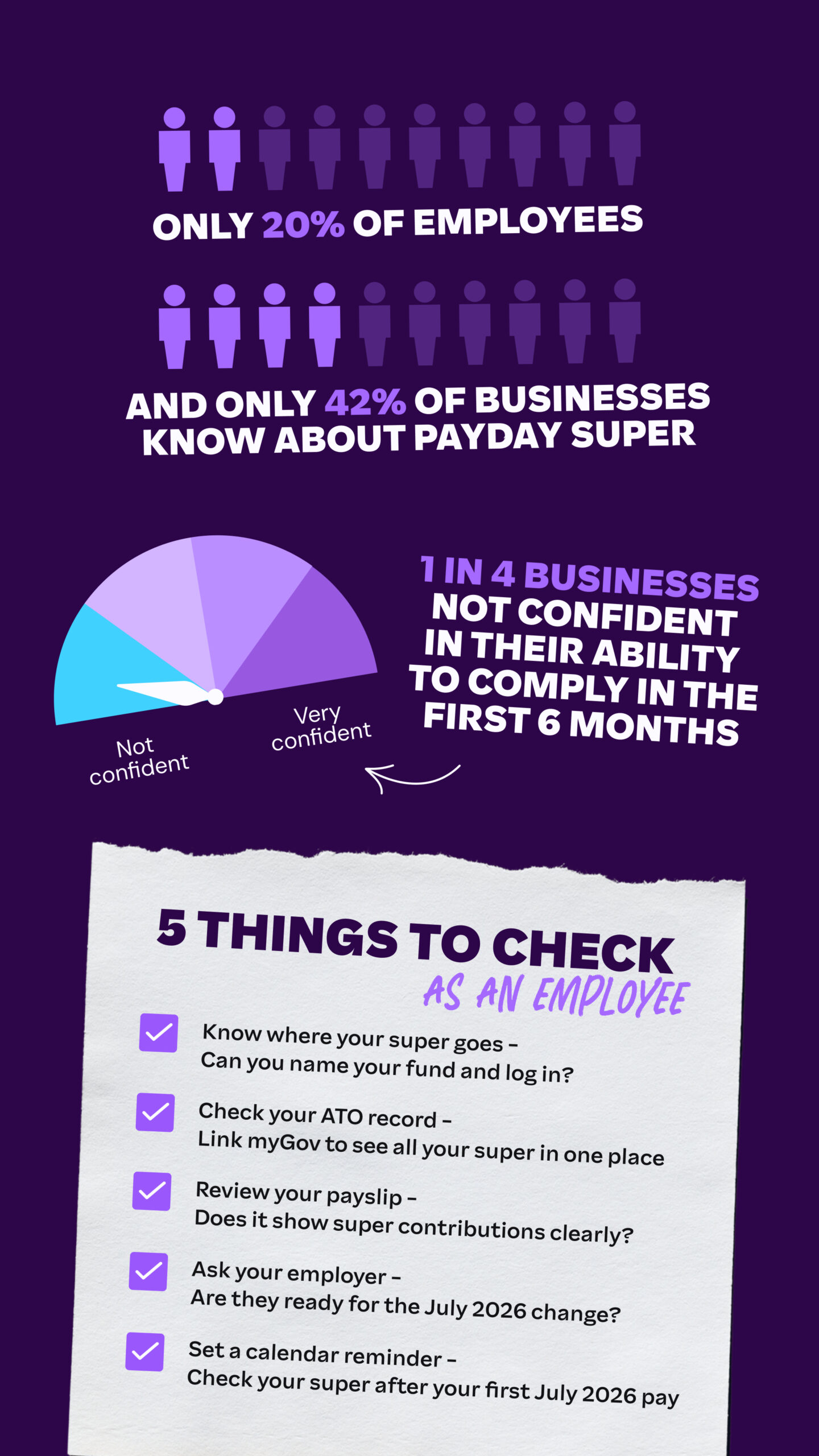
- While changes are coming soon, 58% of businesses remain unaware of Payday Super.
- 80% of employees are not aware of the changes coming under Payday Super.

Download: key visuals and findings
Shareable insights on employee confidence, employer readiness and Payday Super awareness.
SMB readiness
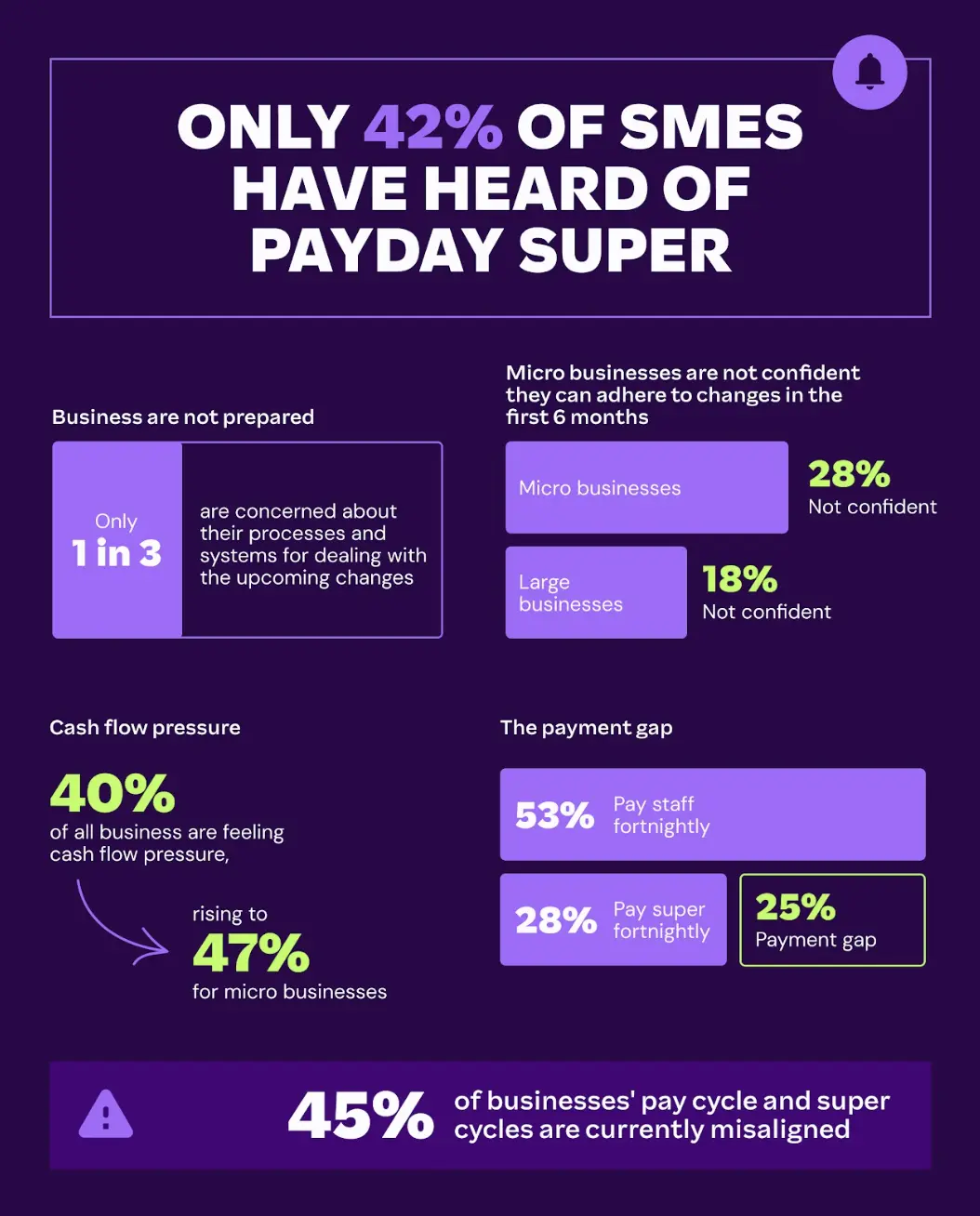
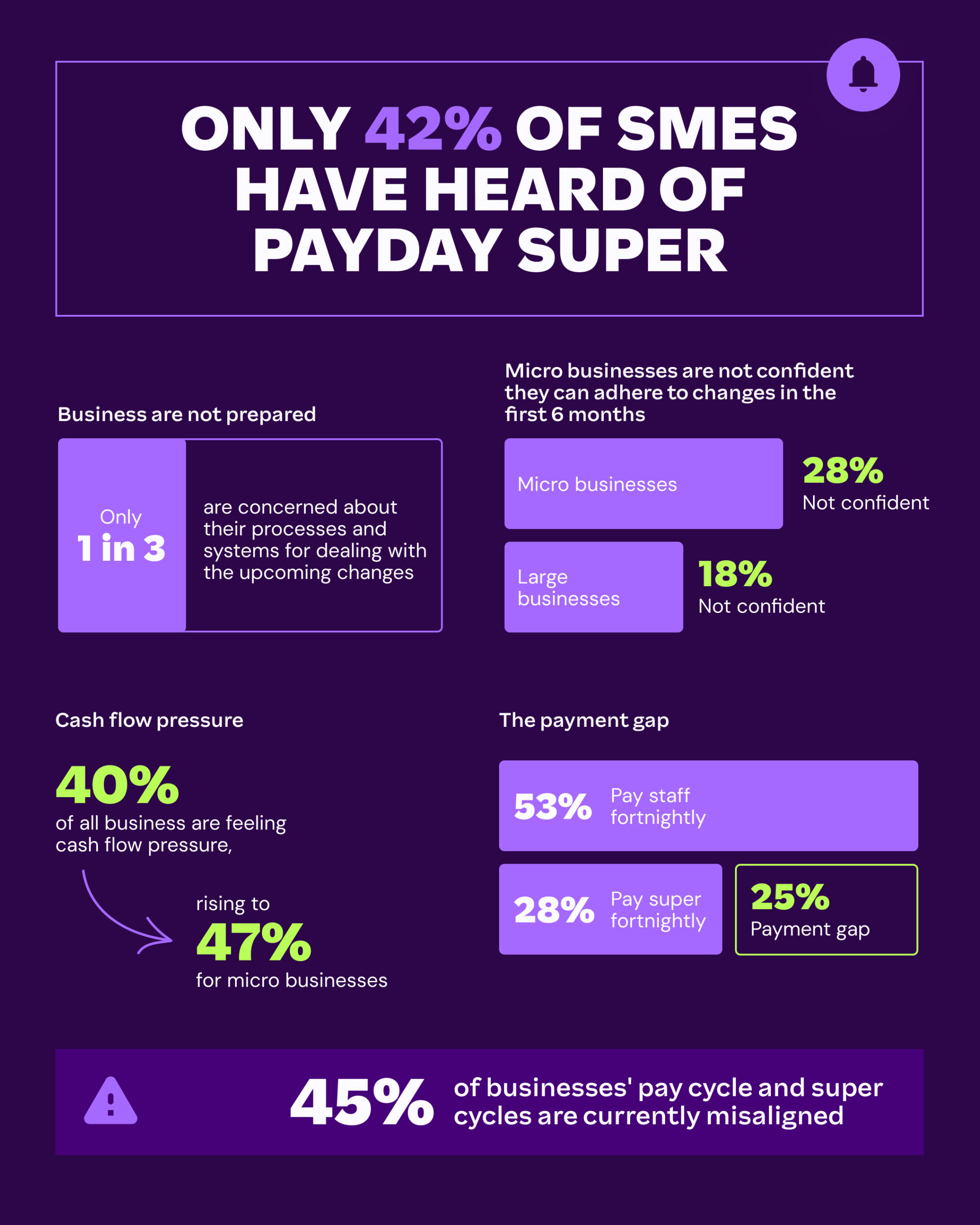
Key stats on Payday Super awareness, preparedness, confidence and the cash-flow/payment gap for SMBs.
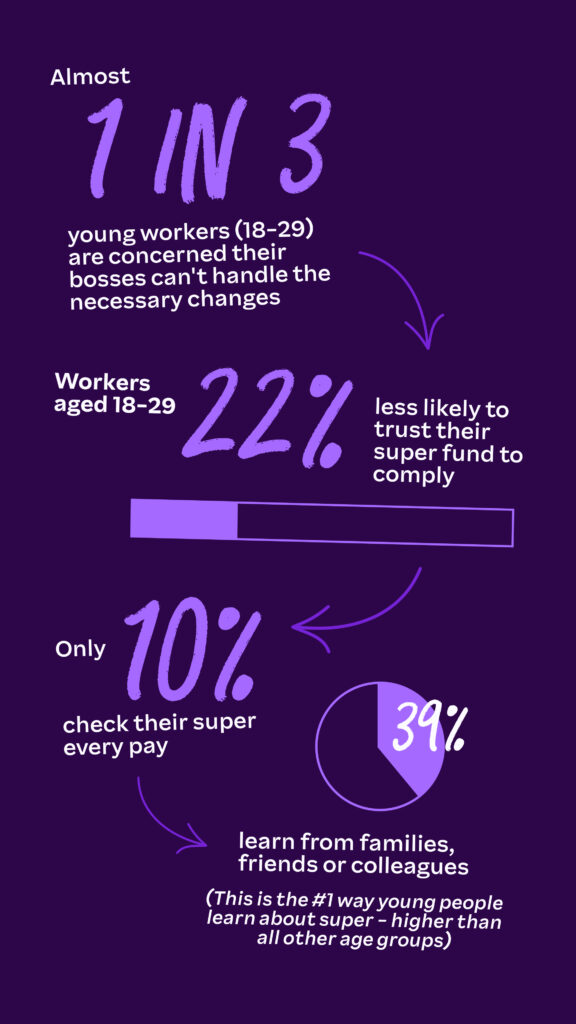
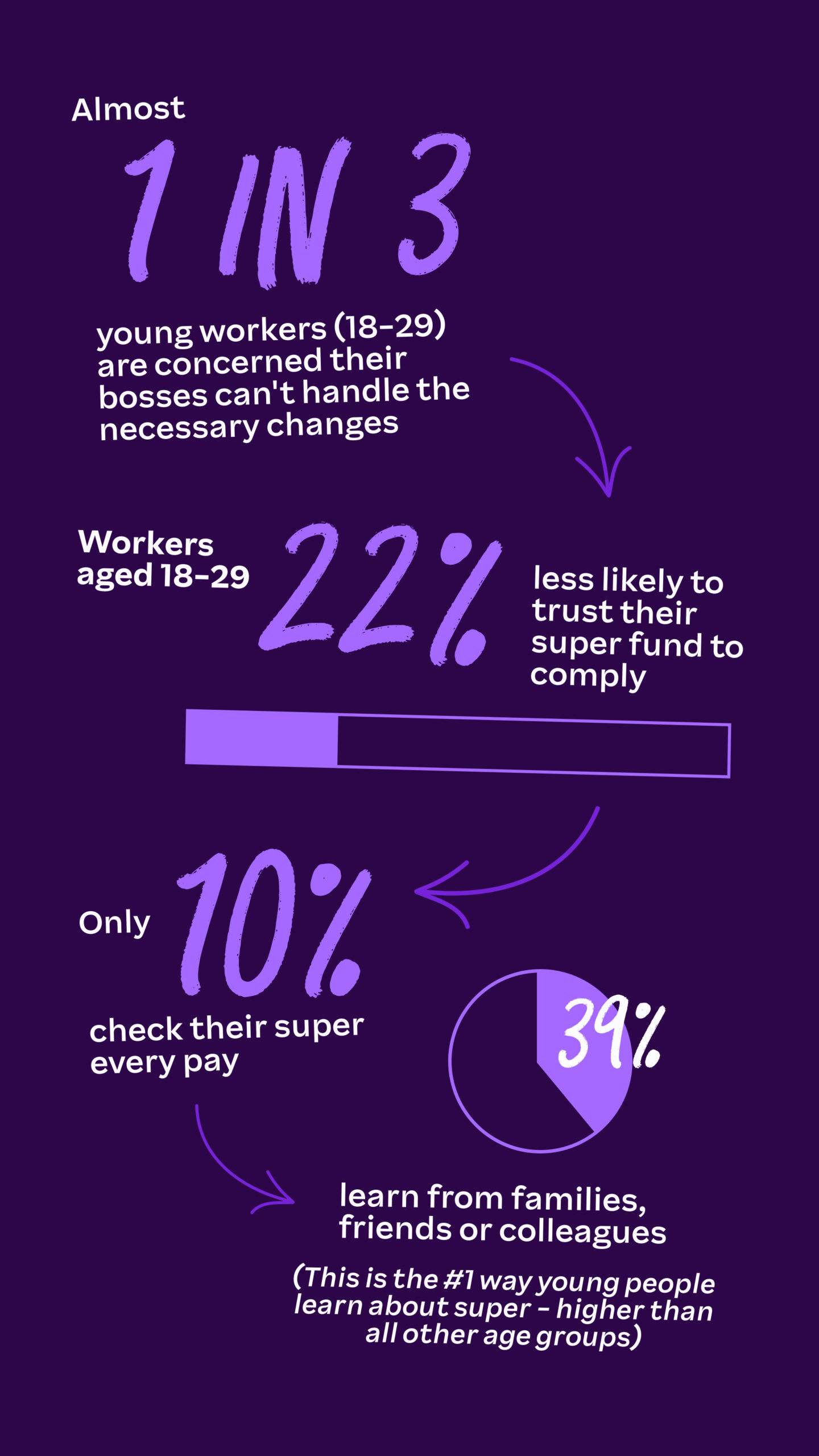
Young Workers
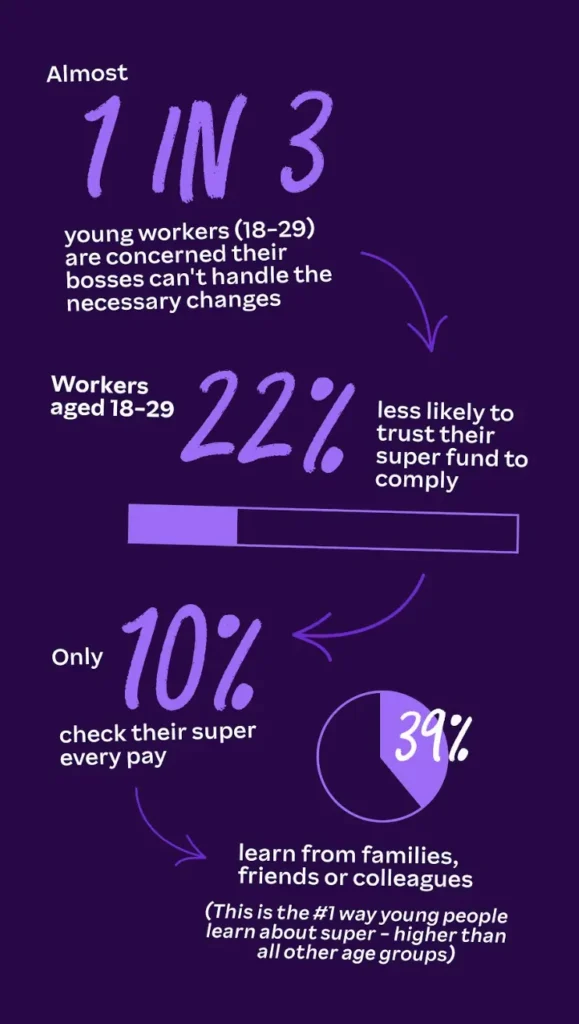
A snapshot of young workers’ trust and understanding of super and how rarely they check contributions each pay.
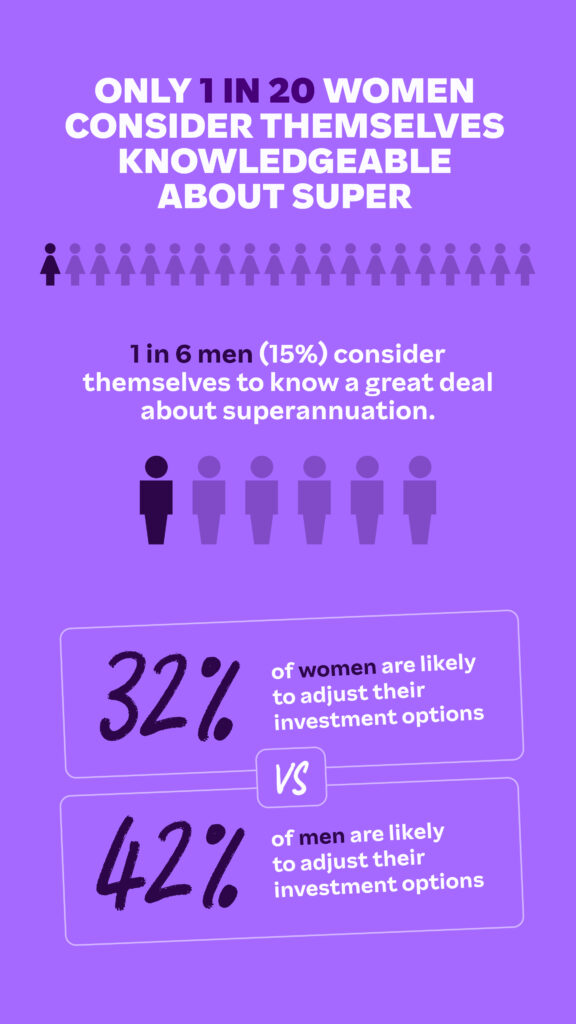
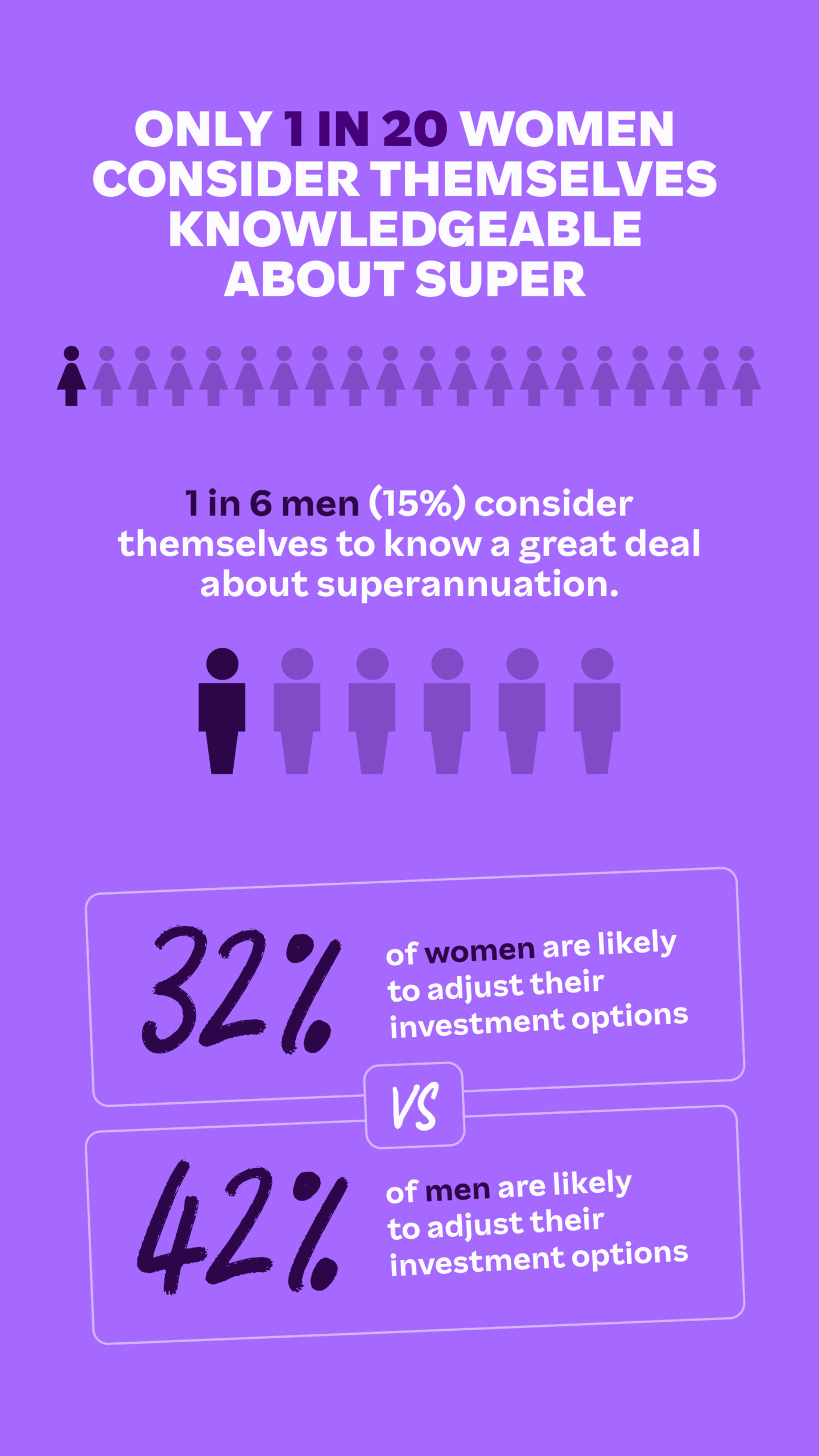
Gender confidence Gap
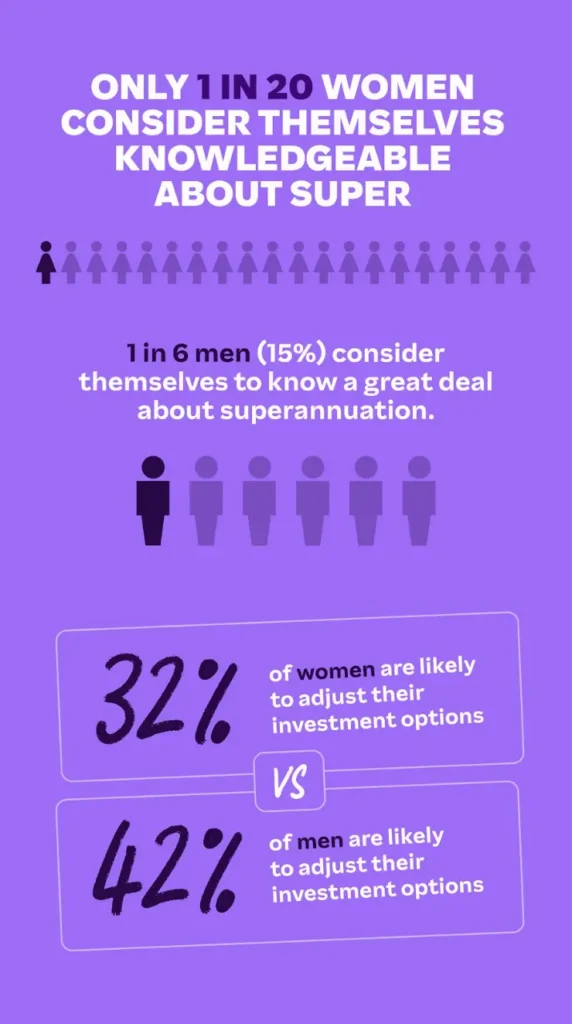
Super knowledge confidence by gender, including reliance on family and friends for information.
Payday Super Checklist
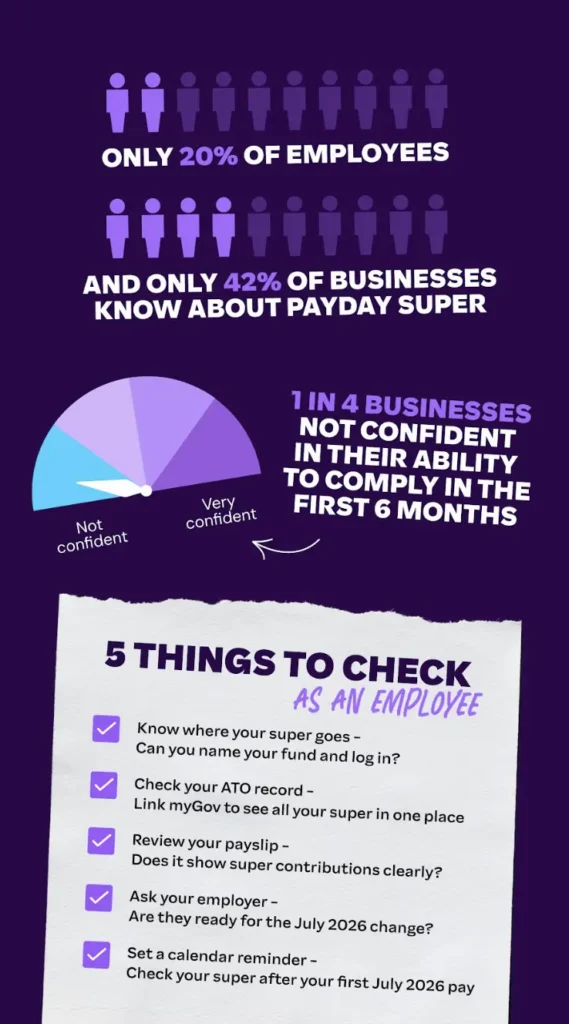
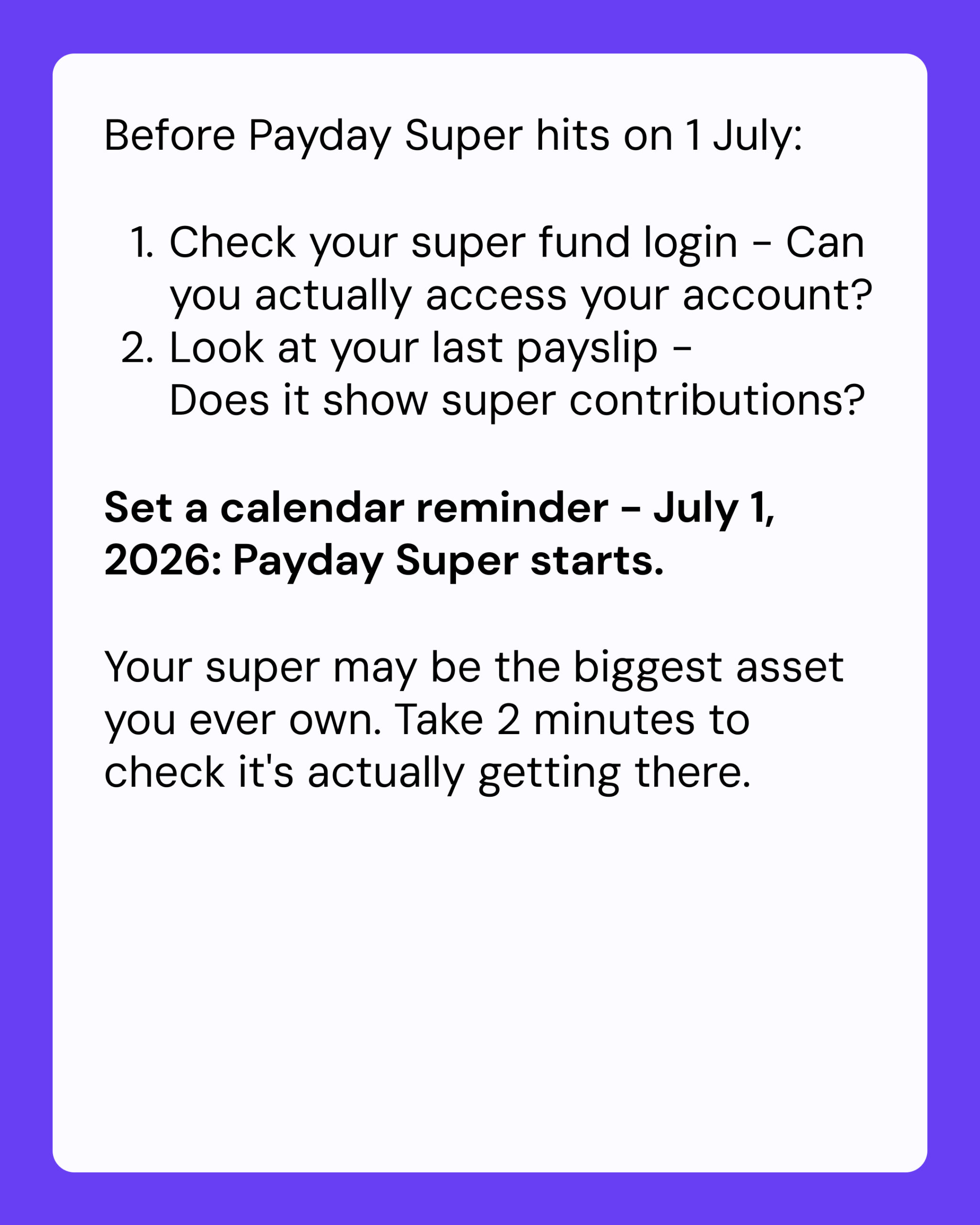
Payday Super awareness and employer confidence, plus a practical “5 things to check” checklist for employees ahead of July 2026
New data backs the cashflow crunch
In Inside the Future of Super: 2026 Report, 40% of businesses state the new super requirements will impact their cashflow to the point they may need a line of credit/financing.
Employment Hero modelling shows the average business could need over $124,000 of additional working capital to meet the new payday super requirements.
Our Payday Super Cashflow Calculator will estimate how much additional working capital businesses may need under Payday Super.
What Payday Super changes
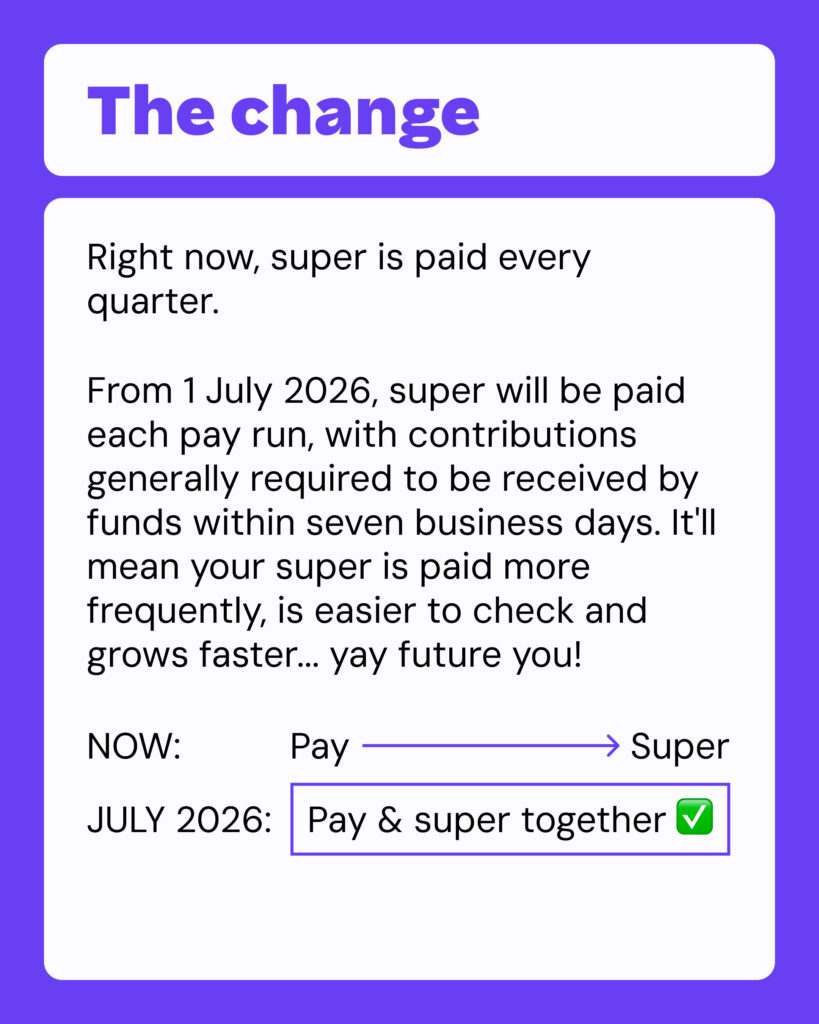
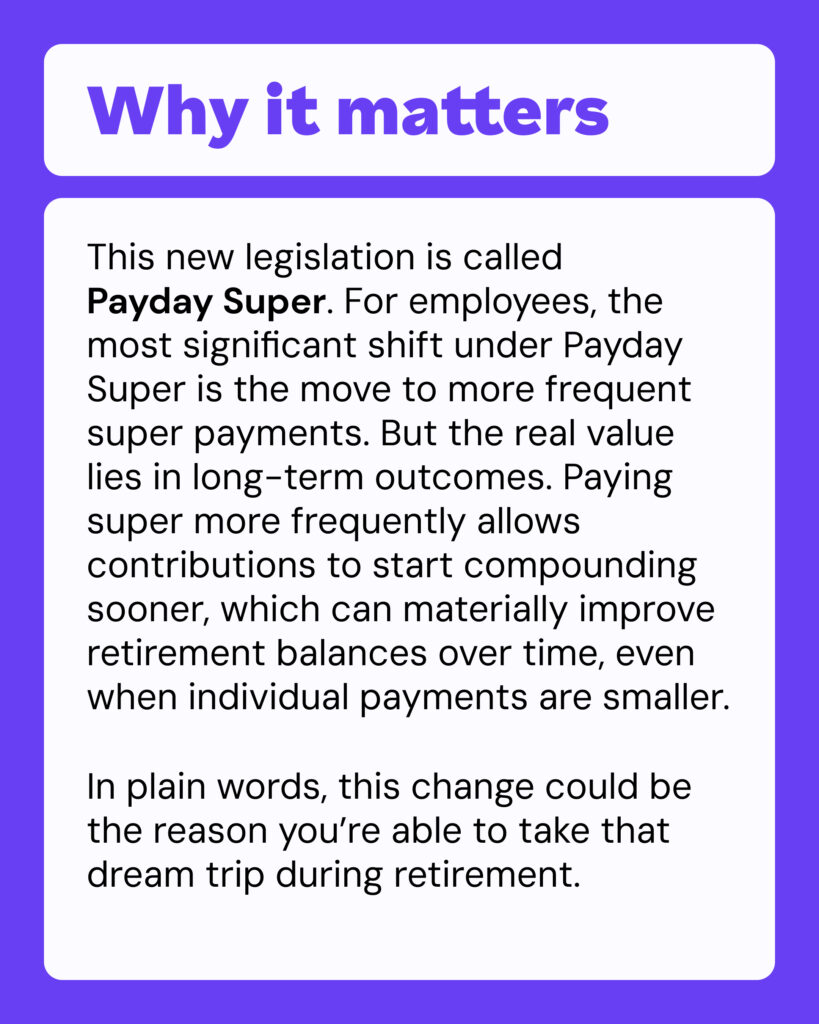
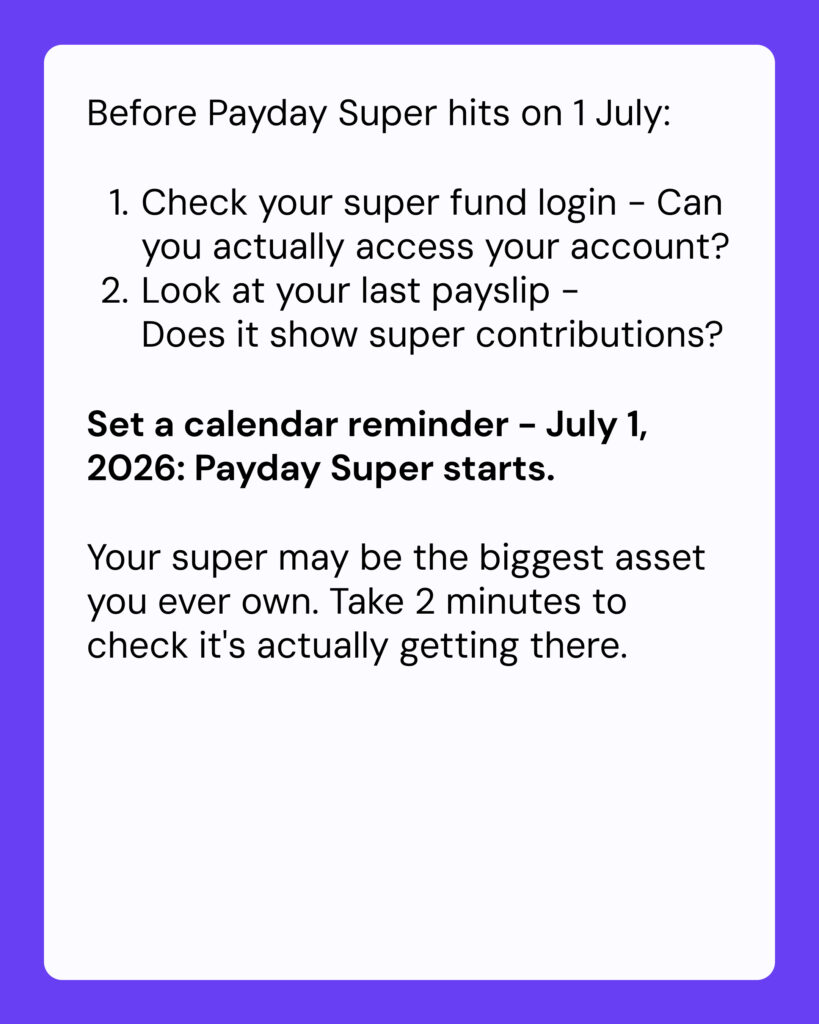
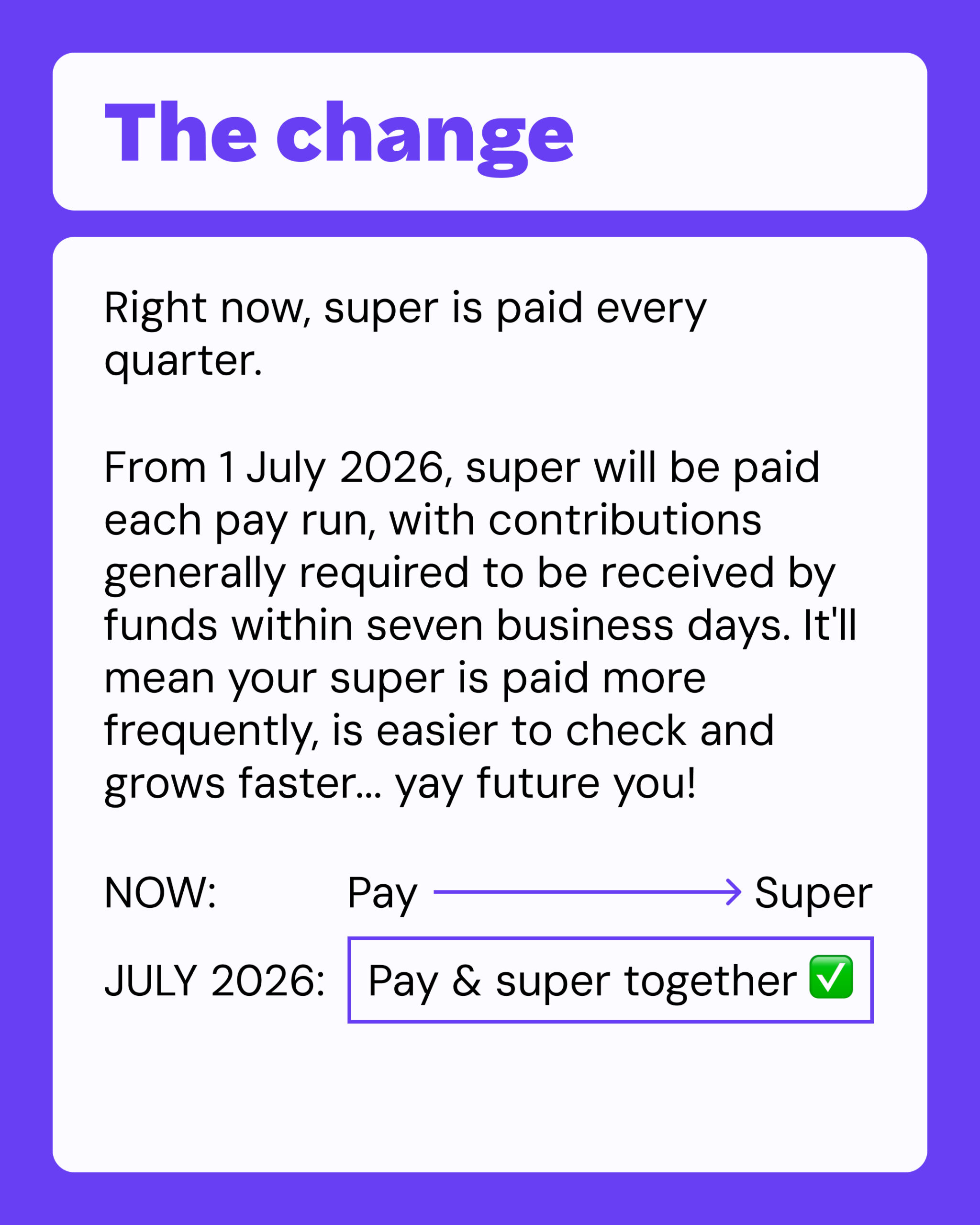
From 1 July 2026, employers will be required to pay superannuation on payday rather than quarterly, with contributions generally required to be received by funds within seven business days. That makes super more frequent, more visible and more time-sensitive, shifting it from a periodic obligation to a core payroll workflow.

Why it matters for employers
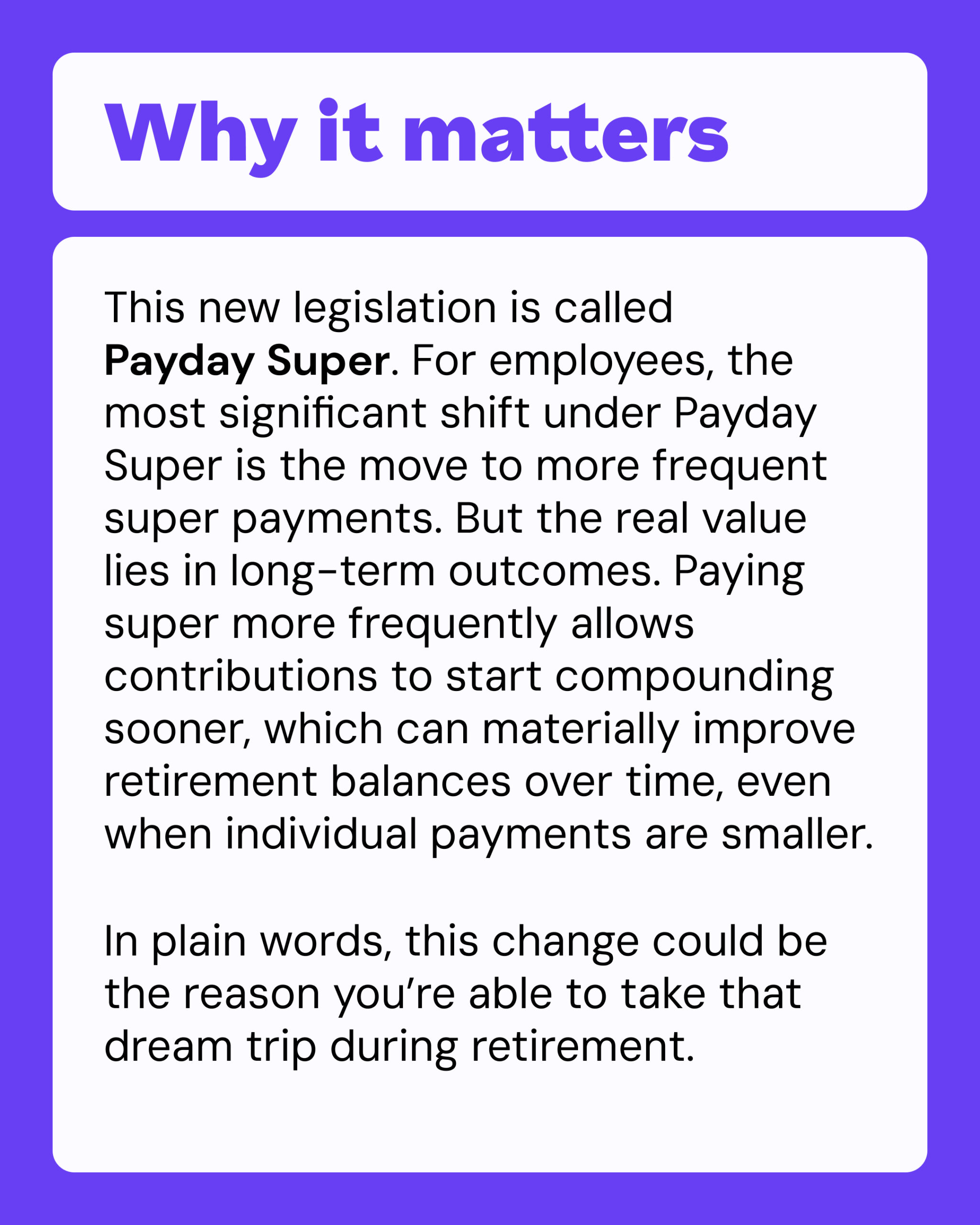
Payday Super tightens the operating environment. Timing becomes tighter, errors become more costly, and scalable payroll workflows become essential. The research found super admin is already under strain, with returned funds due to errors and manual steps among the most common frustrations.

System Frustrations
Today, super often sits in the background and the data shows it. Less than half of employees actively engaged with their super fund in the past year, and only 18% check super every pay cycle. Payday-aligned payments increase visibility at the exact moment people already pay attention: when they’re paid.
What do the experts say?

“At Employment Hero, we’ve spent the past 15 years building technology to make employment easier and more valuable for everyone. As Payday Super approaches, one message is clear: the businesses that move early will be best placed to succeed. That means modernising payroll and super workflows, reducing manual effort and bringing super back into sync with the employment experience, in a way employees can see, understand and trust.
Super can no longer sit in the background. The decisions made now about systems and process design will shape how confidently businesses meet the new requirements and how employees experience super as part of work.”
Ben Thompson, CEO and Co-Founder, Employment Hero

“Payday Super is being introduced with the expectation that all businesses, including small and medium, will move quickly to compliance from day one, even while parts of the super and payroll ecosystem are still being upgraded. At the same time, hundreds of thousands of employers will need to transition off the ATO’s Small Business Superannuation Clearing House ahead of its closure in July 2026.
When you combine that with a projected 60% increase in administrative workload and an average $124,000 cash-flow impact for SMBs, it’s clear this reform represents a significant operational and financial shift for businesses.”
Rob Dunn, General Manager, Superannuation, Employment Hero
What do Australians say?

“Payday Super is the most significant change to Australia’s superannuation system in 30 years. I personally check my super fund every time a payment is made, and I encourage my 230+ staff to do the same – hopefully this change prompts even more people to keep a closer eye on their funds.
Regardless of your views on the policy, as a business leader, you need to understand how it will impact your organisation and what you need to do to stay compliant. HeroClear is brilliant – the manual workload I used to manage is now gone with just a few clicks, and I can close my laptop for the day. I especially like the tracking feature, which makes it much easier to stay on top of compliance, since meeting obligations ultimately depends on when the funds actually receive the payment. With Payday Super on the horizon, it’s a huge relief knowing we’re ready for it.”
Brian Knappstein, Payroll Manager, Purple House

About the Research
This report draws on two bespoke surveys commissioned by Employment Hero and conducted with Quantum Market Research (QMR):
- 500 Australian business decision-makers/users of super payment platforms (organisations with 5–499 employees)
- 1,010 Australian employees actively contributing to a superannuation account. Fieldwork was conducted 4–18 December. Data has not been weighted due to narrow screener parameters and targeted audiences.
For more information, contact press@employmenthero.com
The latest Payday Super news from Employment Hero
-
 Read more: Payday Super factsheet: What employers need to know
Payday Super factsheet: What employers need to know
Learn what Australia’s Payday Super changes mean for your business. Learn how Employment Hero can help you manage super payments…
-
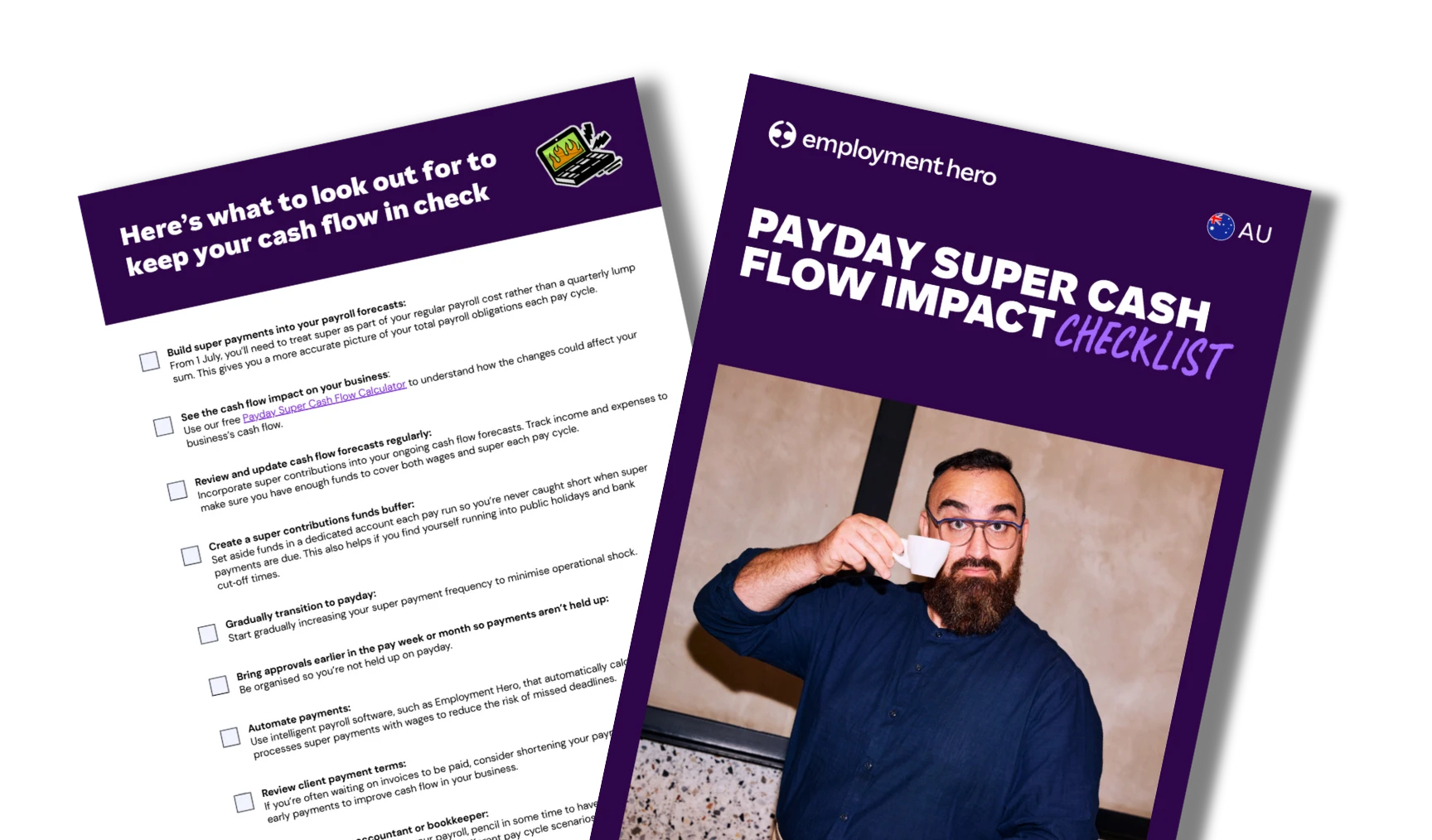 Read more: Payday Super cash flow impact checklist
Payday Super cash flow impact checklist
Businesses will need to strengthen cash flow management and streamline internal processes to meet the new deadlines set by upcoming…
-
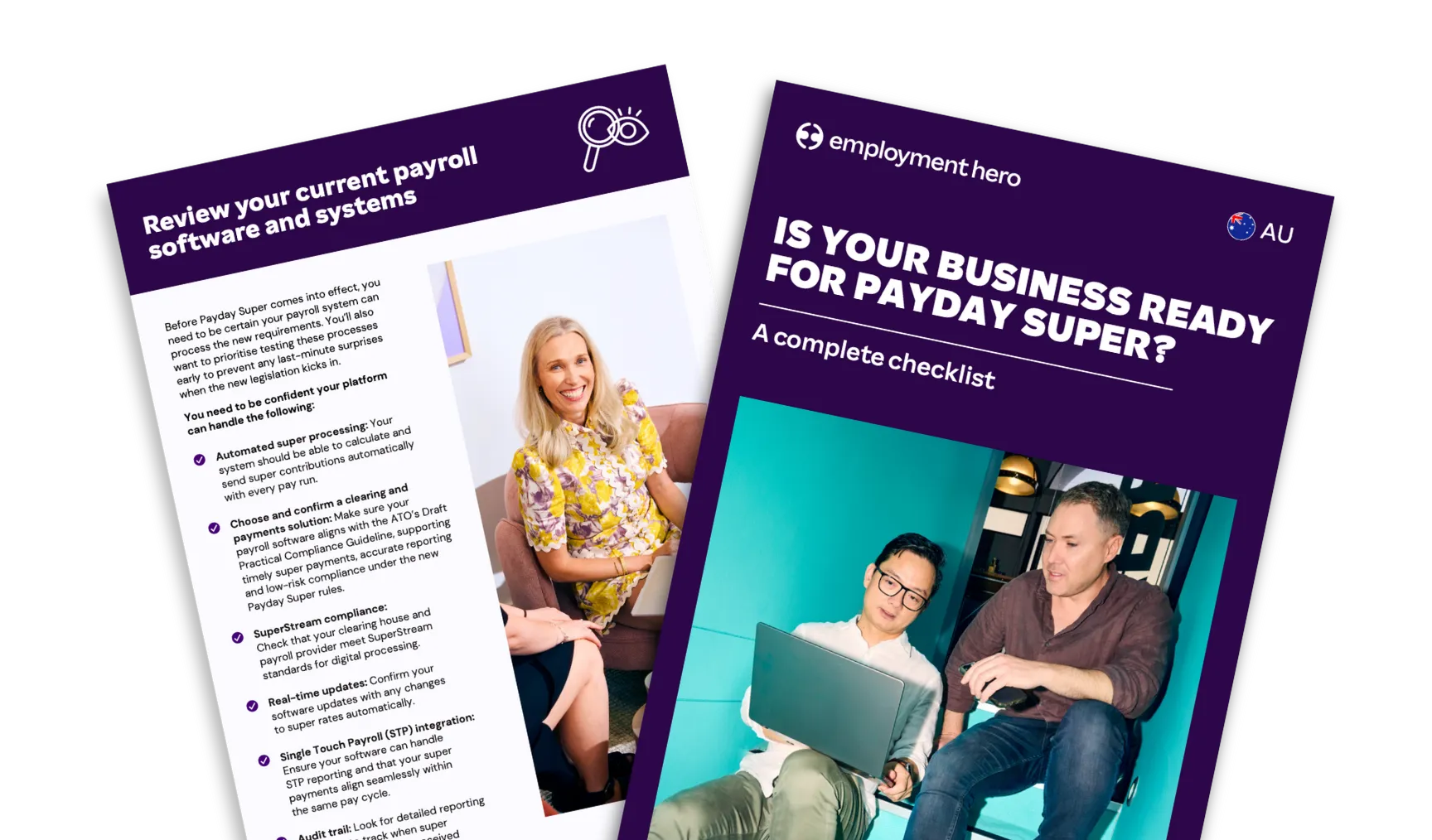 Read more: Payday Super Readiness Checklist
Payday Super Readiness Checklist
Is your business ready for Payday Super? Use our complete checklist to do an audit of your current systems and…