

















Restaurant Industry Award Summary [MA000119]
Published
Restaurant Industry Award Summary [MA000119]
Last Updated
The Restaurant Award is designed to cover employers and their employees who are in the restaurant industry. It applies primarily to businesses operating restaurants, cafés, and similar establishments, and also extends to employees performing roles or occupations listed within the Award’s classifications.
Disclaimer: The information provided in this document is general in nature and is not intended to substitute for professional advice. If you are unsure about how this document applies to your specific situation we recommend you contact Employment Hero for advice. The information in this summary is correct as of November 2025.
Who does this Award cover?
The Award covers employers and employees working in the “restaurant industry”, the Award states this includes:
- Restaurants;
- Cafes;
- Reception centres;
- Night clubs;
- Catering by a restaurant business.
The Award generally does not cover:
- Restaurants connected to hotels, motels or pubs, who are usually covered by the Hospitality Industry (General) Award 2020
- Establishments where food is primarily sold for takeaway, who are generally covered by the Fast Food Industry Award 2010
- Restaurants operated by or connected to registered or licensed clubs, who are generally covered by the Registered and Licensed Clubs Award 2020
- In-flight airline catering and aged care catering services
Classifications
The Award includes a classification structure, set out in Schedule A. This structure is based on the duties and level of responsibility performed by the employee, with each classification linked to a corresponding minimum rate of pay.
Under this framework, an employee cannot be classified higher than Level 2 unless they have obtained the “appropriate level of training”.
The “appropriate level of training” means the employee must either:
- have the relevant qualification required by the Award;
- have been formally assessed by a qualified skills assessor as having equivalent skills.
Note: A Food and Beverage Attendant Grade 2 employee can only be classified at Grade 3 once they have completed an AQF Certificate II relevant to the Grade 3 classification.
The classifications are grouped into streams based on the nature of their role.
Introductory level (all streams)
This level applies to new employees who have no previous restaurant industry experience and are not yet able to demonstrate the skills and competencies required for Level 1 duties.
- The Introductory Level may apply for a maximum of three months, during which the employee receives on-the-job training and supervision.
- At the end of this period, the employee must progress to Level 1, unless the employer and employee mutually agree that additional training is required.
- Where such agreement is made, the Introductory Level may be extended for up to a further three months to allow the employee to achieve the necessary competency.
Food and beverage stream
This stream covers employees engaged in serving food and beverages, including table service, bar work, and related supervisory duties. Junior employees who are involved in supplying, dispensing, or serving liquor must be paid at least the adult rate of pay, with a minimum classification of Level 2. “Serving liquor” includes carrying drinks out to tables, as well as serving at a bar.
Food and Beverage Attendant Grade 1 (Level 1)
This is an entry-level position in the food and beverage stream. Employees at this level work under direct supervision and perform basic support tasks that do not involve direct table service or complex customer interaction.
Typical duties include:
- Collecting and clearing glasses, plates, and cutlery;
- Assisting more senior attendants in service areas;
- Setting and wiping down tables;
- Cleaning and tidying dining or bar areas; and
- Handling or receiving money for basic transactions (e.g. clearing floats or collecting payments).
Food and Beverage Attendant Grade 2 (Level 2)
A Grade 2 employee performs general food and beverage service duties under supervision but has not yet achieved the appropriate level of training required for higher classification. They typically have some customer contact and contribute directly to service delivery.
Typical duties include:
- Supplying, dispensing, or mixing liquor;
- Assisting in the cellar;
- Undertaking general waiting duties for food or beverage service, including clearing and resetting tables;
- Handling cash and processing customer payments;
- Serving at a snack bar or counter;
- Performing delivery duties; and
- Taking reservations, greeting guests, and escorting them to tables.
Note: To move from Grade 2 to Grade 3, a Food and Beverage Attendant must complete a relevant AQF Certificate II qualification or equivalent recognised training.
Food and Beverage Attendant Grade 3 (Level 3)
A Grade 3 employee has obtained the appropriate level of training (for example, an AQF Certificate II or equivalent qualification) and performs food and beverage service duties with a higher level of skill and responsibility. They may also assist in supervising or training less experienced staff.
Typical duties include:
- Supplying, dispensing, or mixing liquor;
- Assisting in cellar operations;
- Performing general waiting duties for food and liquor service, including table clearing and resetting;
- Receiving and processing customer payments;
- Assisting in the training and supervision of food and beverage attendants at lower classifications;
- Carrying out delivery duties; and
- Taking reservations, greeting guests, and managing seating arrangements.
Food and Beverage Attendant Grade 4 – Tradesperson (Level 4)
A Grade 4 Food and Beverage Attendant is a qualified tradesperson who has achieved the appropriate level of training and performs specialised, skilled duties in a fine dining or high-service environment.
This may include the following roles:
- Barista, mixologist, or sommelier;
- Senior waitstaff in premium venues;
- Specialist service roles requiring trade-level competence.
Food and Beverage Attendant Supervisor (Level 5)
A Food and Beverage Supervisor has completed the appropriate level of training, including a recognised supervisory course, and is responsible for overseeing the day-to-day operations of food and beverage service areas.
Typical duties include:
- Supervising, coordinating, and supporting front-of-house or bar staff;
- Training new employees and maintaining service standards;
- Managing rosters and workflow during service periods;
- Monitoring stock levels and controlling inventory for one or more bars; and
- Ensuring compliance with licensing, hygiene, and workplace safety requirements.
Kitchen stream
This stream applies to employees working in food preparation and kitchen operations, including kitchen attendants and cooks at various levels of skill and responsibility.
Kitchen Attendant Grade 1 (Level 1)
A Grade 1 Kitchen Attendant performs general cleaning duties in a kitchen or food preparation area and may assist cooks with basic preparation tasks.
Typical duties include:
- Cleaning cooking utensils, equipment, and general kitchen or restaurant items;
- Assisting employees who are cooking;
- Assembling and preparing ingredients for cooking; and
- Performing general pantry or scullery duties.
Kitchen Attendant Grade 2 (Level 2)
A Grade 2 Kitchen Attendant has the appropriate level of training and performs specialised non-cooking duties in a kitchen or food preparation area, or supervises Kitchen Attendants at a lower classification.
Examples may include:
- Operating specific kitchen equipment or performing specialised preparation tasks; or
- Supervising and coordinating the work of Kitchen Attendant Grade 1 employees.
This level reflects an employee with experience or formal training who undertakes skilled support or limited supervisory duties.
Kitchen Attendant Grade 3 (Level 3)
A Grade 3 Kitchen Attendant has the appropriate level of training, including completion of a supervisory course, and is responsible for coordinating, training and supervising kitchen attendants of lower classifications. This level applies to employees who oversee the day-to-day work of other kitchen attendants and ensure efficient back-of-house operations.
Cook Grade 1 (Level 2)
A Grade 1 Cook performs cooking duties such as the preparation and service of breakfasts, snacks, baking, pastry cooking or butchering. This level generally applies to an employee developing foundational cooking skills under supervision.
Cook Grade 2 (Level 3)
A Grade 2 Cook has the appropriate level of training and performs general cooking duties, including baking, pastry cooking or butchering. This classification reflects a trained cook who works independently across a range of standard food preparation and cooking tasks.
Cook Grade 3 – Tradesperson (Level 4)
A Grade 3 Cook is a qualified tradesperson (commis chef or equivalent) with the appropriate level of training, and is engaged in cooking, baking, pastry cooking or butchering duties. This level applies to a qualified cook who can perform the full range of cooking operations with minimal supervision.
Cook Grade 4 – Tradesperson (Level 5)
A Grade 4 Cook is a demi chef or equivalent who has the appropriate level of training. They are engaged to perform general or specialised cooking, butchering, baking or pastry cooking duties, or to supervise and train other cooks and kitchen employees. This level recognises a qualified and experienced cook who either performs advanced culinary work or takes on a leadership role in training and supervising kitchen staff.
Cook Grade 5 – Tradesperson (Level 6)
A Grade 5 Cook has the appropriate level of training and is a chef de partie or equivalent. They are engaged to perform general and specialised cooking duties and/or supervise and train other cooks/kitchen employees and/or responsible for stock control and ordering. This level applies to senior qualified chefs who manage a kitchen section or team, undertake advanced cooking, and oversee stock control and training.
Administration and clerical stream
This stream applies to employees performing administrative, office, or clerical functions that support the operation of the business. It includes staff undertaking data entry, record keeping, customer service, and payroll through to supervisory roles overseeing other clerical employees.
Clerical Grade 1 (Level 2)
A Grade 1 Clerical Employee performs basic and routine clerical duties such as filing, photocopying, collating, or delivering messages under close supervision. This is generally an entry-level role suitable for employees gaining initial clerical experience.
Clerical Grade 2 (Level 3)
A Grade 2 Clerical Employee handles general office and clerical tasks such as typing, basic data entry, filing, and recording information. They work under limited supervision on routine administrative tasks.
Clerical Grade 3 (Level 4)
A Grade 3 Clerical Employee has the appropriate level of training and performs more advanced clerical duties that require applied knowledge of office procedures and technology. This can include computerised data entry, correspondence, maintaining records, processing accounts, or arranging travel and appointments.
Clerical Supervisor (Level 5)
A Clerical Supervisor has the appropriate level of training, including completion of a supervisory course, and is responsible for the coordination, training, and supervision of other clerical employees. This level reflects an experienced administrative professional overseeing the work and performance of clerical staff.
Storepersons stream
This stream covers employees involved in the receipt, handling, storage, and distribution of goods and stock used in the business.
Storeperson Grade 1 (Level 2)
A Storeperson Grade 1 is responsible for the receipt and storage of general and perishable goods and for cleaning the store area. This is an entry-level classification focused on basic stock handling and store maintenance.
Storeperson Grade 2 (Level 3)
A Storeperson Grade 2 performs the duties of a Grade 1 Storeperson and may operate mechanical lifting equipment (e.g. forklift) or handle more complex store tasks.
Storeperson Grade 3 (Level 4)
A Grade 3 Storeperson has the appropriate level of training and is responsible for supervising staff, coordinating store operations, and implementing quality control procedures.
Security stream
This stream applies to employees engaged to provide security, crowd control, and protection of premises, staff and patrons.
Doorperson/Security Officer Grade 1 (Level 2)
A Grade 1 Doorperson or Security Officer assists in the maintenance of dress standards and good order at an establishment.
Timekeeper or Security Officer Grade 2 (Level 3)
A Grade 2 Timekeeper or Security Officer is responsible for a higher level of security and coordination duties, which may include:
- Managing the timekeeping of employees;
- Maintaining control over keys and access to secure areas;
- Checking delivery vehicles in and out of the premises; and
- Supervising Doorperson or Security Officer Grade 1 employees.
Handyperson stream
This stream covers employees responsible for general maintenance and repair duties to keep the workplace, premises, or equipment in good condition.
Handyperson (Level 3)
A Handyperson is an employee who is not a tradesperson and whose duties include performing routine repair work and maintenance for the employer’s workplace.
Senior managers
The Award does not generally cover senior management responsible for a significant area of the business, including company secretaries, chief accountants, human resource managers, restaurant managers and executive chefs whose duties are not described in the Award.
Types of employment
Employees under the Award can be employed in one of the following categories:
- Full-time;
- Part-time; or
- Casual.
Full-time employment
A full-time employee is engaged to work an average of 38 ordinary hours per week. Employees can be paid per hour or paid a salaried amount (see “Annualised Salaries” below).
Part-time employment
A part-time employee works at least 8 but fewer than 38 ordinary hours per week (or averaged over a roster cycle) and has reasonably predictable hours of work.
At the time of engagement, the employer and employee must agree in writing on two key things:
- The guaranteed number of hours to be provided and paid each week (or over the roster cycle), and
- The specific days and times they are available to work those hours.
For example, a part-time employee might be guaranteed 15 hours a week, with availability on Mondays, Wednesdays, and Fridays between 8:00 am and 4:00 pm. This means the employee must be rostered for at least 15 hours per week, during those specified days and times.
The Award places some clear limits on rostering:
- A minimum shift of 3 hours per day;
- A maximum of 11.5 hours per day;
- At least 2 days off per week; and
- They must not be rostered outside their agreed availability.
If a part-time employee regularly works more hours than they’re guaranteed for at least 12 months, they may request an increase to their guaranteed hours. If the employer agrees, this must be confirmed in writing before the change occurs. If not, the employer must explain the reasonable business grounds for the refusal.
Employees can also change their availability if they have a genuine and ongoing change in personal circumstances, by giving 14 days’ written notice. If the employer can’t reasonably accommodate the change, the original agreement ends, and a new written agreement must be made.
NOTE: Part-time employees who had an existing written agreement about their pattern of work before 1 January 2018 can continue under that arrangement unless they enter into a new written agreement under these updated rules.
Casual employment
A casual employee doesn’t have guaranteed hours of work and typically works on an irregular or as-needed basis. They are entitled to a 25% casual loading on top of the base hourly rate. This loading is in lieu of entitlements like annual leave, personal/carer’s leave, redundancy pay and notice of termination.
Casual employees:
- Must be engaged for at least 2 consecutive hours per shift;
- Can work a maximum of 12 hours per day;
- Can work up to 38 hours per week, or an average of 38 hours over a roster cycle (which can’t exceed 4 weeks);
- Must be paid at the end of each engagement, unless there’s an agreement in place to be paid weekly or fortnightly.
If a casual employee works beyond 12 hours a day or in excess of 38 hours per week (or the rostered average), they must be paid overtime rates as prescribed in the Award.
Casual conversion
From 26 February 2025, the process for casual conversion changed so that employees (not employers) are responsible for initiating conversion to permanent employment.
Casual employees will be able to request conversion in writing if they have been employed for at least 6 months (or 12 months for small businesses with less than 15 employees) and believe they no longer meet the definition of a casual employee. That might occur because, for example, there is an expectation of ongoing work and they are working regular hours, etc.
Casual Employment Information Statement: Employers must provide casual employees with a copy of the Casual Employment Information Statement before, or as soon as possible after, the employee has started their new job. They also need to provide the employee with the Fair Work Information Statement at the same time.
Annualised wage arrangements
An employer and a full-time employee may enter into a written agreement for the employee to be paid an annualised wage.
The annualised wage must be at least 25% more than the minimum weekly rate for the employee’s classification multiplied by 52.
Once the annualised wage agreement is in place, it may cover one or more of the Award provisions. For example, the employer will not have to pay penalty rates (such as when an employee works in the evening, or on the weekend) and overtime rates (such as when an employee works over 38 ordinary hours in a week), as well as various allowances and annual leave loading. There are certain exemptions to what the annualised salary cannot cover, which are set out in the Award.
The agreement must include outer limits for hours that may be worked without additional payment. In any roster cycle of up to four weeks:
- an average of up to 18 ordinary hours which would attract a penalty rate per week(excluding any hours worked from 10.00pm to midnight), and/or
- an average of 12 overtime hours per week in excess of ordinary hours.
If an employee works hours in excess of these limits, those excess hours are not covered by the annualised wage and must be separately paid at the applicable Award rate.
Each annualised wage agreement must be in writing and specify:
- The annualised wage amount;
- Which Award provisions are covered by the wage; and
- The outer limit number of hours for penalty-rate work and overtime that may be required before extra payment is needed.
An employee (or an employer) will be entitled to terminate an annualised wage arrangement by providing 12 months’ notice (or at any time by mutual agreement). Once terminated, the employee must be paid in accordance with the Award for each hour worked.
A record of all hours worked (including start and finish times and unpaid breaks) must be kept by the employer. The employee must acknowledge in writing (including electronically) that the records are correct for each pay period or roster cycle.
Each 12 months from commencement of the arrangement – or upon termination of employment – the employer must compare the total pay under the arrangement to what the employee would have earned under the Award. If there is a shortfall, the employer must pay it within 14 days.
Even if employees only ever work within the new outer limits, the 25% buffer paid on top of the minimum wage may not cover all Award entitlements if they regularly work on weekends and perform some overtime. Therefore it is likely most employees will be entitled to additional payments as part of the annual reconciliation. Employers should calculate appropriately to minimise the likelihood of shortfalls.
How the Award operates for employees who are paid a salary in excess of the minimum wage plus 25%, and for part-time employees, is complex.
When overtime applies
Full-time and part-time employee overtime
Overtime rates are payable when a full or part-time employee works:
- Outside of their rostered hours;
- More than an average of 38 hours per week over the roster cycle (maximum 4 weeks);
- Over 11.5 hours in any one day, exclusive of unpaid meal break times (or if under 18 years old, more than 10 hours per day);
- More than three 10-hour shifts consecutively without receiving a 48-hour break;
- More than 8 days of more than 10 hours per day in a 4-week roster cycle;
- A broken shift that spans over more than 12 hours in one day or shift.
- For part-time employees engaged before 1 January 2018, overtime also applies for hours worked beyond or outside the employee’s agreed pattern of hours.
When an employee works overtime and is required to start their next rostered shift less than eight hours later:
- The employee may delay the start of the next rostered shift until they have had eight consecutive hours off;.
- If this results in the employee missing some or all of the next rostered ordinary hours, they will not lose pay for those hours;
- If the employee begins or continues work without an eight-hour break, all time worked will be paid at overtime rates until the required break is taken.
For part-time employees, additional hours can be rostered at ordinary rates, provided they are not in excess of the daily or weekly limits above and fall within the employee’s agreed availability.
Where an employee is required to work on a rostered day off, such time will be paid at the relevant overtime rate.
Casual employee overtime
Overtime rates are payable when a casual employee works:
- More than 12 hours per day;
- More than 38 hours per week or where the employee works in accordance with a roster, more than an average of 38 hours per week over the roster cycle (the roster cycle may be up to a maximum of 4 weeks).
Overtime rates
Overtime is paid at the percentage rates listed in the below table, based on when the overtime is worked. These percentages apply to the employee’s minimum hourly rate.
| When Overtime is Worked | Overtime Rate (% of minimum hourly rate) |
| Monday to Friday – first 2 hours | 150% |
| Monday to Friday – after 2 hours | 200% |
| Saturday – first 2 hours | 175% |
| Saturday – after 2 hours | 200% |
| Sunday – all hours | 200% |
| Rostered day off – all hours | 200% |
Note: All employees receive overtime rates calculated on the permanent employee’s base rate of pay i.e. casual employees do not receive a casual loading on top of overtime rates of pay.
Time off in lieu instead of payment for overtime
An employer and employee may agree in writing to an employee taking time off instead of being paid for a particular amount of overtime work. The period of time off that an employee is entitled to take is equivalent to the payment they would have received for overtime hours worked. For example; an employee who worked 2 overtime hours at ‘time and a half’ is entitled to 3 hours off.
This time off must be taken within six months of when the overtime was worked, and at a time agreed between the employee and employer. If the employee requests to be paid for the overtime instead, the employer must pay it at the correct overtime rate in the next pay period. If the time off hasn’t been taken within six months, the employer must pay the employee for the overtime worked.
Employers must not pressure employees into agreeing to take time off instead of being paid. If the employee’s job ends before the time off is taken, the employer must pay out the overtime at the applicable rate. It is also unlawful to make false or misleading statements about an employee’s rights under this clause.
Penalty rates
When an employee works ordinary hours on the following days, they are entitled to the following penalty rates:
| Type of Employment | Mon to Fri | Saturday | Sunday | Public holidays |
| Full-time and part-time | 100% | 125% | 150% | 225% |
| Casual Introductory Level,Level 1, Level 2(inclusive of 25% casual loading) | 125% | 150% | 150% | 250% |
| Casual Level 3 to Level 6(inclusive of casual 25% loading) | 125% | 150% | 175% | 250% |
Additional penalty payments apply in the following circumstances:
- Weeknights (10:00 pm – midnight, Mon–Fri)
- Extra $2.81 per hour on top of the standard rate (figure correct as of 1 July 2025, will increase on 1 July 2026).
- Early mornings (midnight – 6:00 am, Mon–Fri)
- Extra $4.22 per hour on top of the standard rate (figure correct as of 1 July 2025, will increase on 1 July 2026).
Full-time and part-time employees who work a split shift (two distinct work periods of at least two hours each, with a break in between) are entitled to a split shift allowance per shift. If two split shifts are worked in one day, the allowance is paid twice.
Public holidays
Full and part-time employees who work on a public holiday are usually entitled to a 225% penalty rate. They may, by agreement with the employer, receive a 125% penalty and a paid day off in lieu instead of the 225% penalty rate.
Casual employees are paid a 250% penalty rate.
Employees who work on a public holiday must be paid for a minimum shift length – 4 hours for full-time and part-time employees, and 2 hours for casuals. If the shift extends immediately before or after a part-day public holiday, those hours count toward the minimum engagement period.
An employee being paid an annualised salary that is required to work on a public holiday will be entitled to a day off in lieu, or a day added to their annual leave entitlement, in addition to receiving their normal salary.
Permanent employees that are not required to work on a public holiday (due to venue closure or because the public holiday falls during a period of annual leave) will receive their ordinary rate of pay for the day of work, and no deduction from their leave balance. If a part-time employee would not normally work on the day of the week that a public holiday falls, they will not be entitled to payment.
Full-time employees (hourly and salaried) whose rostered day off* falls on a public holiday must:
- be paid an extra day’s pay;
- be provided with an alternative paid day off within 28 days; or
- receive an additional day’s annual leave.
Note: *A rostered day off means any day the employee is not rostered to work (i.e. it does not mean a day off as part of an “RDO system”).
Breaks
Breaks must be provided as below and apply to all employees, unless otherwise specified.
| Scenario | Break Entitlement | Timing of Break |
| Employee working a shift of five or more hours | Unpaid 30-minute meal break. | No earlier than 1 hour after starting work and no later than 6 hours after starting work. |
| Unpaid breaks rostered to be taken after 5 hours of starting work OR employee required to work more than 5 hours after an unpaid break. | Additional paid 20-minute break. | If an unpaid break is rostered to be taken after 5 hours, the additional paid break must not be taken earlier than 2 hours after starting work and no later than 6 hours after starting work. |
| Permanent employee required to work more than 10 hours in the day | 2 additional 20-minute paid breaks. | In rostering for these breaks, the employer must make all reasonable efforts to ensure an even mix of work time and breaks. |
| Employee required to work more than 2 hours overtime after completion of the employee’s rostered hours | Additional paid 20-minute break. | There are no set out provisions for when this break needs to be taken, this can be by agreement between the employer and employee. |
An employer and employee may agree that an unpaid meal break is to be taken after an hour of work and within the first 6.5 hours. This is called a facilitation agreement. It must be made after the start of the employees shift and within 5 hours of starting their shift. The employee or employer can withdraw from this agreement within the first 5 hours of the shift.
If the employee is not given an unpaid meal break after 6 hours, the employer must pay the employee 50% of the employee’s ordinary base rate of pay until either the meal break is given or the shift ends.
If the employee was told the time of their unpaid meal break was due to be given, but it is not given at that time, the employee must pay 50% of the employee’s ordinary base rate of pay from the time the unpaid break was due to commence.
Payment of wages
The employer may determine the pay period of an employee as being either weekly or fortnightly. However, the employer and an individual employee may agree to a monthly pay period.
Leave and annual leave loading
Annual leave
Under the National Employment Standards (NES), permanent employees are entitled to four weeks of paid annual leave per year, with entitlements pro-rated for part-time employees.
Employees who are 7-day shiftworkers regularly rostered to work on Sundays and public holidays in a business that operates 24/7 are entitled to an additional week of annual leave (i.e. five weeks total).
Annual leave loading
Employees must be paid an additional 17.5% loading on their usual rate of pay when taking annual leave. This also applies to any unused annual leave paid out on termination.
Note: If an employee is paid above the Award rates, they are entitled to receive their higher base rate during periods of annual leave.
Cashing out annual leave
Employees may cash out annual leave if the following conditions are met:
- There is a written agreement for each instance of cashing out;
- The employee must retain a minimum of 4 weeks accrued leave after cashing out;
- A maximum of 2 weeks may be cashed out in any 12-month period;
- The employee must be paid at least what they would have received had they taken the leave;
- The employer must keep a record of the agreement.
Annual leave in advance
Employees and employers can agree (in writing) for annual leave to be taken before it is accrued. The agreement must outline:
- The amount of leave to be taken in advance;
- The date the leave is to begin; and
- Must be signed by both parties.
If employment ends before the leave has been accrued, the employer may deduct the overpaid amount from final pay.
Temporary shutdowns
Employers may direct employees to take paid annual leave during temporary shutdowns (e.g. over Christmas), provided:
- 28 days’ written notice is given (or shorter by agreement);
- The direction is reasonable and in writing;
- If employees do not have sufficient leave, they may agree to take leave without pay or annual leave in advance of it accruing. They cannot be forced to take leave without pay.
Note: This provision does not apply to casual employees.
Excessive leave accruals
An employee has an excessive leave accrual if they have accrued more than 8 weeks’ of paid annual leave (or more than 10 weeks for shiftworkers).
Where an employee has an excessive accrual, the employer must first attempt to reach agreement with the employee to reduce the excess leave balance.
If no agreement can be reached, the employer may direct the employee in writing to take one or more periods of paid annual leave, provided the following conditions are met:
- The direction must not reduce the employee’s remaining leave balance to less than 6 weeks;
- Each period of directed leave must be at least 1 week in duration;
- The leave must begin no sooner than 8 weeks and no later than 12 months from when the direction is issued; and
- The direction must not be inconsistent with any existing agreed leave arrangements.
Employees with excessive leave may also provide written notice requesting to take one or more periods of paid annual leave, provided the same conditions above are met. The employer must grant the request if it complies with those requirements.
Other leave
The following leave is provided for under the National Employment Standards:
- Personal/carer’s leave: 10 days per year for full-time employees (pro rata for part-time employees);
- Compassionate leave: 2 paid days per occasion for permanent employees;
- Parental leave: Available after 12 months of continuous service;
- Community service leave: Including emergency management and jury duty;
- Family and domestic violence leave: 10 days paid leave per year for all employees.
All employees (including casual employees) will also be entitled to long service leave under relevant state-based legislation.
Notice periods
The Award states that employers must give the notice periods set out in the National Employment Standards when terminating the employment of permanent employees. These are set out below.
| Employee’s period of continuous service with the employer at the end of the day the notice is given | Period |
| Not more than 1 year | 1 week |
| More than 1 year but not more than 3 years | 2 weeks |
| More than 3 years but not more than 5 years | 3 weeks |
| More than 5 years | 4 weeks |
Employees aged 45 years or older who have completed at least two years of continuous service are entitled to one additional week’s notice of termination from the employer.
The notice of termination required to be given by an employee is the same as that required of an employer, except that the employee does not have to give additional notice based on the age of the employee.
If an employee fails to provide the required notice, the employer may make a deduction from the employee’s final pay equivalent to the wages for the notice period not worked of up to one week’s wages. However, if the employer agrees to a shorter notice period, then no deduction can be made.
Deduction from wages
Breakages and cash shortages
No deduction may be made from an employee’s pay for breakages or cash shortages unless the loss resulted from the employee’s wilful misconduct. If a deduction is made, it must be reasonable and proportionate to the actual loss incurred by the employer. For employees under 18 years of age, deductions can only be made if the employee’s parent or guardian agrees in writing.
Inadequate notice of resignation
Where an employee has failed to provide adequate notice in line with the NES, an employer can deduct up to one week of wages from the employee’s final pay, provided it is reasonable and the employee is over 18 years of age. Deductions cannot be made from National Employment Standards entitlements.
Higher duties
Where an employee performs work at a higher classification level for less than 2 hours in any one day, they must be paid at the higher classification rate for the time actually worked.
If an employee performs higher duties for 2 or more hours, they will need to be paid the higher classification for the whole day.
An employer may temporarily direct an employee to perform duties of a lower classification; however, the employee’s rate of pay cannot be reduced as a result.
Allowances
These are some of the commonly used allowances under the Award. For a complete list of all allowances and the specific conditions that apply to each, refer to clause 21 of the Restaurant Industry Award.
| Split- shift (not applicable to casuals) | Paid for each separate work period of 2 hours or more. |
| Meal allowance | The employer must supply an employee with a meal, orpay the meal allowance if an employee is required to work more than two hours of overtime without being notified on the previous day, or if the overtime is cancelled or reduced. . |
| Special clothing allowance (including waterproof or protective clothing) | Employees required to wear special or specific clothing (such as coats, dresses, caps, aprons, cuffs) must be reimbursed by the employer the reasonable cost of purchasing these items – unless they are provided these free of charge. If the employee is responsible for cleaning their special clothing, the employer must cover the cost or pay an appropriate cleaning allowance. For the purpose of this allowance, special clothing does not include shoes, hosiery, or socks, and “black and white” attire. |
| Tool and equipment allowance | Paid where a cook or an apprentice cook is required toprovide and use their own tools (and is not in receipt ofa tool allowance). If an employee is required to buy their own tools or equipment for work (such as knives, utensils, etc.), the employer must reimburse them for the cost. This rule does not apply if the employer supplies the items directly or if the employee already receives a specific “tool and equipment allowance” to cover these costs. |
| Working away from usual workplace – travelling time allowance | An employee who works at a location other than their employer’s regular workplace must be paid for the time they spend travelling to and from that location from their home. This travel time is paid at the employee’s minimum hourly rate. |
| Working away from usual workplace – country orseaside work involving 80km or more of travel | An employer must pay for the cost of an employee’s transport to and from their home to the place of work if all of the following conditions are met:The job requires the employee to travel 80 kilometres or more from their usual workplace.The employee works to the employer’s satisfaction for up to four weeks.The employee is willing to stay for the entire period of the engagement. |
Note: Please note that allowances are regularly updated. Please refer to the Fair Work Ombudsman pay guide for the current rates.
Superannuation
Superannuation rights and obligations are governed by Australian superannuation legislation. Employees generally have the right to select their own superannuation fund for employer contributions. If an employee does not choose a superannuation fund, the employer must make the superannuation contributions to one of the superannuation funds listed in the Award.
An employee may also authorise, in writing, for the employer to deduct a specific amount from their post-tax wages and pay it into the same superannuation fund used for employer contributions.
Subject to the governing rules of the relevant superannuation fund, the employer must also make superannuation contributions:
- while the employee is on any paid leave; and
- for up to 52 weeks of absence due to work-related injury or illness (provided the employee is receiving workers compensation payments or regular payments directly from the employer in accordance with the statutory requirements and remains employed by the employer).
Redundancy
Employers with 15 or more employees must pay the following amount of redundancy pay as set out in section 119 of the Fair Work Act 2009.
| Employee’s period of continuous service with the employer on termination | Redundancy pay period |
| At least 1 year but less than 2 years | 4 weeks |
| At least 2 years but less than 3 years | 6 weeks |
| At least 3 years but less than 4 years | 7 weeks |
| At least 4 years but less than 5 years | 8 weeks |
| At least 5 years but less than 6 years | 10 weeks |
| At least 6 years but less than 7 years | 11 weeks |
| At least 7 years but less than 8 years | 13 weeks |
| At least 8 years but less than 9 years | 14 weeks |
| At least 9 years but less than 10 years | 16 weeks |
| At least 10 years | 12 weeks |
The Award also contains special provisions when an employee is being made redundant, including regarding time off to seek a new job.
Need help applying the Restaurant Award to your business?
Our HR Advisory team is ready to help with advice and support. Whether you’re unsure about pay classifications, rostering rules or managing weekend penalties, our experts can walk you through the details and help you make confident, informed decisions.
We’re here to make sure you understand what the Award means for your team, without the legal jargon.
And if you haven’t already, download your free copy of the Restaurant Industry Award guide. It’s an easy reference to keep on hand whenever you need a clear answer.
Register for the Restaurant Industry Award Summary
Related Resources
-
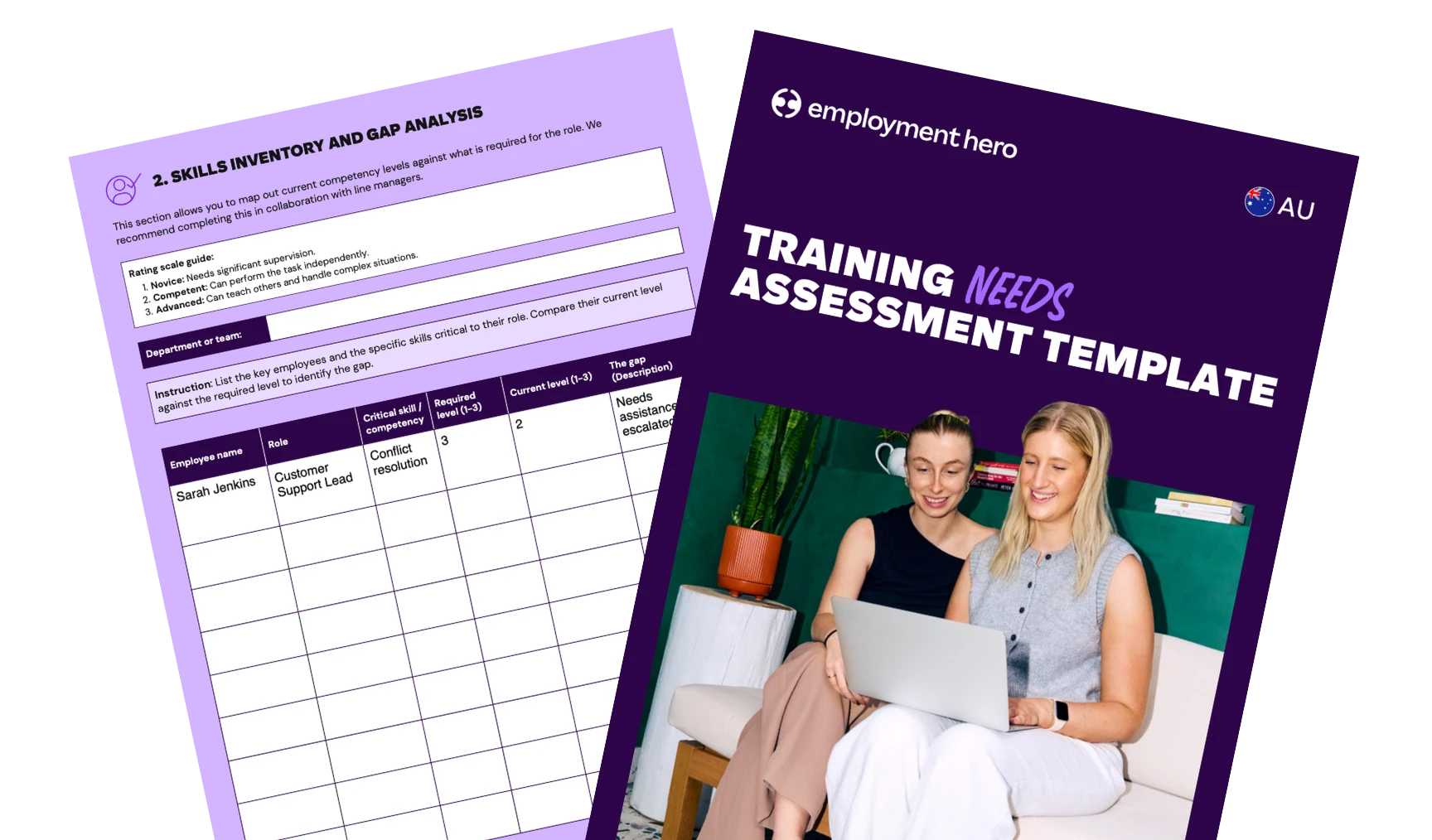 Read more: Conducting a training needs analysis: Free template and guide
Conducting a training needs analysis: Free template and guide
Unlock your team’s potential with a training needs analysis. Learn how to boost employee performance and align training with your…
-
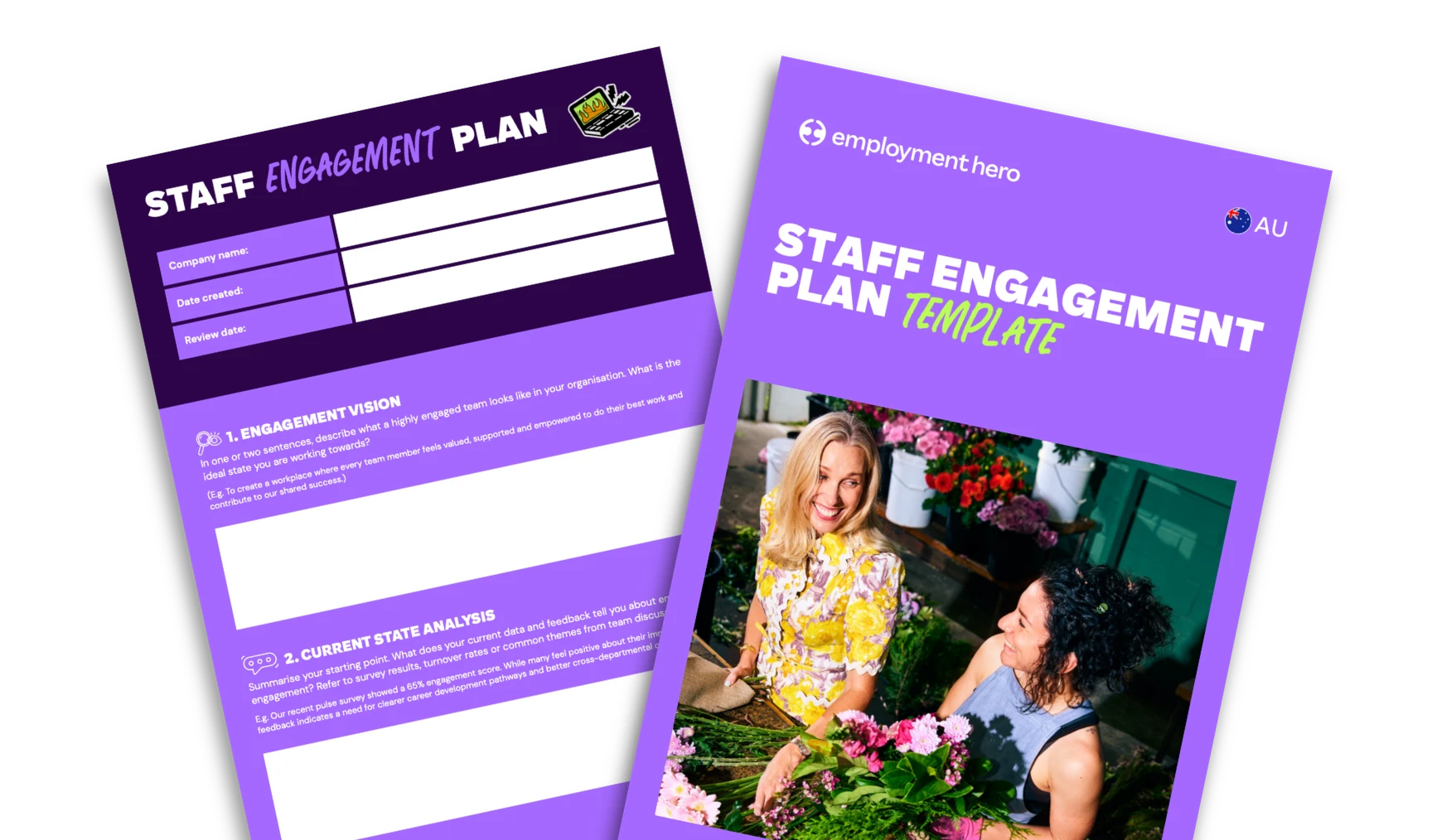 Read more: Staff engagement plan template and guide
Staff engagement plan template and guide
Discover effective strategies for creating a staff engagement plan that drives results. Download our template and guide.
-
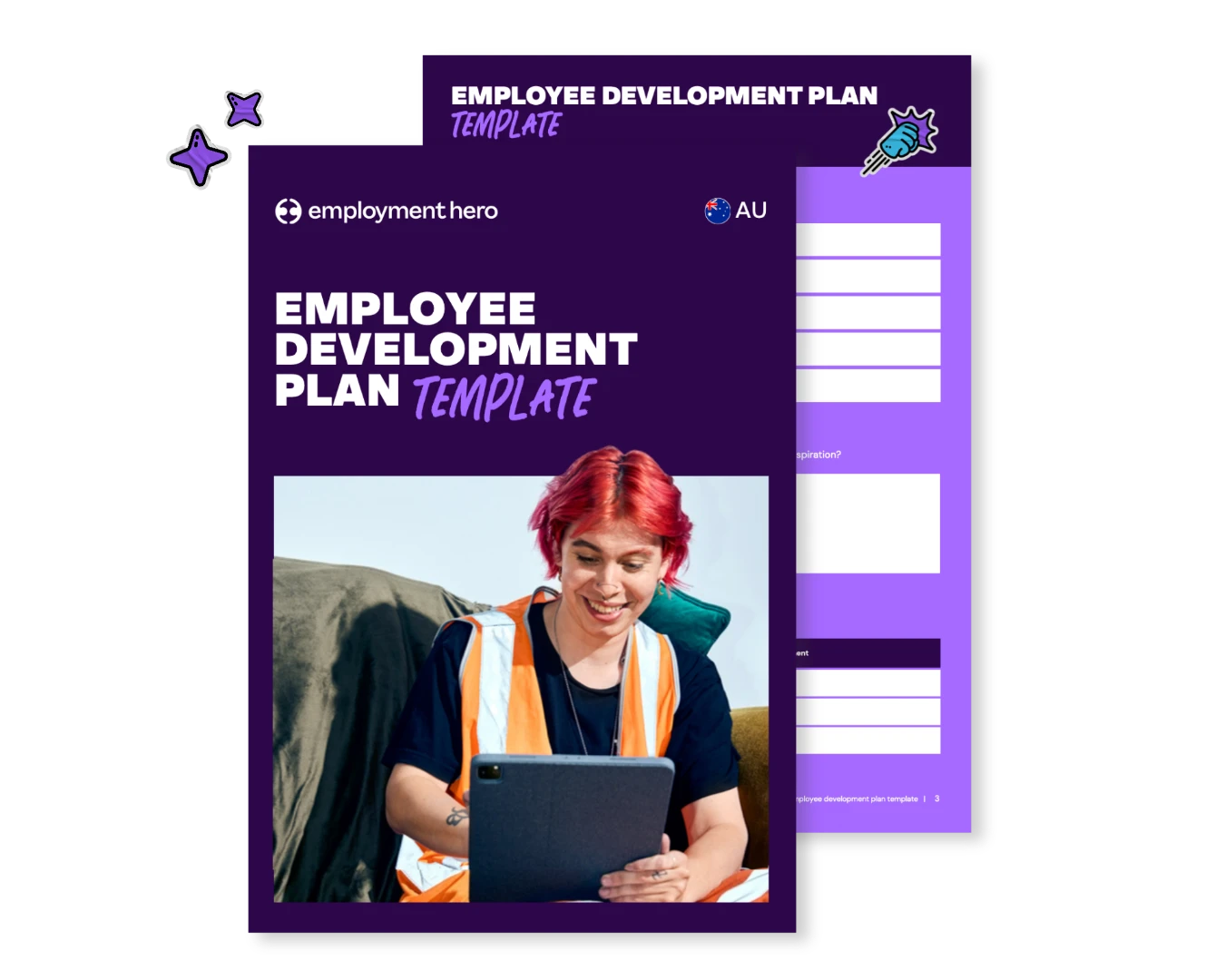 Read more: Employee development plan: Examples and template
Employee development plan: Examples and template
Discover real employee development plan examples, strategic frameworks and a free template to empower growth in your team.


