

















Payday Super factsheet: What employers need to know
Published
Payday Super factsheet: What employers need to know
Published
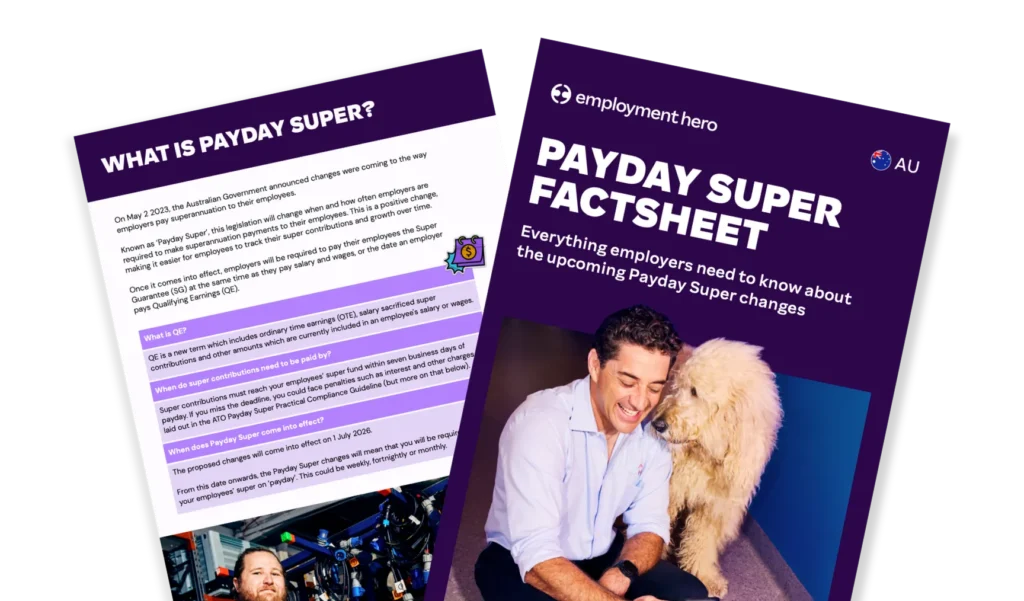
Big changes are coming to the way Australian businesses manage super and it’s time to get prepared. The government’s new Payday Super rules will reshape how employers handle payroll, cash flow and compliance.
This factsheet breaks down what’s changing, why it matters and how your business can stay ahead with confidence.
Download the Payday Super factsheet now for everything you need to know about this important change.

Fast facts about Payday Super
Getting prepared for Payday Super now puts you ahead of the curve. Here are the essentials you need to know.
- What is it? A new requirement for employers to pay superannuation contributions at the same time they pay employee wages.
- When does it start? The change is coming into effect from 1 July 2026.
- Who does it apply to? All employers, regardless of business size or industry.
Start date and rollout timeline
The official start date for Payday Super is 1 July 2026. While that might seem far away, the time to prepare is now. Employers should start adjusting their systems and processes well before the deadline to ensure a smooth switch.
Who does Payday Super apply to?
Payday Super applies to every employer in Australia. If you pay someone a wage, you will need to pay their super on payday. This includes full-time, part-time and some casual employees who are eligible for superannuation. The old quarterly payment cycle is on its way out, making way for a system that’s more immediate and transparent.
Why was Payday Super introduced?
The government introduced this measure for two powerful reasons. First, it tackles the persistent issue of unpaid super. Shifting to payday payments makes it much harder for contributions to be missed or delayed, giving employees greater security.
Second, it boosts retirement outcomes. When super is paid more frequently, it starts earning compound interest sooner, which can add thousands of dollars to an employee’s nest egg over their career.
What employers need to do now
Getting ahead of this change is a power move. It shows your team you’re on top of compliance and committed to doing right by them. Here are three simple, actionable steps you can take today to prepare your business for Payday Super.
Update your payroll systems
Your current payroll system might be set up for quarterly super payments. Now is the time to check if it can handle contributions every pay cycle.
A modern, integrated payroll platform can automate this process, saving you countless hours and removing the risk of human error. Using the right tools takes the compliance burden off your shoulders, freeing you up to focus on other business critical tasks.
Review cash flow and payment schedules
Shifting from quarterly to weekly, fortnightly or monthly super payments will impact your business’s cash flow. Instead of a large lump-sum payment every three months, you’ll have smaller, more frequent outflows. Get in front of this by reviewing your budget and payment schedules now. Planning for these regular payments will help you manage your finances smoothly without any surprises.
To see the impact on your business, visit our Payday Super cash flow calculator here.
Communicate changes with employees
Your team will have questions about what Payday Super means for them. Be proactive and transparent. Let them know you’re aware of the upcoming changes and are preparing for a seamless transition.
This simple act of communication builds trust and reinforces your reputation as an employer who is organised and cares.

Get ready for Payday Super with Employment Hero
The move to Payday Super is coming fast, but Employment Hero has you covered. We’re developing HeroClear, a superannuation tool designed to help employers manage their Payday Super obligations. This tool is currently in development now and will launch before July 2026.
With HeroClear, super compliance will be seamless and stress-free. Super details will be automatically validated upfront, contributions will be calculated and submitted directly from Employment Hero Payroll and payments will be securely drawn from your nominated business account. Every transaction, from payment through to settlement, errors or refunds, will be tracked seamlessly within your Employment Hero platform.
Unlike standalone clearing houses or payment tools, HeroClear will be the only end-to-end solution built directly into your payroll system. That means:
- No file uploads or manual reconciliation, everything is automated.
- Errors are caught before submission, reducing bounce-backs and missed deadlines.
- Payments and reporting happen together, ensuring contributions reach the fund within the ATO’s seven-day rule.
- Full visibility and proof of compliance, detailed histories, confirmations and reports make it easy to show you’ve met your obligations and avoid penalties.
Beyond automation, HeroClear will give you peace of mind, simplifying compliance so you don’t have to worry about missed payments.
Sign up to our Payday Super mailing list to stay updated on HeroClear and get notified when it goes live or get in touch with one of our business specialists to learn how Employment Hero can support your business to prepare for Payday Super.
Download the factsheet now
Download the Payday Super factsheet now for everything you need to know about this important change by filling out the form on the right.
Disclaimer: The information in this checklist is current as at 27 October 2025, and has been prepared by Employment Hero Pty Ltd (ABN 11 160 047 709) and its related bodies corporate (Employment Hero). The views expressed in this checklist are general information only, are provided in good faith to assist employers and their employees, and should not be relied on as professional advice. The Information is based on data supplied by third parties. While such data is believed to be accurate, it has not been independently verified and no warranties are given that it is complete, accurate, up to date or fit for the purpose for which it is required. Employment Hero does not accept responsibility for any inaccuracy in such data and is not liable for any loss or damages arising either directly or indirectly as a result of reliance on, use of or inability to use any information provided in this checklist. You should undertake your own research and to seek professional advice before making any decisions or relying on the information in this checklist.
Register for the factsheet
Related Resources
-
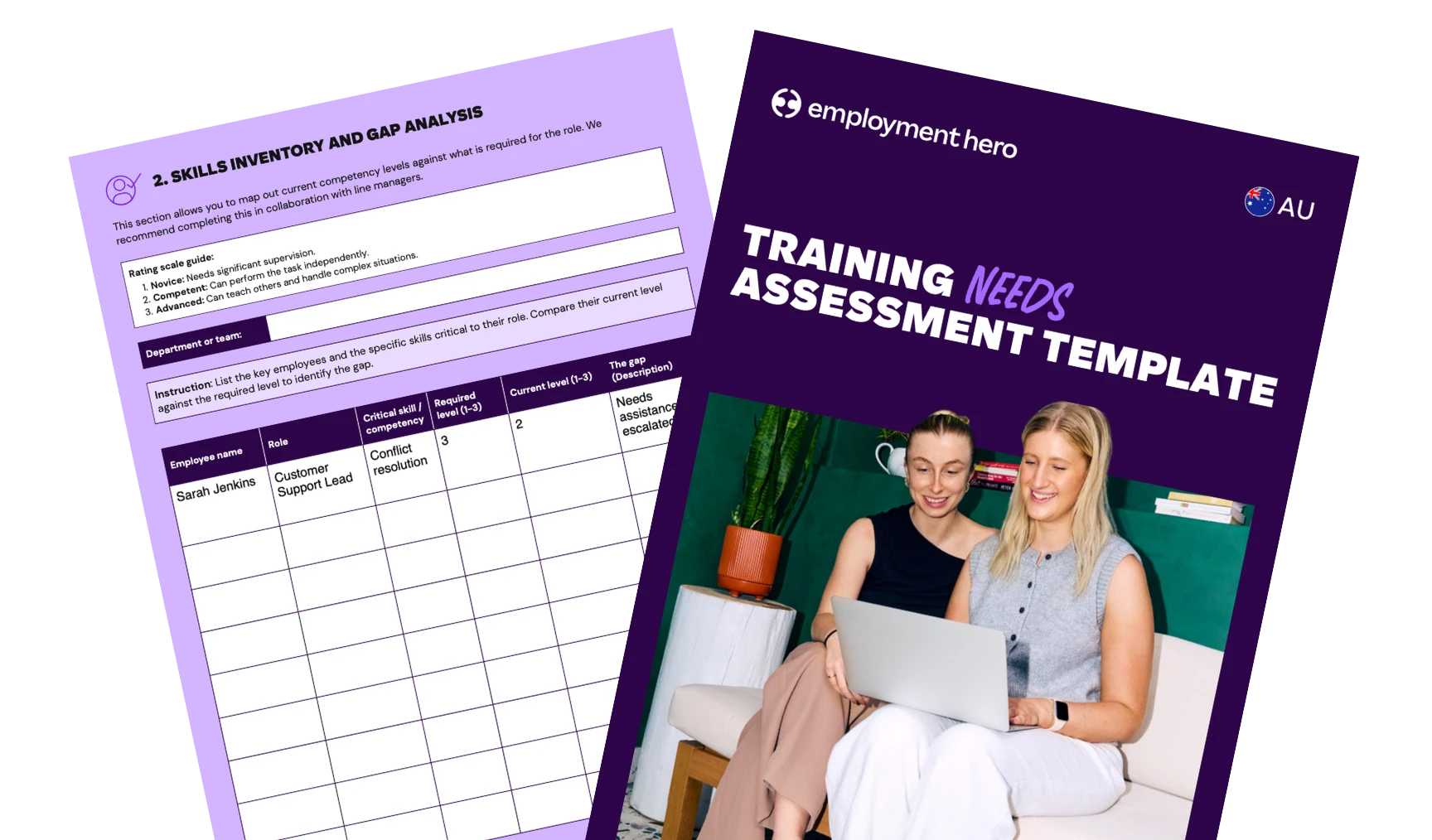 Read more: Conducting a training needs analysis: Free template and guide
Conducting a training needs analysis: Free template and guide
Unlock your team’s potential with a training needs analysis. Learn how to boost employee performance and align training with your…
-
 Read more: Staff engagement plan template and guide
Staff engagement plan template and guide
Discover effective strategies for creating a staff engagement plan that drives results. Download our template and guide.
-
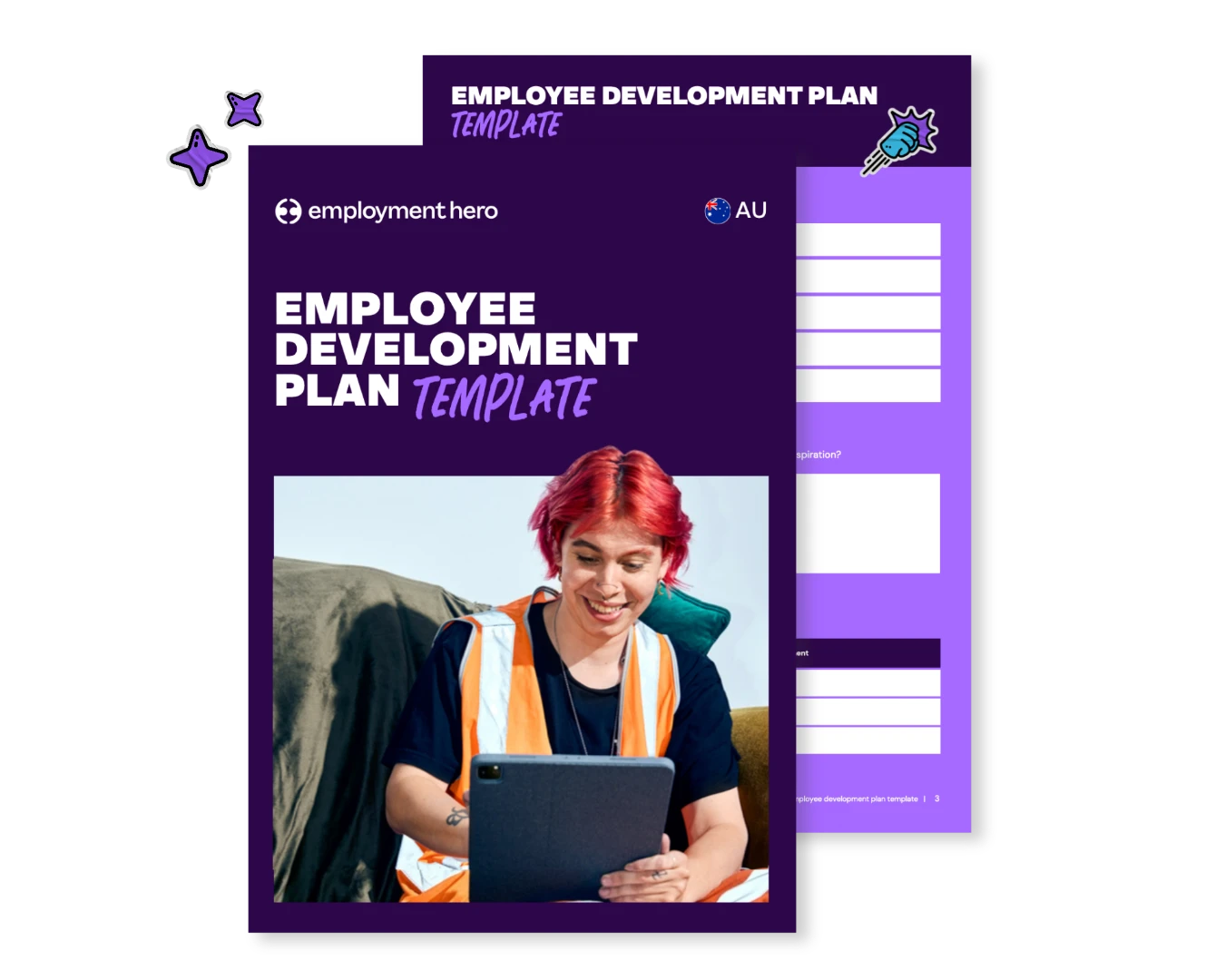 Read more: Employee development plan: Examples and template
Employee development plan: Examples and template
Discover real employee development plan examples, strategic frameworks and a free template to empower growth in your team.

