

















How to hire overseas talent for Australian businesses
Published
How to hire overseas talent for Australian businesses
Don’t let borders limit your growth and hire the world’s best talent.
Published
Stop competing for a small pool of local candidates. Your next great hire could be anywhere. This guide shows you how to break free from local limitations and build a world-class team, no matter where you are.
What is covered in this guide?
Ready to scale your business? This practical guide is built for Australian businesses ready to tap into the global talent pool. We cut through the noise to give you a clear path for building your international team.
What you’ll learn inside:
- The real benefits of hiring globally: Discover how international talent can fill critical skill gaps, drive innovation and give your business a serious competitive edge.
- How to find and attract top performers: Learn proven strategies for identifying and engaging the best people across different markets and cultures.
- How to navigate local laws with confidence: Understand how to manage compliance without the headache. We’ll show you how to handle contracts, benefits and local regulations the smart way.
Why building a global team makes business sense
Global expansion is what often comes to mind when we talk about hiring internationally. That isn’t always the case though, especially in a world where distributed work is now the norm, talent shortages are felt across industries and growth looks less like opening new offices and more like building agile, high-performing teams across borders.
For many Australian businesses, hiring overseas talent allows you to meet existing business needs with greater flexibility, speed and resilience.
Here’s why more companies are tapping into talent across the globe, even without global operations:
- You can access hard-to-find skills faster: Certain roles can take months to fill locally including in engineering, customer success or finance. International hiring opens up specialised talent pools, helping you move faster and stay competitive.
- You gain fresh, diverse perspectives: A team spreads across the globe naturally brings different thinking styles, shaped by culture, lived experience and market exposure. This diversity helps strengthen decision-making, improve customer insight and fuel innovation.
- You extend coverage and collaboration across timezones: Hiring across geographies enables you to support customers in multiple regions, keep work progressing overnight and reduce bottlenecks, without overloading your existing team.
- You reduce payroll pressure without compromising quality: Hiring in regions with lower average salary expectations can help balance budgets, especially when structured thoughtfully around fair, localised compensation.
- You build for long-term flexibility: A global team creates breathing room. It allows you to scale up or down more easily, tap into new markets when needed and avoid being limited by a single hiring market.
When done right, hiring internationally unlocks access to amazing talent, strengthens your team’s capacity and sets your business up for sustainable, scalable growth.
Does the hiring process differ when hiring a global team?
Yes, bringing overseas workers into your team changes the hiring landscape considerably. While the fundamentals remain, you’re still looking for talented people who fit your culture, but international hiring adds new dimensions to navigate.
These include practical challenges like coordination, adapting communication styles to bridge cultural differences and creating cohesive team experiences despite physical distance.
Payroll costs vary significantly by location, as do expectations around employee benefits and work arrangements. Perhaps most critically, each country brings its own complex web of employment laws that require careful navigation to avoid costly missteps.
How should employers stay within local employment laws?
Each country has its own complex regulatory framework that can be the most daunting aspect of hiring overseas. These regulatory frameworks affect everything from contracts and working hours to leave entitlements and termination procedures. What happens if you misclassify workers in Germany? How do Brazil’s holiday requirements differ from Australia’s? What worker protections exist in the Philippines that don’t apply at home?
Start by recognising that employment law varies dramatically between countries, from holiday entitlements and notice periods to termination procedures and mandatory benefits. These aren’t minor differences but fundamental frameworks that shape the employer-employee relationship.
Overseas workers expect and deserve employment arrangements that respect their local legal protections. Taking a methodical approach is essential.
Here’s what you can do:
- Begin with thorough research into the specific requirements of each country where you’re hiring. Focus particularly on classification standards (employee vs contractor), tax obligations, working time directives and mandatory benefits. Document these requirements carefully as they’ll form the foundation of everything.
- Consider working with local experts or employment partners who understand the nuances of each jurisdiction. While this adds to initial payroll costs, it typically proves far less expensive than addressing compliance failures later. These partners can help structure appropriate employment contracts that protect both your business needs and your team members’ rights.
- Review your arrangements regularly as employment laws evolve. Set calendar reminders for annual reviews of each country’s requirements and establish clear channels for overseas workers to raise concerns about their employment terms. This proactive stance helps identify potential issues before they become serious problems.
By taking compliance seriously from the outset, you transform what many see as a barrier into a framework that supports sustainable international hiring and protects both your business and your team.
If that all seems totally overwhelming, you might benefit from an Employer of Record service. Thanks to Employment Hero’s Employer of Record (EOR) service, you can find, onboard, manage and pay your employees no matter where they are in the world. Hire employees and manage great people in over 180 countries.
What are the best ways to attract global talent?
Finding and engaging the best overseas talent requires more than simply posting jobs with a broader geographical reach. It demands thoughtful adaptation of your recruitment approach to appeal across cultures and distances.
Here’s how successful businesses attract exceptional talent from around the world:
Craft globally appealing job descriptions
Job descriptions can make or break intent to apply. Present your business needs clearly while avoiding local jargon or culturally specific references.
Focus on outcomes and impact rather than rigid qualifications. For example, rather than requiring “5+ years in a Big Four firm,” specify the skills you need: “Experience leading complex finance projects with minimal supervision.”
Highlight what makes working with your Australian business unique, whether it’s your mission, culture or the opportunity to work with specific markets or technologies. A tech company might emphasise the chance to develop solutions for the Asia-Pacific market, while a healthcare firm could highlight how their work improves regional health outcomes.
Leverage international recruitment channels
Look beyond familiar local platforms to reach overseas workers. Research which job boards, professional networks and social media channels are popular with your target talent pools in specific regions.
For instance, while LinkedIn works well in many markets, platforms like XING are more effective in German-speaking countries and Glassdoor has strong penetration in North America. Partner with universities or professional associations in key locations as another way to build talent pipelines.
Showcase your inclusive and cross-cultural environment
Global talent wants assurance they’ll be valued team members, not distant afterthoughts. That’s why sharing authentic stories of your existing global team members is key, highlighting how you accommodate different work styles and demonstrate genuine curiosity about diverse perspectives.
For instance, a Melbourne-based company might feature a team member in Manila, Philippines explaining how the company schedules key meetings at times that work across regions, or how they celebrate cultural holidays from team members’ home countries.
Offer competitive, locally-relevant packages
Research what truly matters to employees in your target regions. In some markets, comprehensive health insurance might be critical, while professional development opportunities might have greater appeal in others.
For example, it’s common knowledge that candidates from the US typically prioritise health benefits, while European talent often values generous holiday allowances. In emerging markets, career development and training opportunities can be powerful attractors.
The idea is to structure your employee perks to reflect these priorities while maintaining equity across your team.
Streamline your international hiring process
Respect candidates’ time by designing efficient assessment procedures that accommodate time zone differences. For instance, offer asynchronous initial interviews via recorded video responses or provide flexible scheduling options for live conversations.
Provide clarity about employment arrangements upfront, including work permit requirements and how you’ll handle compliance with local employment laws. Be specific and explain whether you’ll sponsor visas, use an employer of record service, or hire as contractors.
Should policies, employee benefits and salaries follow the business’s location or the employees’?
Balancing local market conditions with company-wide standards presents one of the fundamental challenges when building your global team.
For salaries, consider both local living costs and market rates while making sure team members performing similar work feel valued regardless of location. A clear compensation philosophy that your global team understands is essential.
A landmark decision by FairWork Australia sent ripples through the remote work landscape, particularly for Australian businesses engaging workers overseas. A paralegal working remotely from the Philippines for a Brisbane firm, successfully argued she was an employee and entitled to Australian workplace protections, despite never setting foot on Australian soil. Read our offshore employee compliance guide for more.
Concerned about compliance? There’s a smarter way.
Navigating foreign employment laws is the biggest hurdle for most businesses. Getting it wrong means costly fines and legal risks.
But you don’t have to become a global legal expert. An Employer of Record (EOR) service handles the complexity for you. It acts as the legal employer for your team members in other countries, managing payroll, taxes and compliance on your behalf. You get to focus on building your team, while the EOR takes care of the admin.
This guide explains how an EOR can help you hire in over 180 countries, without the need to set up a foreign entity.
Get the guide. Build your global team.
Download your free guide now using the form on the right and get the step-by-step plan for hiring the world’s best talent. It’s time to stop thinking locally and start building globally.
Frequently asked questions about global hiring
Hiring internationally gives your business a powerful advantage. It allows you to access a wider, deeper pool of skilled talent, filling roles faster than you could locally. It also lets you build a more resilient business with a 24/7 workflow, gain priceless local knowledge for market expansion and bring diverse perspectives into your team to fuel innovation.
It can be, but it doesn’t have to be. While navigating different employment laws, tax regulations and cultural norms presents challenges, you don’t have to do it alone. Using an Employer of Record (EOR) service streamlines the entire process, removing the legal and administrative burdens so you can focus on finding and managing great people.
An Employer of Record (EOR) service, like Employment Hero’s HeroForce, acts as the legal employer for your international hires on your behalf. We use our existing global infrastructure to handle all the complex parts of employment, from local contracts and payroll to taxes and benefits. Your employee works for you as a regular team member, but we manage the HR and compliance behind the scenes.
No. This is one of the biggest myths of global hiring. An EOR service eliminates the need for you to establish a legal entity in every country you want to hire from. This saves you an incredible amount of time and money, allowing you to hire top talent from over 180 countries quickly and confidently.
The safest and most efficient way to manage compliance is by partnering with an EOR. They have local experts who understand the specific legal requirements of each country, from minimum wage and leave entitlements to termination procedures. This removes the risk of costly legal mistakes and makes sure your international team is employed correctly.
Attracting global talent requires a focused approach. Start by creating a compelling employer value proposition (EVP) that highlights your mission and remote-friendly benefits. Post your job ads on international job boards and leverage social media with geo-targeting. Don’t forget to encourage your current employees to share openings with their networks—a referral can be incredibly powerful.
Managing a global team successfully is about fostering an inclusive and flexible culture.
- Communicate openly: Encourage conversations about different work styles and cultural norms.
- Be flexible with time: Schedule meetings at times that work for everyone, and always record them for those who can’t attend live.
- Standardise processes: Use consistent systems for project management and performance reviews to keep everyone aligned.
Register for the whitepaper.
Related Resources
-
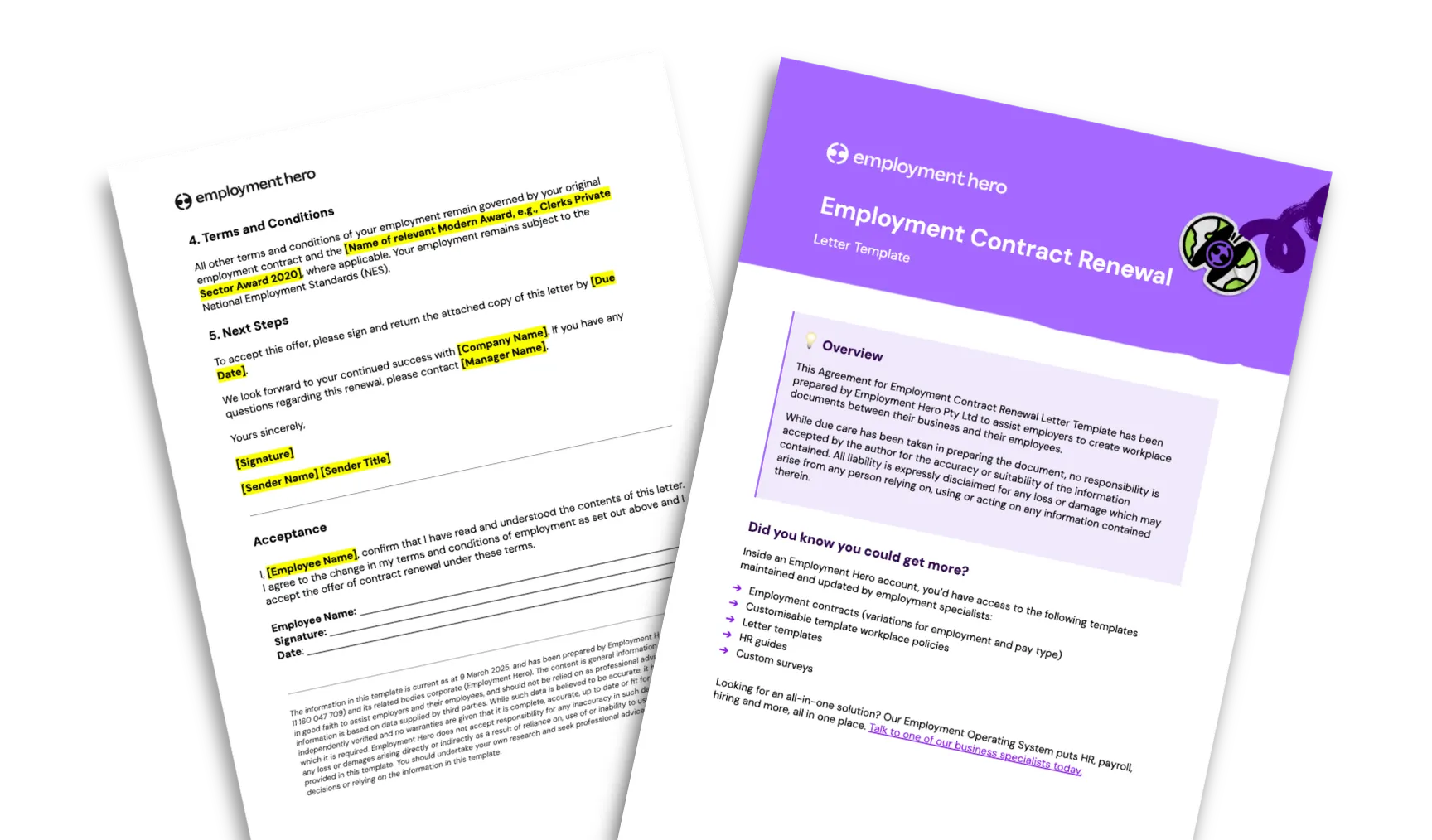 Read more: Employment contract renewal letter sample and template
Employment contract renewal letter sample and template
Need an employment contract renewal letter sample? Learn how to manage the contract renewal process, update terms and support compliance…
-
 Read more: The SME guide to pay transparency
The SME guide to pay transparency
Are you ready for the end of pay secrecy? Download our free guide to navigate the legal shifts and cultural…
-
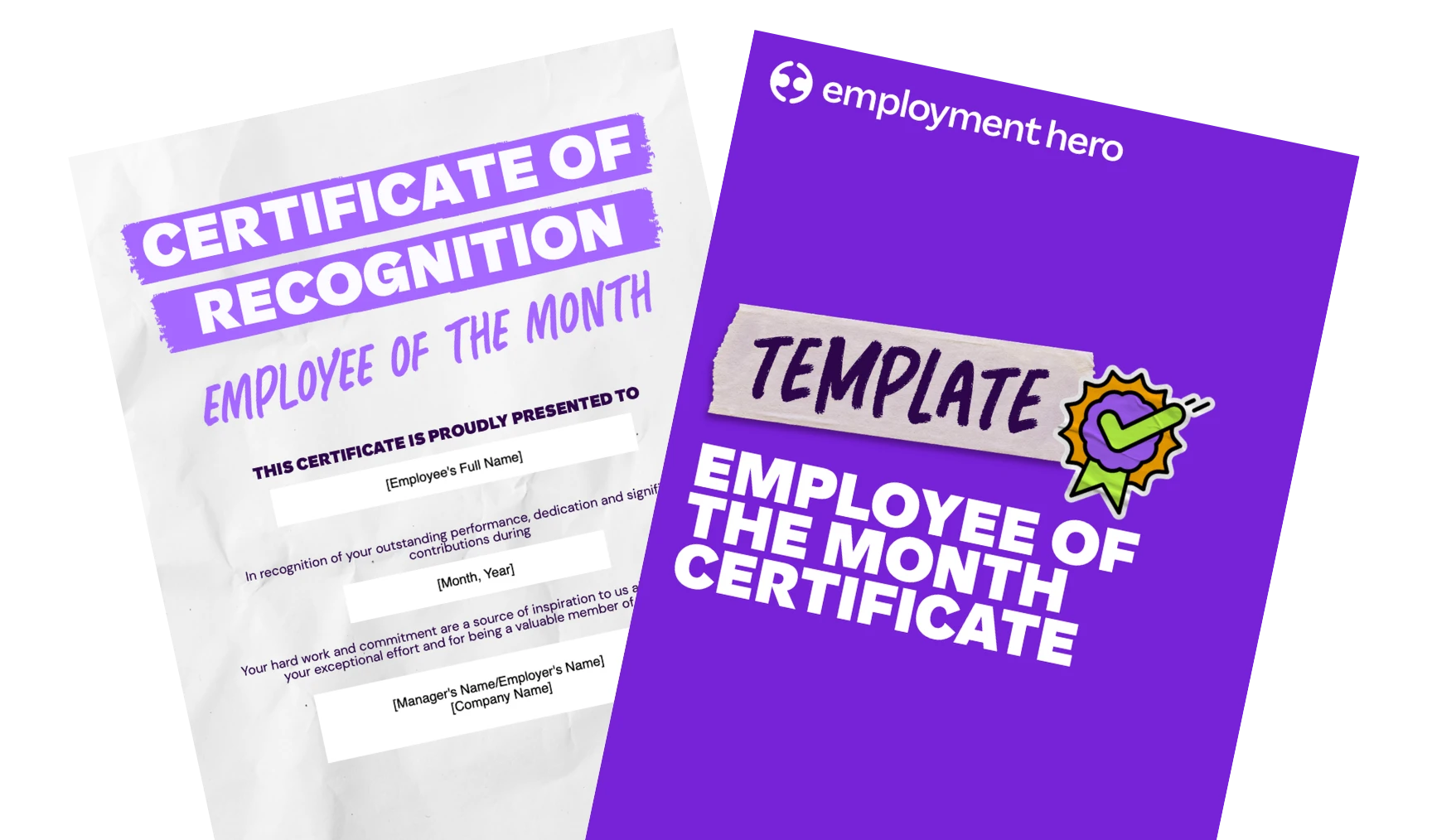 Read more: Employee of the month program: Certificate and guide
Employee of the month program: Certificate and guide
Learn how to launch an employee-of-the-month program, recognise great work, motivate teams and use certificates and incentives effectively.

