

















Australian Employment Law Updates in 2025 Factsheet
Published
Australian Employment Law Updates in 2025 Factsheet
Last Updated
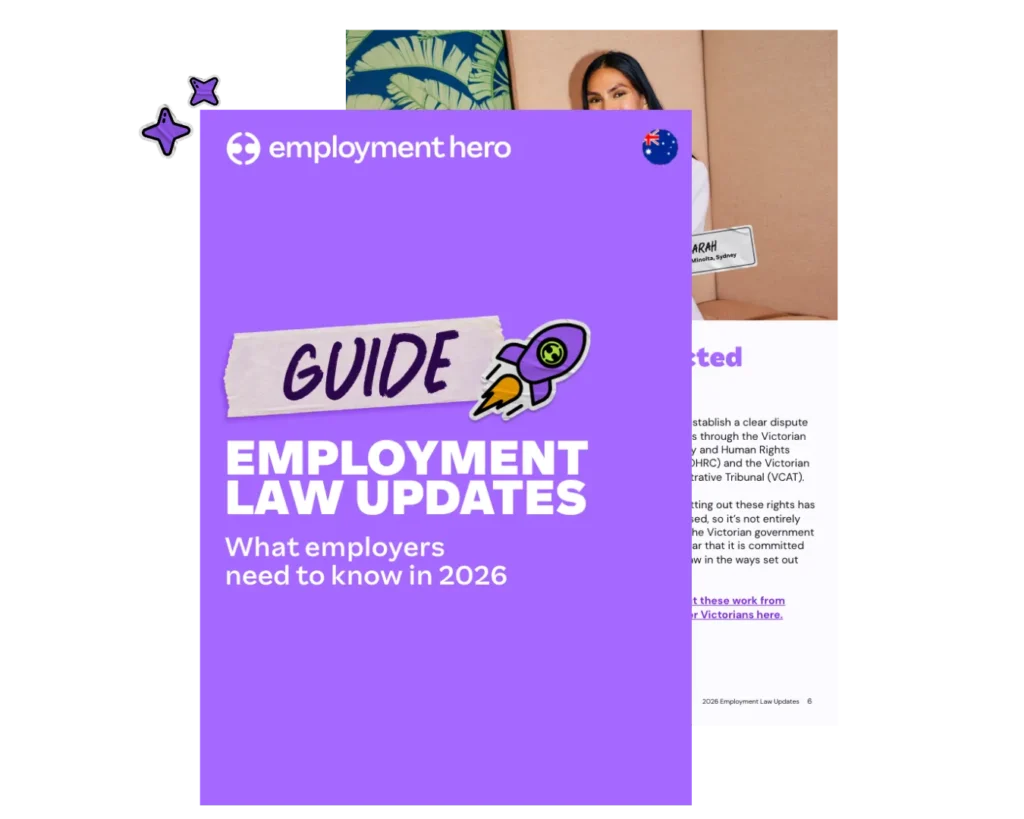
Staying across employment law is a fundamental part of running a business. The rules are always evolving and 2026 is shaping up to be another year of significant change for Australian employers. From superannuation and paid parental leave to new protections against sexual harassment, these updates will impact how you manage your people, process payroll and plan for the future.
This factsheet will walk you through the key changes on the horizon. We’ll break down everything you need to know so you’re not caught off guard.
What’s in the 2026 employment law updates factsheet?
This factsheet provides an essential overview of the major legislative shifts taking place across Australian in 2026, including:
- Payday Super
- Baby Priya’s Law
- Expansion of Paid Parental Leave (PPL) and flexible parental leave
- WGEA gender equality targets
- Victoria to ban non-disclosure agreements (NDAs) in sexual harassment matters
- And other key legislation
Why staying on top of employment law changes matters
Keeping up with legislative changes can feel like a full-time job. But neglecting your compliance obligations isn’t an option. 2026 presents a new set of challenges and responsibilities for employers and getting it wrong can have serious consequences.
The risks go beyond simple administrative errors. Significant financial penalties for non-compliance are a major concern. For instance, mistakes in pay or superannuation can lead to substantial back payments and fines from bodies like the Fair Work Ombudsman and the ATO. With some forms of underpayment now considered criminal offences, the stakes are higher than ever. To learn more, read our Wage Theft Factsheet.
Beyond the financial impact, these changes affect your workforce planning. Updates to paid parental leave and long service leave require you to adjust your policies, budget for staff absences and manage team resources effectively.
Key employment law changes in 2026
Let’s take a look at the specific updates you need to have on your radar for 2026.
Payday Super
One of the most significant changes coming into effect is Payday Super. From 1 July 2026, employers will be required to pay their employees’ superannuation guarantee (SG) contributions at the same time as they pay their salary or wages. This change is designed to help employees track their super more easily and make sure they don’t miss out on investment earnings.
For employers, this means moving away from the current quarterly payment schedule. While the change isn’t mandatory until mid-2026, the transition requires careful planning and preparation well before July. Businesses will need to adjust their payroll processes and review their cash flow management to accommodate more frequent payments.
The ATO will be actively monitoring compliance and failing to meet these new obligations can result in penalties. It’s a good time to review your payroll systems and ensure they can handle this shift smoothly.

Final expansion of Paid Parental Leave (PPL) and flexible parental leave
The government’s expansion of the Paid Parental Leave scheme will reach its final stage. From 1 July 2026, the total amount of leave available will increase to 26 weeks. The rollout has been gradual, increasing by two weeks each year.
- From 1 July 2024, it increased to 22 weeks.
- From 1 July 2025, it will increase to 24 weeks.
- From 1 July 2026, it will reach the full 26 weeks.
This flexible, shareable leave is designed to encourage both parents to access time off and support a more equitable distribution of caring responsibilities. It gives families more options for how they manage work and care in their child’s early years.
At the same time, the government has been increasing the number of days employees can take parental leave flexibly, i.e. take odd days here and there, either before or after they’ve taken a period of continuous parental leave. Following year-on-year increases, the flexible parental leave entitlement will reach a total of 130 days on 1 July 2026.
Employers should update their parental leave policies to reflect these increases and communicate the changes to their team. It’s also important to factor these extended leave periods into your workforce planning and resource management.
WGEA gender equality targets
The Workplace Gender Equality Agency (WGEA) is continuing its efforts to drive change. Following reforms that made employer gender pay gaps public in 2024, large businesses will face new obligations.
From April 2026, private sector businesses with 500 or more employees will be required to select and commit to three specific gender equality targets. These targets are designed to drive measurable change over a three-year cycle, with progress assessed against each employer’s 2024–25 baseline data.
Key points to know include:
- Target selection: Employers must choose exactly three targets from a pre-defined “Targets Menu” of 19 options (which include 9 numeric and 10 action-based goals).
- The “numeric” rule: At least one of the three selected targets must be numeric (e.g. a specific percentage point reduction in the gender pay gap or an increase in women in management).
- Measurable progress: While businesses have three years to achieve their goals, they must demonstrate improvement against their baseline if the target is not fully met by the end of the cycle.
- Consequences of non-compliance: Large employers who fail to set targets or show improvement without a reasonable excuse may be publicly named by WGEA and could become ineligible for Commonwealth Government contracts.
The introduction of portable long service leave for the community services industry in SA
In late 2025, South Australia introduced a portable long service leave (PLSL) scheme for the community services sector.
This scheme allows workers in the community services industry to accrue long service leave entitlements based on their time in the sector, rather than their tenure with a single employer. This is a significant benefit for a workforce that often features high mobility and contract-based work. Employees can carry their accrued leave with them as they move between jobs within the industry.
Employers in this sector are now required to register with the scheme and contribute a levy to fund their employees’ entitlements. This levy is typically a percentage of an employee’s ordinary pay. It’s crucial for affected businesses to understand their registration and payment obligations to avoid compliance issues.
Expansion of portable long service leave for the ACT
If you operate in the Australian Capital Territory, you should be aware of the upcoming expansion of the ACT’s portable long service leave scheme.
From 1 July 2026, the scheme officially extends to the Hairdressing and Beauty and Accommodation, Food, Beverage and Hospitality sectors. Employers in these industries must register with ACT Leave by 30 June 2026 to be ready for the first quarterly return.
Similar to the SA scheme, this allows workers in these sectors to accumulate long service leave benefits across their time in the industry, regardless of how many employers they work for. This provides greater financial security and recognition for long-term service in industries characterised by insecure work.
Employers in these sectors in the ACT will need to register with the governing body and make regular levy payments to fund the scheme. Staying informed about the specific requirements, including levy rates and reporting deadlines, will be essential for compliance.
Victoria to ban non-disclosure agreements (NDAs) in sexual harassment matters
Victoria is taking a strong stance against the misuse of non-disclosure agreements (NDAs). The state government plans to introduce legislation that will limit the use of NDAs in cases of workplace sexual harassment.
This reform is designed to prevent NDAs from being used to silence victims and hide instances of misconduct. While they can still be used in certain circumstances, such as at the request of the victim, the new laws will make sure they’re not used to protect perpetrators or conceal systemic issues within a company.
For Victorian employers, this means reviewing your workplace policies, dispute resolution processes and the way you handle confidentiality clauses in settlement agreements.
The date this reform will be introduced is not yet set, but is likely to be May 2026.
How to prepare your business for compliance changes
With so many changes on the horizon, it’s easy to feel overwhelmed. But a proactive approach can make all the difference. Here are some actionable steps you can take to prepare your business:
- Review and update your policies: Go through your employment contracts, enterprise agreements and internal policies. Make sure they reflect the latest changes to parental leave, superannuation and long service leave.
- Update your payroll systems: Changes like Payday Super will require significant adjustments to your payroll process. Check if your current system can handle more frequent payments and confirm it’s configured correctly for new super and leave rules.
- Train your managers: Your frontline leaders are key to implementing these changes. Make sure they understand the new rules, particularly around leave entitlements and workplace behaviour, so they can support your team effectively.
- Leverage technology: Managing HR and payroll compliance manually is risky and time-consuming. An all-in-one platform like Employment Hero can help you automate super payments, manage leave requests and keep your policies up-to-date, all in one place.
Download the 2026 employment law changes factsheet
Ready to conquer compliance in 2026? Don’t leave it to chance. Our free 2026 employment law changes factsheet gives you everything you need in one place.
This easy-to-use resource breaks down the key legislative updates into a clear and concise summary. It’s the perfect reference tool to help you navigate the changes, understand your obligations and prepare your business for the year ahead.
Disclaimer: The information in this factsheet is current as at 11 March and has been prepared by Employment Hero Pty Ltd (ABN 11 160 047 709) and its related bodies corporate (Employment Hero). The views expressed in this webinar are general information only, are provided in good faith to assist employers and their employees and should not be relied on as professional advice. The Information is based on data supplied by third parties. While such data is believed to be accurate, it has not been independently verified and no warranties are given that it is complete, accurate, up to date or fit for the purpose for which it is required. Employment Hero does not accept responsibility for any inaccuracy in such data and is not liable for any loss or damages arising either directly or indirectly as a result of reliance on, use of or inability to use any information provided in this factsheet. You should undertake your own research and to seek professional advice before making any decisions or relying on the information in this factsheet.
Register for the template
Related Resources
-
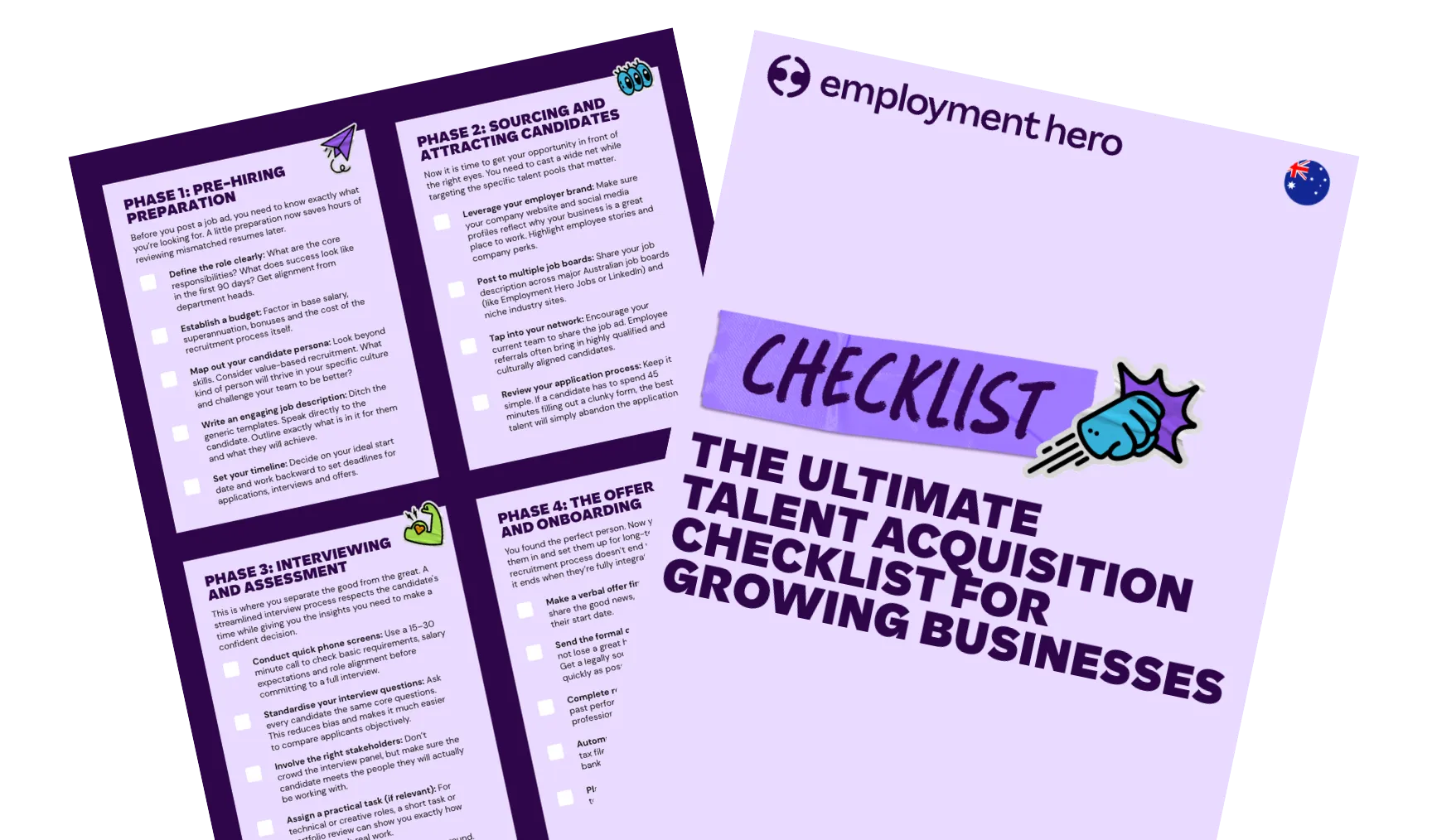 Read more: Talent acquisition audit checklist
Talent acquisition audit checklist
A talent acquisition audit is your secret weapon to cut costs, find better candidates and build the team of your…
-
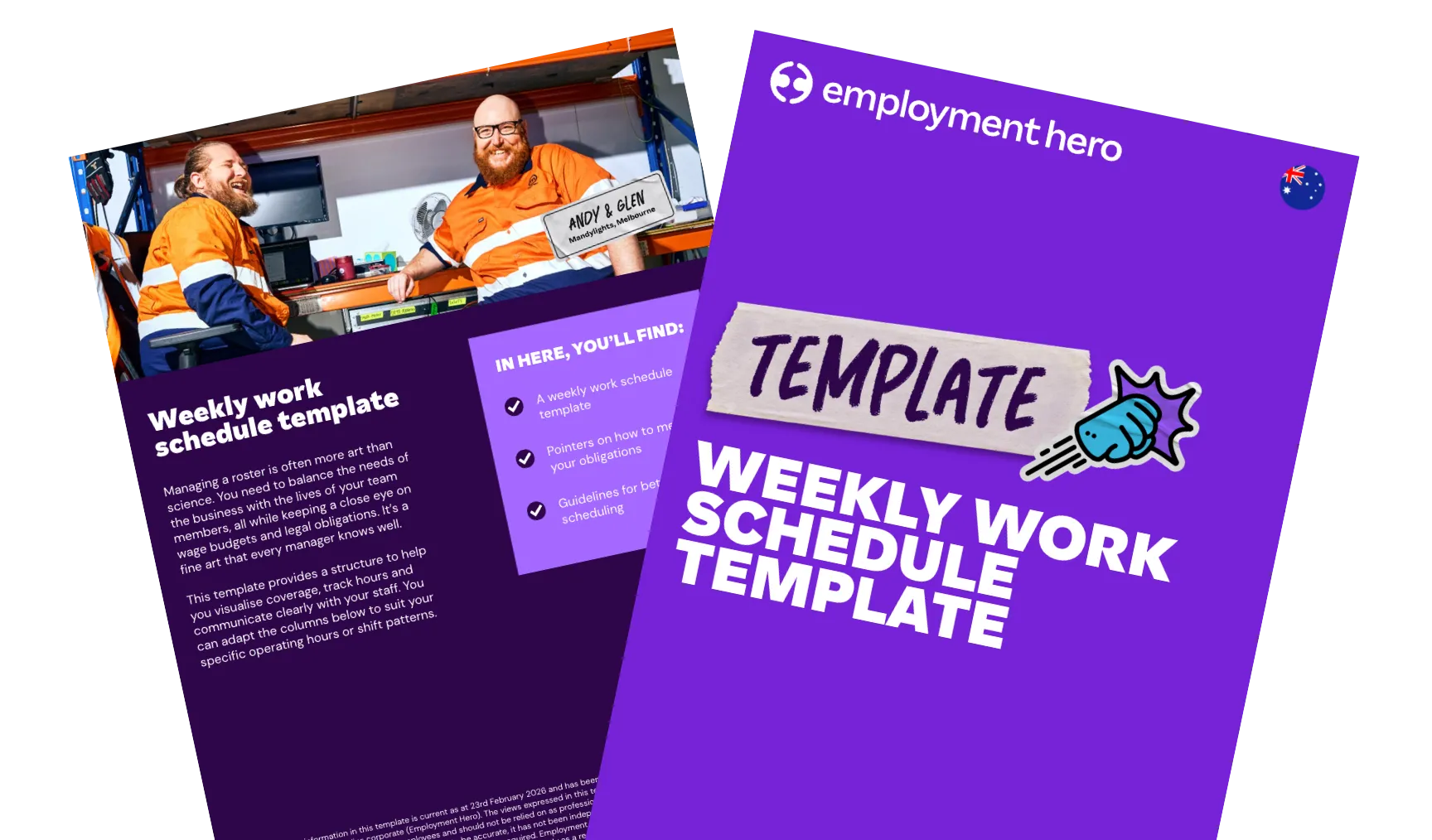 Read more: Designing an employee work schedule: template and guide
Designing an employee work schedule: template and guide
Learn how to create a flexible work schedule that can boost productivity among your employees.
-
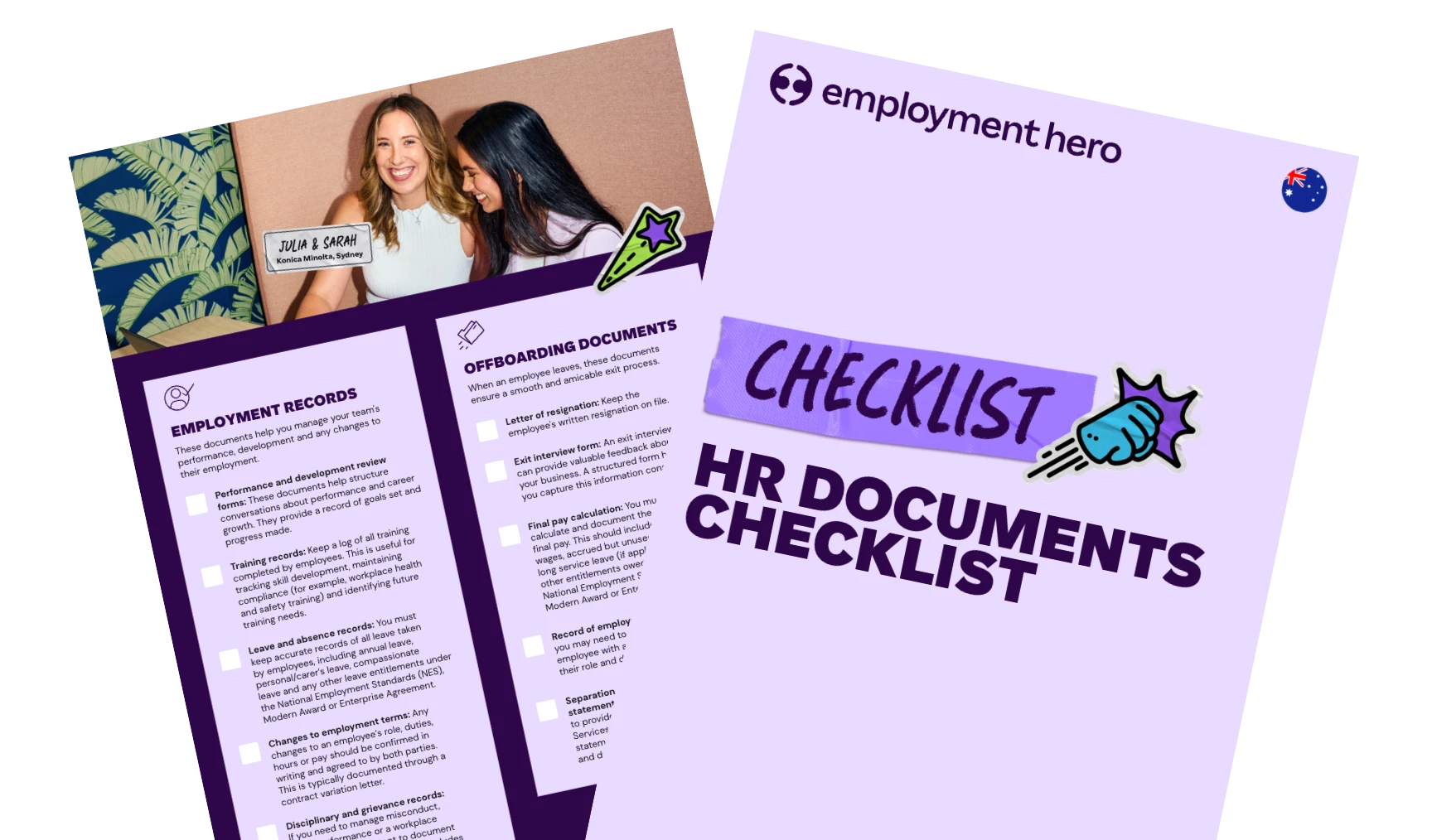 Read more: Essential HR documentation checklist for employee management
Essential HR documentation checklist for employee management
Use our HR documentation checklist to figure out what you’re missing, then download our free templates to close the gaps.

