














Most entrepreneurs dislike paperwork, but Mark Woodland has turned his hatred of red tape into a multi-million dollar business – twice. As co-founder of childcare management platform Xplor and healthcare start-up Kismet, the former soldier has declared war on admin friction.
“It’s the unsexiest thing on the planet, getting excited by the removal of admin,” Woodland laughs. “There’s businesses out there that are sending people to Mars, but for us, it’s admin.”
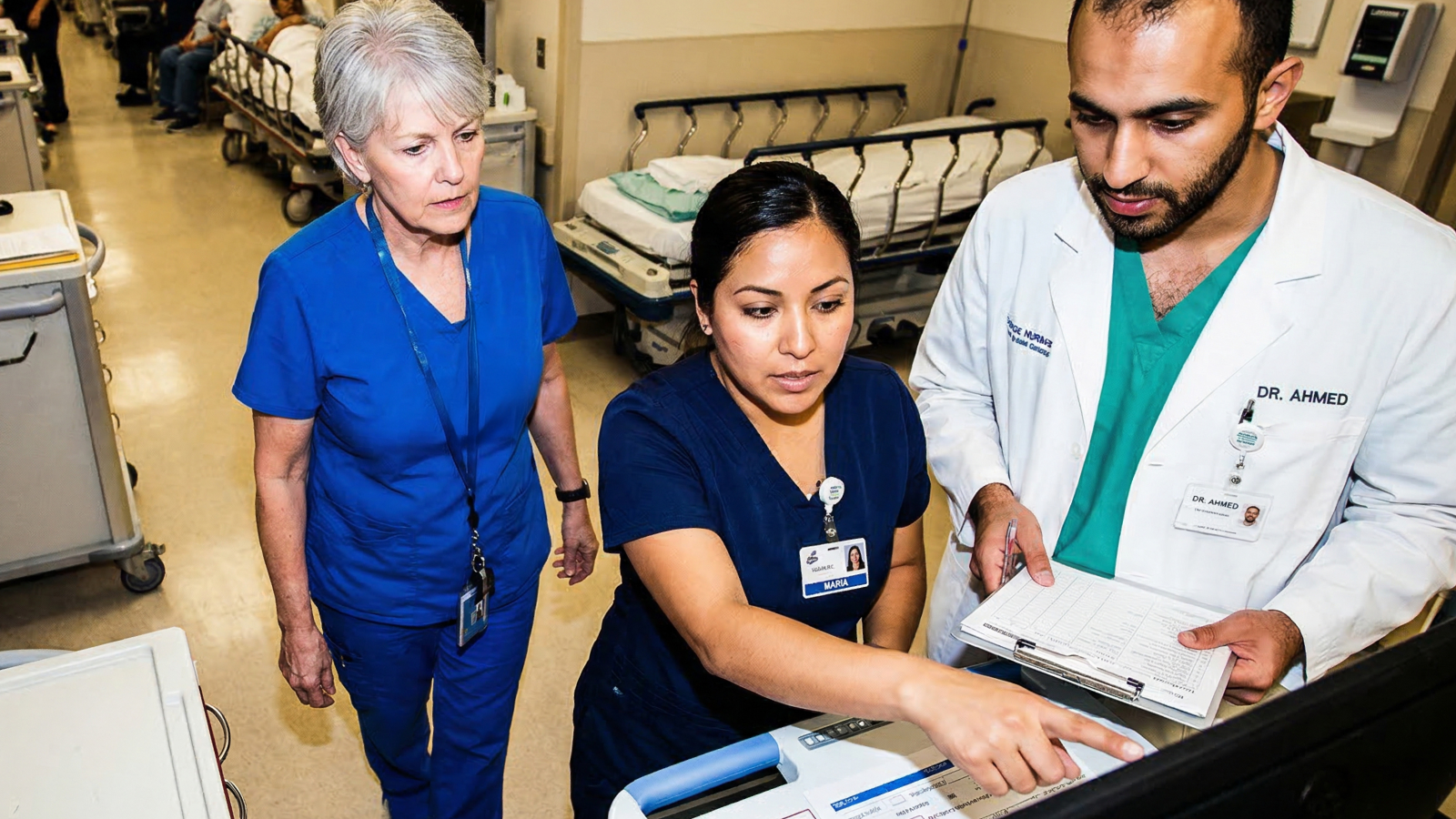
In the Army, in childcare and in healthcare, Woodland has seen first-hand how administration overload forces employers and employees to spend more time on back-office tasks and less time on what they do best: human connection. He says in both small and large healthcare businesses, technology could drastically ease the load, especially with the advent of AI. But he encounters a surprising reluctance to get on board.
Red Tape Makes The Healthcare Sector Move Slowly
Woodland was manually logging arrivals and departures in his mother’s childcare business when he realised there was a better way and digitised the process. “It was really quite selfish, because I was doing the admin and I didn’t enjoy sitting at a desk typing stuff in,” he explains. From there, he co-founded Xplor, which landed him on the Young Rich List when it sold for $100m.
A similar observation led him to co-found Kismet in 2023, a platform which helps NDIS and aged care providers manage bookings, payments and compliance. “It was a selfish thing again, because I was getting upset phone calls from my family saying, ‘We can’t manage grandparents’ aged care plans. It’s too complicated to understand. We can’t even book a gardener. Why is this so painful?’” he recalls. “Healthcare was outrageously slow and manual and so that’s how we launched it.” Kismet has grown so quickly, it was recently declared the fastest-growing start-up in Australia, the growth fuelled by mountains of red tape.
“It’s absolutely wild that we can get technology doing 1000 things, yet for some reason, we’re still manually entering data into a spreadsheet, uploading it into some government portal,” Woodland says.
A recent Productivity Commission report into the care sector confirmed the logjam, finding that eliminating the duplication of paperwork could save $1.8b and 21 million hours of work. “That’s why I get excited, because then all of a sudden people can actually get on with what they’re passionate about, which is not filling in a spreadsheet,” Woodland says. “If you could remove that admin, imagine what people could actually do with their time.”
AI Can Replace Tasks Without Replacing Roles
While some SME workers fear the impact of AI on their jobs, Woodland believes there’s no immediate threat to many healthcare roles: “You want those personal relationships. You want someone visiting your bed when you’re sick. You want someone to talk to when you’re concerned about what’s about to happen with the surgery,” he argues. “That human connection is critical.”
As an example, he notes his own observations of GPs who spend the bulk of appointment time typing and staring at a screen, not at him. Using AI for notetaking would free up the GP for engagement, he claims. Studies support this suggestion. Deloitte has estimated technology could save medical scheduling staff up to 47 per cent of their time and nurses up to 400 hours per year, while a Productivity Commission report found up to 30 per cent of current healthcare tasks could be automated to allow time for higher-value tasks.
While he acknowledges the high-stakes in healthcare, as a business owner, Woodland finds the fragmented systems frustrating. “I think regulation in a lot of sectors is just outrageous,” he says. He believes rules should exist to make systems more accessible and affordable. “But it’s doing the opposite, drives cost up, and guess what? That cost just gets passed straight to the consumer,” he says.
Better Utilise Staff With Tech To Combat Labour Shortages
A multi-million dollar business, Kismet can operate with just 38 staff, but Woodland acknowledges healthcare tech is far less labour intensive than healthcare delivery. Freeing up care workers for care tasks would also alleviate the sector’s labour shortage, he argues. The existing shortfall is predicted to worsen to more than 200,000 care and support workers by 2050 and 79,000 nurses by 2035.
“Utilisation is key,” he explains. “If an average speech therapist can only see five patients a day, and AI allows you to see an extra two, that’s parents who are sitting on a 6 month, 12 month waitlist for their child, they get a speech therapist now. And if you do that across the entire sector, you start opening up this supply.”
Enabling flexibility could also increase workforce capacity, he says. “Implementing technology allows you to open up opportunities for people to work an almost gig-style economy and part-time in different areas, which increases supply. It’s wild that, again, it’s tradition we open from 9 to 5. Show me a parent on the planet that can get to a speech appointment between 9 and 5, kids are at school or you’re working.”
Woodland says allied health practitioners can use AI to automatically write reports or manage attendance, cancellations and fraud checks. “Admin AI is doing a great job at that but go to any doctor surgery or allied health provider and you’ll see traditional systems still being used,” he laments. “Go into education, you’ll see traditional systems being used. These sectors are very, very slow to change, and so that’s why we’re in there, giving them a move along.”
Support Sectors Can Hold Tight To Tradition
Woodland says, in his observations, one of the biggest obstacles to AI adoption is a leader’s desire to stick to time-proven practices – to do things the way they’ve always been done. “The challenge you have is, by the time change comes, it’s a generation too slow,” he points out. ”So if you think about new teachers coming through, they’re now millennials or Gen Z, but the students they’re teaching are Alphas and so you’ve got a generational gap by default. The same happens in healthcare based on how long it takes to get qualifications. So tradition, I would argue, is the biggest reason things haven’t changed.”
Surveys have suggested concerns over privacy and ethics are also behind low adoption rates, with figures indicating a third have no plans to introduce it into their practices. Woodland says navigating change in individual businesses and across industries is hard but possible. He cites the example of childcare where digital attendance-taking went from novel to sector-wide within four years.
“Things change over time and people will be forced to change,” he says. “I think the difference with AI is, unless you’re using it, you’re going to be replaced pretty quickly. There’ll be businesses out there that adopt it while you’re still guessing and you’re too slow. Whereas in the past, we’ve had years to be able to adopt a new tool, AI is scaling faster than anyone can imagine.”
Tech Can Address Several Pain Points At Once
As for how to use it, Woodland suggests taking a broad approach and not confining its use to solving a single problem. He describes how Kismet noticed stakeholders face unique problems within the same system. Patients want fast access to suitable care with the allied health or service provider of their choice. The provider wants to get paid on time, since the slow circulation of reports and other paperwork can delay payments by weeks or months. The families of aged care residents – the so-called sandwich generation – want relief from the weight of aged care admin in their parents’ final years. The solution was to target not individual problems but the ecosystem and address all issues at once. “Kismet connects all those dots,” he explains.
He recommends SME owners assess their existing admin burden and plan from there. “Just embrace change instead of fighting change,” Woodland says. “If you’re embracing it, you’ve got a huge opportunity to be at the start of something instead of always chasing, chasing, chasing because you’ve been deeply against anything new. I’m not saying everything new is awesome, but if you’re not trying it out or testing it, you will be left behind.”