















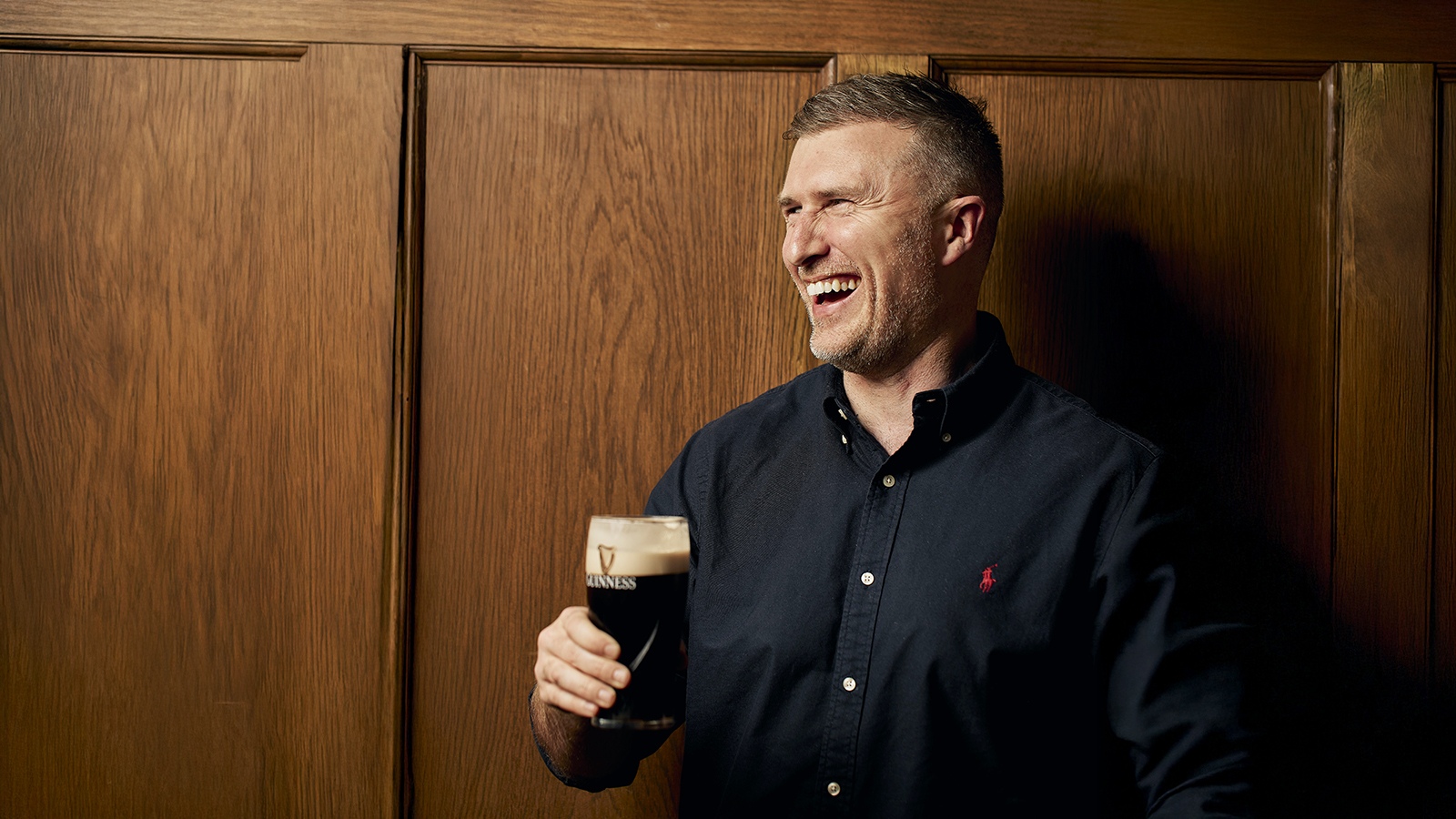
A construction manager has built an Australian hospitality empire by being unafraid to do things the hard way.
Liam Ganley moved to Australia post-Global Financial Crisis to further his career in construction. Instead, he found himself at the centre of an unconventional hospitality success story, owning not one but six iconic pubs and restaurants.
In a sector where nothing comes easily, Ganley added another degree of difficulty by establishing the eateries in heritage buildings. While some may regard complexity as a barrier in business, Ganley sees a competitive advantage.
“I can walk into a space and see opportunities and see solutions to what other people might see as massive issues,” he explains. By focusing on goals instead of roadblocks, Ganley’s approach offers a lesson relevant to all business owners: sometimes the hardest path can be the most rewarding.
Invest In The Future By Preserving The Past
Ganley was managing a heritage restoration business when hospitality came knocking. His then-girlfriend, now-wife, had run cafés in Ireland and jumped at an opportunity to take on one in Melbourne’s hip inner-north. “We just grew from there,” Ganley says. He focused on the similarities between the sectors rather than the differences. “Construction, you know, is very systems-based. So, I always had a very good handle on the figures and numbers and projections and forecasting.”
What he couldn’t get his head around was the fact cafés were so labour-intensive. He recalls a Saturday afternoon in the café when there were seven staff on duty and three customers, in contrast to a pub where 20 customers would spend $50 an hour while being served by one backpacker. “I was thinking, ‘I’m in the wrong game here!’” he laughs. More projections suggested pubs would be a safer bet. “Cafés are great but, at a single café, it’s very, very hard to make money.”
Still, Ganley didn’t take the easiest option. While some may have selected a straightforward space for their first venture, Ganley opted to establish an Irish pub, The Fifth Province, in an old railway station in colourful St Kilda.
“Heritage buildings in particular make the best pubs. They’ve just got the best character, and generally sit on corner sites,” he explains. “Growing up in Ireland, of course, we’ve got pubs there that are hundreds of years old. So I’ve always been attracted to them. You can let the architecture or the building tell the story and develop around that, as opposed to going to a shop front with a glass facade.”
His niche construction expertise allowed for a business model – and character-filled locations – that competitors couldn’t easily replicate.
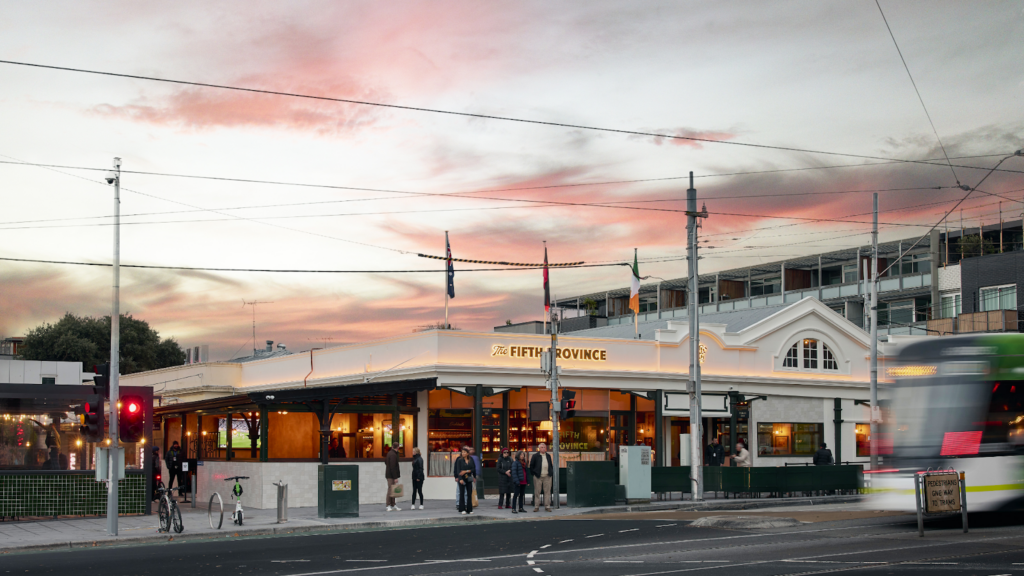
The Fifth Province in the Melbourne suburb of St Kilda
An Unconventional Approach to Scale And Growth
The path to scale wasn’t easy either. Ganley acknowledges he could have franchised The Fifth Province – same menu, same design, same vibe – but it would have failed. “I just don’t think the cookie cutter approach has ever really worked in Melbourne,” he says. “Look at the likes of Starbucks. It’s probably one of the only major cities in the world where they don’t have a shop on every corner. So, it is difficult.”
Another complication was the concepts, largely decided by the buildings themselves and far from franchisable.
“I think the building definitely informs the design, you know, the feel of the space,” Ganley explains. “That is probably the hardest part, because you’re essentially starting from scratch every time.”
For Freddie Wimpoles, in the historic George Hotel, a dimly-lit ‘dive bar’ seemed fitting. Mornington’s Bay Hotel, built as a bank in 1889, was fitted out as a warm and cozy local. The former Prahran Post Office insisted on becoming AC/DC-inspired steakhouse Angus & Bon. “I didn’t want to open a restaurant,” Ganley admits. “I only opened a restaurant there because I knew we wouldn’t be able to get a pub in that building and the building was just too good.”
This year, Ganley Group Hospitality rescued two more historic venues – the Windsor Castle and Carlton Club – from liquidation, for a total of six. They’re all different but, he argues, they share the same DNA: spaces that appeal to locals and feel like home. He concedes growing the business without traditional economies of scale was challenging. “I think one to three [venues] is hard,” he says, then offers hope. “After that, it gets easier… assuming they’re all successful, right?”
For owners considering expansion, perspective is crucial. “You need to be out of the business,” he says. “If you’re still in the day-to-day operation of the business, dealing with all the nitty-gritty, you’re not ready to go on to the second.” He urges owners to walk before they run, by not burying themselves in debt. “Make sure your first business is set up for success before moving on to the next, because at the end of the day, that business is going to fund your next two.”
Small Businesses Must Be Prepared To Navigate Red Tape
Ganley’s success comes despite the fact he’s operating in two of the most heavily-regulated industries, hospitality and construction..
“I wouldn’t think there’s a city in the world that has more red tape than Victoria,” he says bluntly.
His list of compliance requirements is long. “You’ve got local permits for council, you’ve got heritage permits, you’ve got local laws from council for your footpath trading, and then you’ve got liquor licensing, and then you’ve got your building rates, you’ve got issues with accessibility. You’ve got so many different hoops to jump through, it can be really, really expensive.”
It’s less of a complaint than an observation, as Ganley acknowledges the system has benefits; it weeds out backyard operators who don’t play by the rules. But he says it can be hard to get a small hospitality business off the ground. “At the very beginning, you’re just doing everything, so you’ve got five, six hats on. Before you even get into the operational side of things and design and buyers, you’ve got just so many layers of bureaucracy to get through.”
He says the best money any business owner can spend in this space is on top-notch heritage consultants. Although expensive, they save time in a sector where time is money. “You could go off designing the most wonderful pub or restaurant in the world, but somebody might sit down and say, listen, this is not going to get approved. This is not in line with the laws, with the heritage character of these areas. So, don’t waste your time.”
The advice extends to other service providers, like accountants and lawyers. While loyalty is valued, he says businesses under expansion must assess whether they’ve outgrown their advisors. A bookkeeper servicing a $1 million-a-year business may not be the best fit at $10 million.
Great Leaders Create Pathways For Their People
Having the best people in your corner extends to employees. In an industry renowned for churn, Ganley has made retaining quality staff a priority. “Without the best people, you’ve got no chance,” he maintains. “It’s getting harder for smaller hospitality businesses to attract great chefs, great managers, great bartenders. If you don’t have opportunities for them to move up the ranks, they’re going to leave and you’re going to have to do nothing but encourage them to do so.”
Instead of accepting a high staff turnover as inevitable, he’s made an effort to provide career pathways beyond the bar in operations, marketing and graphic design. The growth of his business made this possible, but he says smaller operators can still create opportunities by delegating tasks if employees are interested. It has the added benefit of freeing up time. “It allowed me to kind of step back and concentrate more on the design and the construction, which is basically what I spend probably 80% of my time on now.”
Having overseen the process end-to-end as Managing Director, the perfectionist in Ganley can walk into a completed venue and find fault. But there are enough other signals to remind him the hard work was worth it.”To see it reactivated, to see the spin off in the area and people on the streets, and other businesses near you get the spin off from it, that’s just a great buzz.”