 New Zealand
  United Kingdom
  Singapore
  Malaysia
  Canada (Français)
 Australia

We went first.
Now we’re handing
you the map.
Most businesses know AI is changing the way they work, but few have a clear picture of what happens when you commit to it entirely. This is the honest account of what it took for Employment Hero to move to AI-first.
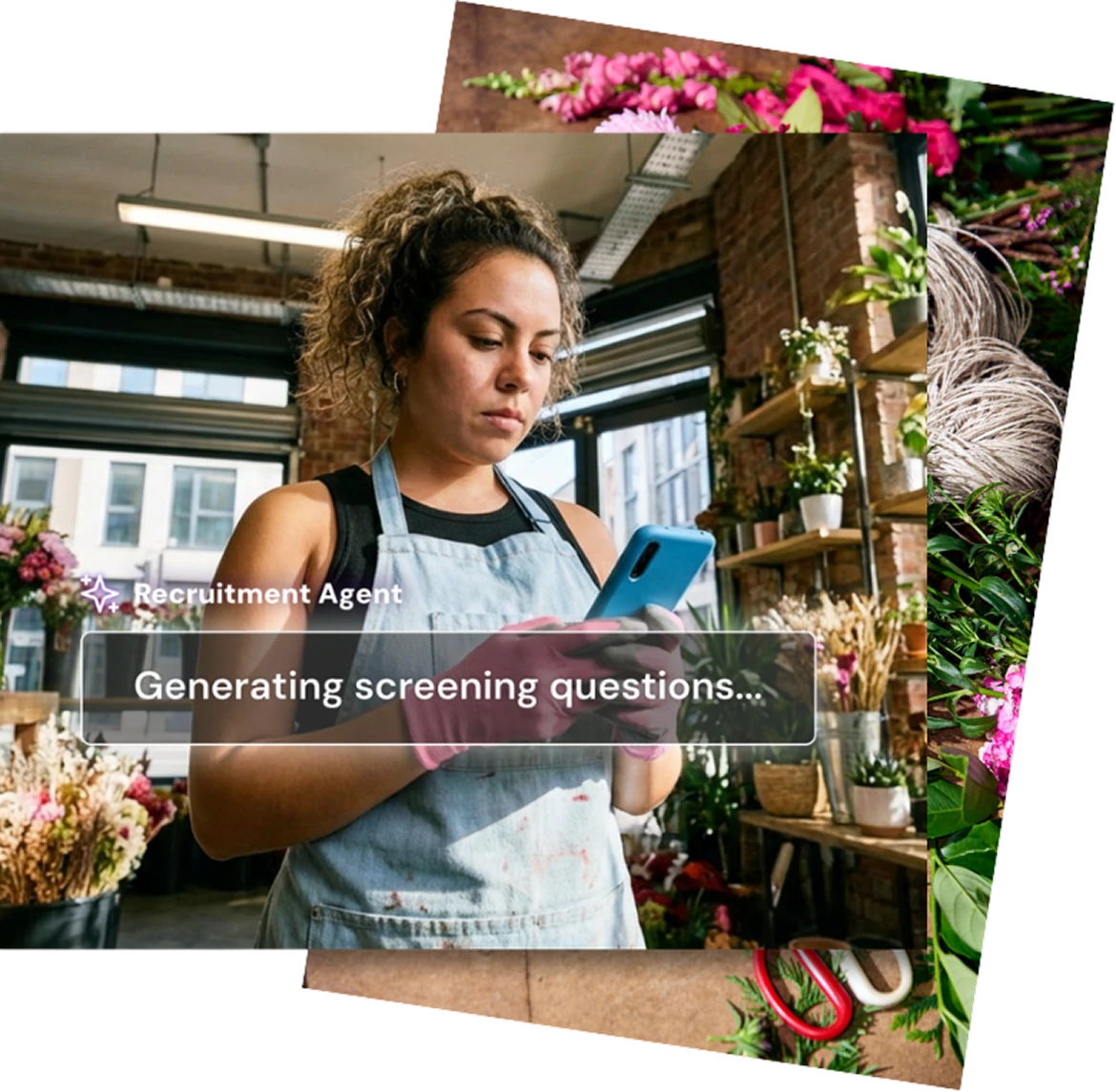
What’s inside the AI Adoption Blueprint?
Six chapters · about 34 min in totalIn 2025, Employment Hero formally embraced AI as a strategic priority, changing how our entire team do their jobs day to day. Whether you’re a five-person business or 500, you don’t need a perfect plan. You just need to get started. Here’s everything we learnt along the way, plus practical tools, tips and templates for you to get started.
Our experience, your blueprint
Why we made the commitment, getting risk and security right and the structural changes we made.
From curious to capable
Making it official, building peer momentum, the training and what we’d do differently.
An AI policy that unlocks your team
How we built ours, choosing the right tools and why a good policy speeds up adoption.
The new hiring playbook
What to look for in candidates, inside our hiring process and how we test for learning agility.
From our team, to yours
Practical tips from our marketing team and other members around the business.
Ready, set, roll out
The four phases of a company-wide roll out and your checklist for Monday.
The people behind it, on how it came together
Nine voices, twelve clipsThe framework, in four phases
Chapter 05, in fullGet leadership aligned
Make sure that your people at the top set expectations and have the visibility to model the behaviour they’re asking for.
Build the guidelines first
Clear guidelines give your people permission to move. Without them you risk two groups; those already using AI without telling anyone and those too cautious to start because they’re not sure what’s allowed. Neither group is where you want them.
Train in segments, not just company-wide
Lay the foundations of AI knowledge company-wide, then move to segments. Start with the roles where AI has the most immediate, visible impact and use those early adopters as internal proof points.
Measure the results
The metrics that matter are the ones that track behaviour. Time saved on specific processes, confidence scores before and after training and the number of workflows that have changed because of AI.
We wrote the map. Now it’s yours.
You don’t need a perfect plan. You just need to get started. Embedding AI involves finding a way to use technology that works for your business and putting a few things in place, so your people can use it well. Here’s how you can, from us to you.
Prefer the PDF? Download the full report here.

Our experience, your blueprint
Why we made the commitment, getting risk and security right, and the structural changes we made.
We know that AI vendors are flooding your inbox right now. It’s the topic of every strategy meeting and on every employee’s mind.
Employment Hero has been technology-forward since day one; we’ve made it our business to digitise manual employment processes. When AI came along, we decided to embrace it. That meant giving employees the opportunity to use AI in their work, to see what it could do for our productivity and to drive new, exciting results for our customers.
It was a big undertaking, but the move to embrace AI can be replicated in every business, regardless of size. So we’ve built this guide in two halves. First, the honest story of how we did it and then a practical blueprint you can act on, with tips to use along the way.
Why we made the commitment
Employment Hero was built on a simple belief that technology should make employment easier and more valuable for everyone. Staying close to what technology makes possible has never been optional for us. So when AI began to change how work gets done, our leadership moved quickly to work out how to adopt it well.
We knew we had to figure out how to use it to gain a significant advantage; to create the best product and offer the best experience to our customers possible. That is no small challenge for a business with more than 350,000 customers globally.
 ZT
ZT
AI just gives us so much leverage as individuals and as a company. It’s something our founder Ben [Thompson] has contemplated for a long time, nearly a decade. The effect of AI on businesses and the workforce. And we’re a tech company, so we always gravitate towards any tech that can give us more leverage.Zara Tonkin Chief of Staff · 1:12
Getting risk and security right
Committing to AI meant taking risks seriously from the start. We handle sensitive employment data on behalf of thousands of businesses, so questions around responsible use were the first we had to answer.
In our AI Paradox research, from a survey of more than 1,000 employers and 1,600 workers, around 1 in 3 (34%) Australian employees use AI at work without their employer knowing. When that’s the reality, a clear framework is crucial for bringing that activity into the open. Transparent use keeps your people and your data protected.
Australian employees use AI at work without their employer knowing.
Employment Hero AI Paradox researchRob Goodwin, Chief Operating Officer, explains how those initial discussions at Employment Hero began:
But moving fast didn’t mean moving carelessly. On the risk side, Rob is equally direct:
Setting those guidelines early matters more than most businesses expect, and it’s easier than it sounds. Clear guidelines, set upfront, give people the permission they need to start.
 RG
RG
As a technology business, we knew we just had to be at the forefront of this. Not giving our teams access to AI is a little bit like not giving them a laptop back in the nineties.Rob Goodwin Chief Operating Officer · 1:48
The structural changes we made
From there, we began embedding AI across 1,800 people. Making a change stick across a large team is a bigger job than most businesses reading this will ever have to take on. If it can work at that size, it can work for smaller businesses too.
For us, the supporting structure meant we needed a dedicated AI enablement team. A smaller business will almost never need that. That same work can sit with one person or as part of an existing role. The key is that someone is there to own the individual business’s AI use. You need someone accountable for the guidelines and training, as well as to be the go-to person for answering any questions.
The results at Employment Hero show what becomes possible once that ownership is in place. Over the course of one year alone, our top developers moved to coding at roughly 30 times their previous rate. The marketing team is producing entire campaigns using AI. The CX team now spends 2–5 hours on data configuration per customer onboarding, down from 10–11 hours. In a smaller team, you can often reach these kinds of numbers much sooner.
Getting there also took a commitment from the top. Our leaders aligned on AI and used the tools themselves. They talked openly about the results they were getting, which gave everyone else the confidence to follow.
As Zara, our Chief of Staff describes it, the clearest sign that it worked is how unremarkable AI use has now become inside the business:
Our top developers are now coding at roughly 30 times the rate they were previously. The marketing team is producing entire campaigns using AI. The CX team now spends 2–5 hours on data configuration per customer onboarding, down from 10–11 hours.
And our COO’s advice to any business still on the fence?
The scale will look different for a 50-person business but the order of steps is the same. We went early, but now is the time for every business to realise the opportunity, assess any risks for their individual business and start building the framework to empower their team.
Checkpoint 1 of 5
A five-point readiness check
Before you take the plunge and embrace AI, it’s worth knowing a few things up front. Work through these as a leadership team in one sitting. If you can answer them, you’re ready to move.
From curious to capable
Making it official, building peer momentum, the three training phases and the six-week bootcamp, including what we’d do differently.
How we mobilised the company

Getting our team to integrate AI into their work took deliberate effort. Here’s how we did it, starting with how we mobilised the company and how we ran skills training.
Our first move was to put every person through a structured learning program, whatever their role, location or starting confidence with AI. We included everyone, so no corner of the business fell behind. That principle holds at 1,800 people or 18.
Liam D’Ortenzio, our Head of People Operations, describes the thinking:
That distinction, of altering the company-wide mindset rather than focusing on individual change, was crucial. It brought AI into daily work conversations and normalised its use for everyone.
Making it official
Employment Hero has stayed close to new technology throughout its history, so moving early on AI fit how the company has always worked.
Under CEO Ben Thompson’s leadership, this was made explicit. “We Are AI First” was added to our company values. That meant that embracing AI became a company-wide expectation directly from the CEO, instead of an HR initiative.
As Liam explains: It wasn’t just a comms exercise. It was actually about, how do we change
people’s performance? How do we change the expectations that people work within? And it made it
much harder for people to avoid, quite frankly.
From there, we began regular communication and training that encouraged the use of AI. The cadence was consistent and deliberate. Our internal comms channels were updated at least once a week with tips and ideas and there were regular company-wide presentations. Everything tied back to the same framing.
That framing carried a lot of weight. We connected AI to goals people already cared about, which brought them along with us.
 LD
LD
It wasn’t, how do you get 1,800 people to change individually? It was more about how do you actually change the conditions in which they operate, to then lead to meaningful behavioural change.Liam D’Ortenzio Head of People Operations · 2:04
Building peer momentum
Alongside the formal comms, encouraging AI use relied heavily on peer-to-peer momentum, which proved to be a powerful lever. When employees see their colleagues using AI openly, sharing prompts that worked or shortcuts they’ve found, it sends the message that this is a normal part of how work gets done here.
For leaders, this is an important sign. Our AI paradox research found that 42% of Australian workers feel that using AI to do parts of their job feels like cheating, meaning that nearly half the workforce is using a tool that improves their productivity, while feeling guilty about it. For effective use, AI needs to be normalised. The fastest way for this guilt to fade is when they see their peers doing the same thing openly, without judgement.
Along with leadership endorsement, the team created forums and competitions. People who were already using AI well had a platform to share what they were doing.
The most persuasive voice in an adoption program is the one with proven results: the person in finance turning around month-end faster, the sales rep who has cut their admin in half. Those people exist in most businesses. They just need an opportunity to speak up.
 LD
LD
There were some leaders that were just naturally curious and were using the tools and then cascading that use. The ones that weren’t, you could see a pretty noticeable delta. Their team members weren’t getting the same experience.Liam D’Ortenzio Head of People Operations · 1:40
Where it fell short
Not everything worked the way it was planned. Liam says that the place where the sprint showed its limits most clearly was in leadership enablement.
“What we could have done better and what we learned really quickly, was that the expectations we set for leaders to actually use AI and drive it through their teams, we needed to crystallise that a little more firmly.
“There were some leaders that were just naturally curious and were using the tools and then cascading that use. The ones that weren’t, you could see a pretty noticeable delta. Their team members weren’t getting the same experience.”
The lesson here was clear. Culture change follows leadership behaviour and people move when they see the person above them reach for the tool first. A smaller business has an edge here, because in a team of 30, a founder using AI openly sets the tone straight away.
Is your leadership modelling AI use?
Our clear lesson in mobilising AI use at Employment Hero was that teams follow what their leaders do. Before you widen a rollout, check honestly:
Making it always-on
The first few weeks were just the launchpad. Soon, embracing AI use became a focus for the whole business. Every functional leader was tasked with identifying workflows and processes where AI could be introduced or where manual processes could be removed entirely. More than 40 initiatives ran concurrently in mid-2025, with leaders accountable for delivery in their own areas.
Enabled by the 1:1 and professional development features in the Employment Hero platform, leaders could also regularly check in with their teams to make sure their approach was working.
That momentum has continued. “It’s an always-on approach for us,” as Liam puts it. The early weeks created the groundswell; the focus gave it structure; the ongoing cadence of communication, learning and accountability has kept it moving.
How to apply this to your business
It helps to know where your people are starting from. Our AI Paradox research found that Australian workers tend to see AI upskilling as their own responsibility, rather than something they wait for from their employer. So you likely have people experimenting already.
Adoption also needs a clear path or it stays patchy across the business. The businesses seeing the fastest returns actively create the conditions for adoption.
What this means for you
Liam’s three rules for a rollout
First, it has to come from the top. The CEO and leadership team have to visibly own the change. “That’s a different signal. If you just have an HR team or a learning team driving this change and you’ve got executive support, the failure rate will be a lot higher and it’ll have significantly less impact.”
Second, find your social proof early. Every business has people already doing brilliant things with AI. Give them a platform and they’ll do the convincing for you.
Third, build the expectation of using AI well into every role. “There’s a big difference between using AI a lot and not getting a lot out of it, and using AI effectively and having a huge impact.”
Building AI skills from the ground up
For people to get the most out of AI, they need to be capable. Right now, only 18% of Australian employers say AI skills are essential, yet workers are already out there figuring it out on their own. They’re teaching themselves AI through social media, with no framework and no connection to the work their business actually needs done. It’s a missed opportunity.
Employment Hero ran a training program designed to cover all bases, built around the recognition that different people had different starting points, levels of confidence and practical needs.
Bronwen Caspers, Learning Manager, and Allan De Brincat, Head of AI Activation, built and ran the training program in three distinct phases. The goal at the end was for every Employment Hero employee to have the necessary skills to use the most cutting edge AI capability available. We wanted every new advancement in AI to arrive into our well prepared and educated team who could immediately use it to their advantage, because they’d already built the foundations in the learning program.
Our three training phases
Get comfortable
Six online courses in Employment Hero’s Learning Management System, covering what large language models are, how the common tools work and how to start prompting. Not work tasks yet. Just comfort.
Self-pacedThe bootcamp
Six weeks of live weekly sessions on real workplace tasks, including building agents live in front of an audience, bugs and all.
6 weeks · 60–90 minRole-specific pathways
Away from whole-of-business programs. If a tool was relevant to a function, that team enrolled in the pathway for it.
OngoingThe first phase of the training program was six online courses in Employment Hero’s Learning Management System, covering the basics, including what large language models are, how the most common tools work and how to start prompting.
As our Learning Manager, Bronwen, describes:
 BK
BK
We started off with just getting comfortable with AI, even if you’re not using it at first for work activities. Just feeling comfortable asking questions, using AI to help you solve some problems.Bronwen Kaspers Learning Manager · 1:31
The second phase went much deeper, with a six-week bootcamp of live weekly sessions covering real-life workplace tasks.
The third and most recent phase moved away from whole-of-business programs and toward role-specific pathways. If a particular tool was relevant to a certain function, those teams would enrol in the pathway for that tool. The learning became more targeted as the business needs became more specific.
Inside the six-week bootcamp
The second phase, the six-week bootcamp, is where the most deliberate design thinking went in. The first two weeks were theory, running through what an agent is, how it works and the foundational technical concepts people needed to get started.
Weeks three and four moved into hands-on sessions on building AI agents and tools which could be applied to work at Employment Hero. This is where the program made a deliberate and important choice.
Allan, our Head of AI Activation says, “we actually built some of those tools live in front of a live audience. The idea was to show people how agents are built from nothing, all the way through to delivery and sharing it out to your team.”
Crucially, the sessions were intentionally lo-fi. No pre-scripted demos or polished walkthroughs where everything works first time.
 AD
AD
There were bugs, there were issues and given that these are non-deterministic solutions, we couldn’t account for all the different permutations of what would happen. People really appreciated seeing the blockers and the bugs and how we’d go around and fix that in the real world.Allan De Brincat Head of AI Activation · 1:37
Week five was a showcase where people who’d built tools after the training sessions shared their work. Week six was a wrap-up. Each session ran for 60 to 90 minutes and was spread across the six weeks deliberately, to give people breathing room to absorb what they’d learned.
What surprised us
Both leaders of the AI training program had their assumptions tested by what they saw.
Bronwen’s biggest surprise was one of the simplest. “People didn’t naturally use AI to ask how to use AI. To me that was really obvious, but to lots of people it really wasn’t obvious unless you gave them a guide or specific steps to follow.”
It’s a small insight that carries a big implication. Even when people have access to the tools, the instinct to reach for them isn’t automatic. The training program’s job is to build the reflex of reaching for them in the first place.
Allan’s surprise went the other way. He expected agent-building to remain intimidating throughout the program but people took to it fast.
“There were a lot of people who felt the agent-building concept was very technically complex, very hard, very almost stressful to jump in. After seeing people run through it live, those fears were really allayed and it gave them the confidence to jump on.”
By week four, the bootcamp had four times the number of people building agents as on day one. The live unscripted sessions were the thing that moved people from watching to doing.
How we measured success
Measurement was critical to confirm the training was working. Allan tracked three metrics throughout the program. Comparing them over time showed us what was landing so we could do more of it in the next round. The metrics are something you can borrow directly, whatever your size.
The three metrics Allan tracked
Self-assessment
People rated their own capability before the course and again six weeks later. The trajectory was consistently positive, with the biggest upshifts in less technical roles.
Survey · before and afterAgent-building activity
The four-times growth in active builders by week four was the clearest signal the training was translating into actual behaviour change.
WeeklyTool engagement
Whether people were logging in and using the platforms day to day, with an important caveat about how to read it.
OngoingWhat we’d do differently
It didn’t go perfectly but those lessons are important. Both Bronwen and Allan are honest about what businesses should look to avoid in their own training.
Bronwen would move away from the one-size-fits-all approach earlier, saying “I would probably speak to all the different functions to understand what types of things are relevant to them that they would find most useful, rather than taking the full one size fits all approach.”
Allan’s change is more logistical. The sessions were streamed from Australia and the a-sync experience for people outside of complementary time zones was noticeably less effective than the live sessions.
“The a-sync users definitely had a lot less engagement. They weren’t able to engage with us live and ask questions. And we were able to see engagement in real time on the live calls, which we just couldn’t get the same visibility on for the other regions.”
The goal was always for everyone in the business to go on this journey together and that only works if everyone has an equal chance to participate. As we learned, the more people who are in it, the faster the whole business moves.
Checkpoint 2 of 5
What made the training work
An AI policy that unlocks your team
How to write a policy that gives your people permission to move.
Writing a policy that enables people
When we wrote our AI framework, we made a deliberate choice which was to start with what people were allowed to do. It was a clear signal that the team was encouraged to use AI, paired with firm parameters that keep everything safe. That difference in framing is what made it something people felt comfortable to pick up and follow.
How we built ours
For our team, the policy had to account for the sensitivity of the data we handle on behalf of over 350,000 businesses globally. Getting the balance right between permission to experiment and risk management wasn’t optional. It required HR, information security, AI enablement and others to work together very closely from the beginning.
The outcome was a policy that HR, legal and security were confident in from a risk management, compliance and enablement front. When HR presents AI policy as something that exists to protect the business from its own employees, people feel policed. However, when HR presents it as something that exists to give employees the confidence to learn and grow, people feel supported.
Now, people know what they can do, what requires a conversation first and what sits outside the boundaries. They have clear guidelines on which tools they can use for what and what kind of data is permitted to be used. That is exactly what makes confident adoption possible.
Choosing the right tools
Part of making AI adoption real is being deliberate about which tools your business standardises and why.
For Employment Hero that meant making decisions based on our existing infrastructure and our data privacy requirements. Gemini, sitting within our existing Google Workspace environment, became the primary tool across the business for exactly those reasons.
For businesses thinking about their own tool choices, the most important consideration is that it fits with your existing environment. The best AI tool for your business is the one your team will use, that sits within the systems you already have and that your policy can govern.
Not sure where to start? Here are some popular AI tools you can look into.
Popular tools to consider
Pick the tool that fits your environment
| Tool | Primary use case |
|---|---|
| ChatGPT (OpenAI) | Writing, document analysis, research, image generation |
| Claude (Anthropic) | Coding, structured reasoning, technical writing, agentic task automation via Claude Cowork |
| Gemini (Google) | Research synthesis, long-document analysis, multimedia creation |
| Perplexity AI | Search and research |
| GitHub Copilot | Code completion and generation |
| Midjourney | Artistic image generation for creative and marketing visuals |
Why a good policy speeds up adoption
The businesses that hesitate on AI policy longest are often the ones most worried about losing control. However, when AI is already being used in most businesses without oversight, introducing a policy provides security. You need to know that they’re using it with your knowledge and within a framework that protects them and the business.
What to include in your AI policy
We built a set of green lights that empowered our team to learn and build
A good AI policy gives employees a clear framework to work from, not just a list of rules. Here’s what it needs to cover.
| Area | What to include |
|---|---|
| Name approved tools | List specific platforms, state what each is approved for and make them easier to access than unapproved alternatives |
| Define prohibited inputs | Spell out exactly what can’t be entered into AI tools, such as client data, financial models, proprietary code, strategic documents and personal employee information |
| Set up data classification | Create a simple tiered system (e.g. use freely, use with caution, restricted) so employees have a framework to follow for grey areas |
| Clarify output ownership | Confirm that anything generated with a company-approved tool during employment belongs to the business |
| Document an incident response process | Outline in advance how the business will report, assess and remediate a breach if one occurs |
A policy that covers all five areas and is specific enough for employees to act on, is one people can confidently use. When employees know exactly where they stand, they’re free to get on with using AI well, instead of second-guessing themselves or a document sitting unread.
Get the free AI policy template
We’ve put together a policy template to help your team adopt AI with confidence. Download it, mark it up and adapt it to your context.
The new hiring playbook
What to look for in candidates, inside our hiring process and how we test for learning agility.
One thousand applicants for just one role. That’s not unusual for Employment Hero but it’s exactly the kind of pressure that was swallowing the recruitment team’s time before AI entered the picture. Now the Talent team’s days look very different.
The problem here was the ratio of time spent on admin versus expertise. Before AI, the work that required that expertise, like reading a market, assessing real fit and building a relationship with a candidate, was getting crowded out by everything else the role demanded.
 KJ
KJ
In the last 12 months, I’d say that my team’s roles within Talent have quite fundamentally changed.Kate Jolly Global Head of Talent & Enablement
How we rebuilt the funnel
The first tool the team brought in was the Employment Hero Recruitment Agent. It changed the top of the funnel by scoring candidates so recruiters could prioritise who to review first, without skipping anyone.
To be clear, we will always review every single application. We never disqualify one without having read it,
says Kate. But it certainly enables us to prioritise the order in which we’re reviewing applications, because we’ve now got a scoring framework.
The change that followed ran deeper than screening. When a new role opens, the talent partner now sits down with the hiring manager to capture a thorough brief before anything gets posted.
It’s almost like a role intake process where the talent partner sits down virtually with the hiring manager and really gets a thorough brief of what the problem is we’re trying to solve for by hiring that person,
says Kate.

That conversation gets transcribed, then an AI agent turns it into a scorecard and a set of hiring criteria the whole team works from. Every interviewer is assessing candidates against the same standard rather than their own interpretation.
The biggest shift, though, came earlier in the process. Previously, the first conversation with a candidate required both the recruiter and the candidate to be free at the same time, which meant recruiters had to be selective about who they spoke to.
Often they would only speak to the top few candidates that on paper looked like the strongest possible match, because they had to be so careful and protective of how they were using their time.
Now the team uses the Employment Hero Recruitment Agent to hear from a wider pool early on. Recruiters might send an AI interview to the top 20 to 30% of applicants, a much larger group than before, which means candidates with transferable skills who don’t look like an exact match on paper still get heard.
 KJ
KJ
There might be some absolute gems in there who had transferable skills that didn’t look like the exact match on paper, but they could see that there was potential and now they’ve actually got the time to hear from those people.Kate Jolly Global Head of Talent & Enablement
What to look for in candidates
The job description is the easy part. What’s harder is working out whether the person sitting across from you is going to thrive in an environment that looked different six months ago (and will likely look different again by the time they’ve finished onboarding). Experience and track record won’t always tell you how someone behaves when the ground moves.
The quality that’s moved highest up the list is learning agility.
It’s a quality worth screening for deliberately, because the bar is rising quickly. 30% of Australian employers already list AI skills as entry-level hiring criteria, so the candidates who arrive fluent are only going to get harder to compete for.
In practice, that shows up less in what someone has done and more in how they talk about it. Does the candidate describe solving problems by figuring things out or do they wait to be told? When something didn’t go to plan, what did they do next? Those questions tend to tell you more than a list of software on a CV.
Want to understand a candidate’s learning agility?
Five questions to add to your interview process
Add some of these questions to your interview process to get a clearer picture of their AI proficiency.
- Tell me about a time you had to learn a new AI tool or model quickly to get a task done. What was your process and what did you do when your first approach didn’t work?
- Describe a situation where an AI tool gave you an unexpected or wrong result. How did you figure out what went wrong and what did you change?
- What’s an AI capability or tool you taught yourself in the last few months, without being asked to? Walk me through how you went about it.
- Give me an example of feedback you received on how you were using AI in your work. What did you do with that feedback?
- If I gave you a task tomorrow using an AI tool you’ve never touched before, how would you approach figuring it out in the first hour?
How we test for learning agility
Employment Hero went a step further and built something formal. Every applicant now completes a case study during the hiring process.
What makes it useful isn’t just the end result.
Not every business needs to build a formal case study, but the principle translates. Ask candidates how they currently use AI in their work, not to screen out people who say they don’t, but to get a feel for their relationship with new tools and whether they’re curious or just saying the right things.
Be upfront early about what the role involves day to day, because people who will do well in that environment tend to respond well to hearing about it and the ones who won’t are better off knowing before they start.
The prompt history is the key consideration
A simple take-home AI task
Send a short take-home task before the interview. Ask the candidate to complete the exercise using any AI tool, then review their prompt history and final output together against a scoring table to get a quick read on how they use AI.
Here’s an example of what you might do.
The test: self-guided AI task
- Format
- Take-home, 15–20 minutes.
- The task
- Give them a real, role-relevant input and ask them to produce an output using AI. Example: a messy email to reply to, a rough dataset to summarise, a vague brief to turn into a plan.
- Ask them to submit
- The final output
- Their prompt history (a shared conversation link or pasted exchange)
- Two lines on what they’d change if they did it again
What to check:
| Signal | What it tells you |
|---|---|
| Did they use AI without being told exactly how | Shows default habit vs one-off compliance |
| First prompt has context, not just raw input pasted | Basic prompting skill |
| More than one exchange in the history | Willingness to iterate and refine |
| Final output differs from the first AI draft | They edited or sense-checked rather than copy-pasting |
| Their “what I’d change” answer is specific | Actual reasoning, not a generic answer |
The prompt history is the key consideration. It shows their actual process, which is much harder to fake than a polished final output.
 KJ
KJ
There are so many different things now that were perhaps front of mind for us to some degree, but now it’s tenfold. AI is moving so quickly that we need people that are really comfortable with change so that they’ll be able to keep pace.Kate Jolly Global Head of Talent & Enablement
Where the bar is heading
The candidates arriving fluent in AI are going to keep getting harder to compete for. The businesses that will be in the best position aren’t necessarily the ones that find those candidates first. They’re the ones that have already built a process that develops that fluency once someone’s through the door.
That starts with who you hire and what you signal to them about what the role actually involves from day one.
From our team, to yours
Practical tips from our marketing team and other members around the business.
Marketing is one of the first places AI really started to make an impact. In a few short years, everything from content and creative to campaigns and testing was transformed. Work that once took weeks and reliance on external help can now happen in days and all been created in-house.
Lessons from our marketing team’s AI journey and practical ways to start yours
Our journey found one of the biggest misconceptions about AI in marketing is that it’s coming for the strategist’s job. In fact, our AI Paradox research found 45% of Australian workers feel AI is making them replaceable. However, our experience on the ground tells a different story.
Employment Hero’s Marketing Director, Tasman Page, says there is a lot of industry discussion around AI replacing marketing roles, from strategist to creative, but the Employment Hero experience is that AI is actually helping them deliver faster, more insightful work.
In other words, what disappears is the waiting, the bottlenecks between having an idea and getting it out the door. Once those bottlenecks disappear, the whole flow of work changes, starting with how creative gets tested.
The benefit isn’t just speed, but what the increase in speed does for the people on the team. Work that once had to go out the door to an agency can now be picked up by team members who always had some of the skills but never had the runway.
That experience isn’t unique to one team either. Far from replacing people, AI is giving them more room to grow.
of Australian workers say AI is helping them build more valuable skills.
Employment Hero AI Paradox researchIf you’re a small team, you don’t need to have it all figured out to get started

If your marketing team is just one, two or three people, it’s completely understandable to feel overwhelmed by the sheer number of AI tools out there. Standalone tools and built-in features inside things you already use, it’s a lot to take in and nobody expects you to know it all from day one. Our advice here is to keep it simple and start with one tool that covers a lot of ground.
Claude and ChatGPT can help in terms of general AI support, but also Claude Code, Claude Cowork and
Claude Design are massive. Claude Design in particular is great if you need to pull together some visuals
or something to communicate a concept internally or for customers. It’s extremely easy to use,
Tasman
shares.
If the first attempt doesn’t land, that’s normal too. It’s a tool you get better with over time, not one you need to master straight away.
Play around with your prompts. There are a whole bunch of resources out there to help you write very
specific ones. And if you feed it inspiration from things you’ve done in the past, or guidelines that
keep it true to your business, it can be an amazing tool,
Tasman says.
So if you’re an SME wondering where to begin, start small and be kind to yourself about the learning curve. Pick one thing that’s slowing you down, whether it’s ad variants, internal decks or explainer videos and let AI take some of that weight off. The strategy still needs you, but AI is just there to clear the path so you can focus on the part only you can do.
A small marketing team’s guide to getting started with Claude
Small marketing teams don’t have time to test every new AI tool that comes out. Most only need to know three things.
- What to use first
- What it replaces
- Whether it’s worth the setup
We’ve mapped out what you could do with Claude in the order that makes sense to adopt them, starting with what gets you the most value for the least setup.
Adopting AI, in our team’s own words
When we started embedding AI into how the team works, we wanted to hear how it landed. We asked people across the team to talk to us through their own experience.
Here’s the response to using AI and what’s changed most for them day to day.
 AM
AM
Things that would normally take me 10 or 15 minutes to go through manually, now take maybe 10 or 15 seconds. And then I get to focus on the work that actually needs fixing.Alicia Marr Head of Global Content Marketing · 1:23
Alicia Marr, Head of Global Content Marketing, shared that when Employment Hero made its AI-first announcement, she was super excited about it. For her, the conversation around AI in the workplace had always carried unnecessary stigma and the announcement was a chance to reframe what was possible, not just in how fast work gets done, but in what becomes possible at all.
The work is still yours. You’re just spending your time on judgement and direction instead of execution. Part of what makes that sustainable is being open about it and Alicia made sure to let people know when work was completed with Claude or AI.
In Alicia’s role, content approvals was one of the most time-consuming parts of her workflow, requiring careful manual attention at every step, explaining:
AI tips: from our team to yours
My advice to everyone is always just chat to the AI. Claude and I are now besties because I just say,
hey Claude, I’ve got this problem and this is the outcome I need. Can you tell me a couple of ways that
you can problem solve this and which one you think is the best solution? Usually it will come back with
something pretty good. But then I can ask, what if we tweaked it this way? And then I can guide it on
the instructions for making sure it’s set up properly and that it’s working for me.
Neil Webster, Head of Sales NZ
 NW
NW
We’d have to wait weeks to get a new kind of panel put up in a dashboard. Now it’s literally a 15-minute job to build a new view of the data.Neil Webster Head of Sales NZ
Neil, Head of Sales NZ, says that “it’s been a really pleasant surprise to find out just how useful AI has been.”
What’s changed isn’t a small efficiency gain. It’s meant that Neil and his team now have a different way of working entirely. Before, getting a new view of data they needed meant going through the data team and waiting on their queue. “We’d send a request off to the data team to say, can you show us some insights into this? And we’d have to wait weeks to get a new panel put up in a dashboard.” That whole cycle, the request, the wait, the back and forth, has effectively disappeared. “Now it’s literally a 15-minute job to build a new view of the data.”
That hugely changes what the role looks like day to day. Instead of waiting on answers, Neil is generating them in real time, which means decisions don’t have to wait either. “Being able to make decisions, being able to change and pivot really fast has just been the biggest impact.” The work moved from requesting insight to producing it directly and that’s a fundamentally different job than the one they started with.
Daniel Brady, GTM Solutions Lead
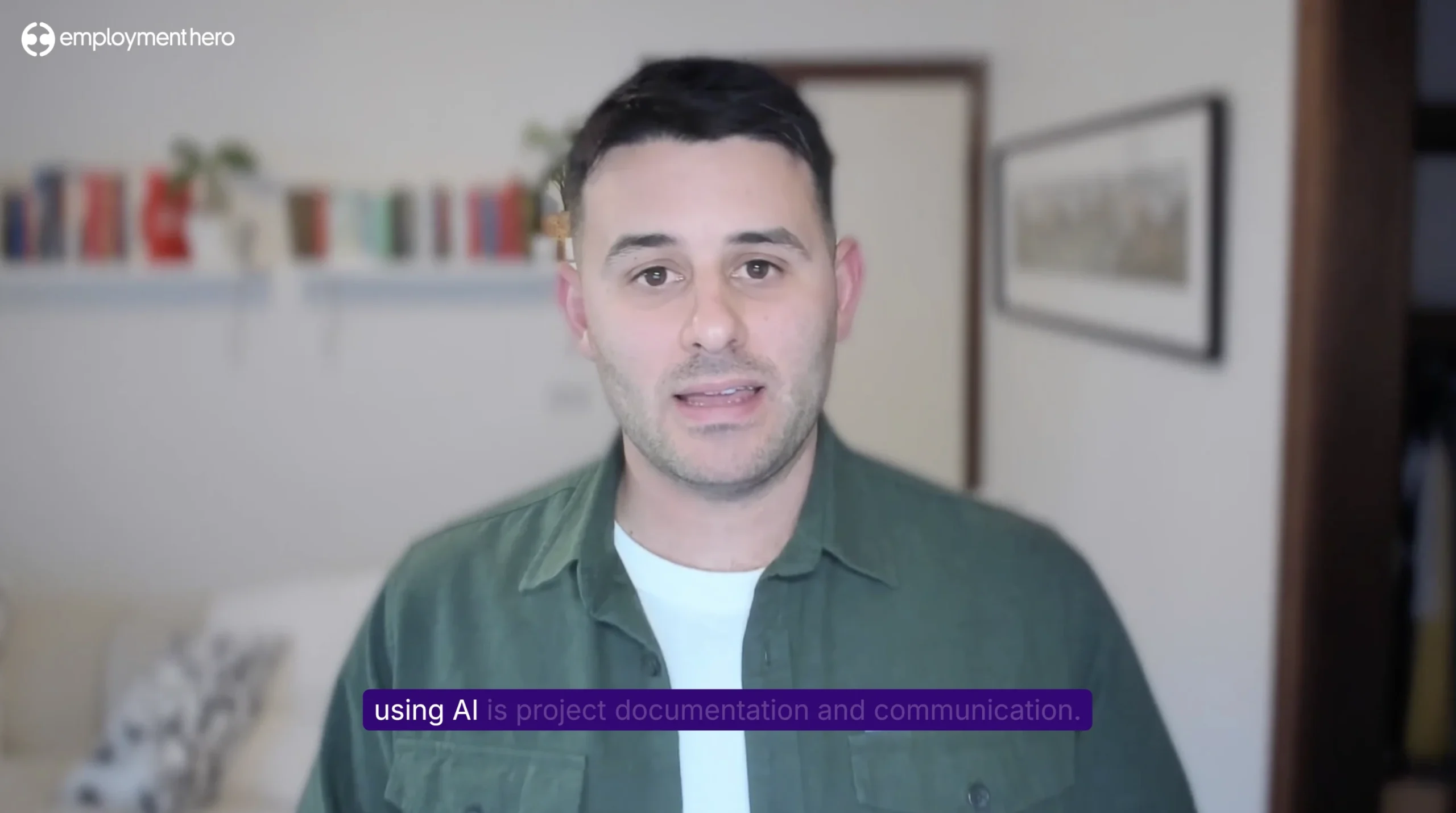 DB
DB
How far can you push it? If there is something that you’re curious whether it can do, just ask the question. I think you’ll be really surprised that it can do certain bits of work that maybe you never thought it could do.Daniel Brady GTM Solutions Lead
For Daniel Brady, GTM Solutions Lead, AI has had the biggest impact on his work in project documentation and communication.
This time-saving has meant that he can focus more on moving the project forward, instead of the admin that comes with managing a project.
AI tips: from our team to yours
The hardest part of getting used to AI is understanding what its limitations are. I think most people who are using AI have a lot of internal assumptions about what it can do and what it can’t do.
The biggest challenge that people are going to have is actually that mental limitation. What are you willing to ask the AI to do? And that’s what I would really encourage everyone to do is as you start using AI, how far can you push it? If there is something that you’re curious whether it can do, just ask the question. I think you’ll be really surprised that it can do certain bits of work that maybe you never thought it could do.
Your team gets their time back
Behind the headlines about AI and jobs sits a very human question. If AI can do parts of my job, what happens to me? The worry behind this is real and in Australia, it runs hotter than in any other market we surveyed. 45% of workers are concerned that AI is making them more replaceable. It’s worth meeting that fear directly, because the data doesn’t bear it out.
Instead, what happens when AI is embedded thoughtfully across a business is something different. The tasks that get automated are almost always the ones people liked least. The repetitive, time-consuming, admin-heavy work that filled hours without adding much. The time that opens up goes back into the work people were hired to do in the first place. Businesses with AI at the core are actually growing entry-level headcount at more than double the rate of lower adopters.
Inside Employment Hero, we’ve seen this play out across the business. In our creative function, AI has changed the shape of what the team works on, removing the mechanical parts of content production and freeing up time for the judgement that moves the work forward. In sales, admin that required hours of manual work has been restructured around AI tools, with the team now focused on analysis and improvement instead of data handling.
Our research supports what we experienced internally. 75% of Australian employees say AI has improved their productivity, while 74% say it’s improved the quality of their work. The work nobody really wanted to do is disappearing and what’s left is the work people signed up for.
of Australian employees say AI has improved their productivity
say it’s improved the quality of their work
Ready, set, roll out
That’s what embedding AI looks like from the inside and now we’re handing you the framework to do it too.
That’s what embedding AI looks like from the inside and now we’re handing you the framework for you to do it too.
Your practical framework
Our journey with AI is far from over, but the early lessons are worth sharing. With everything we’ve learnt so far, we’ve built a practical starting framework for Australian businesses ready to move from intention to action.
The four phases
Work through four phases of a company-wide rollout. These phases are drawn directly from what we did when embracing AI use at Employment Hero.
Phase 1: Get leadership aligned
This doesn’t have to be a CEO. In a smaller business it is simply the owner, or whoever is in charge, but it has to be someone with the authority to set expectations. They also should have the visibility to model the behaviour they’re asking for. At Employment Hero, our CEO announced the new AI-first value. That signal alone changed the conditions people were operating in, well before a single training session had run.
Phase 2: Build the guidelines first
Clear guidelines around AI use give your people permission to move. Without it, you risk having two groups:
- The employees already using AI tools at work without telling anyone
- The employees too cautious to start because they’re not sure what’s allowed
Neither group is where you want them.
Your guidelines primarily need to answer three questions:
- What can people use AI for without asking
- What requires a conversation before proceeding
- What is off limits
Write it in plain language and have your HR function own it, alongside whoever manages your data security.
Phase 3: Train in segments, not just company-wide
The instinct is to train everyone at once but in practice, a company-wide rollout without a clear order produces uneven results. If you start company-wide, start by clearly laying the foundations of AI knowledge, like we did with our AI bootcamp.
Then, move to segments of the business. Start with the roles where AI has the most immediate, visible impact. Through their work, you’ll be able to demonstrate a clear before and after within a few weeks. Use those early adopters as internal proof points. When a finance team member shares how a process that used to take three hours now takes twenty minutes, that’s more persuasive than any training deck.
Phase 4: Measure the results
As with any business initiative, you need metrics to know if it’s working. The metrics that matter are the ones that track behaviour like time saved on specific processes, employee confidence scores before and after training, as well as the number of workflows that have changed because of AI.
Not every phase will run smoothly and that’s fine. What’s important is that you keep the momentum going. Employment Hero’s early weeks in AI adoption had their own challenges and the businesses that move fastest through hurdles are the ones that name them early.
of Australian employees say AI has improved their productivity
say it’s improved the quality of their work
Checkpoint 4 of 5
Your Monday checklist
The four phases above are the shape of a significant journey. However, you can start the ball rolling with a few simple steps, each achievable in under a day. These will shift you from reading about AI, to doing something about it.
How Employment Hero can help
AI should raise the value of every person on your team, not reduce the need for them. It’s the thinking behind Employment Hero’s whole platform, which we built to take the repetitive work off your team’s plate and hand back the human parts of the job. That includes the judgement, the relationships and the thinking.
Everything in this guide came from doing it ourselves first. The policy framework, the training pathways and the mistakes. We’re not describing a methodology we developed for customers, but what it actually took to move 1,800 people from AI-curious to AI-confident.

The Employment Hero platform is what sits underneath all of it in practice. The same tools we used to run performance conversations about AI adoption, set expectations at a leadership level and track how our people were developing, are the tools our customers use every day.
Employment Hero is an AI-powered employment platform transforming the way businesses hire, manage, and pay their teams. Our intelligent Employment Operating System (eOS) uses HeroAI to support teams, deliver real-time insights and offer compliance safeguards.
We work with AI to bring employers the best that it has to offer.
Curious? Speak to one of our team to find out more or learn more about Employment Hero’s use of AI.


