 Australia
 New Zealand
 Singapore
 Malaysia
 Canada (Français)

 United Kingdom





Top 10 Work From Home Trends in 2026
As we start another tumultuous year, let’s have a look at the forecasted work from home trends to look out for in 2026.
-

The Team
Published
Updated
22 mins read

Hybrid working has stopped being an experiment. Around four in ten UK workers now do at least some of their job from home — 13% fully remote, 28% splitting the week — according to the Office for National Statistics. Before 2020 it was closer to one in eight.
The question employers are actually wrestling with isn’t whether people work from home, but how often. Just over half now set a minimum number of office days, most commonly three, while 91% still offer flexible working in some form (CIPD, 2025). Get that balance wrong and it costs you: around 1.1 million UK workers changed jobs in 2024 over a lack of flexibility.
Here’s what you need to know:
Fully remote working has fallen back. Hybrid hasn’t — it’s grown steadily since 2022 and settled as the default for more than a quarter of UK workers.
- Workers with a degree or equivalent qualification are ten times more likely to hybrid work than those with no qualifications, according to the Office for National Statistics (ONS).
- The ONS also reports that 45% of workers in the £50k-plus annual salary band work hybrid, compared to just 8% in the up to £20k band.
- Shifting from onsite to remote work can decrease the workforce-driven carbon footprint by 58%, according to PNAS.
As we start another tumultuous year, let’s have a look at the forecasted work from home trends to look out for in 2026.
- More digital nomads
- Improved home environment
- More savings, fewer expenses
- Greater workplace actualisation
- Re-evaluating employee benefits
- Focus on health and wellness at home
- Remote networking opportunities
- Increased demand
- Better opportunities
- Sustainability
1. More digital nomads
Remote workers love staying at home and don’t opt to travel much for work. However, 2024 will continue to see an increase in remote workers choosing to work from remote locations other than their homes. This trend is then going to result in an increase in revenue for hotels and AirBnB-like rental venues. In fact, an estimated 165,000 Brits identify as digital nomads, according to Public First. This lifestyle offers significant wellbeing benefits, with 80% of digital nomads reporting they are highly satisfied with their work, compared to 59% of other workers (MBO Partners).
This is such a perfect way to mix up your work week and recharge your batteries at the same time. What could be more perfect than renting a beach house for a week where you work by a large bay window overlooking the ocean by day and then go for a walk on the beach at sunset?

Key points
- More remote workers work from locations other than their homes.
- An increase in remote workers renting out hotel rooms and using AirBnB-like rentals.
- Working at the beach for a week. Who’d say no?
- 30% of U.S. workers value being able to choose their work location over an increase in vacation time. (PR Newswire, 2019)
- An estimated 165,000 Brits identify as digital nomads (Public First).
- 80% of digital nomads are highly satisfied with their work, compared to 59% of other workers (MBO Partners).
2. Improved home (office) environment
Remote work arrangements have seen drastic changes to the time that people are spending commuting to and from work. This time saved is now being invested into people’s home lives. Remote employees now get much more time with their family, as well as more time to socialise with friends outside of work.
Aside from being able to spend more time with your loved ones, remote work capabilities will be greatly considered when people think about moving home (whether they rent or are looking to buy) and when they are renovating as well.
Similarly, remote employees will be spending more money on furniture, technology and appliances for their work from home set-up. Whether this is ensuring they are connected to high-speed broadband, buying a new computer, or buying new furniture that is more ergonomic and comfortable.
Key points
- More quality time spent with the family due to reduced commute times.
- Home office spaces will be a requirement when looking for a new home and renovating their existing home.
- More money is being spent on technology and furniture to provide a comfortable work environment in the home.
- A survey conducted by Nulab found that 56.7% of participants weren’t allowed to bring home equipment to help them work remotely. The same survey found that 31.8% of participants had to purchase equipment to help them work remotely. (Nulab, 2020)
3. More savings, fewer expenses
As we realised in the last two years, when working from home, travel and food/coffee expenses were a major area for saving. The biggest savings were seen in the eliminated need to pay for petrol, road tolls and public transport fares.
These savings have even extended to lower spending on clothes. Remote work has seen most people have a drastic change in their work attire.
Working remote, for most, has removed the need or requirement to wear a button-up shirt or blouse that would typically be donned in the office.
Still wanting to remain professional on work video meetings, remote employees have now widely adopted a more simple aesthetic consisting of plain cotton tops, t-shirts and sweaters.
Additionally, the work from home attire has eliminated any need to wear a full suit and similar pieces that have specific care instructions.
This has completely removed the time and money it costs to have all of your best work clothes dry cleaned.
Key points
- Keep saving on your travel expenses.
- Adjust your wardrobe expenditure to purchase more simple items.
- No more dry cleaning bills.
- If employees work from home just part-time they can see savings of between $2,500 and $4,000 annually. (Forbes, 2020)
4. Greater workplace actualisation
The future of remote work will include many new forms of technology. Businesses will be seen integrating new systems and technologies to enhance communication and engagement, tighten cybersecurity as well as monitor employee productivity. This is particularly important because home-based networks typically lack the strong security mechanisms present in corporate environments, increasing data vulnerability.
These technologies will be shaping the home work environment to feel more like working on-site or in the office whilst keeping the benefits of working remotely. These technologies will allow those who are working remotely to feel less isolated and be able to connect easily with their colleagues.
Key points
- New technologies in the workplace to emulate an office-like experience at home.
- Creating social environments to reduce employee isolation.
- FlexJobs’ annual survey found that 65% of respondents are more productive in their home office than at a traditional workplace. (FlexJobs, 2020)
5. Re-evaluating employee benefits
As remote working becomes more widely accepted and commonplace, employers are going to notice that a ping pong table in the office doesn’t quite cut it when trying to attract new talent and satisfy their existing employees.
The way businesses should think about their Employee Value Proposition (EVP) to weather the turbulent period of ‘The Great Resignation’, will shift towards more holistic benefits focused on what matters to their teams in 2024.
From mental health programs (such as an Employee Assitance Program) to discounts on everyday products to fun onboarding kits you can send out to your new starters, wherever they are, there’s so much you can offer beyond a coffee machine in your office.

Key points
- Greater reward and recognition.
- Focus on what your team really wants and needs.
- A more holistic approach to employee perks and benefits.
6. Focus on health and wellness at home
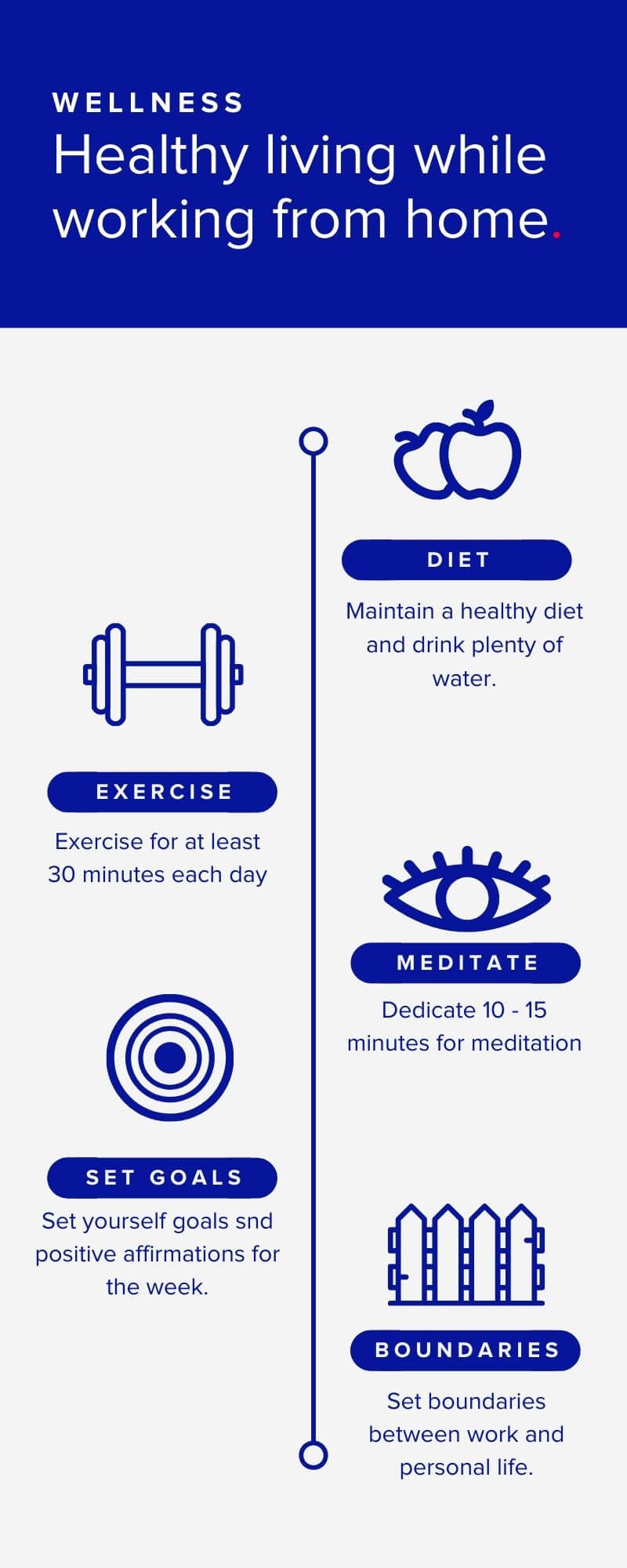
The temptation to go out for lunch will still be present, but you won’t give in to temptation as easily. When you’re at home you can enjoy the healthy options that you have already bought as a part of your grocery shopping for your household.
Gone are the days when you can use the excuse of ‘forgetting your lunch’ to go out and buy unhealthy takeaway. Working from home gives you more time to dedicate to exercise and fitness as you have been able to completely cut out the commute time to work.
The time that you have cut out can now be used to properly commit to at least 30 minutes of exercise before work. Exercise is proven to increase your productivity and motivation during the day.
Along with exercise, remote employees will have extra time to focus on mindfulness through meditation and affirmations. This is a big win for employees working remotely, as they can prioritise achieving a healthier work-life balance.
Key points
- Healthier diet.
- Dedicate more time to exercise and meditation.
- Increased motivation and productivity.
- A survey conducted by FlexJobs found that 77% of participants said having a flexible job would allow them to be healthier (eat better, exercise more, etc.). (FlexJobs, 2018)
7. Remote networking opportunities
Remote working has provided the opportunity for professionals to connect across countries and across the world. Working from home has alleviated any initial awkwardness associated with connecting with someone.
Networking has also been made easier by working from home because you can connect with professionals who you may never have met if you were working on-site or in the office.
There are also many groups of like-minded professionals who are using communication tools such as LinkedIn and Slack to create online networking communities.
Key points
- Network with physically inaccessible professionals.
- Find digital communities with like-minded people.
- LinkedIn has over 756 million users as of July 2021.
8. Increased demand for WFH roles
As remote work arrangements continue to grow there is a greater demand for a remote workforce. The remote working movement has increased employee desire to work from home.
In many cases, people will look for roles where they are either solely working remotely from home or working from home part-time and in the office part-time. However, access to these roles isn’t evenly distributed, as hybrid working is more prevalent among full-time staff and employees in less deprived areas. Employers are also advertising more roles for remote employees, and looking at specific minor occupation groups rather than broad industries provides a clearer picture of exactly which jobs are transitioning to home environments.
This is because remote work arrangements are in high demand and they know that this will increase the talent pool that they will be able to select from.
Key points
- Employees want to work from home, encouraging employers to advertise more remote working roles.
- 80% of U.S. workers would turn down a job that didn’t offer flexible working. (PR Newswire, 2019)
9. Better opportunities
Following the increase in demand, remote working has opened many doors for people living in isolated areas and even in other countries. Remote working roles are providing more jobs, and jobs of greater quality to those who live in remote regions or other countries. However, building a distributed team introduces legal and compliance challenges, requiring businesses to navigate the complexities of global payroll, correct employee classification, and cross-border taxation.
As well as helping geographically isolated people, employers are able to recruit professionals who have specialised qualifications that are specific to the role they are recruiting for. This will, ultimately, result in greater business performance as they have been able to hire the best of the best rather than hiring out of geographical convenience.
Key points
- Better and more job opportunities for people living in isolated areas in different countries.
- Employers can recruit professionals with specialised qualifications.
- 78% of businesses think that offering flexible working enables them to expand their talent pool. (PR Newswire, 2019)
10. Sustainability
Remote work arrangements will continue to prove to play a major part in reducing carbon emissions. The biggest reduction will be due to the reduction in the number of people driving their car to work. Reducing commuter travel is one of the quickest, easiest and cheapest ways to lower your carbon footprint. Shifting from onsite to remote work can decrease the workforce-driven carbon footprint by 58%, according to PNAS.
With fewer people in offices, there will be a reduction in the use of electricity in commercial office buildings. Office buildings will no longer need to run their air conditioning and heating as often or for as long.
Even though people will be working in their homes and will be using power and utilities there, instead of in the office, there is a lot more control over the use of utilities in the home compared to a massive office building.
You are more capable of controlling the climate of your home, and it is easier to self-regulate your body temperature at home than in the office.
When working remotely from home, you may even have the option to work in a more natural ambient environment. This will eliminate the need to have the lights on in your house. If you do need to have lights on you are only ever lighting one room, and you can opt to use a lamp instead of your regular ceiling lights.

Key points
- Reduced carbon footprint due to fewer cars on the road.
- Office buildings use fewer utilities.
- Controlled use of utilities within the home compared to the office.
- Every 100 employees who work from home twice a week would eliminate 70 tons of CO2, or 154,000 miles travelled by car, each year. (Grist, 2020)
- Shifting from onsite to remote work can decrease the workforce-driven carbon footprint by 58% (PNAS).
2026 and beyond
Working from home isn’t just here to stay, but it’s going to continue growing and is shaping the workforce for the better.
Learn how you can tap into the global talent market with our Employer Of Record service. Find out more by reaching out to our business specialists today!
The information in this article is current as at 20 August 2026, and has been prepared by Employment Hero and its related bodies corporate. The content is general information only, is provided in good faith to assist employers and their employees, and should not be relied on as professional advice. Some information is based on data supplied by third parties. While such data is believed to be accurate, it has not been independently verified and no warranties are given that it is complete, accurate, up to date or fit for the purpose for which it is required. Employment Hero does not accept responsibility for any inaccuracy in such data and is not liable for any loss or damages arising directly or indirectly as a result of reliance on, use of or inability to use any information provided in this article.
FAQs
Salary and education levels significantly impact the likelihood of working from home, with higher earners and degree-holders seeing much greater access to flexible arrangements. According to the Office for National Statistics (ONS), workers with a degree or equivalent qualification are ten times more likely to hybrid work than those with no qualifications. The ONS also reports that 45% of workers in the £50k-plus annual salary band work hybrid, compared to just 8% in the up to £20k band.
The primary cybersecurity and team cohesion challenges of remote work include increased data vulnerability and employee isolation. Home-based networks typically lack the strong security mechanisms present in corporate environments, meaning businesses must integrate new systems to tighten security while also creating social environments to maintain team cohesion.
Working remotely affects sickness absence rates by causing them to fluctuate based on an employee’s work-from-home status. Employers should monitor these trends to understand how remote work impacts employee health and business productivity.
Related Resources
-
 Read more: Employment Hero partners with Crezco to enable faster payroll payments for UK SMEs
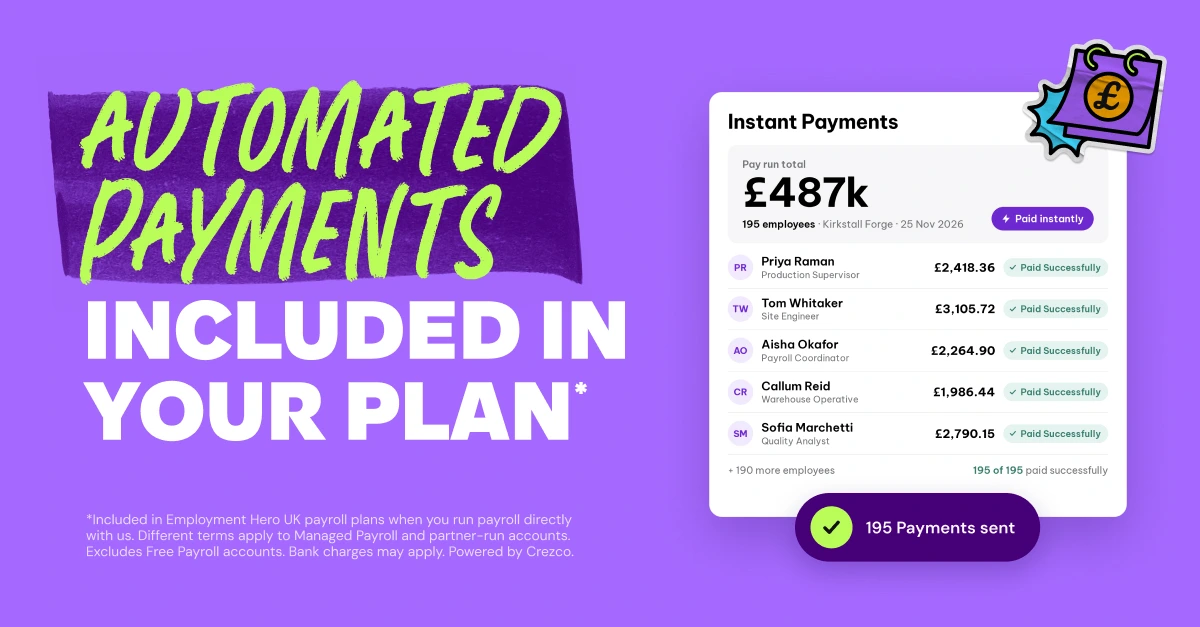
Employment Hero partners with Crezco to enable faster payroll payments for UK SMEs
London, 10 November 2026: Employment Hero, the global AI-powered employment platform, has announced a new partnership with payments provider Crezco…
-
 Read more: The quiet signs you’re burning out at work (and what to do before it gets worse)
The quiet signs you’re burning out at work (and what to do before it gets worse)
Burnout builds quietly through signs that are easy to dismiss. Learn to recognise the early warnings and act before recovery…
-
 Read more: Workplace stress risk assessment: are you actually okay going into the new year?
Workplace stress risk assessment: are you actually okay going into the new year?
Before the new year kicks off, answer these questions honestly. A practical stress check for employees. Read more.