 Australia
  New Zealand
  Singapore
  Malaysia
  Canada (Français)
 United Kingdom




National Minimum Wage Compliance: Why 660 UK Employers Underpaid by Accident
Contents
On 3rd September, GOV.UK published its latest naming round. Around 660 employers have been named for failing to pay the National Minimum Wage. £4 million returned to more than 27,000 workers and £7 million in penalties. Getting national minimum wage compliance right is harder than it looks, even for employers with no intention of underpaying.
Scroll the list and you’ll find household names on it. Organisations with finance directors, payroll teams and HR functions. It’s unlikely any of them decided to underpay thousands of people.
So we asked Sarah Sharpe, Founder of Payroll Ninjas, a community of UK payroll practitioners (and the host of the National Payroll Week panel we ran on 11th September) to help us get to the bottom of where it keeps going wrong for businesses that are trying to get it right.
What’s the question your community asks most about National Minimum Wage?
“Salary sacrifice, without a doubt. And the other big one is when you can and can’t deduct during absence — sickness, maternity. Those two come up over and over,” Sarah explains.
“What makes it hard isn’t that the rules don’t exist. It’s that there’s a lot of conflicting advice out there, and most businesses don’t have anyone in-house who can settle it. So people ask the community, because where else are they going to go?”
They look for reassurance from their peers, the pressure is real!
The story is the same all over. Salary sacrifice is a complex topic and rarely operates as a single scheme. Pension is the obvious one, but employers are also running holiday purchases, nursery fees, electric vehicles, shares and medical cash plans through sacrifice arrangements. Each one reduces pay. Each one has to be accounted for before you know what someone’s real hourly rate is.
Why are businesses still getting National Minimum Wage payments wrong?
Sarah says:
“Business as usual, mostly. There are deadlines, there’s the actual job to get done, and payroll has its own deadline every single month. The checks do happen — they just don’t happen as thoroughly as they need to.”
Even though payrollers highlight the risk of not meeting NMW compliance some businesses will have the attitude “We will deal with it when someone complains” That is what some will face.
Some employers say they go through every single staff member by hand. Others check a month in arrears to see whether anyone slipped under. With some describing it as a headache they come back to a couple of times a month.
And when it goes wrong, the business doesn’t always catch it first. At a recent event, one employer told us they’d fallen short in the past and only found out when an apprentice pointed it out.
“And most business don’t have the luxury of a dedicated minimum wage person,” Sarah continues. “There’s rarely anyone whose actual job is this one area. It sits with someone who’s already doing pensions, maternity, statutory sick pay and everything else that arrives with a deadline attached. You might have a payroll team of two people running payroll for fifteen hundred… All that, and the advice out there can often be conflicting.”
Are payroll problems actually getting worse?
“I don’t think the problem is growing, I think awareness is. It’s always been happening — the checks are just shining a spotlight on it now. Social media, HMRC, all of it.”
Enforcement is also being reorganised. The Fair Work Agency was established in April 2026 under the Employment Rights Act 2025. It brings four previously separate bodies under one roof: HMRC’s National Minimum Wage team, the Gangmasters and Labour Abuse Authority, the Employment Agency Standards Inspectorate and the Office of the Director of Labour Market Enforcement.
So the substance hasn’t changed. The visibility has, and the government has committed to publishing naming lists more regularly. (If you want the current rates and obligations in one place, our National Living Wage 2026 employer compliance check covers what changed in April.)
“But there is a real resourcing issue underneath it,” describes Sarah. “Your role grows and you grow with it. What changes underneath you is the legal responsibility, and that means the whole business needs to change, not just the payroll team. I think businesses genuinely underestimate what it takes to stay on top of this.”
Five national minimum wage mistakes behind most compliance failures
Pulling the threads together, five things account for most accidental underpayment.
Routine deductions that push pay below minimum wage. A weekly deduction for a holiday-purchase scheme is fine most weeks. Then someone’s hours drop or they take a week off, and the same deduction takes them below the floor—so it can’t be taken, and the recovery schedule has to change by hand. Uniforms, tools, till shortfalls and parking all behave the same way.
Salary sacrifice. The sacrifice reduces pay for minimum wage purposes, so the calculation runs on what’s left rather than the contractual salary. There’s a live risk here for anyone moving to employee self-service: if people can change their own pension contributions, something has to stop the change that would take them under.
Birthdays. The bands change at 18 and 21, so the correct rate changes on a date no payroll calendar knows about. From April 2026 the National Living Wage is £12.71 an hour for workers aged 21 and over, against £10.85 for 18 to 20-year-olds—a gap of £1.86. Miss a 21st birthday and the underpayment builds every week until someone notices, and the employee has no reason to know their rate should have gone up.
Derived rates. Holiday pay and overtime rates calculated from a compliant base rate can still land below the floor. Nothing flags it. Worth knowing that holiday pay record-keeping requirements have applied since April 2026, even though Fair Work Agency enforcement of holiday pay isn’t expected until 2027—so the records matter now, not later.
Unpaid working time. Cashing up, handovers, security checks, travel between sites, mandatory training. This is also where records bite — one employer pointed out that in an audit they’d need evidence when a specific person took a specific break, not just what they were paid.
Five checks before your next pay run
Each of the five failure points above is checkable. None of them takes long on its own.
- List anyone paid at or close to the floor for their age band. That’s your exposure list.
- Total every deduction and re-run the hourly rate on what’s left—including the weeks where hours dip.
- Check every sacrifice participant against the reduced pay figure, not the headline salary.
- Pull a list of everyone with a birthday coming up who’s approaching 18 or 21. If nothing generates that list automatically, that’s your gap.
- Check your derived rates — holiday and overtime — not just base pay.
If you only do one, do the first. It tells you the size of the problem before you spend time on the rest.
Minister for the Future of Work Kate Dearden says: “Every employer should check their payroll now and reach out to Acas if they need further support.”
The longer-term answer is the resourcing point Sarah made: This can’t depend on one person remembering. Where hours, pay, ages and approvals sit in the same place, the checks run every cycle rather than when someone has a spare afternoon. That’s also what an audit trail looks like when somebody asks you to produce two years of it.
How Employment Hero helps
Employment Hero offers payroll at different levels, from free payroll and comprehensive features via add-ons through to a fully managed service—so what’s included depends on the plan. What follows is what the platform does; check out the pricing page to see exactly what’s included at what level.
The reason any of this matters for National Minimum Wage is that most of what goes wrong depends on someone remembering to check. Making the checks part of the process to begin with is a major fix.
Compliance built into the pay run
Payroll includes National Minimum Wage checks alongside PAYE and NI calculations, holiday pay calculations and statutory payments. The system is kept up to date with legislation changes including National Minimum Wage and National Insurance rates, so you’re calculating against current rates without anyone updating them by hand.
Warnings before the money moves
Configure the process once and automations run it — you review and approve. You get a heads-up if something’s missing, with warning triggers and contingency pauses so nothing slips through.
Deductions and sacrifice in one place
Salary sacrifice schemes, pension contributions, attachment of earnings orders and statutory payments including SSP and SMP are all handled alongside pay. Calculating them in the same place is what makes the rate that’s actually left visible.
Pensions without manual assessment
PensionSync handles automatic enrolment, contributions, and opt-in and opt-out from one source of truth, updated in real time. Contributions enter the pay run as a percentage of pensionable earnings, with National Insurance rebate amounts specified where they apply.
Where the hours come from
Rotas & Time and Attendance covers time clocks, timesheets and geofencing. Relevant here because unpaid working time only becomes visible if it’s captured somewhere.
Unusual scenarios, set up once
Payroll scenarios can be configured per employee, including overtime rates, bank holidays and allowances. Derived rates are where compliant base pay stops being compliant.
Records that hold up
RTI submissions go to HMRC automatically after a pay run, along with FPS, EPS, P11, P11D, P32 and P60s. The platform is HMRC-recognised, RTI-compliant and GDPR-compliant.
Sarah’s view:
“I’ve reviewed Employment Hero free payroll software for small UK businesses… I highly recommend it as one of the strongest free payroll tools on the market. If you’re still working on payroll manually, you should check Employment Hero out.”
Bring your messiest scenario
Sarah hosted our National Payroll Week panel on Friday 11th September. She was joined by Jeni Morris, who spent years investigating minimum wage cases at HMRC, Nicola Denison from Phase 3 who shared how the risk changes across a client book, and Phil Harbage, an implementation expert from Employment Hero. Watch on-demand to find out more.
Disclaimer: The information in this article is current as at 4th September 2026, and has been prepared by Employment Hero Pty Ltd (ABN 11 160 047 709) and its affiliates (Employment Hero). The views expressed here are general information only, provided in good faith to assist employers and employees, and should not replace professional advice. Some information comes from third-party data believed accurate but not independently verified. No warranties ensure it is complete, accurate, current, or fit for its intended use. Employment Hero disclaims responsibility for inaccuracies and any loss or damage from reliance on this information. You should research and seek professional advice before making decisions or relying on this article.
Related Resources
-
 Read more: Leeds is outpacing Manchester in the race for talent ahead of Roses derby, new Employment Hero research finds
Leeds is outpacing Manchester in the race for talent ahead of Roses derby, new Employment Hero research finds
New Employment Hero research shows 61% of Leeds workers moved to the city, and small business employment grew 12.1% vs…
-
 Read more: Employment Hero Partners with Leeds United Foundation for Supporting Our City Awards
Employment Hero Partners with Leeds United Foundation for Supporting Our City Awards
Employment Hero launches Hero Foundation in the UK alongside Leeds United Foundation to help people facing barriers to employment find…
-
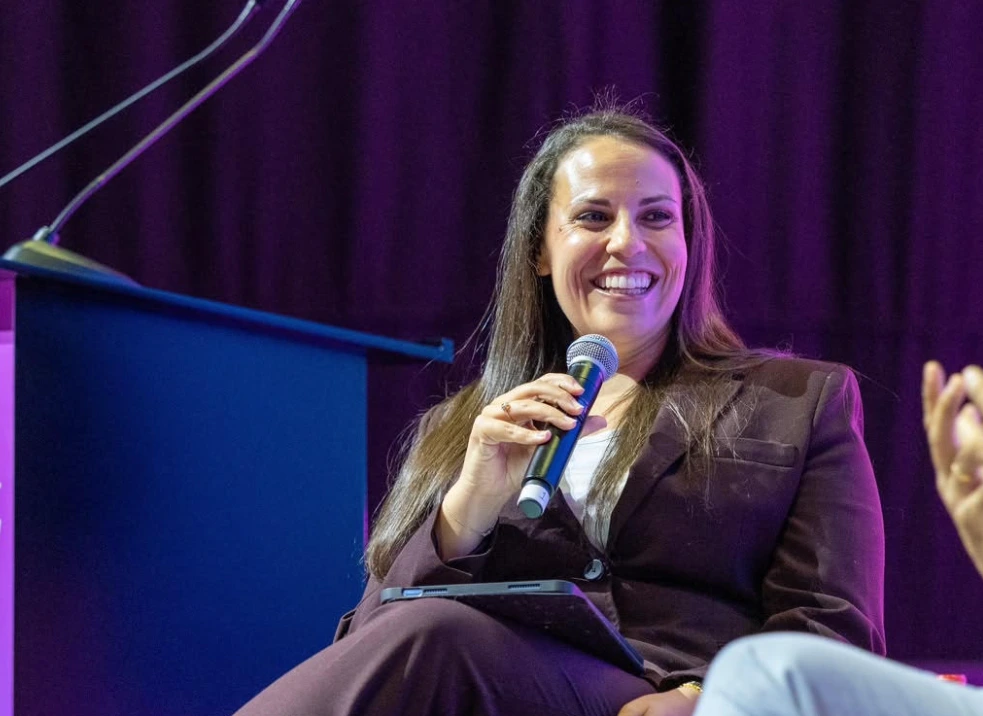 Read more: Pressure is a privilege: Sara Essa on performing when it counts
Pressure is a privilege: Sara Essa on performing when it counts
Sport broadcaster Sara Essa on pressure, setbacks and building something that lasts, ahead of Beyond the Boundary at Headingley, 15th…

