 Australia
  New Zealand
  United Kingdom
  Singapore
  Malaysia
  Canada (Français)














T2200 form 2026: The complete guide to remote worker tax deductions
Contents
Mei Lin has twelve months of hydro bills, a rent receipt and a $45 monthly internet invoice spread across her kitchen table. And she needs just one piece of paper to make it all claimable: a signed T2200 form from her employer. If that scene sounds familiar, you’re in good company. For the 2026 tax year, that makes Form T2200 mandatory for anyone deducting home office costs.
This guide covers what the T2200 tax form certifies, who qualifies for it, what employees can and can’t claim and what employers need to do. It also covers the 2026 changes that touch Form T777, from Bill C-15 to new vehicle limits. Whether you sign these forms or rely on them, you’ll finish with a clear path from declaration to deduction.
Key takeaways
- Form T2200 is the CRA’s Declaration of Conditions of Employment. It certifies that an employee was required to work from home and paid their own work expenses.
- Your employer completes and signs it. You keep it on file and give it to the CRA only if asked.
- The detailed method is the only way to claim for 2026: actual expenses, receipts, a signed T2200 and a calculation on Form T777.
Issuing T2200s to a growing remote team?
What is the T2200 form?
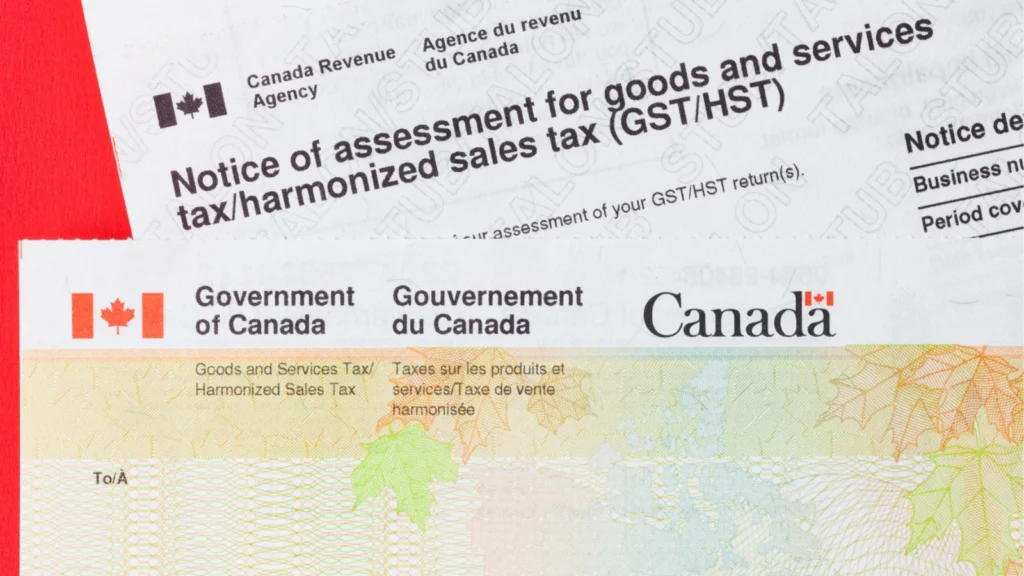
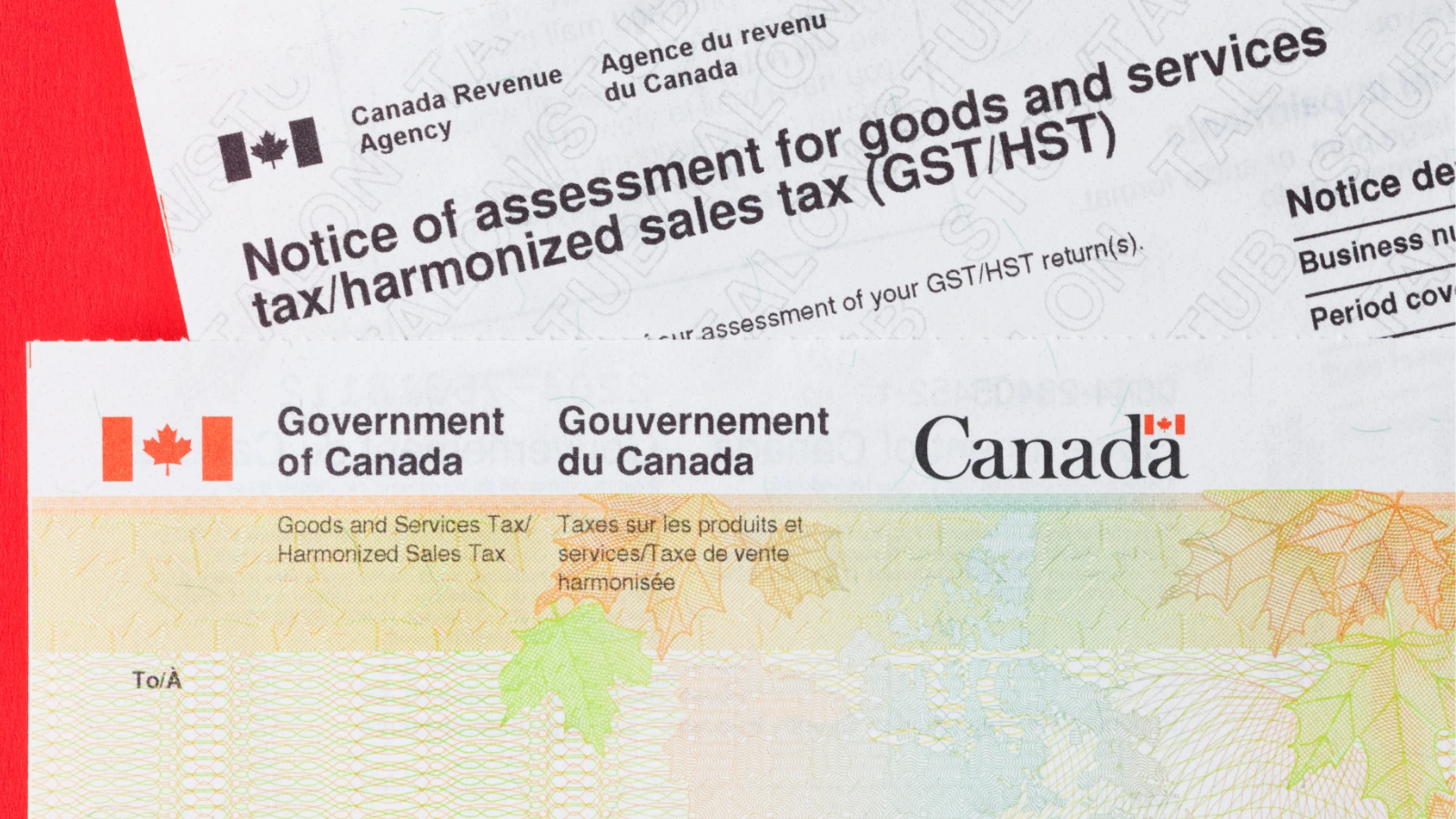
Form T2200, the Declaration of Conditions of Employment, is a Canada Revenue Agency (CRA) form that an employer completes to certify the conditions of an employee’s job and the expenses the employee had to pay themselves. For remote workers, it confirms they were required to work from home and weren’t reimbursed for the costs they’re claiming.
Employees in Quebec need the provincial equivalent, Form TP-64.3-V (General Employment Conditions), completed and signed by the employer.
Employees don’t send the T2200 in with their return. They keep it on file and give it to the CRA only on request.
Eligibility criteria for claiming home office expenses
To qualify, an employee must meet three conditions:
- They were required to work from home. A written or verbal agreement is enough, and it doesn’t need to sit in the employment contract. The CRA also treats a formal telework arrangement as a requirement to work from home, so a documented remote work policy makes the form easier to complete.
- They worked from home more than 50% of the time for at least four consecutive weeks in the year.
- They paid the expenses themselves, and the expenses were used directly in their work.
Claims cover only the eligible periods. An employee who worked from home in January to March, returned to the office, then worked from home again in November and December has two eligible periods, and they claim expenses only for those.
If an employer pays an allowance or reimbursement for certain expenses, the employee can claim only the amount above it.
Claim methods: Detailed method vs. flat rate (discontinued)

The temporary flat rate method paid $2 for each day worked from home, up to $400 for 2020 and $500 for 2021 and 2022, with no receipts. It was available for those three tax years only and has been permanently discontinued.
For 2023, 2024, 2025 and 2026, employees must use the detailed method. They claim the actual amounts they paid for home office expenses, backed by receipts and a completed Form T2200 from their employer.
What expenses can you claim? Eligible vs. ineligible
| Salaried (non-commission) employees can claim | Commission employees can also claim | Neither can claim |
|---|---|---|
| Electricity, heat and water | Home insurance | Mortgage interest |
| Utilities portion of condo fees | Property taxes | Principal mortgage payments |
| Home internet access fees | Leases of a cell phone, laptop or tablet that relate to earning commission | Internet connection fees and modem or router leases |
| Rent, if you rent your home | Furniture, desks and chairs | |
| Maintenance and minor repairs, such as light bulbs and paint | Capital expenses, such as replacing windows or flooring |
Each expense is claimed only for the share of the home used for work.
Three classification rules trip people up. Office supplies are items used up while doing the job, such as pens, paper and toner, and the CRA keeps them separate from the workspace. Cleaning products count as maintenance expenses. A basic cell phone plan counts as an “other expense” and is claimable only if the cost is reasonable, apportioned between work and personal use and backed by records of the minutes or data used for work.
Struggling to keep receipts, forms and deadlines straight across a hybrid team?
How Form T2200 works with Form T777
The T2200 is the permission slip, and Form T777 (Statement of Employment Expenses) is where the math happens. Employees file T777 with their return, leave the receipts at home and enter the total on line 22900. Our tax package preparation checklist lists what to gather first.
2026 updates that touch T777
Capital cost allowance (CCA) on T777 applies to vehicles, not home office equipment, so this affects employees who also claim vehicle expenses. Three changes apply:
- Bill C-15. The Budget 2025 Implementation Act, No. 1 received Royal Assent on March 26, 2026. It introduced reaccelerated investment incentive property (RIIP) rules, which generally suspend the half-year rule and enhance the first-year deduction for qualifying property acquired after 2024.
- A CRA hold on CCA returns. On February 23, 2026, the CRA asked electronic filers to hold returns claiming CCA on Form T777 until it issued a revised form to reflect the RIIP rules.
- New vehicle limits. The Class 10.1 passenger vehicle cap rose from $38,000 to $39,000 (plus tax) for vehicles acquired on or after January 1, 2026. The Class 54 zero-emission cap remains $61,000.
Employer responsibilities and legal requirements

Employers complete and sign Form T2200 and give it to eligible employees. The CRA leaves it to the employer to decide who is authorized to sign. No deadline applies, but the form should be in employees’ hands before the April 30 filing deadline. Lawrence Levin, an EY Canada tax partner, suggests issuing them in bulk alongside T4s in late February.
No provision of the Income Tax Act compels an employer to provide a T2200. The CRA does expect employers to issue one when an employee’s conditions are met, and Levin told Investment Executive the risk is “primarily an employee relations issue.” In practice, issuing the form supports your people and your culture. A written T2200 employer policy gives you one consistent process.
The form is also simpler to complete. Employers no longer estimate the percentage of duties performed at home. Instead, the form asks two yes-or-no questions: did the employee work from home more than 50% of the time for at least four consecutive weeks, and did they use the workspace regularly for in-person meetings? The CRA accepts electronic signatures, so handwritten ones aren’t required.
Record-keeping, deadlines and CRA resources
Employees keep the T2200, receipts and supporting records for six years. The personal tax filing deadline is April 30. In January 2026, the CRA published the 2025 edition of Guide T4044 (Employment Expenses) and Form T2200, with eligibility rules unchanged from the prior year.
From declaration to deduction
Mei Lin’s kitchen table clears quickly once the signed form arrives: receipts sorted by category and one T777 to total them. Employers can make that routine by deciding who signs, setting a February issue date and keeping a policy on file.
Ready to plan next year’s T2200 process before the rush?
T2200 form: Frequently asked questions
No. Under the detailed method, you need a completed and signed Form T2200 from your employer to claim home office deductions. If you don’t have one and don’t expect one, don’t claim these expenses.
No. That refers to the temporary flat rate method, which paid $2 a day up to a yearly maximum and ended after the 2022 tax year. You must now use the detailed method, which requires receipts and a T2200.
Your employer completes Form T2200 to certify that you’re eligible to claim expenses, and you keep it on file. You complete Form T777 to calculate your actual expense amounts, and you file it with your return.
The CRA publishes its forms, but it doesn’t send the T2200 to employees. Your employer downloads the fillable PDF from the CRA website, completes it and gives it to you.
No. The T2200 must be completed and signed by your employer. For more, read our answers to common tax questions.
Related Resources
-
 Read more: T2200 form 2026: The complete guide to remote worker tax deductions
T2200 form 2026: The complete guide to remote worker tax deductions
Unsure how to handle remote work tax deductions? Learn how to issue and claim the T2200 form for eligible home…
-
 Read more: Employment Hero in September: Native mobile onboarding, contractor payments and unified mobile support
Employment Hero in September: Native mobile onboarding, contractor payments and unified mobile support
Contents Welcome to our September product roundup! This month, we’ve focused on delivering features designed to save you time and…
-
 Read more: The October 2026 minimum wage increase: What changed in five provinces and what to check now
The October 2026 minimum wage increase: What changed in five provinces and what to check now
October 2026 minimum wage increase: see the new rates in Ontario, Manitoba, Saskatchewan, Nova Scotia and PEI and what to…
