 Australia
  New Zealand
  United Kingdom
  Singapore
  Malaysia
  Canada (Français)














How to create an employee handbook in Canada
Published
How to create an employee handbook in Canada
Published

A great handbook isn’t just admin, it’s your blueprint for a fair, consistent and compliant workplace. This guide shows Canadian employers how to build a handbook that actually works: clear enough to protect you, practical enough to use every day and human enough to reflect your culture.
What’s inside the guide
- The legal must-haves for a compliant Canadian employee handbook
- How often to review and update policies (and who should sign off)
- What to include for onboarding, conduct, leave and safety
- Common provincial differences across Ontario, Québec, BC and Alberta
- Free templates and resources to help you get started fast
How to create a Canadian employee handbook FAQs
An employee handbook is a document that outlines your company’s key policies, procedures and expectations. In Canada, it helps employers stay compliant with federal and provincial laws while keeping the workplace fair and consistent. A well-written handbook builds trust and protects both your business and your employees.
No, there’s no single law that requires you to have an employee handbook. However, many provincial regulations — like Ontario’s Employment Standards Act or British Columbia’s Employment Standards Act — make it essential to clearly communicate workplace policies. A handbook helps you meet those obligations in one central place.
Your handbook should include the essentials that protect your people and business, such as:
- Workplace violence and harassment prevention
- Health and safety
- Overtime and leave rules
- Privacy and data handling
- Code of conduct
Including these policies ensures compliance and builds clarity from day one.
Review your employee handbook at least once a year or whenever employment standards change. Laws evolve across provinces — for example, updates to Ontario’s leave entitlements or Alberta’s overtime rules — so keeping your handbook current ensures ongoing compliance and credibility.
An employment contract is a legally binding agreement between an employer and employee. The employee handbook, on the other hand, explains how those legal terms apply in daily operations. It’s not a contract — it’s a practical guide for how your workplace functions and how employees can uphold company values.
In most provinces, an English version is sufficient. However, in Québec, the Act Respecting Labour Standards and language laws often require that your handbook be available in French. Providing both English and French versions ensures accessibility and compliance.
Make the handbook part of your onboarding process. Ask each employee to read and sign it digitally, and confirm receipt after probation. Regularly communicate policy updates and encourage questions. This keeps your workplace transparent, consistent and engaged.
The typical structure of an employee handbook includes a numbered outline of key sections to help employees navigate the document easily. A standard layout often looks like this:
1. Company information: Start with your company history, mission, vision and values statement examples, culture, organizational charts and HR contact information.
2. Policies and procedures: Outline your core rules, including your drug and alcohol policy and any available rehabilitation resources.
3. Employee expectations: Outline dress codes, work schedules, physical location information and building layouts to show specific locations like bathrooms and parking lots.
4. Compensation and benefits structure: Detail pay schedules, direct deposit options and health or retirement benefits.
5. Communications and technology policy: Set standards for internet, email, instant messaging and social media use. You can use a social media policy resource or template to help build this out.
6. Emergency procedures and workplace safety: Include specifics on handling workplace accidents and detail your evacuation plans.
7. Disciplinary and termination procedures: Cover warnings, appeals, return of equipment and insurance end dates.
Typical items included in the policies and procedures section cover the core rules that explicitly protect company assets, like equipment, rather than just managing legal liability. You should include clear guidelines on anti-discrimination, workplace health and safety, leave entitlements, code of conduct and data privacy. This section acts as the operational rulebook for your business, ensuring everyone understands their rights and responsibilities on the job.
Disciplinary and termination procedures should be described clearly to cover warnings, appeals, the return of company equipment and insurance end dates. Termination details in the handbook must address the handling of unpaid accruals of time off. Outlining these crucial steps ensures a fair, transparent process for departing employees.
A dress code policy should be defined by clearly outlining the expected professional attire and grooming standards for your specific workplace environment. Dress code policies often need specific guidelines regarding visible tattoos and piercings. Setting these expectations upfront helps employees feel confident and comfortable in how they present themselves at work.
If employees feel they are being discriminated against, they should immediately follow the grievance procedures outlined directly within the handbook. The handbook must provide actionable guidance on how to report incidents, who to contact in human resources or management, and the steps the company will take to investigate the claim confidentially. We champion a safe, inclusive workplace, and having a clear reporting process is essential to protecting your team.
Employers can update their handbook without a full revision by issuing policy addendums. Using addendums allows for handbook flexibility and updates without requiring a full document revision.
The compensation section of a handbook should include clear details on pay schedules, direct deposit options and health or retirement benefits. Compensation sections should account for months with varying numbers of pay periods to avoid employee confusion.
Medical leave details in the handbook should clearly outline the operational boundaries for taking time off due to illness. The handbook should explicitly state when a doctor’s note is required for sick leave.
To download the guide, we just need a few quick details.
Related Resources
-
 Read more: Section 87 Explained: What Payroll Teams Need to Know
Section 87 Explained: What Payroll Teams Need to Know
Understand Section 87 of the Indian Act. Join our webinar to learn payroll tax exemptions, compliance tips, and best practices…
-
 Read more: How to protect your small business from tariffs: a free guide for Canadian employers
How to protect your small business from tariffs: a free guide for Canadian employers
Tariffs are squeezing Canadian small businesses. Get 10 practical ways to protect your margins, supply chain and team in one…
-
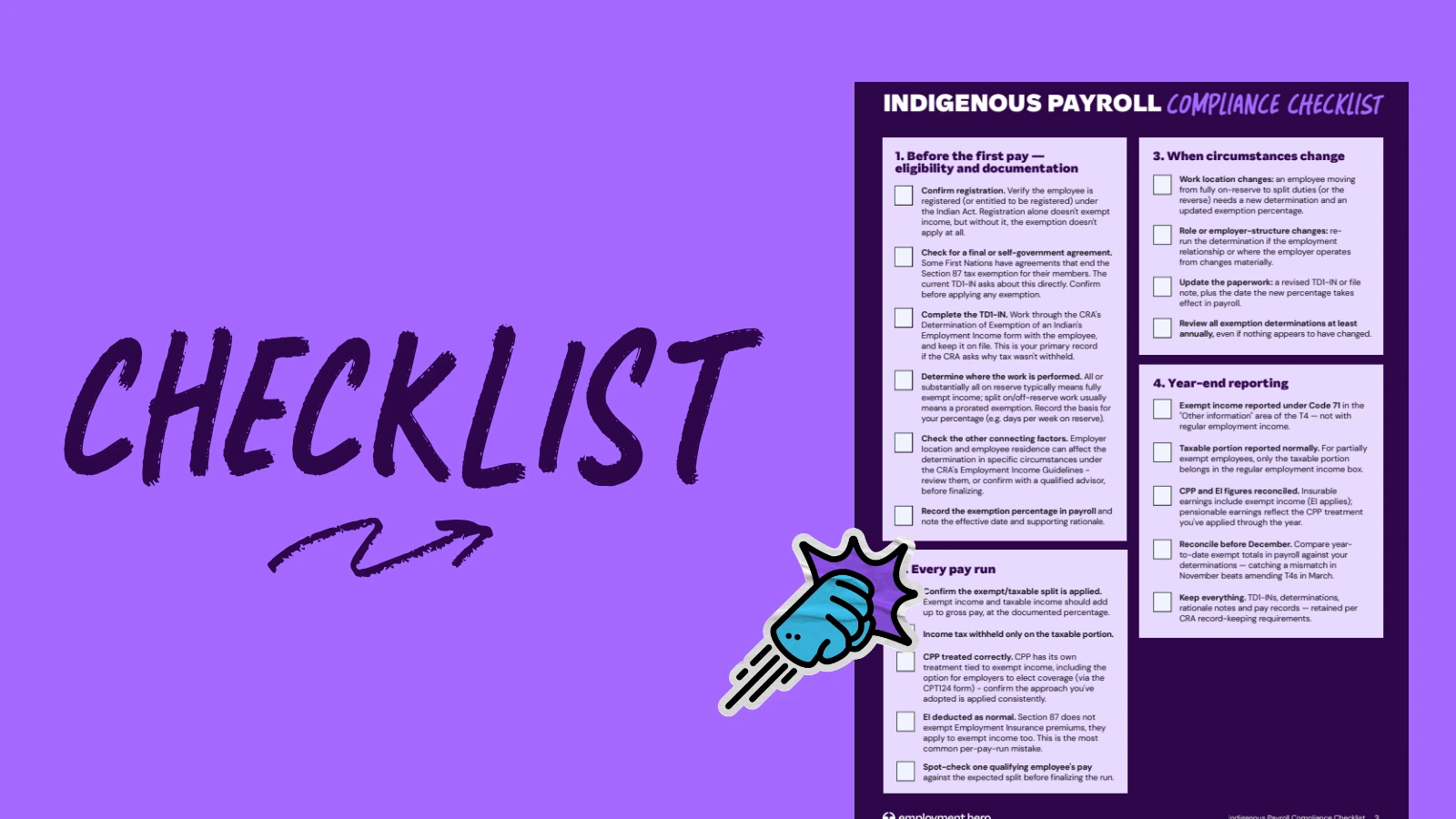 Read more: Indigenous Payroll Compliance Checklist
Indigenous Payroll Compliance Checklist
Simplify Section 87 tax exemptions with our practical Indigenous payroll compliance checklist. From eligibility to year-end, manage your payroll accurately.

