 Australia
  New Zealand
  United Kingdom
  Singapore
  Malaysia
  Canada (Français)


Employee coaching plan template [Free download]
Published
Employee coaching plan template [Free download]
Published

Learning at work is a game-changer. It helps employees tackle challenges, spark new ideas, build confidence and keep skills razor-sharp. Professional development has always mattered in Canada’s competitive economy, but right now, it’s more important than ever. In fact, 40% of leaders say they don’t get enough coaching from their manager, and 31% of frontline leaders want more coaching than they’re currently getting, according to DDI.
This free employee coaching template is designed to set your people up for personal and professional growth. Inside, you’ll find the core areas where coaching can make a difference, plus step-by-step guidance to build a coaching plan that supports real progress.
Ready to get started? Share the doc with your employee, ask them to fill it out, then book time for a conversation. Walk through each section together and put coaching into action.
What is an employee coaching plan?
An employee coaching plan is a clear, practical strategy that empowers you to support your team’s ongoing success.
With this plan, employees get a direct path to align their goals and coaching needs while managers gain clarity on how to give effective support. Using a standardized coaching plan template improves consistency, efficiency, tracking and scalability, helping HR teams and managers justify its use. In fact, experts increasingly suggest replacing traditional performance improvement plans (PIPs) with coaching plans. This is the kind of document you’ll reference again and again as your people work toward their objectives.
How does employee coaching help with professional development?
Coaching and professional growth go hand in hand. When you invest in coaching, you create space for ongoing improvement.
Sometimes coaching means formal learning opportunities-thinkemployee learning management system-but often it’s about simple conversations and sharing wins and lessons. No matter the approach, a structured coaching process helps employees grow, boosting confidence and motivation. According to the Coaching Federation (2024), 72% acknowledge a strong correlation between a well-designed coaching plan and higher engagement levels. Clear pathways for career growth mapped out in coaching sessions can significantly increase retention rates. Coaching plans also act as a critical risk-management tool for the executive team, mitigating business continuity threats like unidentified employee flight risk.
If you’re wondering when to step beyond coaching and invest in targeted upskilling, check out our guide onleadership training for your managers.
How do you write an employee coaching plan?
This template helps you start strong.
Structure matters. Without it, coaching plans drift off track. By writing down a simple, focused plan, you’ll clarify what motivates the coaching, the why behind it, how it aligns to your company goals, what great outcomes look like and what steps both manager and team member will take.
Key elements of a coaching plan
Here’s what’s inside this template and why it matters.
The why
Start with a clear reason for the coaching plan. Maybe your employee wants to overcome a challenge, get ready for a promotion or move into a new role or department. Whether their drive comes from setbacks or successes, coaching is an opportunity for growth.
The game plan
Drill down into the practical steps. List up to six clear actions your employee will take with your support. Make these actions specific, actionable and ordered logically. Simplicity is key—no over-complicating things.
The timeline
When will things happen? Map out timelines for each action, establishing both short-term and long-term milestones for the employee. Setting deadlines keeps everyone accountable and pushes progress forward.
What is the best way to coach an employee?
Every manager brings their own style to coaching. There’s no single formula. But don’t confuse ‘coaching’ with ‘telling’. The best coaches support their teams to find their own solutions rather than jumping in to fix things at the first sign of trouble. Effective coaching behaviours require balancing ‘releasing’ (creating a safe space) and ‘confronting’ (challenging perceptions). Many managers use the GROW framework (Goal, Reality, Options, Will) to structure effective coaching conversations. You can also supplement traditional manager-led coaching with peer coaching groups, which bring together five to 12 members to collaborate and learn from each other.
If you’re coaching a swimmer, you don’t jump in the pool to finish the race. You cheer from the sidelines and help identify strategies to keep going. The same mindset applies at work. Well-timed coaching, especially empowered by leadership training, level-ups a manager’s support.
If your employee hits a roadblock, encourage them to brainstorm and talk through their ideas in a one-on-one meeting. Use open-ended questions like:
- What do you think your options are for removing this roadblock?
- What’s the main issue causing the roadblock?
- Are there ways we could pivot to avoid this challenge?
- What are three unexpected solutions that might move things forward?
Support employees as they develop their answers and confidence. That’s what real coaching looks like—and it pays off for the whole business.
More resources and templates for professional growth
Want more ways to help your team thrive? Check out these resources.
Performance review toolkit
We’ve built this end-of-year performance review toolkit for managers. It’s a go-to for review conversations with your team. Plus, see how ourHR software can make performance reviews fast, easy and insightful.
Professional development plan template
If you’re looking to take your team up a notch, start with our professional development plan template. Implementation turns potential into real progress.
Career progression plan template
Help junior and mid-level employees think bigger about their futures with a career progression plan. This template gives structure to their ambitions and helps define the steps to get there.
It’s time to put people first
Building a culture of coaching isn’t just about ticking boxes—it’s how you future-proof your team and keep your business moving forward. When you invest in real growth conversations, you create more engaged, resilient employees who are ready for what’s next.
FAQ
You create an employee coaching plan by following a structured step-by-step process. First, assess the current state and incorporate employee self-evaluations to reconcile their perspective with your view. Second, set clear objectives. Third, identify the resources and support needed. Fourth, develop an action plan. Fifth, establish short-term and long-term milestones. Sixth, schedule regular follow-ups. Finally, document the sessions to track progress.
The 11 types of coaching plan scenarios include leadership, performance, career progression, succession, conflict resolution, skill-specific, new manager, diversity and inclusion (D&I), time management, executive and team-building. Using these specific use cases rather than a one-size-fits-all approach helps tailor the coaching to the exact situation.
A written coaching plan should include the employee’s goals, the specific actions they will take, short-term and long-term milestones, required resources and a schedule for follow-up meetings. It should also include a section for documenting session notes to track long-term progress.
The required elements of coaching plan documentation include the goals discussed, action items agreed upon, progress made and any roadblocks identified. Documentation of coaching sessions helps HR and leadership uncover patterns and themes across multiple employees, supporting long-term performance management.
Common obstacles that stop employees from enhancing their performance often include external systemic blockers rather than internal skill gaps. Managers should look for external obstacles like a lack of time, limited training or insufficient tools before assuming the issue lies with the employee’s abilities.
You address the coaching needs of high-potential employees versus underperformers by categorizing your coaching strategies by performance level. Use assessment tools like the Skill Will Matrix or a 9 Box Grid to identify exactly which employees need what type of coaching. Focus on strengths and career advancement for high-potential employees, while tailoring your approach to address specific behavioural challenges and skill gaps for underperformers.
The difference between mentoring and coaching comes down to focus and timeline. Coaching is a goal-oriented approach focused on building specific skills and improving current performance. Mentoring is a broader, long-term relationship focused on overall career growth and professional development.
Effective reality-checking coaching questions help employees assess their current situation during the ‘Reality’ phase of the GROW framework. You can ask: “What is happening right now?”, “What steps have you already taken to resolve this?” and “What is the impact of this situation on you and the team?”
Effective exploration and options coaching questions encourage brainstorming during the ‘Options’ phase of a coaching conversation. Try asking: “What are all the possible ways to approach this issue?”, “If there were no constraints, what would you do?” and “What are the pros and cons of that approach?”
Register for the template
Related Resources
-
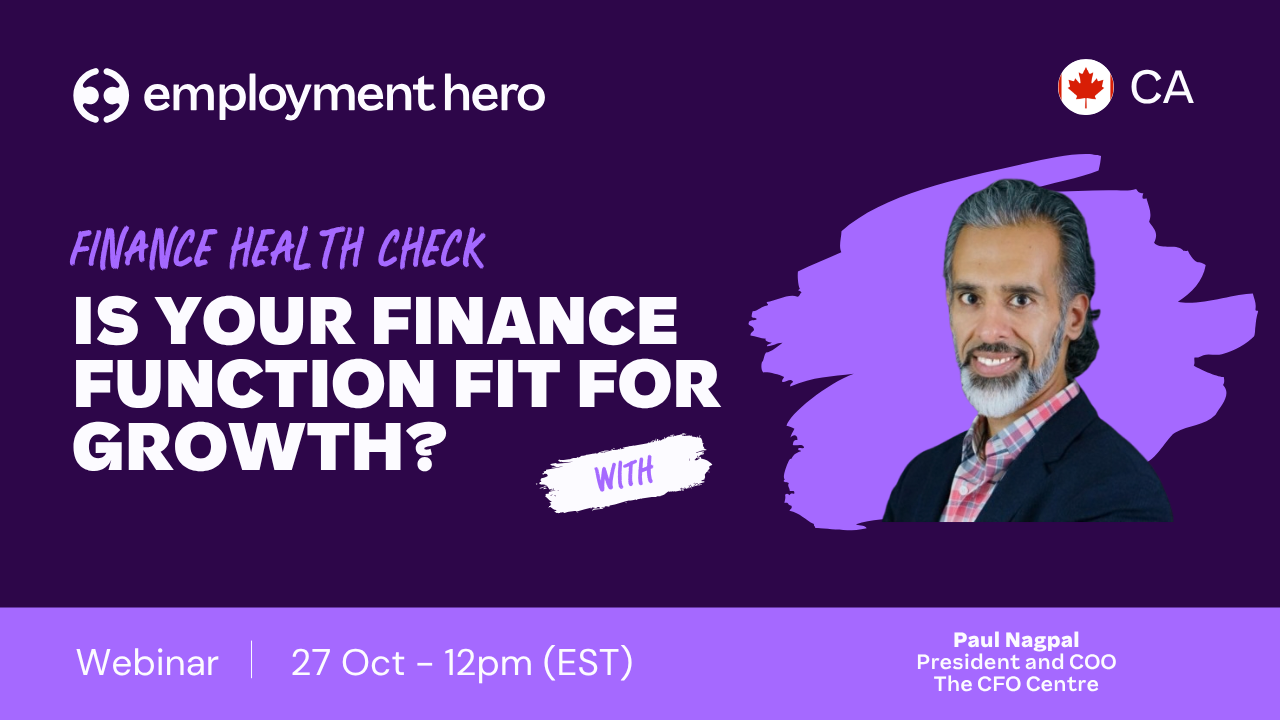 Read more: Is Your Finance Function Fit for Growth?
Is Your Finance Function Fit for Growth?
Join our webinar for a practical finance health check. Learn how to evaluate your finance function and gain the confidence…
-
 Read more: Newfoundland and Labrador Labour Standards Act guide
Newfoundland and Labrador Labour Standards Act guide
Master compliance with this guide to Newfoundland and Labrador employment standards. Discover rules for minimum wage, overtime, leave, and more.
-
 Read more: New Brunswick employment standards: a guide for employers
New Brunswick employment standards: a guide for employers
Struggling with New Brunswick’s changing labour laws? Ensure compliance with the latest 2026 wage, leave, and termination rules. Read the…