











Craig Hartzel didn’t set out to become a go-to voice on AI adoption. He stumbled into it. A few years ago, his e-commerce business was starting to haemorrhage money. Searching for a fix, he came across Midjourney, among the first widely accessible AI image generation tools to reach the public, launching in early 2022 some nine months before ChatGPT brought AI into mainstream conversation. He started using it to generate designs, cutting out the £80 per-image fees he’d grown accustomed to paying to mere pennies.
“All of a sudden you could create more products, more designs. You could trend hack, meaning creating designs quickly based on what was popular and trending,” he says.
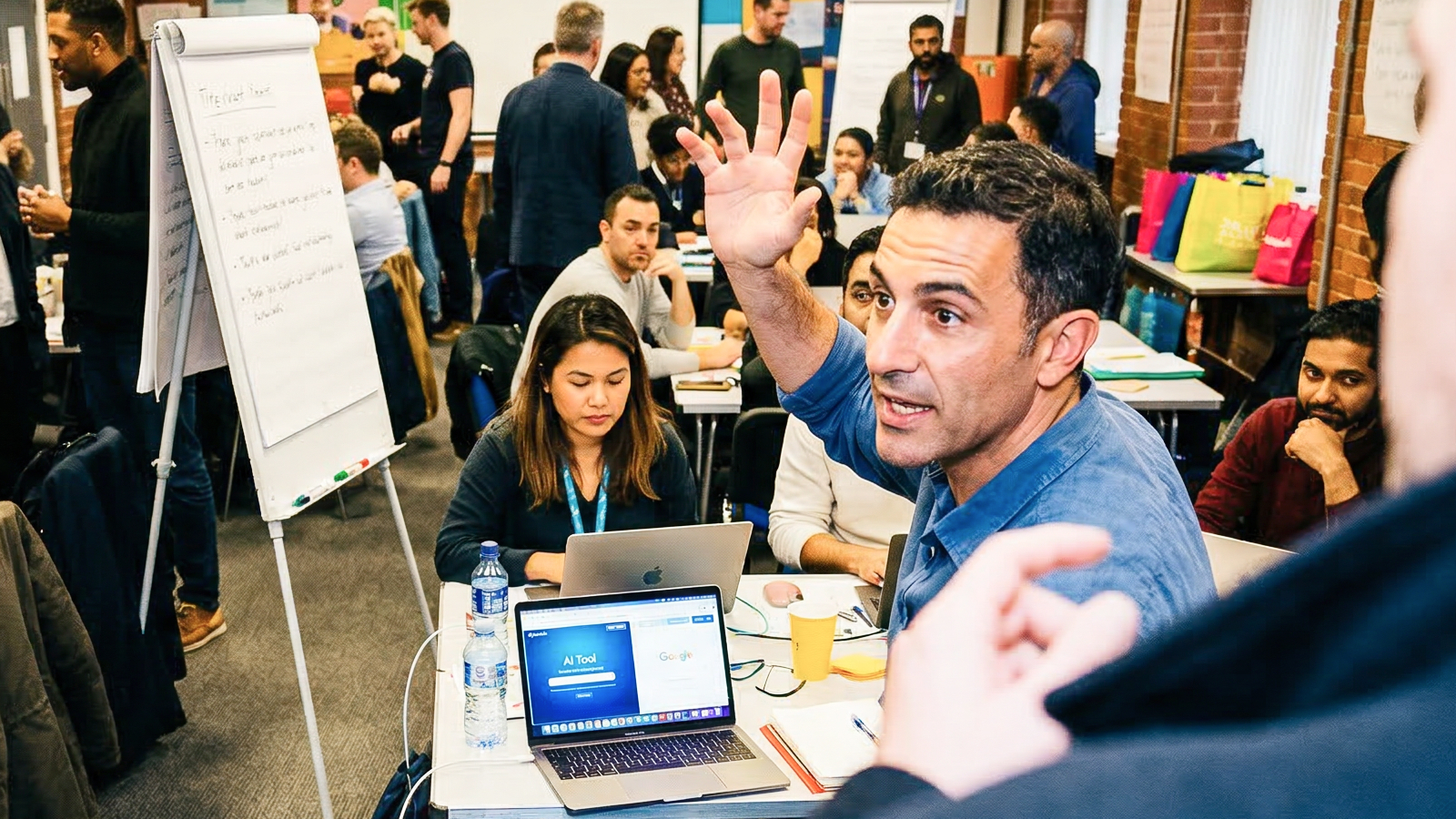
Then came the part he didn’t plan. “I was asked to be on a panel about AI, which I did really reluctantly. I remember turning up and I just had imposter syndrome. There was one guy who had a PhD, super bright, from an Ivy League university, and it went well. Then I was asked to do some ChatGPT training. I was expecting five people in a room and I walked in, there were 50 people staring at me, bright-eyed.”
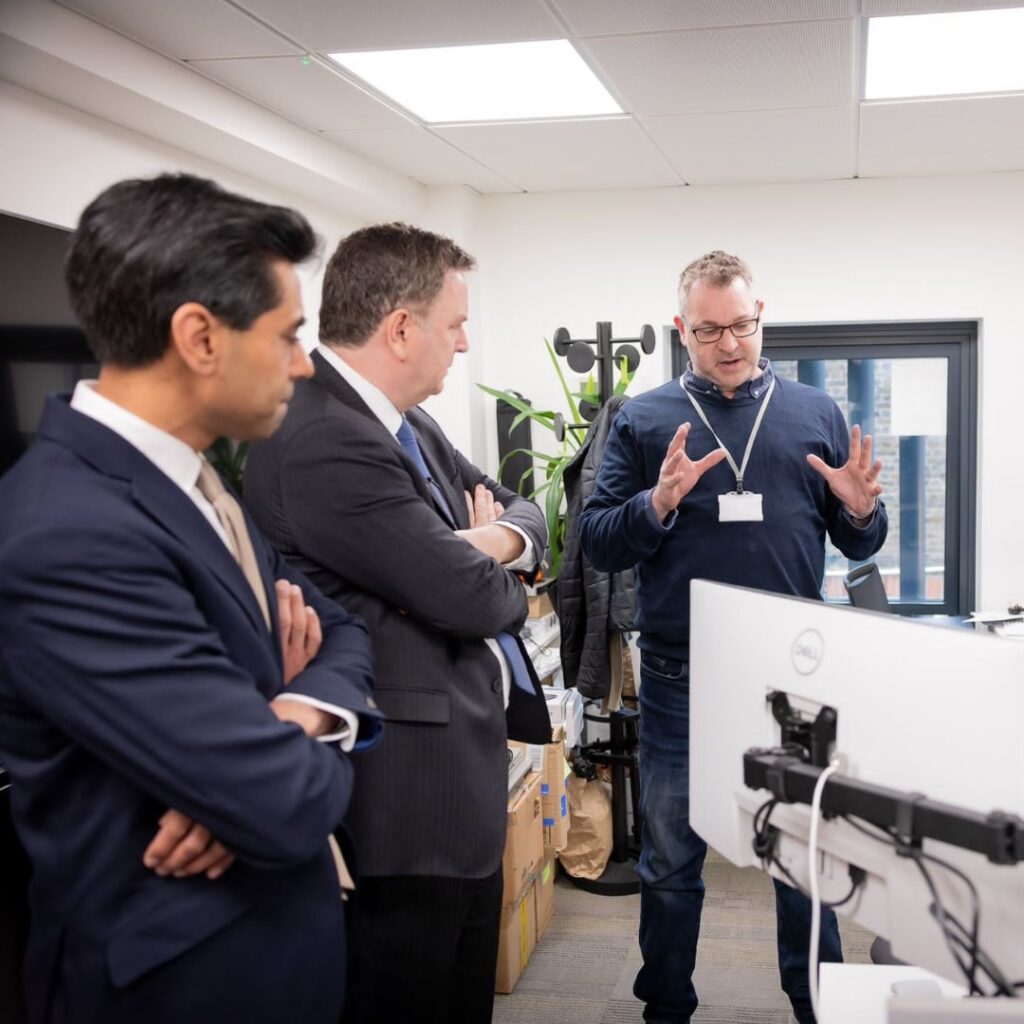
That was the beginning of Craig’s journey towards creating Hartz AI, a London-based consultancy that has since trained over 500 UK SME professionals and works with organisations across sport, healthcare, education, charities and professional services. His clients include the Lancashire Football Association, where Hartz AI has delivered AI training and is continuing to work with the organisation to embed the technology at scale. He’s also met with Government ministers, including Pat McFadden, Secretary of State for Work and Pensions, who he spoke with recently to discuss AI’s implications for the next generation of workers.
Scores of training sessions later, Craig has built a clear picture of where UK businesses are repeatedly getting stuck with AI, and what it takes to get unstuck.
Over a third of SMEs are integrating AI into their daily work, according to the British Chambers of Commerce, while Employment Hero’s own research shows 62% of business leaders are creating or planning to create new AI-specific roles. But research from Starling Bank suggests the lack of meaningful integration is still costing the UK economy £25.3 billion a year, as employees spend around 15 hours a week manually bridging the gap between disconnected tools.
The fumble period, as it’s come to be known, is real and measurable. Here, Craig breaks down what drives it.
1. AI is far more useful than most businesses realise
One of the most common entry points for SMEs can also be their ceiling. YouGov research from 2025 found that marketing is among the top sectors leading AI adoption among SMEs, explaining why so many businesses associate the technology primarily with content. But Craig is clear that this is only the start.
“A lot of people just think it’s ChatGPT, or marketing content creation,” he says. “But it’s so much more than that.” Businesses solely using AI for copy are missing pipeline management, data analysis, customer profiling, financial benchmarking, and a great deal more besides.
Research from the Greater Manchester Chamber of Commerce recently found that only one in 10 UK SMEs are turning AI into real productivity gains, a figure that suggests adoption and effective use remain two very different things.
2. Fear is the wrong starting point for AI adoption
Many businesses come to AI with a sense of dread as opposed to ambition. Craig hears it constantly. “A lot of the conversations I have, they’re coming in from [a sense] of fear almost,” he says. “They’re not seeing it as a solution-based thing.”
The concern is often less about the technology itself and more about the people around it. “A massive pain point and worry for a lot of SMEs is what’s going to happen to the member of staff who’s been with them for 20, 25 years? They’ve probably gone through life events with them, whether it’s marriages, kids, possibly deaths, and then: where is AI going to fit in?”
It’s a legitimate concern. But the evidence suggests it may be more perception than reality. New research from the British Chambers of Commerce published this month found that 86% of SMEs using AI say job roles have remained unchanged. Craig’s view is that the employees most at risk aren’t necessarily the ones who’ve been there longest, but the ones who haven’t been given the tools to keep up. “You have to upskill your staff now,” he says. “It’s the new digital literacy.”
3. Fragmented AI adoption is becoming a legal liability
Most organisations Craig walks into have the same setup: individual employees using personal ChatGPT accounts in their own way, with no consistency, no oversight, no shared standards. “Loads of companies are just doing it all fragmented,” he says. “There’s no real AI pathway.”
A free-for-all might have been forgivable two years ago. Today, with the Employment Rights Act introducing new obligations around workplace transparency and data handling, alongside rising regulatory scrutiny of AI use in professional settings, it’s becoming a genuine liability. “You’ve got to be careful about the information that’s provided,” he says.
4. Every business needs someone to Champion AI internally
A policy without a person behind it rarely holds. Craig’s solution is an AI champions programme: identifying someone inside the business who leads on adoption, normalises usage day-to-day, and shows colleagues what good looks like in practice.
“The idea is that they’re then not dependent on us as much,” he says. Without that internal anchor, progress tends to stall the moment external support steps back.
5. The AI compliance questions businesses are leaving unanswered
The questions Craig fields daily (Can we upload company data to ChatGPT? Does it learn from our inputs? Should we be disclosing AI use to clients?) are questions that he says go unanswered for too long in many businesses. And with the Employment Rights Act bringing greater scrutiny to how businesses manage employee data and workplace processes, getting it wrong is becoming increasingly costly. “If you’re doing something serious,” Craig says, “I always say you’ve got to cite the source. You can’t just trust everything that comes out.”
6. Better prompting is the fastest way to better AI results
Vague inputs produce vague outputs, and Craig stresses: “You can’t be a lazy prompt engineer. The more context and information you give it, the better the output will be. You’ll get out what you put in.” Research backs this up: users report greater work efficiency and better results when prompts are explicit, structured and detailed. A separate finding referenced by MIT Sloan suggests structured prompting can deliver up to 30% better output quality.
The skills gap behind this is significant. According to the UK Government, only 32% of UK workers have received AI training. “Prompt engineering is the new digital literacy,” Craig says. “If you can get the most out of tools like ChatGPT or Claude, you don’t have to worry about AI taking your job. You’ve got to worry about someone who’s very proficient in prompt engineering.”
7. Your existing data has far more value than you realise
Most SMEs are richer in data than they realise, and slower to act on it than they should be. Research from Alliance Procurement Solutions found that UK SMEs are adopting big data analytics at a rate of less than 1%, a striking figure given how much untapped insight sits in the average organisation’s spreadsheets and management systems.
Craig says he has worked with charities that, after feeding five years of data into an AI tool, discover for the first time which events actually returned a profit and which ones barely broke even. “Oh, actually, now I realise that if we put on an event for over-50s, where there’s a speaker who has been a beneficiary of the cause, our donations go way up,” he describes clients finding.
8. AI outputs are a starting point, not a finished product
More employees and SME leaders need to understand what AI actually is. It’s not a search engine or an oracle. “It’s an algorithm making its best prediction based on what it’s been trained on,” Craig says. “It gives its answers based on autosuggestion and gives its best guess based on what it thinks you’re asking.”
He puts it plainly: “If you and I, among other people in London, said ‘did you see that pig flying over Tower Bridge yesterday?’, a large language model would pick that up and think pigs can fly. Because a million people have suggested it.” Outputs need to be checked, especially in anything client-facing, regulated or consequential. Businesses that treat AI-generated content as a finished product, rather than a starting point, tend to spend more time correcting errors than they saved generating the content in the first place.
The businesses coming through the fumble period fastest, in Craig’s experience, aren’t necessarily the most technically capable, they’re the ones that go in with a plan, invest in their people, and treat AI as a genuine shift in how they work rather than a piece of software to bolt on.
“It comes with a huge amount of efficiency gains, less human error,” he says. “Who knows, maybe one day we’ll have a four-day work week.”