


















The essential guide to HR compliance in the UK
Published
The essential guide to HR compliance in the UK
Last Updated
Like most small and medium-sized business owners, you wear several hats when it comes to your business. At any one time you’re probably trying to be a visionary entrepreneur, tenacious salesperson, creative thinker and great team manager; all while trying to keep a close eye on compliance. So, it’s no wonder that 3 in 4 SMEs report that keeping up with legislation is a major challenge.
As hard as business owners work, high-paced multitasking can often leave you open to human error. HR and employment compliance are a vital part of business success, yet can often be neglected, with disastrous consequences.
Learning about HR, and the complex nature of employment compliance, is absolutely crucial. We know it can be complicated, so that’s why we’ve put together this essential guide of UK HR compliance tasks to help.
This guide covers:
- A general overview of employment law.
- Minimum rights of employees.
- Employment agreements.
- Workplace policies.
- Independent contractors.
- Performance management.
Disclaimer: The information in this article is current as of February 2026 and has been prepared by Employment Hero UK Ltd and its related bodies corporate (Employment Hero). The views expressed in this article are general information only, are provided in good faith to assist employers and their employees, and should not be relied on as professional advice. Some information is based on data supplied by third parties. While such data is believed to be accurate, it has not been independently verified and no warranties are given that it is complete, accurate, up to date or fit for the purpose for which it is required. Employment Hero does not accept responsibility for any inaccuracy in such data and is not liable for any loss or damages arising directly or indirectly as a result of reliance on, use of or inability to use any information provided in this article. You should undertake your own research and seek professional advice before making any decisions or relying on the information in this article
What does HR compliance mean?
HR compliance is essentially a commitment by a business to follow the working standards set out by employment laws in a respective city, state or country. Whilst businesses must follow these laws to maintain HR compliance, managing multitudes of employees in accordance with these laws can be challenging.
Creating contracts in line with legal and regulatory requirements, wage and hour laws, and all other applicable laws are an essential part of HR compliance. They ensure employees understand, acknowledge, and comply with laws throughout their employment period.
HR compliance also entails staying updated on any employment law changes. HR professionals must stay abreast on all laws applicable to their organisation, as well as best practices to ensure statutory compliance.
Is the HR department responsible for compliance with local laws?
A HR department has many responsibilities, from recruiting to onboarding, employee training and development, but perhaps most importantly their role is to help the company maintain legal compliance.
HR departments are responsible for making sure that the organisation has fair practices in the hiring process and treatment of employees, setting necessary workplace rules, making sure employees receive their contractual and statutory workplace entitlements, and all other aspects comply with local employment laws.
HR departments are also responsible for creating and maintaining employee handbooks or policies, for full transparency on employer and employee roles and responsibilities. They should also be kept under review and updated to reflect any changes in the regulatory landscape or business needs.
But the onus isn’t entirely on the HR department per se. Business owners play a critical role in HR compliance too. Ultimately, they are responsible for implementing compliance practices and steering the direction of HR teams. If business owners aren’t aware of their responsibilities, HR leaders will struggle in their roles to maintain compliance.
As an employer, it’s crucial to ensure that your employees are up-to-date with the latest statutory changes. Send them for regular HR compliance training if needed, so they can get a thorough understanding of relevant legislation, stay abreast of any legal developments, and avoid non compliance.
What are the important employment laws in the United Kingdom?
UK’s labour law is based on (1) case law and (2) employment legislation. The two sources of law enshrine a myriad of rights and obligations that govern the relationships of employees, employers, and trade unions in the UK.
The key legislation which makes up the UK employment legal framework includes:
- Employment Act 2002.
- Employment Relations Act 2004.
- Employment Rights Act 1996 (as amended by the Employment Rights Act 2025).
- National Minimum Wage Act 1996.
- The Small Business, Enterprise and Employment Act 2015,
- Equalities Act 2010 – which consolidated:
- Disability Discrimination Act 2005.
- Sex Discrimination Act 1975.
- Race Relations Act 1976.
- Transfer of Undertakings (Protection of Employment) Regulations 2006.
- Pensions Act 2008.
- Pensions Act 1995.
- Employment Tribunals Act 1996.
- Health & Safety at Work etc. Act 1974.
- Trade Union and Labour Relations (Consolidation) Act 1992.
- Data Protection Act 2018.
- Public Interest Disclosure Act 1998.
What are the common HR compliance issues?
HR compliance issues come in many forms and are often shaped by the size of an organisation, the sector it operates in and the behaviour of its workforce. However, several recurring challenges consistently affect employers across industries.
Unfair dismissals
One of the most common compliance risks arises when dismissals are not handled fairly or in line with established procedures. It’s important to remember that the landscape of unfair dismissal is changing dramatically. Previously, employees required two years of service to bring a claim, but as of January 2027, the qualifying period will be reduced to six months.
To remain compliant, UK employers must ensure that:
- There is a valid reason for dismissal.
- A fair and transparent process is followed.
- Communicate clearly with the employee.
Poor investigations, inadequate documentation or a lack of due process can expose organisations to significant financial and reputational risk.
Discrimination in the workplace
Every employee has the right to work in an environment free from discrimination, whether that’s based on race, gender, disability, age, religion, or any other protected characteristic. And this is a key compliance consideration for business owners and HR teams in the UK. Under the Equality Act 2010 (including its 2025 updates), employers are legally responsible for the actions of their employees unless they can demonstrate they took reasonable steps to prevent discriminatory behaviour.
In 2026, there is a stronger emphasis on proactive prevention. Employers now have a legal duty to take all reasonable steps to prevent sexual harassment, including harassment from third parties such as customers or clients. This means organisations must go beyond reactive measures and actively embed inclusive practices, provide training and ensure clear reporting mechanisms are in place.
When employers fail to prevent or address discriminatory behaviour, the financial and reputational consequences can be severe. Beyond the legal liability, a culture that tolerates discrimination will struggle to retain good people.
Misclassification of employment status
This one can sometimes catch employers off guard. Just because someone is labelled a contractor in a written agreement doesn’t mean they’ll be treated as one by a tribunal. If the working arrangement looks more like employment with regular hours, set tasks and use of company equipment, the individual may be entitled to worker rights like:
- Holiday pay.
- Sick pay.
- Minimum wages.
- Pension and national insurance contributions.
- PAYE tax.
Getting the classification wrong can result in back-payments and penalties you weren’t budgeting for.
Incorrect classification can lead to unexpected liabilities, backdated payments and potential penalties, particularly as scrutiny of employment status continues to increase.
The bottom line
These issues aren’t niche cases. They’re the everyday risks that come with employing people. The businesses that stay on the right side of compliance are the ones that take a proactive approach. By understanding these common compliance risks and putting robust policies and processes in place, organisations can reduce exposure to claims, protect their workforce and build a more resilient HR function.
Are there minimum wage and hour laws in the UK?
Yes, there are. The statutory minimum wages are determined by age and rise annually.
As of 1 April 2026, the national minimum wages will be:
- Apprentice: £8 per hour.
- Below 18 years: £8 per hour.
- Between 18 to 20: £10.85 per hour.
- National Living Wage (21 and over): £12.71 per hour.
Employers must ensure that all workers are paid these rates, and failure to do so can result in penalties and legal action.
In addition to minimum wage laws, there are also laws in the UK that govern working hours, breaks, and holiday entitlements. The Working Time Regulations (WTR) set out the maximum number of working hours per week, which is 48 hours on average, although workers can opt out of this limit through a written ‘opt-out’ agreement if they wish.
Other employee rights with regards to working hours include:
- Night workers should not work more than an average of 8 hours per 24 hour period.
- Minors should not work between the period of 10 pm and 6 am.
- Workers are entitled to the following rest periods/breaks:
- At least one full day’s rest per week.
- A daily rest period of not less than 11 consecutive hours in each 24-hour period.
- A 20-minute break away from their workstation after six hours worked.
Creating an HR compliance checklist
Why is it important to create a HR compliance checklist? Doing so can help you ensure that you are adhering to HR compliance laws and avoid running into potential legal issues.
Here are some steps to create a HR compliance audit checklist:
1. Review current employment contracts and policies
Employers should review their current employment contracts and policies to ensure that they are up to date and comply with current UK employment law.
Do you have a dedicated HR compliance team that can take charge of handling all these regulations? It’s vital that they keep the organisation’s contracts and policies up to date at all times.
2. Check minimum wage rates and working hours
The HR department should be regularly checking that employees are paid at least the minimum wage rates, and complying with working hour regulations.
3. Conduct right to work checks
As an employer, you must get your HR department to check that a job applicant has the legal right to work in the UK before you employ them. You could face a civil penalty if you employ an illegal worker and have not carried out a correct right to work check.
There are three ways to do so, you can:
- Check the applicant’s right to work online, if they’ve given you their share code.
- Check the applicant’s original documents.
- Check an applicant’s right to work by using an identity service provider that offers Identity Document Validation Technology (IDVT).
4. Check compliance with discrimination laws
There are anti-discrimination laws in the UK. Discrimination is prohibited under the Equality Act 2010, which protects individuals from discrimination based on the following nine protected characteristics:
- Age.
- Disability.
- Gender reassignment.
- Marriage and civil partnership.
- Pregnancy and maternity.
- Race.
- Religion or belief.
- Sex.
- Sexual orientation.
The Act applies to all aspects of employment, including recruitment, training, promotion, and dismissal. As an employer, you must ensure that you do not discriminate against any employee or job applicant on the basis of their protected characteristic. This includes indirect discrimination, harassment, and victimisation.
You are also required to make reasonable adjustments for employees with disabilities, to ensure that they are not placed at a disadvantage in the workplace.
5. Review data protection policies
Data security is of utmost importance in today’s digital world. Do your data protection policies and procedures comply with the Data Protection Act 2018 and protect your employee’s personal data? Review them to ensure compliance obligations are met, and all your HR data is securely stored.
6. Conduct health and safety assessments
In the UK, employers have a legal obligation under the Health and Safety at Work etc. Act 1974 and the Management of Health and Safety at Work Regulations 1999 to ensure the health and safety of their employees while they are at work. As part of this obligation, it is essential for employers to conduct regular health and safety assessments in the workplace.
7. Review redundancy and dismissal policies
You should also be reviewing your redundancy and dismissal policies to ensure HR compliance, and follow a fair and lawful process.
Ultimately, by creating a HR compliance checklist, you can identify any areas where you may be falling short of regulatory compliance and legal obligations, and take the necessary steps to rectify them. Review and update this checklist regularly to ensure you’re always on top of your compliance responsibilities.
Support compliance with Employment Hero
Staying on top of ever-changing employment legislation can be complex and time consuming. From managing employee entitlements and pay to keeping policies up to date and maintaining accurate records, compliance requires consistent attention and robust processes, it’s a lot to handle. Especially for business owners and HR professionals with a lot on their plates already.
This is where Employment Hero comes in, the platform automates compliance updates, has built-in compliance tools and streamlines workflows to help reduce administrative burden, minimise risk and ensure your organisation remains aligned with the latest legal requirements.
But our Employment Operating System (OS) can do more than just support compliance. We’ve taken the traditional, isolated elements of employment and put them into one place. Find and hire top talent, onboard, manage complex payroll and more.
One system, everything employment.
To download the guide, we just need a few quick details.
Related Resources
-
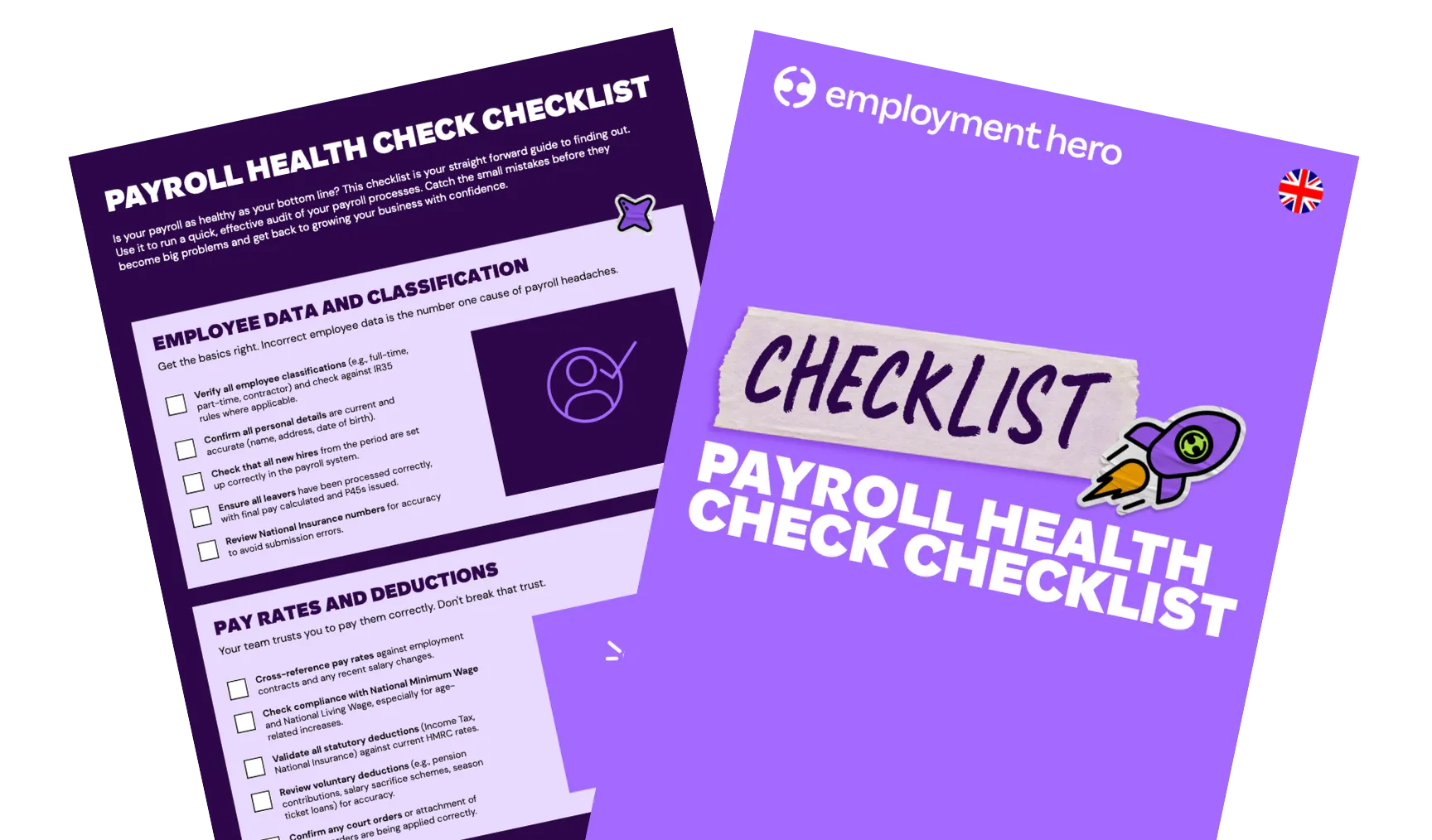 Read more: Payroll Health Check Checklist: Audit, Compliance and Review
Payroll Health Check Checklist: Audit, Compliance and Review
Is your payroll as healthy as your bottom line? Use our payroll audit, compliance, and review checklist to catch errors,…
-
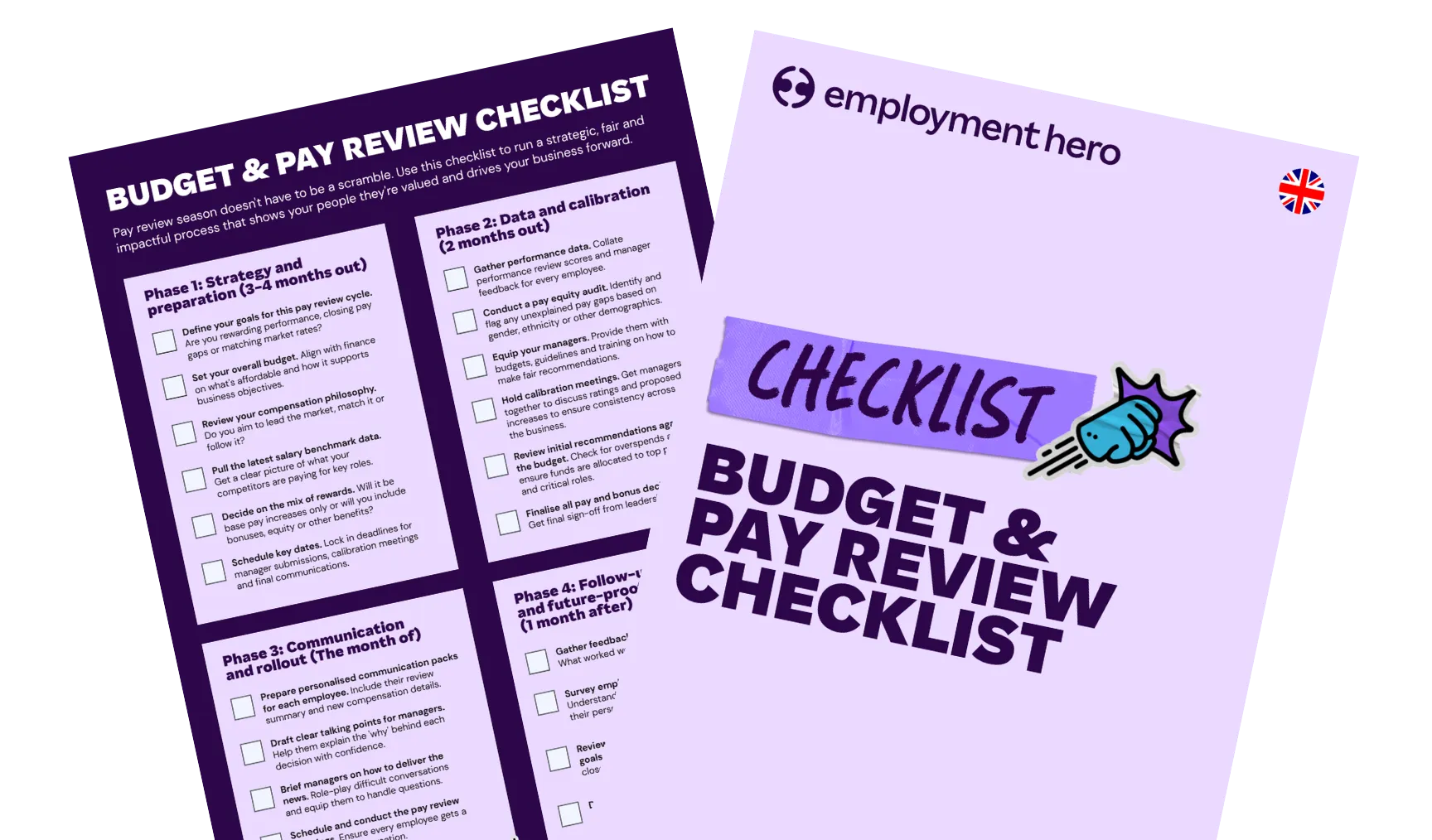 Read more: Budget & Pay Review Season: Shifting the Strategy for 2026
Budget & Pay Review Season: Shifting the Strategy for 2026
Learn how HR leaders can reward performance, boost engagement and show employees they matter.
-
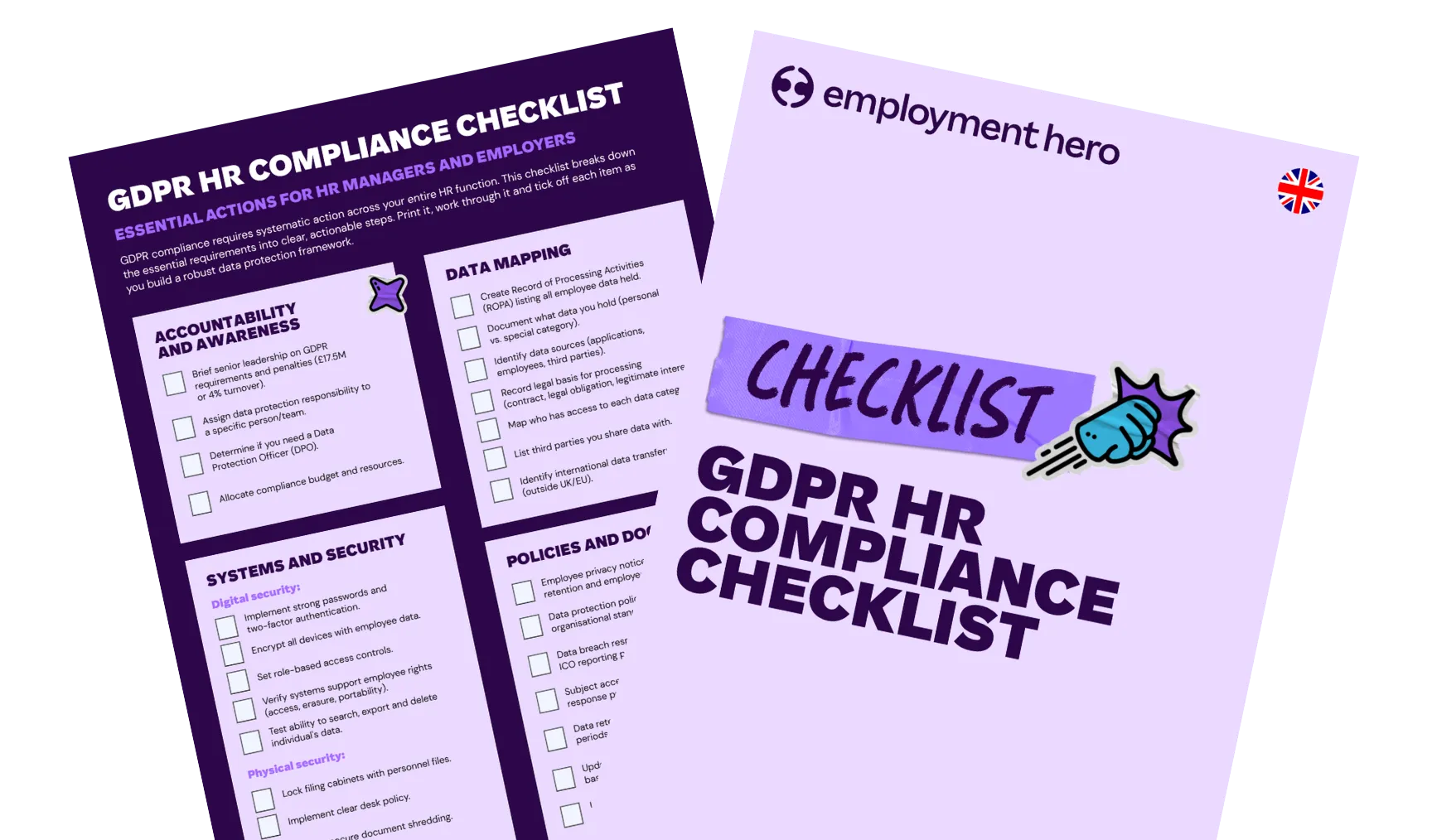 Read more: GDPR Checklist for HR Managers and Employers
GDPR Checklist for HR Managers and Employers
Check if your HR practices are GDPR compliant with our checklist.
