














After a turbulent year for small businesses, UK workers are heading into 2026 feeling considerably depleted – yet remarkably positive.
It’s a contrast that sums up what 2025 felt like for many workers – a year of sporadic breaks, stretched employees and a deepening sense of pride in the work itself.
Research from Employment Hero’s newly launched Employment Uncovered offers a clear look at how those patterns played out. Drawing on aggregated insights from more than 100,000 employee records across small businesses and a national survey of 1,000 UK workers, the findings reveal a workforce juggling patchy downtime, burnout and a growing desire for meaningful work.
The Rise of the Unrestful Break
If you look at annual leave alone, 2025 appears fairly typical. Workers took an average of 19 days of leave, with December remaining the most popular month for time off and holiday hacking continuing to dominate people’s planning. Fridays were 20% more likely to be booked off than other days, followed by Mondays. The Thursday before Good Friday was also a popular choice, emerging as the most sought-after pre-holiday break outside December.
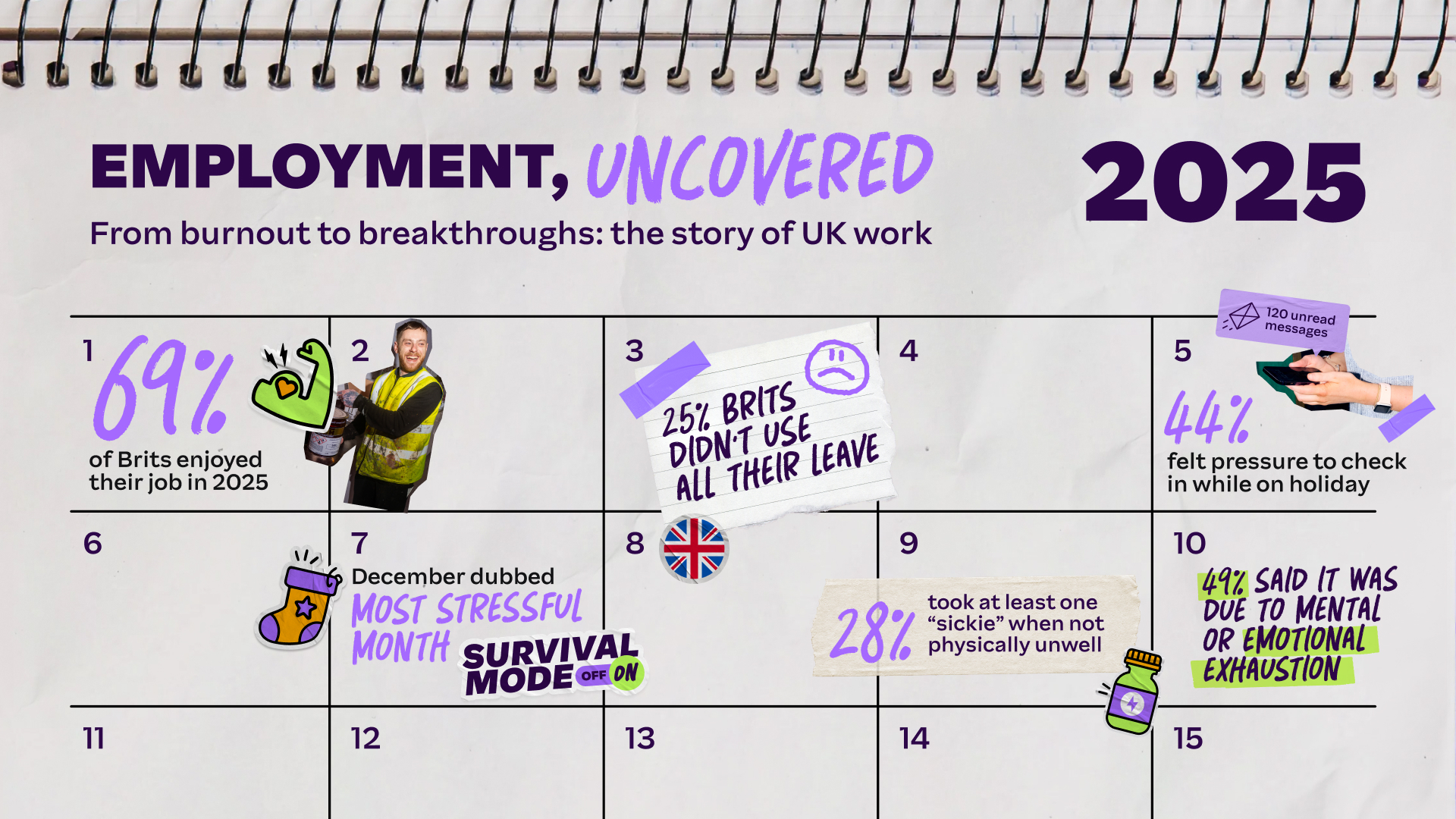
But there’s more to the story. A quarter of workers didn’t take all of their leave, and a significant proportion felt pressure to remain engaged even when they did manage to step away. According to the survey, 44% said they felt obliged to keep an eye on work during their time off. That feeling was especially strong among younger workers; more than half of 18-34-year-olds reported struggling to disconnect compared with just over a third of those aged 45 and above.
The figures serve as a reminder that the culture around taking time off is just as important as the number of days people use. That’s especially true for younger workers, who often have less autonomy and a stronger sense of needing to stay visible in fast-moving teams, making switching off feel more like a risk than a right.
December’s Shift into ‘Survival Season’
One of the most striking shifts in this year’s data is employees’ experiences of the festive season. Traditionally a winding-down period before the holidays, December has morphed into the most stressful month of the working year.
Employment Hero’s data shows the pattern continuing straight into January, creating a two-month window where pressure peaks, deadlines compress and the usual year-end rush blends with personal responsibilities.
This recalibration of the festive period reflects the shape of 2025 itself – a year of thin recovery, blurred boundaries and economic uncertainty, with many workers reaching December already low on reserves.
Sick Days as a Last Resort for Real Downtime
Between January and October, workers took an average of seven sick days, with older workers typically taking more than their younger colleagues. London – unsurprisingly, given its pace – recorded the highest number of sick days overall.
What’s changed most is why people are taking them. Rather than largely being reserved for physical illness, sick days are increasingly functioning as a fallback for mental and emotional recovery.
The study shows that 28% of workers took at least one sick day when they weren’t physically unwell, 17% took more than one, and full-time staff were more than twice as likely as part-timers to do so. When asked to explain, workers pointed firmly to burnout. Nearly half (49%) said they’d taken a sick day because they felt mentally or emotionally exhausted, while 39% said they felt overwhelmed and needed a break.
Younger workers tended to use the time for genuine recuperation, whereas older workers were more likely to opt for life admin or personal errands. Sick days have become a pressure valve in other ways for a smaller slice of the workforce, too. Fourteen percent used one to attend a social event, and 9% stretched it into a long weekend – a sign that people are grabbing whatever pockets of real rest they can find.
Feeling the Strain – and Still Enjoying Work
The most surprising finding in Employment Uncovered, however, is that despite the strain, 69% of UK workers said they enjoyed their job in 2025. Among self-employed and freelance workers, enjoyment rose to 83%. Londoners reported a notable increase too, with job enjoyment up 14% on the previous year.
That unexpected sense of optimism sits alongside a deep attachment to their work. Nearly half of respondents said work is a significant part of who they are, and four in ten said they’d keep working even if they won the lottery – a reminder that people’s relationship with work isn’t simply good or bad, but shaped by a mix of pressure, purpose and pride.
Kevin Fitzgerald, UK Managing Director at Employment Hero, believes this tension captures the UK’s working mood in 2025.
“People are juggling higher costs, fewer opportunities and intense pressure to stay switched on – and our data shows the toll that’s taking. When nearly half the workforce feels the need to check emails on annual leave or use sick days as an excuse to actually switch off, it’s clear something needs to change.
“But this research also reveals something I think is uniquely British: even in a difficult year, most people still enjoyed their jobs. They showed up, worked hard and found pride in what they do.”
Preparing for 2026
Employment Uncovered reflects a year where workers stayed surprisingly upbeat despite mounting challenges. They didn’t always rest well, and they struggled to disconnect, but they still found value in their jobs. That blend of resilience and strain is shaping what employees will look for from their workplaces in the year ahead.
As businesses plan for 2026, there are clear opportunities to redress this disconnect. Prioritising efforts to help workers maintain better boundaries, clearer expectations and genuine support for downtime will be key in turning that contradiction into something more sustainable.