

















Remote work compliance: Checklist & best practices
Published
Remote work compliance: Checklist & best practices
Published
Remote work isn’t just a trend: it’s a fundamental shift in how great teams can work and are working together outside of a traditional office environment. But getting it right isn’t as simple as sending your team home with a laptop. There are requirements for employers to ensure that they’re meeting their workplace health and safety obligations in accordance with New Zealand law. That means you need to have a framework for remote work in your business that is safe, fair and legally sound.
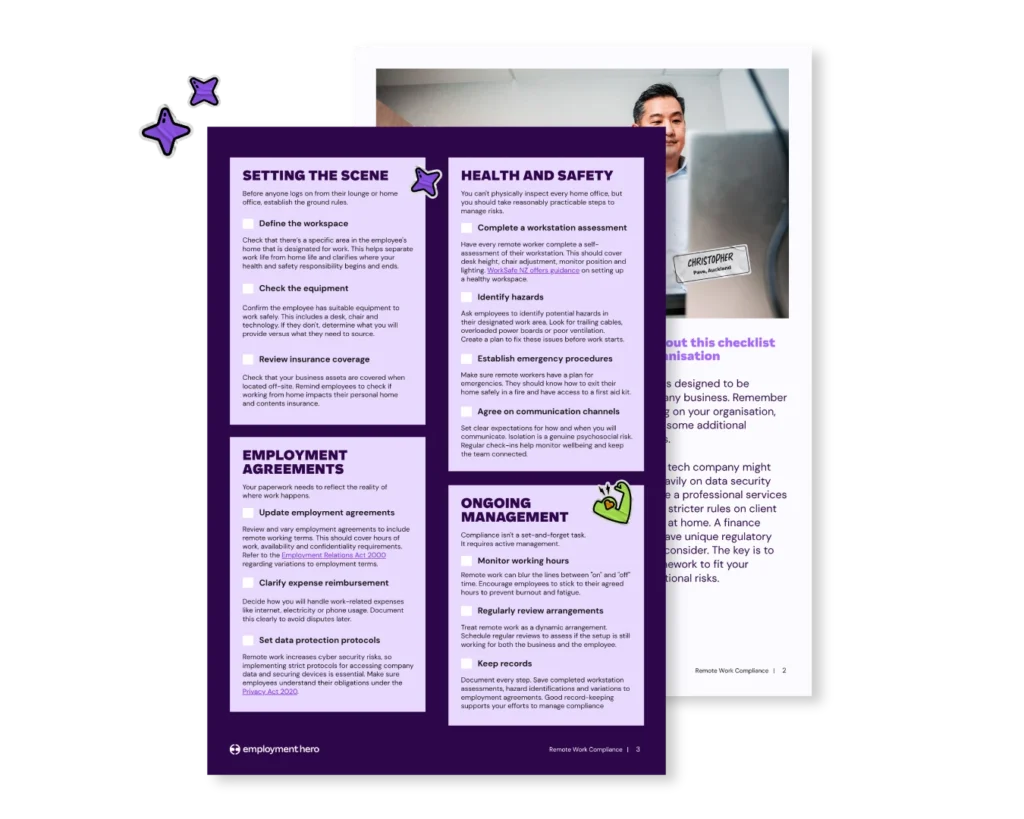
Our practical checklist goes through the key workplace health and safety (WHS) and data security requirements for employers in the context of remote work. It’s designed to help you confidently understand your remote work obligations and build a thriving remote culture.
Download the checklist by filling in the form on the right.
As always, this isn’t legal advice, so we’d highly recommend you seek independent legal counsel if you have any workplace health and safety concerns.
Why remote work compliance matters in New Zealand
Managing remote work compliance is about more than just ticking boxes. Providing your employees with a safe and secure place to work is part of your responsibility as an employer. It’s also the foundation for a resilient business, a strong culture and a team that trusts you to have their back.
It’s about protecting your people and your business while creating an environment where everyone can do their best work, no matter where they log in from.
Legal risks and penalties for non-compliance in NZ
Overlooking your obligations can lead to serious consequences. This includes significant penalties from WorkSafe for health and safety breaches, personal grievance claims for unfair practices, and reputational damage from privacy breaches. Getting it wrong exposes your business to unnecessary risk and erodes employee trust.
Business continuity and employee trust
Getting compliance right isn’t just about avoiding penalties. It’s a powerful way to build trust and prove you care about your team’s wellbeing. A clear, fair framework for remote work creates psychological safety and strengthens your culture, making your business more resilient and a more attractive place to work. It shows your team you’re invested in their success.
Key laws in New Zealand
Several key pieces of legislation shape your remote work obligations in New Zealand. These include the Health and Safety at Work Act 2015 (HSWA), the Employment Relations Act 2000 and the Privacy Act 2020. Regulatory bodies like WorkSafe NZ provide guidance and enforce these laws, making it crucial to understand how they apply to your remote team.
Remote work compliance checklist
Here’s your step-by-step guide to building a robust remote work framework. Each step provides clear actions to help you manage your obligations effectively.
Step 1: Review and update employment agreements
Your employment agreements must reflect your remote work reality. This means formally documenting the arrangement, including where an employee will work, their hours and any specific terms. Under the Employment Relations Act, you must consult in good faith before making any changes. Document everything.
Step 2: Conduct health and safety risk assessments
Under the HSWA, your health and safety duties extend to your team’s home offices. You should take reasonably practicable steps to identify and manage risks. This involves using self-assessment checklists for workstations, identifying hazards like trip hazards or poor ergonomics and managing risks associated with lone workers.
Step 3: Provide the right equipment, tools and connectivity
Your team needs the right tools to work safely and productively from home. This includes hardware like laptops and monitors, as well as secure software access. You need a clear policy on who provides what and how costs for things like the internet or power are handled.
Step 4: Strengthen privacy, security and data protection
Remote work multiplies security risks. The Privacy Act 2020 holds you responsible for protecting personal information, no matter where it’s accessed. You need clear device policies, transparent guidelines on any monitoring and strict protocols for handling data, especially if it crosses borders.
Step 5: Set clear work hours, boundaries and leave rules
The line between work and home can blur easily. Protect your team from burnout by setting clear expectations around work hours and availability. Clarify how overtime is managed and ensure leave requests are handled consistently. Promoting clear boundaries is key to wellbeing.
Step 6: Build robust communication and performance systems
Great remote culture doesn’t happen by accident. It’s built on clear communication and fair performance management. Use performance management tools to track progress, schedule regular check-ins to maintain connection and set clear KPIs so everyone knows what success looks like. This turns culture from a buzzword into a business asset.
Step 7: Review insurance, liability and incident reporting
Check your business insurance policies to understand how they cover assets and liability in remote settings. Just as importantly, you need a clear process for reporting any work-related incidents or injuries that occur at home. This is a critical part of your health and safety duty.
Step 8: Embed compliance into policies and audits
Compliance is an ongoing process, not a one-off task. Embed these practices into your official policies. Then schedule regular audits of your remote work arrangements to ensure they’re still effective and fit for purpose. This proactive approach keeps your business protected and your processes sharp.
Considerations employers need to know
Navigating remote work in New Zealand involves unique legal factors that set it apart.
Good faith and employment relations in New Zealand
The principle of good faith is central to New Zealand employment law. It means you have a legal duty to be open, honest and communicative with your team. When implementing remote work policies, this involves genuine consultation, sharing relevant information and being responsive to feedback.
Cross-border and international remote work risks
If an employee works from overseas, even temporarily, it can trigger complex tax, visa and employment law issues in that country. It may even create a ‘permanent establishment’ for your business, exposing you to foreign tax obligations. Tread carefully and seek expert advice.
If hiring someone to work for you overseas could be critical to your business performance, consider using an Employer of Record service. This can help you manage a lot of those big concerns.
Privacy and cross-border data transfers
Under the Privacy Act, if your employee accesses personal information from overseas, you must ensure it’s protected to a standard comparable to New Zealand’s. This has major implications for data storage and security protocols for international remote workers.
Wellbeing, social connection and isolation risk
New Zealand’s focus on workplace wellbeing is a core part of health and safety. For remote teams, this means actively managing the risk of social isolation. Proactively create opportunities for connection, foster inclusive communication and check in on your team’s mental health regularly.
Tailoring your compliance checklist by industry
While the core principles of compliance apply to everyone, how you implement them may change depending on your industry. A tech company might focus heavily on data security protocols, while a professional services firm may need stricter rules on client confidentiality at home. A finance business will have unique regulatory obligations to consider. The key is to adapt the framework to fit your specific operational risks.
To start your compliance checklist today, download our version by filling in the form on the right.
Frequently asked questions on remote work compliance in New Zealand
No, it’s not an automatic right. Employees can request flexible working arrangements, including remote work, and employers have a duty to consider these requests in good faith. In order to decline a request, they have to have recognised business grounds or non-accomodation grounds. For example, many employers will have to have their team members onsite for work to be completed.
Yes, but with strict conditions. Any monitoring must be for a legitimate business purpose and your policy must be transparent. You must inform employees what you’re monitoring, why and how. Covert monitoring is rarely justifiable under the Privacy Act.
There is no set frequency. The law requires you to take ‘reasonably practicable’ steps. A detailed self-assessment checklist completed by the employee is often sufficient. You should review these assessments periodically, especially if circumstances change.
This creates significant legal and tax complications. You must seek specialised advice before approving any international remote work, as you may become subject to the laws and taxes of the other country. You may want to consider using an Employer of Record service like HeroForce, which can employ overseas workers on your behalf.
There are no prescribed remote work allowances. However, if an employee incurs costs as a direct result of their work (like for specific equipment or internet usage), you should have a clear policy for reimbursement to ensure they are not left out of pocket. This is part of the duty of good faith.
The information in this article is current as at 30 December 2025, and has been prepared by Employment Hero Pty Ltd (ABN 11 160 047 709) and its related bodies corporate (Employment Hero). The views expressed in this article are general information only, are provided in good faith to assist employers and their employees, and should not be relied on as professional advice. Some information is based on data supplied by third parties. While such data is believed to be accurate, it has not been independently verified and no warranties are given that it is complete, accurate, up to date or fit for the purpose for which it is required. Employment Hero does not accept responsibility for any inaccuracy in such data and is not liable for any loss or damages arising directly or indirectly as a result of reliance on, use of or inability to use any information provided in this article. You should undertake your own research and seek professional advice before making any decisions or relying on the information in this article.
Register for the checklist
Related Resources
-
 Read more: Remote work compliance: Checklist & best practices
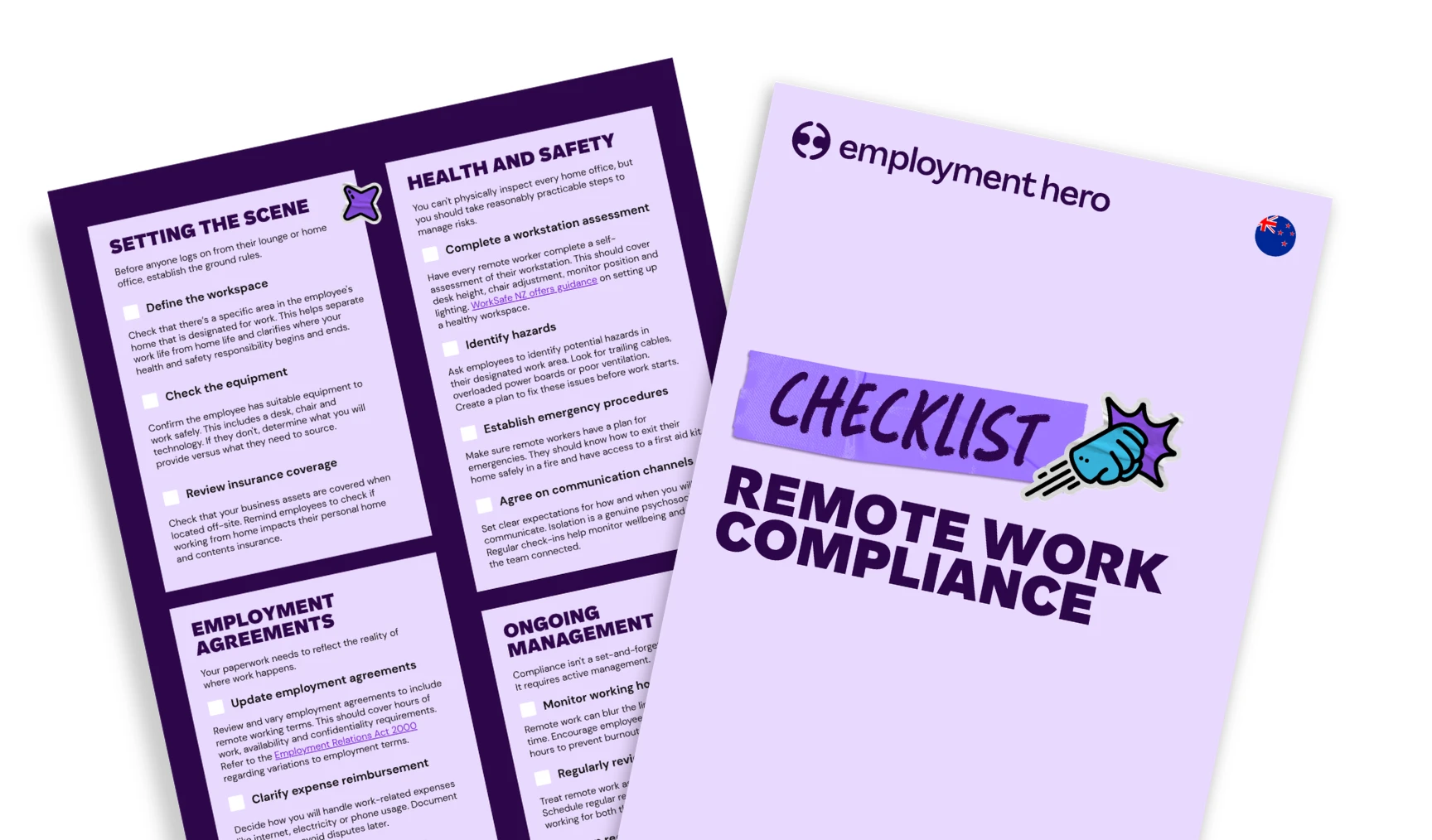
Remote work compliance: Checklist & best practices
Support your team with our NZ remote work compliance checklist. Understand legal obligations and create a safe, productive workplace.
-
 Read more: Employer’s guide to tax-deductible expenses
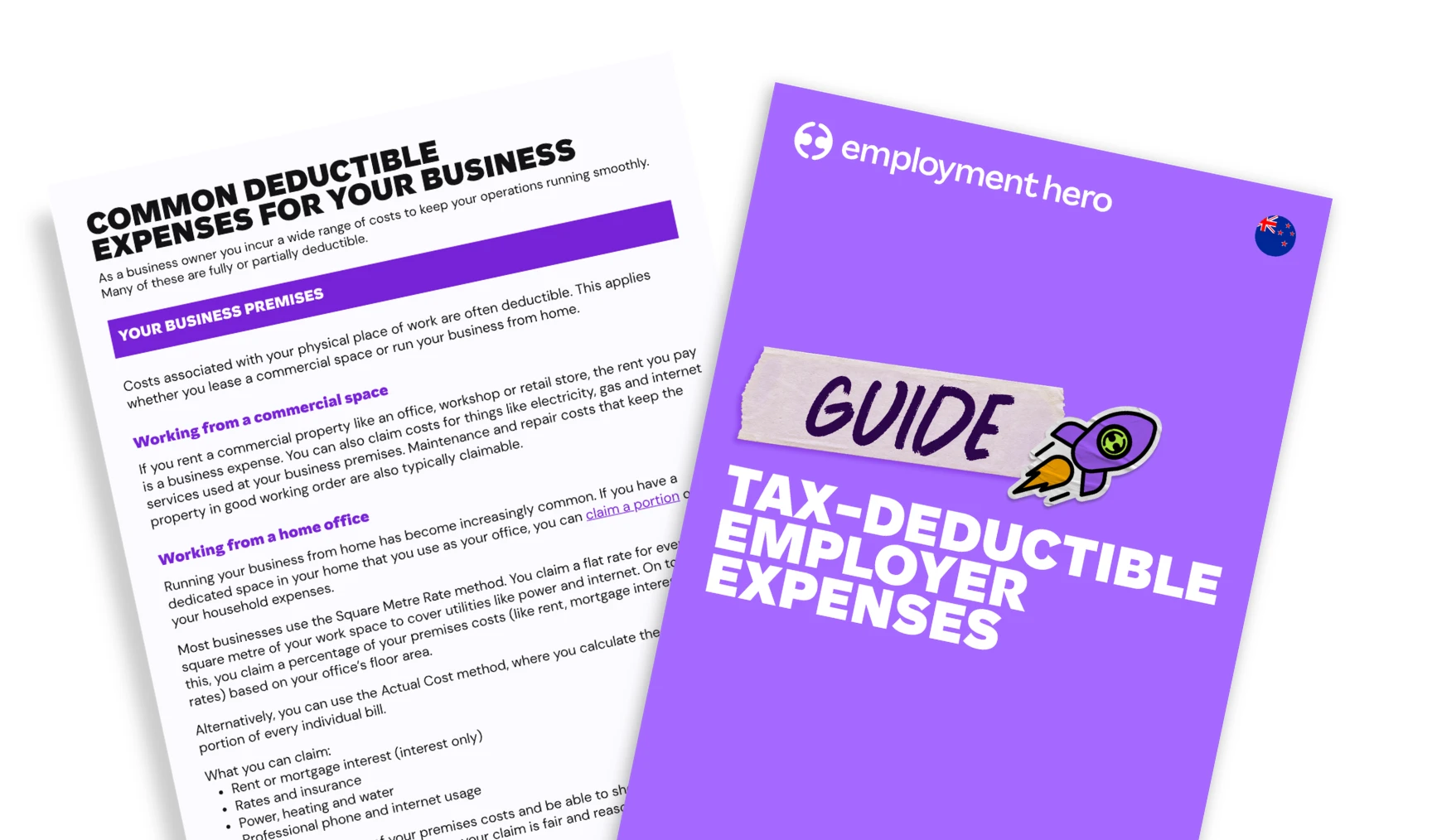
Employer’s guide to tax-deductible expenses
Tax deductions may include expenses like office rent, business insurance, equipment and even business travel.
-
 Read more: Your HR risk assessment checklist
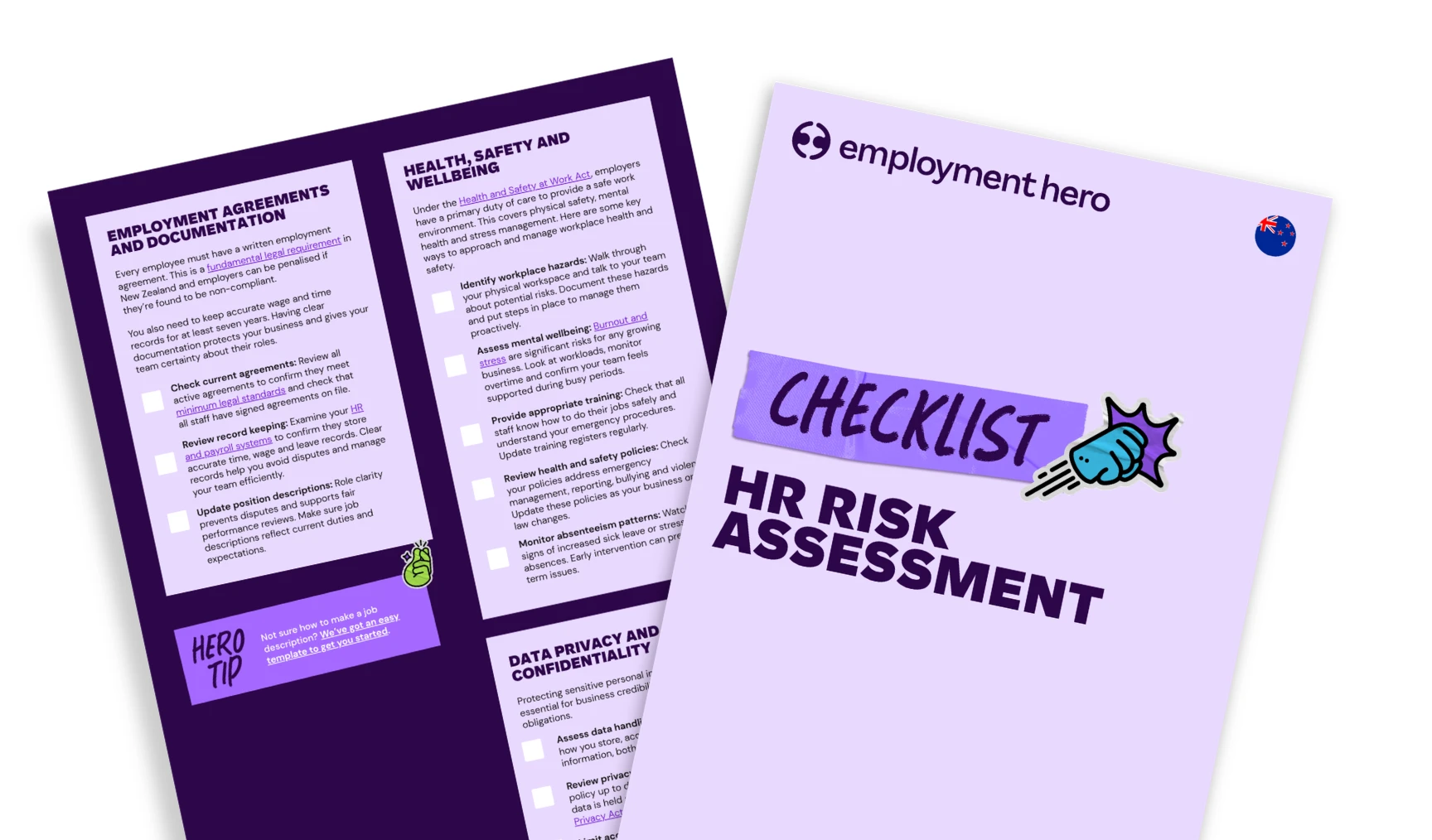
Your HR risk assessment checklist
Use our straightforward checklist to identify and manage potential issues, so you can focus on growing your business.

