


















Staff Engagement Plan Template
Published
Staff Engagement Plan Template
Published
Staff engagement isn’t just a buzzword, it’s a vital part of building a productive, motivated and loyal workforce. When employees feel heard, valued and supported, they’re more likely to perform at their best, stay with your company and contribute to long-term business success.
We’ll take a deep dive into how you can create an effective staff engagement plan template, from gathering honest feedback to turning insights into actionable initiatives.
Whether you’re an HR professional, manager or business leader, you’ll find practical steps to improve engagement, boost morale and drive real results.
What is a staff engagement plan?
A staff engagement plan is a strategic document that outlines exactly how you intend to improve the employee experience based on real feedback. Rather than being a vague set of intentions, it’s a structured outline that uses employee feedback to identify what’s working, what’s not and where change is needed. From there, it sets out specific actions, owners and timelines to address those insights.
At its core, an engagement plan connects listening with action. It helps businesses improve the workplace in meaningful ways, boost morale and motivation and create an environment where employees can do their best work. When done well, it doesn’t just improve engagement scores, it supports better performance, stronger retention and long-term business growth.
Why create an employee engagement action plan?
Creating a staff engagement plan template ensures that employee feedback leads to real, visible change, rather than sitting unread in survey results or meeting notes. When people take the time to share honest opinions about their work, they expect action. A clear plan turns those insights into priorities, accountability and progress, proving that listening is more than a tick-box exercise.
According to the Work That Works report, job satisfaction is the number one driver of employee productivity, in fact when employees feel recognised, retention issues are reduced by 40%. So the return on investment of addressing it can be significant. Engaged employees are more productive, more committed and far more likely to stay with your business. By acting on feedback, businesses can:
- Reduce turnover.
- Improve performance.
- Strengthen workplace culture.
Just as importantly, an engagement action plan builds trust. It shows employees that their voices matter and that leadership is genuinely invested in making their working lives better, laying the foundation for long-term loyalty and sustained business success.
How to conduct an employee engagement survey
An effective employee engagement survey starts with asking the right questions. Focus on areas that genuinely influence engagement, such as:
- Leadership
- Communication
- Workload
- Recognition
- Development opportunities
- Wellbeing
Use clear, simple language and a mix of quantitative questions (for example, rating scales) and qualitative questions that allow employees to share their views in their own words.
To avoid survey fatigue, keep surveys concise and purposeful. Be transparent about:
- Why you’re conducting the survey.
- How the data will be used.
- What will happen next.
Where possible, ensure anonymity to encourage honest feedback. It’s also important to choose a sensible cadence; this means it’s regular enough to track progress, but not so frequent that employees feel overwhelmed or disengaged.
But conducting an employee survey is only the first step and what you do with the information you collect is far more important. Not sure where to start? We’ve got you covered.
Analyse survey results
Once the responses are in, the real work begins. Start by looking beyond the headline scores to identify patterns and themes across teams, roles or demographics. Pay close attention to written comments, as these often reveal the underlying reasons behind the numbers and highlight issues that may not be immediately obvious.
Important things to look out for include:
- Recurring concerns.
- Standout strengths.
- Areas where scores are consistently lower.
These insights help you prioritise what matters most to your employees, ensuring your engagement efforts are focused where they’ll have the greatest impact.
Decide on your employee engagement initiatives
With clear insights in hand, the next step is turning feedback into action. Choose practical, high-impact initiatives that directly address the key issues raised in your survey. This could include:
- Improving reward and recognition programmes.
- Investing in learning and development.
- Enhancing communication.
- Introducing more flexible ways of working.
It’s important to be realistic as trying to fix everything at once can dilute your efforts. Focus on a small number of initiatives that will make a noticeable difference and be clear about who is responsible for delivering them and by when. This keeps momentum high and makes progress visible.
Establish milestones to monitor progress
To understand whether your engagement plan is working, you need clear milestones. Set simple, measurable indicators that align with your initiatives, such as improvements in engagement scores, reduced turnover, higher participation in development programmes, or positive feedback in pulse surveys.
Regularly reviewing these milestones helps you track progress, adjust your approach if needed and demonstrate to employees that change is happening. Visible progress builds confidence and reinforces the value of sharing feedback.
Follow up
Following up is non-negotiable when it comes to employee engagement. Close the loop by sharing:
- What you’ve learned.
- What actions you’re taking .
- Why certain suggestions may not be possible right now.
This transparency is critical for building trust. Ongoing communication keeps engagement high and shows employees that their voices genuinely matter. By checking in regularly and updating your team on progress, you maintain momentum and create a culture of continuous improvement, rather than a one-off exercise.
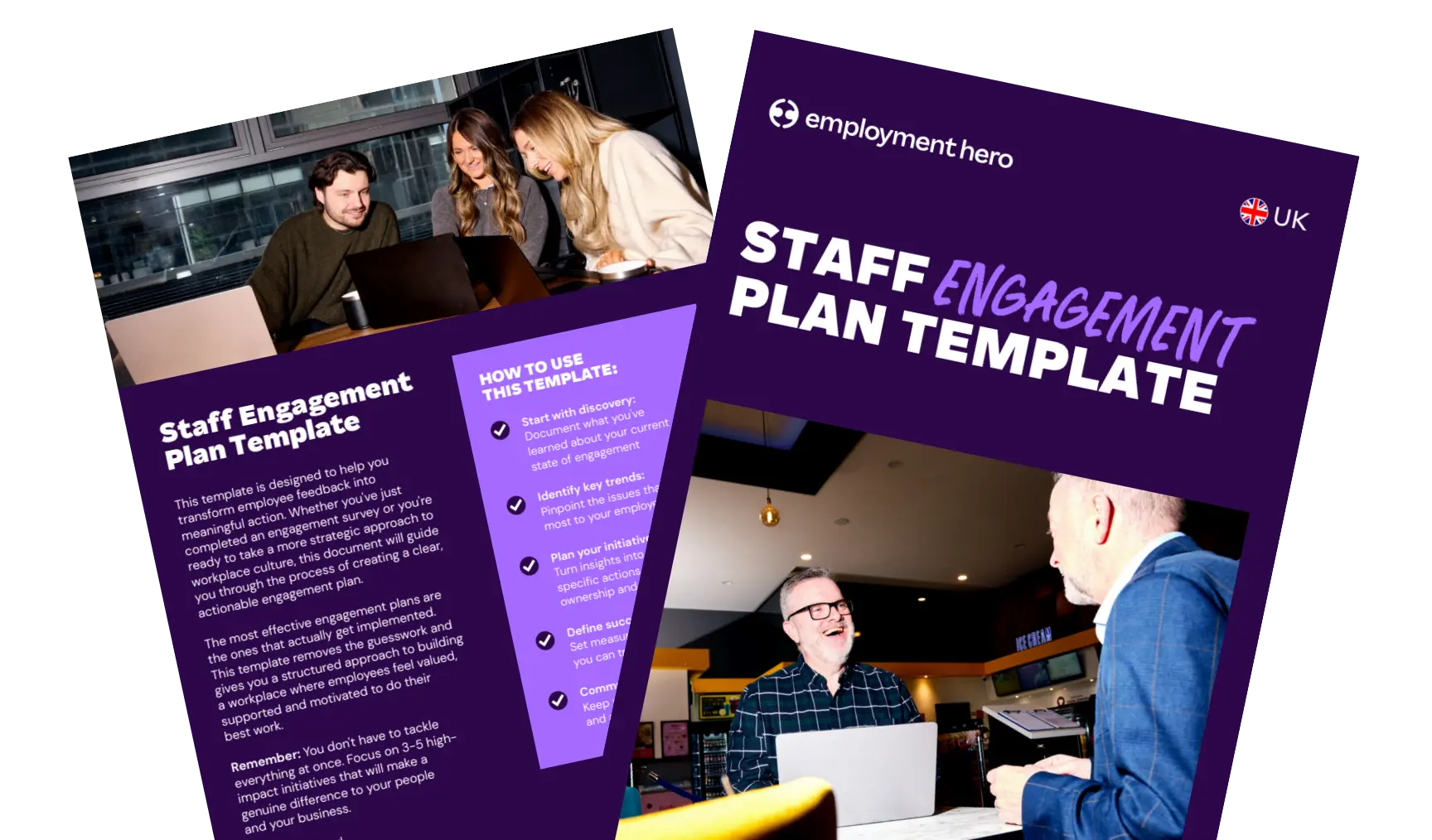
Staff engagement plan template
As a business owner, leader or HR manager, we know that your time is precious and you don’t want to spend hours formatting a document. Instead your time is better used on more strategic or people centric tasks.
That’s why we’ve created a ready-to-use staff engagement template. It covers the essentials, giving you a structured format to document your objectives, success metrics, owners and timelines. It takes the guesswork out of the process and ensures you don’t miss any critical steps.
Stop staring at a blank page. Download our free Staff Engagement Plan Template and start building a better workplace today.
Developing an employee engagement strategy
Your engagement plan is what you’re going to do, the “how”, but your strategy is the long-term “why.”
Developing a strategy means deciding what kind of company you want to be:
- Do you want to be the employer of choice in your sector?
- Do you want to be known for rapid development and high performance?
- Do you want to be seen as a culture of flexibility and autonomy?
Your strategy should be woven into your company’s DNA. It shouldn’t be a side-project for HR; it should be a core business objective discussed at the board level. If your business strategy is to innovate rapidly, your engagement strategy must focus on psychological safety and rewarding risk-taking. The two must align, or they will pull your people in opposite directions.
Creating an effective employee engagement plan
An employee engagement plan works best when it’s practical, visible and supported at every level of the business. The most effective plans typically include:
- Leadership buy-in: Senior leaders actively support and role-model engagement, showing it’s a business priority, not just an HR initiative.
- Clear goals and focus areas: The plan targets a small number of high-impact issues based on employee feedback.
- Manager ownership: Managers are empowered and equipped to lead engagement initiatives within their teams.
- Employee involvement: Employees are part of the solution, helping shape actions and improvements.
- Clear actions and accountability:Each initiative has defined owners, timelines and outcomes.
- Regular communication and follow-up: Progress is shared openly to build trust and maintain momentum.
When these elements are in place, engagement plans are far more likely to drive meaningful, lasting change.
Measuring employee engagement effectively
Most companies rely solely on the eNPS (Employee Net Promoter Score). While useful, it’s a lagging indicator, it tells you how people felt yesterday. To get a true picture, you need a mix of metrics.
- Retention rates: Are your best people staying?
- Absenteeism: High sickness rates often correlate with high stress or disengagement.
- Productivity: Are outputs rising or falling?
- Participation: Are people turning up to socials, town halls and training?
- Internal promotion rate: Are people growing with you?
By combining these data points, you get a 3D view of your organisation’s health, rather than a flat score.
Using survey data to drive action plans
The hardest part of this process is connecting the dots between a data point and a human action. To turn survey results into meaningful change, you need a clear, structured approach.
A simple framework includes:
- Identifying key themes: Group survey results and comments into recurring themes to highlight what matters most to employees.
- Prioritising high-impact issues: Focus on areas that score low and have the biggest influence on engagement and performance.
- Understanding the ‘why’: Use comments and follow-up discussions to uncover the root causes behind the data.
- Defining clear actions:Translate insights into specific, achievable actions rather than broad intentions.
- Assigning ownership: Make it clear who is responsible for each action and how progress will be tracked.
- Communicating and reviewing: Share priorities with employees and regularly review progress to keep actions relevant and effective.
This approach ensures survey data leads to focused action plans that deliver real, visible improvements.
The role of HR leaders in engagement plans
HR leaders play an essential role in ensuring staff engagement template plans succeed.
They act as both strategists and advocates, bridging employees and leadership. Key responsibilities include:
- Championing engagement: Ensuring employee experience is a business priority at the executive level.
- Coaching managers: Equipping managers with tools and guidance to drive engagement within their teams.
- Translating data into action: Turning survey insights into practical initiatives that address real issues.
- Being the employee voice: Representing staff perspectives in leadership discussions and decision-making.
- Monitoring progress: Tracking milestones and keeping engagement efforts on course.
By taking a strategic, hands-on approach, HR leaders ensure engagement plans are not just developed, but truly implemented and impactful.
Building an action plan for employee engagement
Creating a successful engagement plan involves a clear, step-by-step process:
- Review survey insights: Analyse results to identify key themes, strengths and areas for improvement.
- Set priorities: Focus on high-impact issues that will make the biggest difference for employees and the business.
- Define specific actions: Turn priorities into clear initiatives with measurable OKRs (objectives and key results).
- Assign ownership:Allocate responsibility to managers or teams to drive each action forward.
- Establish milestones: Set simple metrics to track progress and measure success.
- Communicate openly: Share the plan and next steps with employees to build trust and engagement.
- Monitor and adjust: Regularly review progress, celebrate wins and refine actions as needed.
This roadmap ensures your engagement plan moves from insight to action and delivers tangible results across the organisation.
Ready to transform your culture?
An effective employee engagement plan can transform your workplace, boost morale and drive business success. By turning feedback into clear actions, you show your team that their voices matter and create a culture where everyone can thrive.
Don’t let another year go by with your team running on autopilot. Take control of your culture. Be the leader who listens, learns and leads with purpose.
To download the template, we just need a few quick details.
Related Resources
-
 Read more: Staff Engagement Plan Template
Staff Engagement Plan Template
Discover effective strategies for creating a staff engagement plan that drives results. Download our template and guide.
-
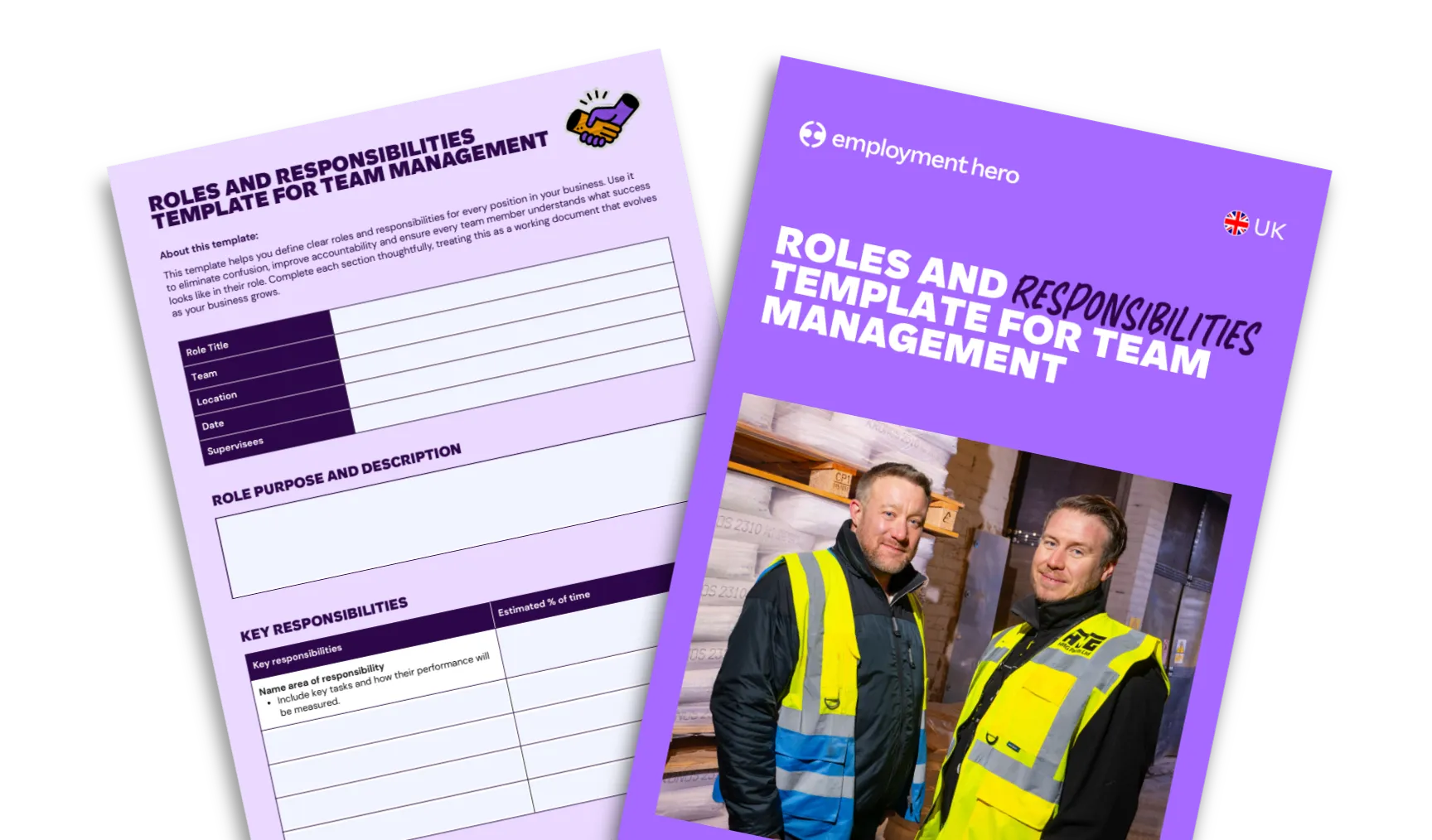 Read more: Roles and Responsibilities Template for Team Management
Roles and Responsibilities Template for Team Management
Download our roles and responsibilities template for easy and effective team management.
-
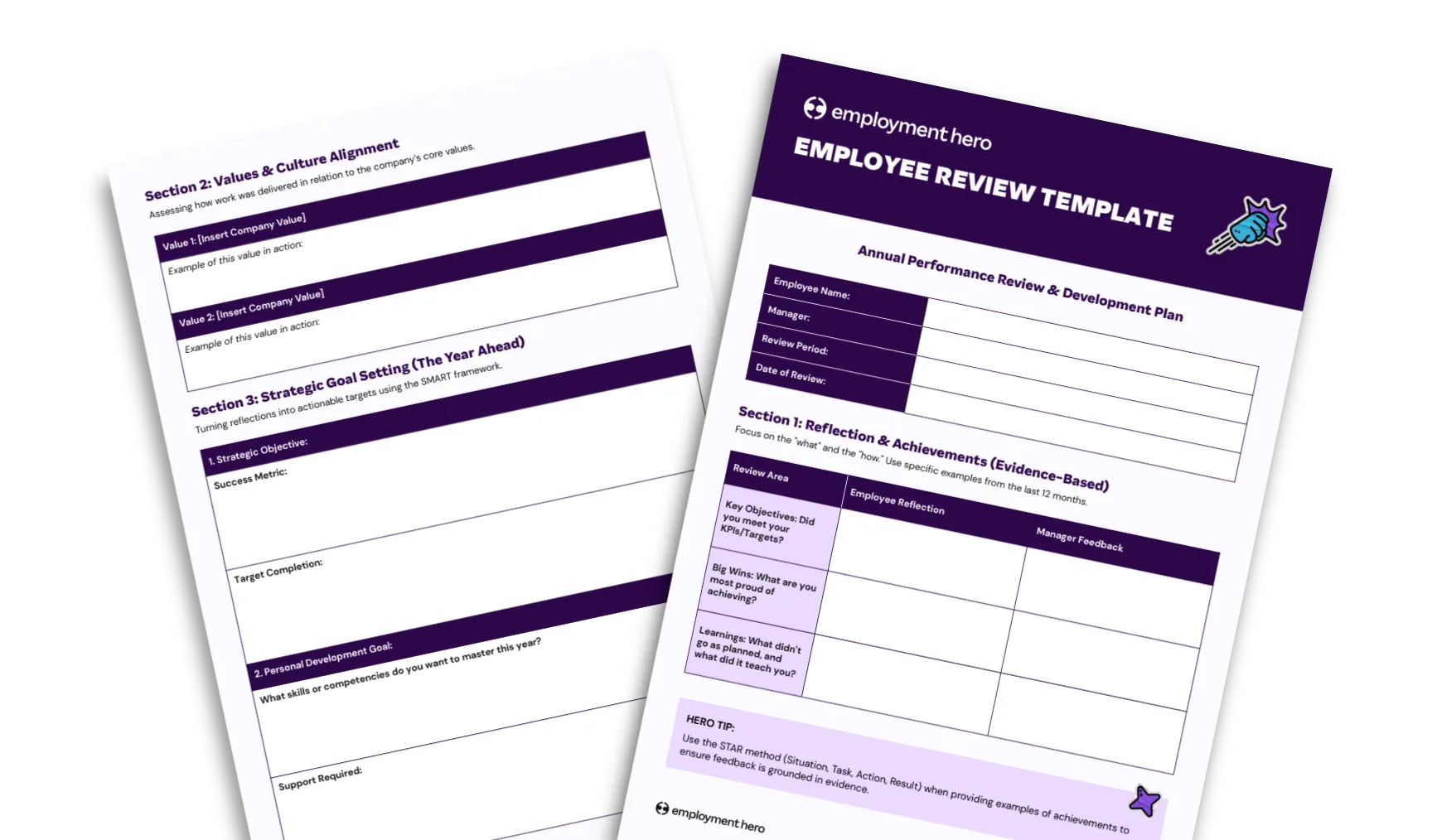 Read more: Employee Review Template
Employee Review Template
Discover the ultimate guide to employee reviews with tailored templates for every scenario.
