














Payroll Continuity: An Employer’s Checklist for Uninterrupted Pay
Published
Payroll Continuity: An Employer’s Checklist for Uninterrupted Pay
Published
When it comes to running a business, few things are as critical as paying your employees on time. In the UK, businesses must comply with employment law, HMRC requirements and their duty of care to staff. Yet payroll is often one of the first functions to face disruption during unexpected events—from staff absence to software failures.
That’s why every business, large or small, needs a payroll continuity plan. In this guide, we’ll explain what payroll continuity is, why it matters, how to create a robust plan and what tools can support you in keeping paydays uninterrupted.
What’s included in the guide?
- Payroll continuity checklist
- Payroll continuity plan template
- Best practices for UK compliance
What is a continuity plan for payroll?
To put it simply, a payroll continuity plan is a structured approach that ensures employees are paid accurately and on time, even when normal processes are disrupted. It’s essentially an outline of what needs to happen for finance to run smoothly if the standard person or processes are unable to manage the function.
It’s part of a wider business strategy, but it focuses specifically on the payroll function. It maps out contingencies, assigns responsibilities and sets up safeguards to prevent delays or errors in pay.
Why payroll continuity matters for UK businesses
- Legal obligations: Employers must meet statutory deadlines for PAYE, NICs and pension contributions. Late or incorrect filings with HMRC can result in penalties.
- Employee morale: Few things damage trust faster than missed or inaccurate wages. Payroll errors can reduce engagement and increase turnover.
- Operational resilience: By ensuring continuity, businesses can weather disruptions, from IT outages to staff illness, without affecting their people’s livelihoods.
In short, payroll continuity isn’t just an administrative concern. It’s a compliance, cultural and reputational imperative.
How to know if your payroll continuity plan is outdated
Many businesses believe they already have safeguards in place for when things aren’t operating as normal. But the reality is, payroll continuity plans age quickly. So it’s important to ensure that it is regularly reviewed and updated.
Here are some signs that yours might be out of date:
- Reliance on single staff members: If one payroll manager holds all the knowledge, the system is at risk. Illness, resignation or leave can bring the entire process to a halt.
- Outdated software: Legacy systems may lack modern security features, integration or automated compliance updates. Relying on spreadsheets or dated payroll software can increase errors.
- Manual processes dominate: Paper forms, physical signatures and manual calculations increase the chance of mistakes and slow down processes during disruptions.
- No regular testing: Payroll continuity plans should be tested annually. If your team hasn’t simulated a disruption in the past year, your plan may not reflect current risks.
- Lack of documentation: If payroll procedures aren’t clearly documented and stored securely, continuity depends on memory and individual expertise.
If any of these apply, it’s time to review and refresh your payroll continuity plan.
Steps to create your payroll continuity plan
It’s clear that having a plan in place is essential for all businesses, but knowing where to start (especially with the mountain of other tasks on your plate) can feel overwhelming.
The good news is that building a strong plan doesn’t need to be complicated. Here’s a practical framework to help streamline the process:
1. Map your payroll process
The best place to start is by documenting processes, this includes everything, from data collection (timesheets, contracts, leave records) to payment execution and HMRC submissions.
When doing this, consider:
- Defining roles and responsibilities.
- What systems are used.
- Timeline.
- Important dates.
2. Identify risks
Knowing what the risks are is a crucial part of being able to avoid them. So consider potential disruptions to normal processes, such as:
- Staff absence.
- IT system failure.
- Cyberattacks.
- Power outages.
- Bank delays.
3. Create backup systems
Having a backup system in place not only prevents disruptions when regular processes can’t be carried out, but also gives you and your team confidence and peace of mind.
Businesses can ensure there is a contingency plan by:
- Ensuring at least two staff members are trained in payroll.
- Using cloud-based payroll software with secure remote access.
- Backing up payroll data regularly and securely.
4. Establish contingency roles and responsibilities
Once you have identified who normally completes what tasks, consider who can see out that process in the event of an absence. This includes assigning deputies for payroll managers and ensuring HR and finance leaders understand their role in the plan.
5. Develop communication protocols
Communication is essential, both with your team and with HMRC. Therefore, create a plan for effective communication with your team in the event of a delay as well as with HMRC if a submission deadline cannot be met.
6. Review annually
In today’s ever-evolving world, things are always changing. So make sure you are consistently reviewing your processes to ensure they are up to date.
Who should be responsible for payroll continuity?
Who is responsible for payroll depends on the size and structure of the business, but clarity is key.
Some key teams that tend to look after payroll continuity include:
- HR managers typically oversee employee data and ensure accurate records for payroll.
- Payroll managers manage payment execution, tax compliance and accounting.
- External providers (such as payroll bureaus or cloud-based software providers) can add resilience, but businesses must retain oversight.
Best practice is to make payroll continuity a shared responsibility. Assign ownership to a senior manager (often a business owner, HR manager or payroll manager) while ensuring deputies are trained. For small medium enterprises (SMEs), outsourcing payroll can reduce risk, but accountability remains with the employer.
Risks of not having a payroll continuity plan
A payroll continuity plan isn’t just a nice safety net, it’s a crucial layer of protection for your business. Without one, even a small disruption, like a staff absence or a system glitch, can quickly spiral into bigger issues that affect your people, your compliance and your reputation.
Some of the key risks businesses face without a payroll continuity plan include:
- Financial penalties: Late submissions to HMRC may trigger fines and interest charges.
- Reputational damage: Employees losing trust in payroll accuracy may share concerns publicly or leave.
- Operational disruption: Disputes over pay can damage morale, productivity and retention.
- Legal consequences: Non-compliance with UK employment law, auto-enrollment pensions, or National Minimum Wage requirements can lead to enforcement action.
These risks highlight why payroll continuity is more than a “nice-to-have”—it’s essential business hygiene.
Tools and templates to support payroll continuity
Although it can feel like a daunting task, businesses don’t need to start from scratch when it comes to payroll continuity planning. Here are a few things that can help to streamline the process:
- Payroll continuity checklist: A structured list of steps, risks and safeguards.
- Documentation templates: Standardised guides for payroll processes and responsibilities.
- Payroll software: Cloud-based platforms that ensure compliance, provide access controls and enable remote payroll execution.
- Third-party providers: Outsourcing partners can act as backups, provided contracts and SLAs cover continuity.
To make payroll continuity planning easier, we’ve prepared a free downloadable checklist. Use it to assess your risks, document your processes and protect your business against disruption.
To download the checklist, we just need a few quick details.
Related Resources
-
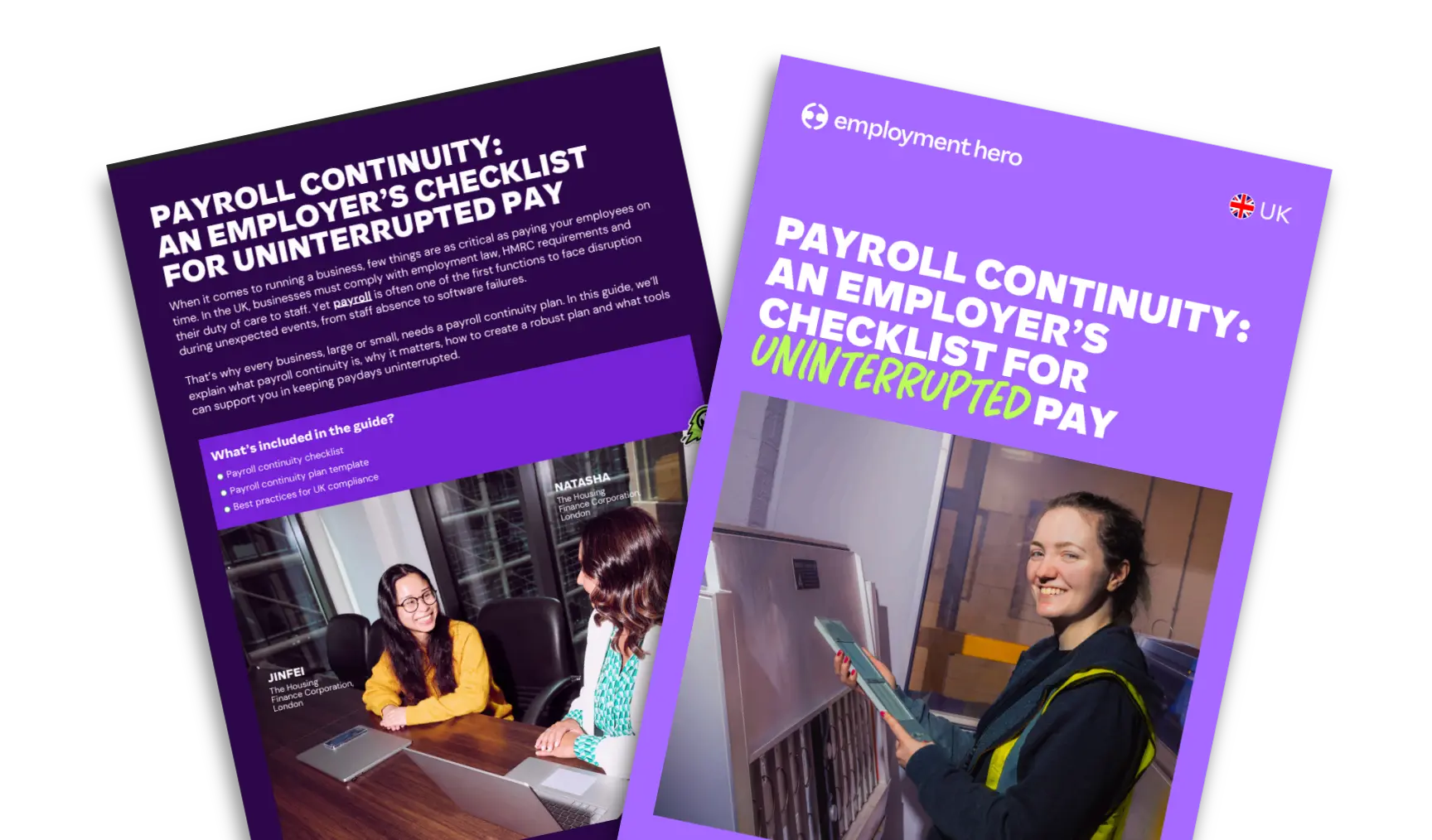 Read more: Payroll Continuity: An Employer’s Checklist for Uninterrupted Pay
Payroll Continuity: An Employer’s Checklist for Uninterrupted Pay
Use our payroll continuity checklist to keep employees paid on time, even during disruptions.
-
 Read more: Directors’ Service Agreement Checklist: What to Include
Directors’ Service Agreement Checklist: What to Include
Learn what a directors’ service agreement should include, how it differs from an employment contract and why it’s essential for…
-
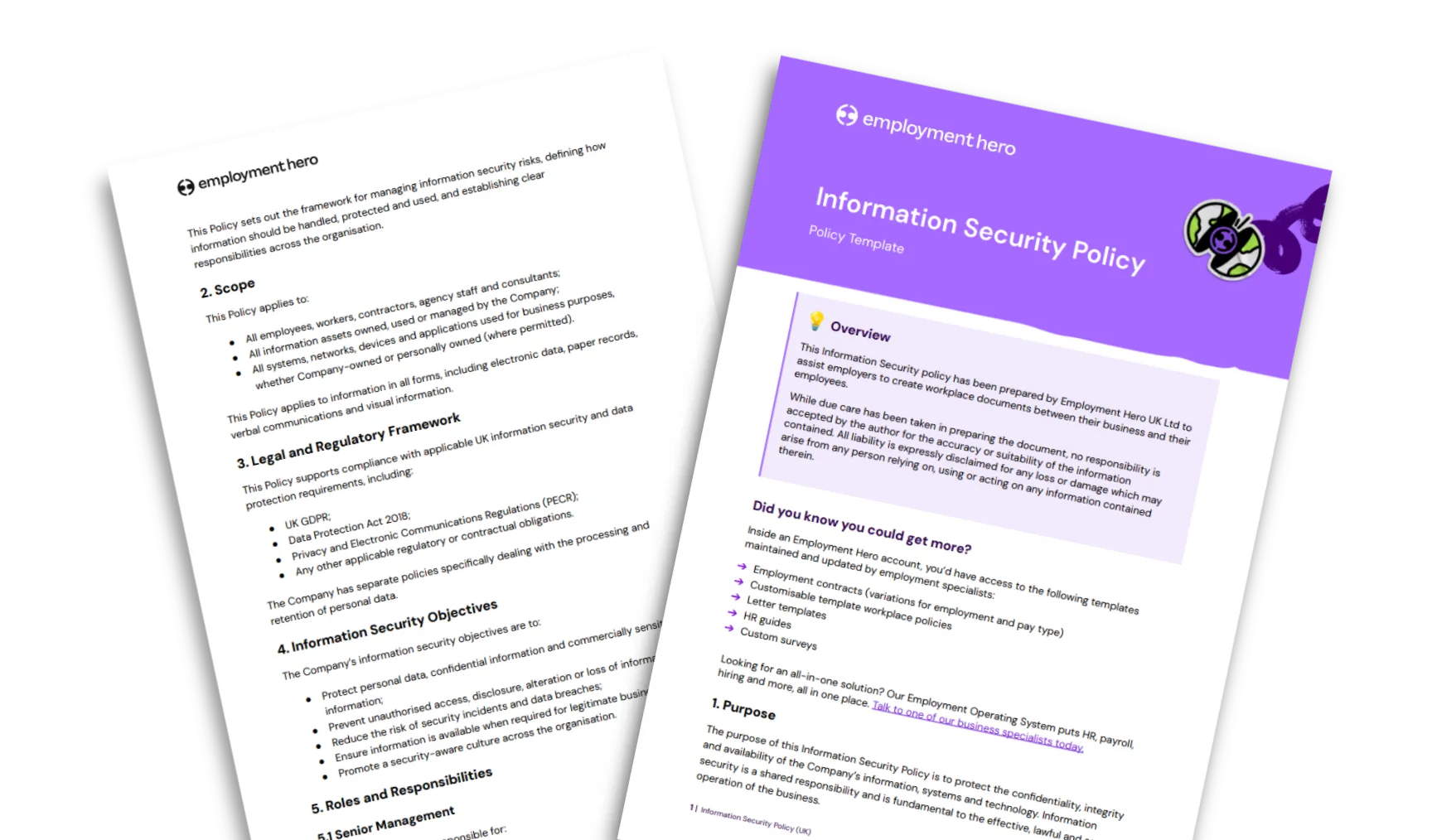 Read more: Information Security Policy Template
Information Security Policy Template
Create a solid foundation for your business with our essential information security policy template.
