


















A UK Employers Guide to Building a Candidate Pipeline
Published
A UK Employers Guide to Building a Candidate Pipeline
Last Updated
The traditional approach to hiring; you know the drill, write and post a job advert and hope to attract the right people, just doesn’t cut it anymore. According to our Work That Works report, 3 in 4 business leaders say recruitment is a challenge and this is no surprise in today’s competitive job market.
But, there is a way forward for SMEs. And it lies within switching from reactive hiring to proactive recruitment. This helps you stay ahead of the curve and build relationships with talented people before you have an open role. Creating a candidate pipeline helps keep your business ready for whatever comes next.
Not sure where to start and wondering how to build a candidate pipeline? Don’t worry, we’ve got you covered.
What is a candidate pipeline?
A candidate pipeline is a ready-made pool of qualified, engaged candidates who have shown interest in your company. It’s a proactive talent acquisition strategy where you identify and build relationships with potential future hires, even when you don’t have an open role for them. Think of it as a living database of talent that you can tap into the moment a position becomes available.
In the context of UK hiring, where skills shortages are a persistent challenge, a pipeline moves you from a position of panic to one of power. Instead of starting from zero every time someone resigns, you start with a curated list of warm leads who already know and respect your brand.
Candidate pipeline vs. talent pool
With so much jargon floating around, it’s easy to get terms confused. Two terms that are often used interchangeably are candidate pipeline and talent pools. But it’s important to remember that they serve different purposes.
Let’s break down the key differences:
- Talent pool: A broad database of candidates who could potentially be a good fit for your company at some point. It’s often a passive list, think of people who have applied in the past or whose CVs you’ve collected from various sources.
- Candidate pipeline: A more active and strategic approach. It contains candidates you have already vetted and are actively nurturing for specific, upcoming or recurring roles. These are people you have engaged with and are keeping warm for future opportunities.
A talent pool is the “who,” while your pipeline is the “who, for what and when.” This distinction is crucial for understanding why building a pipeline is so vital.
Why building a pipeline matters for UK employers
For UK businesses, hiring has never been more challenging. Between ongoing skills shortages, rising salary expectations and the growing demand for flexible work, finding the right people can feel like an uphill battle.
A candidate pipeline changes the game. It helps you stay one step ahead, reducing your reliance on costly recruitment agencies or frantic job board ads when someone leaves. Instead, you’re building a bench of engaged, high-quality candidates who are already excited about your business.
By investing in a proactive talent strategy, you’re not just filling roles, you’re future-proofing your workforce. A strong pipeline gives your business the resilience to adapt, evolve and keep moving forward, no matter what challenges come next.
Benefits of building a candidate pipeline
Investing time in building a talent pipeline isn’t just a “nice-to-have” HR project; it delivers tangible business results that give you a serious competitive edge.
Reduced time-to-hire and recruitment costs
This is where the impact of a strong candidate pipeline really shows. Instead of scrambling to post a job ad and waiting weeks for the right applicants, you can hit the ground running. Your next great hire could already be in your pipeline, pre-qualified, engaged and ready to go.
That means faster hiring, lower recruitment costs and less disruption to your team. By cutting out lengthy vacancy periods and expensive agency fees, you free up time and budget to focus on what really matters—growing your business and supporting your people.
Improved candidate experience and engagement
A proactive talent pipeline completely changes how people experience your hiring process. Instead of a cold, one-off application, you’re building genuine relationships over time. It’s about connection, not transactions.
By staying in touch and showing genuine interest, you make candidates feel seen and valued—not just another CV in the pile, which also improves candidate engagement. So when a role does open up, they’re already engaged, excited and ready to join your team.
Stronger employer brand and future-ready workforce
Building a talent pipeline isn’t just about filling roles faster, it’s also a powerful way to grow your employer brand. By keeping in touch with potential candidates, sharing company updates and offering valuable insights, you’re showing people what your business stands for.
It tells future hires that you’re forward-thinking, people-focused and invested in long-term success. Over time, this consistent, authentic engagement positions your company as an employer of choice…someone people want to work for.
The result? A stronger reputation, a deeper connection with talent and a workforce that’s ready to take on the future.
How to build a candidate pipeline (step-by-step)
One of the biggest questions businesses have is about how to build a candidate pipeline. The good news is that it isn’t a dark art; it’s a structured process. By following these steps, you can move from disconnected tactics to a sequential, actionable plan.
Step 1: Identify your future hiring needs
You can’t build a great strategy if you don’t know what you’ll need. Start with some simple workforce planning to get clear on your goals.
Think about:
- Your growth plans: What’s on the horizon for the next 12–24 months? Are you expanding into new markets or launching new products?
- The roles that will drive success: Which positions will be essential to support that growth?
- High-turnover roles: Which roles are hardest to keep filled? These are great starting points for your pipeline.
By understanding where your business is headed, you can start building relationships with the right talent, long before you need to make your next hire.
Step 2: Define ideal candidate profiles
Once you know which roles you’ll need, it’s time to get clear on who you’re looking for. Create an ideal candidate profile, or “persona”, for each role.
Go beyond the job description. Think about:
- Skills and experience: What capabilities does success in this role really require?
- Behaviours and values: What kind of mindset helps someone thrive in your culture?
- Top performer insights: Look at your best people. What do they have in common?
By defining what great looks like from the start, you’ll attract and nurture the right kind of talent, people who don’t just fit the role, but fit your business.
Step 3: Source candidates proactively
This is where you go hunting for talent. Don’t just wait for them to come to you. Use a mix of modern talent sourcing strategies to find potential candidates:
- Social media: Use LinkedIn to search for people with the right skills and experience. Engage with them by commenting on their posts or inviting them to connect.
- Employee referrals: Your current employees are your best source of quality candidates. Launch a referral program that incentivises them to recommend people from their network.
- Internal mobility: Don’t forget the talent you already have. Look for opportunities to promote from within and add their previous roles to your pipeline needs.
- Networking and events: Attend industry events (both online and in-person) to connect with passive candidates who aren’t actively looking for a job.
Step 4: Nurture relationships with potential candidates
Finding great people is just the start. The magic happens when you begin to build relationships. This is the “nurture” phase and it’s critical. Keep your pipeline engaged with ongoing, valuable communication.
This could include:
- A quarterly talent newsletter with company news and industry insights.
- Invitations to company webinars or events.
- Sharing relevant blog posts or content.
The goal is to stay top-of-mind, so when they are ready for a move, you are their first call.
Step 5: Use an ATS or recruitment CRM to manage your pipeline
Spreadsheets are fine when you’re just getting started, but as you get better at building a talent pipeline, things can quickly get messy. That’s where a dedicated system makes all the difference.
An Applicant Tracking System (ATS) or recruitment CRM helps you stay organised, track every interaction and keep your candidates engaged. It streamlines your process, automates repetitive tasks and gives you a clear view of every stage of your hiring journey.
With Employment Hero’s hiring tools, you can manage your entire pipeline in one place, from sourcing and nurturing talent to making the final hire. It’s smarter, faster hiring that helps you find (and keep) the best people.
Step 6: Evaluate and optimise your pipeline regularly
Your candidate pipeline isn’t a “set and forget” project—it’s a living, breathing part of your hiring strategy. To keep it working at its best, you’ll need to check in regularly and make sure it’s performing the way you want it to.
Keep an eye on key metrics like:
- Conversion rates: How many of your pipeline candidates end up being hired?
- Engagement levels: Are people opening your emails or newsletters?
- Diversity: Does your pipeline reflect a broad mix of talent and perspectives?
Candidate pipeline best practices for UK employers
Building a talent pipeline involves more than just following the steps; it requires adhering to best practices, especially within the UK’s legal and cultural context.
Maintain GDPR compliance and candidate consent
GDPR compliance is non-negotiable for UK businesses. It’s important to understand that you can’t add anyone to your candidate pool without their consent.
When sourcing candidates, you must be transparent about why you are connecting and get their permission to store their data and contact them about future roles. Always provide a clear way for them to opt out. Failing to comply with GDPR can result in significant fines and damage your reputation.
Prioritise diversity and inclusion in your pipeline
Your candidate pipeline is a powerful opportunity to create a more diverse and inclusive workforce. The key is to be proactive and intentional in how you build it.
Here’s how to get started:
- Source inclusively: Actively reach out to candidates from underrepresented groups.
- Remove bias: Review your candidate personas and job descriptions to make sure they’re fair and inclusive.
- Track your data: Measure the diversity within your pipeline and hold yourself accountable to improving it.
A diverse pipeline leads to a diverse workforce and that’s not just good for culture, it’s good for business. Inclusive teams drive innovation, creativity and stronger results for everyone.
Balance automation with the human touch
Automation and smart tools are game-changers for managing your business, especially for the recruitment process. But they should never replace the human touch.
Personalise your outreach whenever you can. A genuine, thoughtful message will always stand out more than a bulk email.
Use technology to make your process smoother and more efficient, not robotic. When you combine smart automation with authentic connection, you create a candidate experience that feels personal, professional and true to your brand.
Common challenges when building a talent pipeline
Even with the best intentions, you may run into some common roadblocks. Being aware of them can help you plan ahead.
Lack of time or resources for ongoing nurture
This is the most common reason pipelines fail. Sourcing candidates is the easy part; consistent nurturing takes time. Assign clear ownership for pipeline management and use tools to automate parts of the process, like scheduling newsletters.
Poor data hygiene or disorganised CRM
An out-of-date or messy pipeline is useless. Enforce good data hygiene from day one. Ensure anyone who interacts with the system is trained on how to tag candidates correctly and log interactions properly.
Inconsistent candidate communication
Going silent on your pipeline is a cardinal sin. It damages your employer brand and disengages your hard-won candidates. Create a simple communication schedule and stick to it, even if it’s just a light touchpoint every quarter.
Tools and templates to streamline your candidate pipeline
To help you get started, we’ve created a practical tool to manage your first pipeline.
Candidate tracking spreadsheet template
Ready to begin building but not yet ready for a full ATS? Our free candidate tracking template is the perfect starting point. It provides a simple, structured way to track candidates, log your interactions and manage your nurture activities.
Using Employment Hero’s recruitment software
When you’re ready to level up, Employment Hero’s integrated recruitment software helps you find candidates and manage your entire pipeline effortlessly. From sourcing and nurturing to interviewing and hiring, our platform automates the admin and gives you the tools you need to build a winning recruitment strategy.
Building a future-ready recruitment strategy
Building a candidate pipeline isn’t just a nice-to-have—it’s essential for any UK business serious about growth. In a competitive, fast-changing job market, it’s your best defence against uncertainty and your foundation for long-term success.
By investing in proactive recruitment, you’re not just filling roles, you’re building lasting relationships, strengthening your employer brand and setting your business up for the future.
It’s time to stop waiting for talent to find you. And Employment Hero can help you do just that. Our Employment OS (Operating System) offers hiring tools that make it easy to attract, manage and hire top talent — all in one place, with smart automation, seamless onboarding and a people-first experience from start to finish.
To download the guide, we just need a few quick details.
Related Resources
-
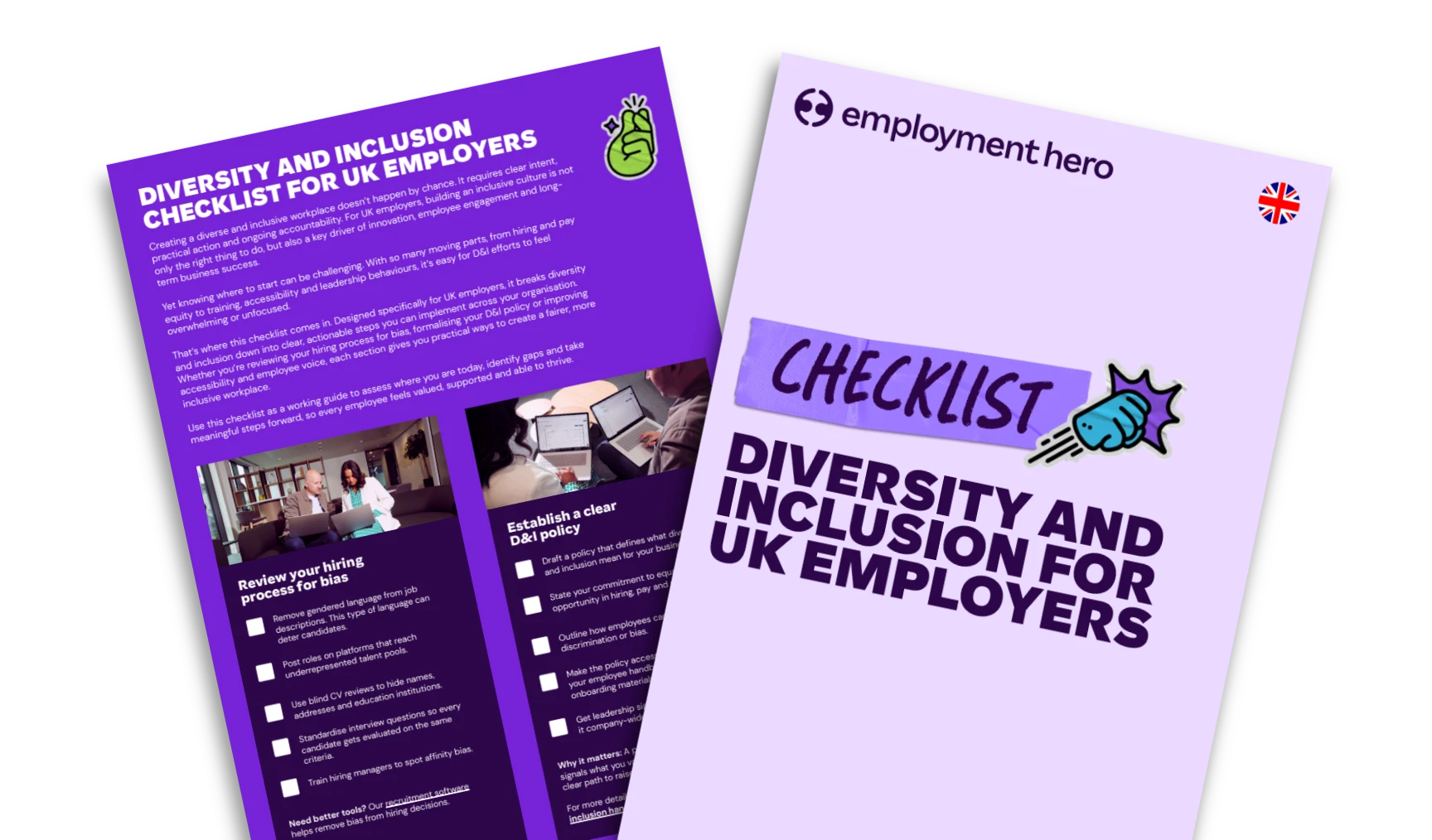 Read more: Diversity and Inclusion Checklist for UK Employers
Diversity and Inclusion Checklist for UK Employers
Create a truly inclusive environment with our diversity and inclusion checklist.
-
 Read more: Workplace Bullying Checklist for UK Businesses
Workplace Bullying Checklist for UK Businesses
Are your employees protected from workplace bullying? Review your processes and learn how to handle arising issues with this checklist.
-
 Read more: Monthly Payroll Checklist for UK Businesses
Monthly Payroll Checklist for UK Businesses
Manage your payroll processing with our monthly checklist. Streamline your tasks and improve efficiency.
