
















The Ultimate Guide to the Employee Life Cycle
Published
The Ultimate Guide to the Employee Life Cycle
Published
Managing people isn’t just about filling vacancies and processing payroll. Every person who joins your business follows a journey. From the moment they first hear about your company to their last day and beyond. How you manage that journey directly impacts productivity, retention and your bottom line.
The employee life cycle gives you a framework to understand and improve that journey at every stage. It helps you spot where candidates drop off, where new hires struggle and where your best people decide to leave. More importantly, it shows you exactly where to focus your effort to get measurable results.
This guide breaks down the seven stages of the employee life cycle, what matters at each one and how to manage them effectively with less admin standing in the way.
What is the employee life cycle?
The employee life cycle is the complete journey a person takes with your company from attraction and recruitment through to their departure. It maps every touchpoint and transition: how they discover you, why they apply, what their first week feels like, how they grow in the role and ultimately, why they stay or leave.
Think of it as your company’s relationship timeline with each employee. Just as customers have a journey with your brand, employees have a journey with your workplace. The difference? Your employee journey is longer, more complex and has a bigger impact on your business performance.
The framework typically includes seven stages: Attraction, Recruitment, Onboarding, Development, Engagement, Retention and Offboarding. Each stage builds on the one before it. A poor recruitment experience leads to shaky onboarding. Weak development creates disengagement. When one stage fails, it creates friction throughout the entire cycle.
Why is the employee life cycle important?
Every stage of the employee journey costs you time and money. The question is whether you’re spending it strategically or wasting it on avoidable mistakes.
Our research shows that 95% of SMEs say they have challenges in managing employment and HR processes, with recruitment, time spent on admin and employee engagement and retention being the top three pain points. The impact is tangible: over half of SMEs are spending one whole day a week on administrative tasks related to employment, HR and payroll—that’s 20% of their time consumed by admin alone.
The financial costs are equally stark. The average cost to replace an employee ranges from 50% to 200% of their annual salary, according to SHRM and Gallup. Research from Jobvite shows that 33% of new hires leave within the first 90 days, often due to poor onboarding experiences. Disengaged employees cost UK businesses billions in lost productivity each year.
When you map and manage the employee life cycle intentionally, you reduce these costs. You attract better-suited candidates, onboard them faster and keep them longer. You spot problems early, like why good candidates ghost you after interviews or why high performers leave after 18 months.
The employee life cycle also gives your HR team a clear focus. Instead of reacting to crises, you can build systems that work at each stage. You know what good looks like, you track the right metrics and you improve incrementally.
The employee life cycle model
The employee life cycle model is a visual framework that shows each stage of an employee’s journey and how they connect. It helps HR leaders and business owners see where to invest resources and which stages need improvement.
Most models show the cycle as circular or as a continuous loop, because even after someone leaves, they can become a brand advocate, refer others or even return as a boomerang hire. The end of one employee’s journey often influences the start of another’s.
A strong model maps the key activities at each stage (what needs to happen), stakeholders involved (who’s responsible), success metrics (how you measure performance) and transition points (where employees typically experience friction).
When you use a model consistently, you can benchmark your performance over time and against other businesses. You’ll see patterns, like if most people disengage in month six or if your best hires come from specific sources.
The 7 employee life cycle stages
Let’s walk through each stage in detail: what it involves, why it matters and how to get it right.
1. The attraction stage
Before someone applies to work for you, they form an opinion about your company. The attraction stage is about building that reputation and making sure the right people notice you.
This stage happens everywhere your brand appears: job boards, social media, your website, Google reviews, conversations with current employees. It’s your employer brand in action.
What makes working for you different or better? That’s your employer value proposition and it needs to be clear. Candidates want to see authentic culture, what working there actually looks like, not just stock photos of people high-fiving in conference rooms. They also want visible career opportunities that are easy to find and understand. When your current team members talk about you as a great place to work, that employee advocacy carries more weight than any recruitment ad.
To improve attraction, showcase real employee stories and testimonials. Make your careers page easy to find and navigate. Highlight specific benefits, not just “competitive salary” but actual perks like flexible working or learning budgets. Respond to Glassdoor and Google reviews, both positive and negative. Use your team’s networks for referrals.
If you’re not intentional about attraction, you’ll compete on salary alone. But if you build a strong employer brand, you’ll attract people who want to work for you specifically and they’re more likely to stay.
2. Recruitment
Recruitment is where attraction turns into action. A candidate has decided you’re worth applying to, now you need to assess fit and move quickly before they accept another offer.
This stage includes job postings, application screening, interviews, assessments and offers. Each step should answer two questions: Is this person right for the role? Is this role right for them?
It’s no wonder that 3 in 4 business leaders say recruitment is a challenge. The stakes are high: 6 in 10 businesses say they’ve had issues with making the wrong hiring decision before and those mistakes are costly in both time and money.
Speed matters because top candidates get multiple offers. Delays cost you hires. Candidates also want transparency, they want to know what to expect, how long the process takes and what happens next. Remember that recruitment is a two-way evaluation. You’re assessing them, but they’re also assessing you. Every interaction shapes their decision. Poor communication, ghosting or disorganised interviews don’t just lose you one candidate, they damage your employer brand.
To improve recruitment, use AI-powered recruitment tools to screen applications faster and match candidates more accurately. 5ab Care used our AI powered Employment Operating System to reduce the number of unsuitable candidates by up to 75%. This would mean you no longer have to sift through countless unsuitable CVs. Set clear timelines and stick to them or communicate if things change. Prepare interviewers so they ask consistent, relevant questions. Give candidates a realistic preview of the role and team. Provide feedback, even to unsuccessful candidates.
A strong recruitment process doesn’t just fill roles faster. It creates positive first impressions that carry through to onboarding and beyond.
3. Onboarding
Onboarding is where potential becomes performance. A new hire has signed the contract, now they need to ramp up quickly, understand expectations and feel confident in their role.
This stage typically covers the first 30-90 days and includes paperwork orientation, training, introductions and early performance check-ins.
Clear expectations matter from day one. What does success look like in their first week, month and quarter? New hires also need structured training, a real plan, not just being left to figure things out alone. Social integration determines whether they feel like part of the team or isolated and uncertain. Manager support makes the difference—is their manager engaged and available or too busy to help?
Create onboarding checklists so nothing gets missed. Assign a buddy or mentor for the first month. Set up regular 1-on-1s with their manager from day one. Use employee management software to automate paperwork and track progress. Businesses like Sigma have saved up to 10 hours per week on onboarding-related tasks using Employment Hero; that’s 25% of the week. Schedule a 30-day and 90-day review to address concerns early.
Research from the Brandon Hall Group shows that effective onboarding increases retention by 82% and productivity by over 70%. But most companies still treat it as an afterthought. If new hires don’t feel supported early, they start looking for other jobs, often before they’ve even finished probation.
4. The development stage: Career growth and learning
Once employees settle into their roles, they need to keep growing. The development stage is about building skills, expanding responsibilities and creating a clear path forward.
This includes training programs, mentorship, promotions, lateral moves and career planning conversations. It’s where you answer the question: “What’s next for me here?”
Learning opportunities should be accessible, whether formal courses or on-the-job development. Career progression needs to be visible. Can people see a realistic path to advancement or does the future feel vague and uncertain? Managers play a critical role here. Do they have development conversations or just tick boxes in annual performance reviews? Recognition also matters; are people rewarded when they level up their skills?
Offer access to learning platforms or courses relevant to their role. Create individual development plans with clear goals and timelines. Make internal mobility visible by posting opportunities before hiring externally. Budget for professional development and make it easy to use. Tie development to performance reviews so it’s prioritised, not optional.
When people can’t see a future with you, they start planning one elsewhere. Development isn’t a perk, it’s a retention strategy.
5. The engagement stage: Fostering motivation
Engagement is how connected and motivated employees feel about their work, team and company. Engaged employees perform better, stay longer and contribute more. Disengaged employees do the minimum and look for the exit.
This stage runs parallel to development and retention. It’s less about a specific timeframe and more about creating ongoing conditions for motivation.
Research shows that job satisfaction is the strongest correlating factor for productivity. Yet half of all employees don’t feel recognised enough in their jobs—only 18% rate their company a 10/10 for recognising their work. This matters because the number one reason that someone would go ‘over and above’ in their job is because they care about the work, ranking just above monetary incentives.
Meaningful work matters. Do people understand how their work contributes to bigger goals or does it feel pointless? Autonomy and trust shape daily experience. Can they make decisions or is everything micromanaged? Recognition determines whether achievements feel valued or taken for granted. Connection, feeling valued by their manager and team drives whether people want to stay or start quietly job hunting.
Conduct regular pulse surveys to measure engagement and spot issues early. Recognise wins publicly in team meetings, company updates or peer shoutouts. Give people ownership over projects and outcomes. Connect individual work to company goals so people see their impact. Act on feedback—engagement surveys only work if you respond to what you learn.
HR software can help you track engagement metrics and surface patterns across teams, locations or departments. The key is treating engagement as an ongoing priority, not a once-a-year survey.
6. Retention
Retention is the outcome of everything that’s come before. If you’ve attracted the right people, recruited them well, onboarded them effectively, developed their skills and kept them engaged, they’ll stay. If any stage has failed, retention suffers.
This stage focuses on why people leave and what you can do to keep your best performers.
Behind stagnant pay, feeling undervalued is the number two reason employees leave their jobs. This matters to employees so much that high turnover is their number one ‘red flag’ in a company, ranking even above bullying. These insights reveal that retention isn’t just about money, it’s about creating an environment where people feel valued and want to stay.
Competitive compensation matters. Are you paying fairly for the role and market or have you fallen behind? Work-life balance determines whether people can manage their workload without burning out. Manager quality is critical; people don’t leave companies, they leave bad managers. Culture and values alignment shows up in whether the day-to-day reality matches what you promised during recruitment.
Conduct stay interviews, not just exit interviews. Ask people what keeps them engaged before they decide to leave. Review compensation regularly to stay competitive. Train managers to lead well; people skills matter as much as technical skills. Create flexible working options where possible. Address toxic behaviours and poor performers quickly. Good people leave when bad behaviour goes unchecked.
Retention isn’t about keeping everyone forever. It’s about keeping the right people long enough to deliver value and grow. High turnover costs you money, knowledge and momentum.
7. Offboarding and happy leavers
Offboarding is the final stage, but it’s not the end of the relationship. How someone leaves shapes their lasting opinion of you, whether they refer others and if they might return in the future.
This stage includes resignations, exit interviews, knowledge transfer, final pay and alumni engagement.
Professionalism matters, even if the departure is difficult. Treat leavers with respect. Exit interviews give you data on why they’re leaving and what you could improve, but only if you track themes over time and act on them. Knowledge transfer ensures critical information and tasks are handed over smoothly, not lost when someone walks out the door. An alumni network keeps you connected, former employees can become clients, partners or future hires.
Create an offboarding checklist to ensure nothing is missed. Conduct exit interviews and track themes over time. Offer references or LinkedIn recommendations when appropriate. Keep in touch with alumni through newsletters or events. Make rehiring former employees (boomerang hires) a normal part of recruitment.
Happy leavers become brand advocates. Bitter leavers become cautionary tales. The difference often comes down to how you handle those final weeks.
The employee’s journey: A holistic view
The seven stages give you a structured framework, but real employee journeys aren’t linear. Someone might go through development and engagement simultaneously. A high performer might cycle between development and retention several times before they leave.
The key is to think holistically. Every stage influences every other stage. A bad hire creates problems in onboarding, development, engagement and retention. A strong onboarding experience boosts engagement and retention down the line.
When you map the employee journey from their perspective, you spot the moments that matter most: the first day when everything feels new and overwhelming, the first mistake and how their manager responds, the first time they ask “What’s next for me?” and whether you have an answer and the moment they decide to stay or start looking elsewhere.
These moments, positive or negative, shape how long someone stays and how much they contribute while they’re with you.
Enhancing the employee experience
Improving the employee life cycle means focusing on experience at every stage. The moments that matter most are often the transitions: hired to onboarded, onboarded to fully productive, individual contributor to manager. These gaps are where people feel lost. Build clear pathways.
Research shows that 1 in 3 employees feel they spend time on unnecessary or inefficient tasks. When you streamline processes and remove friction at each stage of the employee life cycle, you don’t just improve experience, you improve productivity.
Listen consistently using onboarding surveys, pulse checks, 1-on-1s and exit interviews to gather feedback at every stage. Then act on what you learn. Measure what matters by tracking metrics like time-to-hire, onboarding completion rates, engagement scores and voluntary turnover. Data shows you where to focus.
Invest in managers. They’re the link between company strategy and employee experience. Train them, support them and hold them accountable. Use technology intelligently; the right tools like HR advisory services and integrated HR platforms reduce admin and give you time back for the work that actually matters.
Check out our employee experience guide for more detailed strategies.
The role of HR leaders in the employee life cycle
HR leaders and business owners are accountable for the entire employee life cycle, but they don’t do it alone. Success requires collaboration across teams. Leadership sets the culture and values that shape every stage. Managers execute the day-to-day work of development, engagement and retention. Recruitment teams own attraction and hiring. Learning and development teams drive growth. People operations handle onboarding, compliance and offboarding.
HR’s role is to design the framework, provide the tools and measure the results. You create the systems that make it easier for everyone else to do their part well.
That means building repeatable processes for each stage, training managers and teams on best practices, using data to spot problems before they become crises, reporting on employee life cycle metrics to leadership and continuously improving based on feedback and results.
Employee life cycle management: Top tips
Map your current employee journey by documenting what actually happens at each stage, not what you wish happened. Identify gaps and friction points. Define success metrics for each stage. How do you know if attraction, recruitment or onboarding is working? Pick 2-3 key metrics per stage and track them.
Automate admin wherever possible using technology to handle repetitive tasks like onboarding paperwork, training reminders and compliance tracking. This frees up time for strategic work. Invest in manager training—your managers make or break the employee experience. Equip them with skills in coaching, feedback and performance management.
Create feedback loops. Don’t just collect data from surveys and interviews. Close the loop by sharing what you’ve learned and what you’re changing. Treat offboarding as seriously as onboarding. Exit interviews reveal patterns you can fix and alumni networks create long-term value.
Review and improve quarterly. The employee life cycle isn’t a one-time project. Schedule regular reviews to assess what’s working and what needs adjustment.
Make employee life cycle management easier
Managing the employee life cycle well takes time, focus and the right tools. When you’re juggling recruitment, payroll, compliance and a dozen other priorities, it’s easy for employee experience to slip through the cracks.
The average SME is using 3-4 systems to manage employment, with only 11% using just one platform. Juggling multiple systems creates inefficiency, data silos and gaps where things fall through the cracks.
That’s where Employment Hero’s HR software and employee management tools help. We bring the entire employment journey into one platform—from attracting and hiring talent to developing and retaining your team—with less admin standing in the way.
Whether you need help with recruitment automation, structured onboarding or expert HR advice through our HR advisory services, we’re built for the realities of running a business today.
Ready to improve your employee life cycle? Let’s talk about what’s possible.
FAQ: Employee life cycle
The seven stages are: Attraction, Recruitment, Onboarding, Development, Engagement, Retention and Offboarding. Each stage represents a phase in the employee’s journey with your company.
It helps you identify where candidates and employees experience friction, where you lose good people and where to invest to improve retention, productivity and employee experience.
The cycle lasts from the moment someone first hears about your company until after they leave. For most employees, that’s several years—though the specific duration varies by role and company.
The employee life cycle is the framework—the stages someone goes through. Employee experience is how they feel and what they encounter at each stage. The life cycle is the structure; experience is the outcome.
Track metrics like time-to-hire, offer acceptance rate, onboarding completion time, engagement scores, internal promotion rates, turnover rate and exit interview feedback. Choose metrics that align with each stage.
Integrated HR platforms, applicant tracking systems, onboarding software, learning management systems, engagement survey tools and performance management systems all support different stages of the cycle.
To download the guide, we just need a few quick details.
Related Resources
-
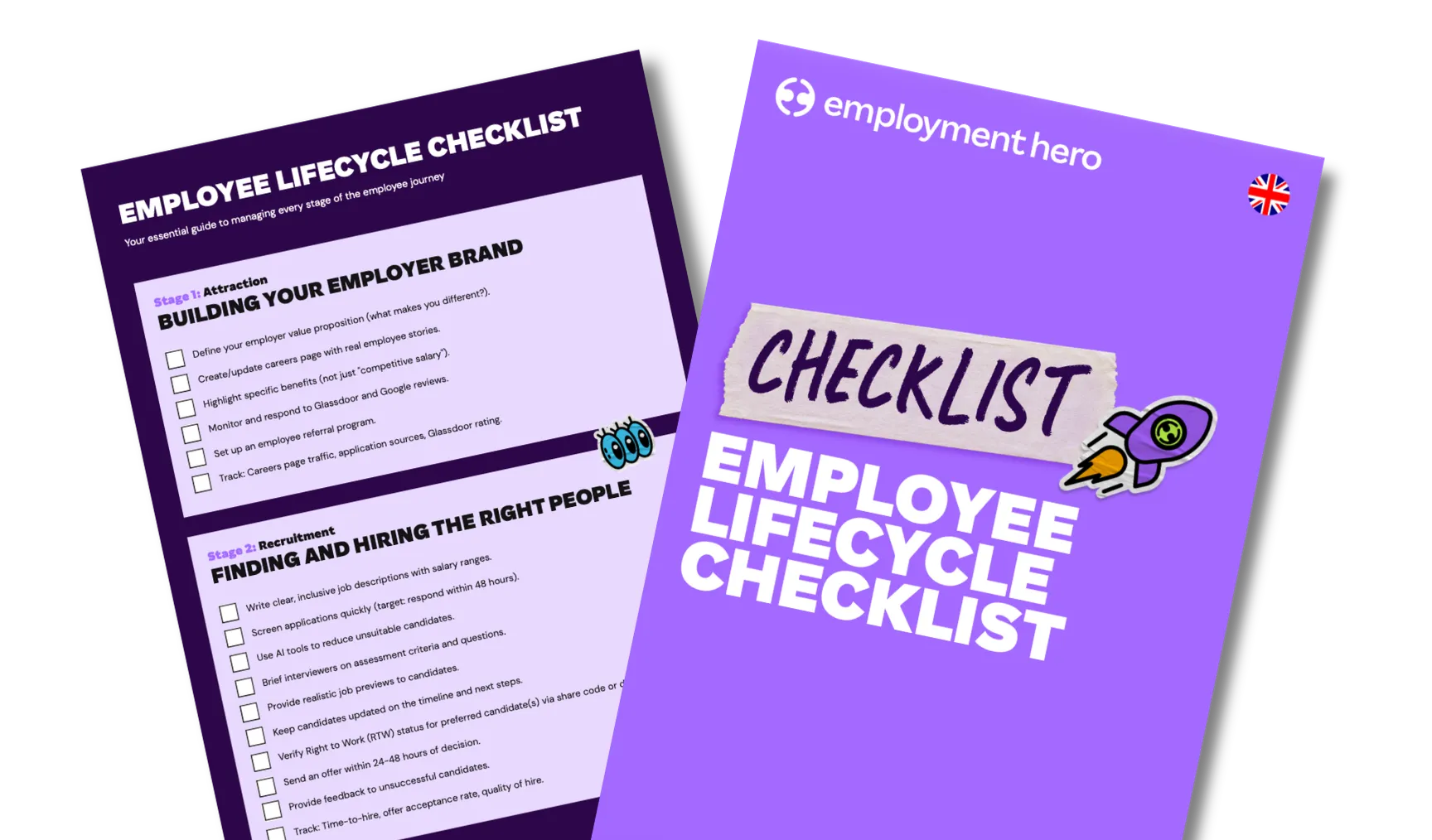 Read more: The Ultimate Guide to the Employee Life Cycle
The Ultimate Guide to the Employee Life Cycle
Learn the full scope of the employee life cycle and how it impacts recruitment, onboarding and retention.
-
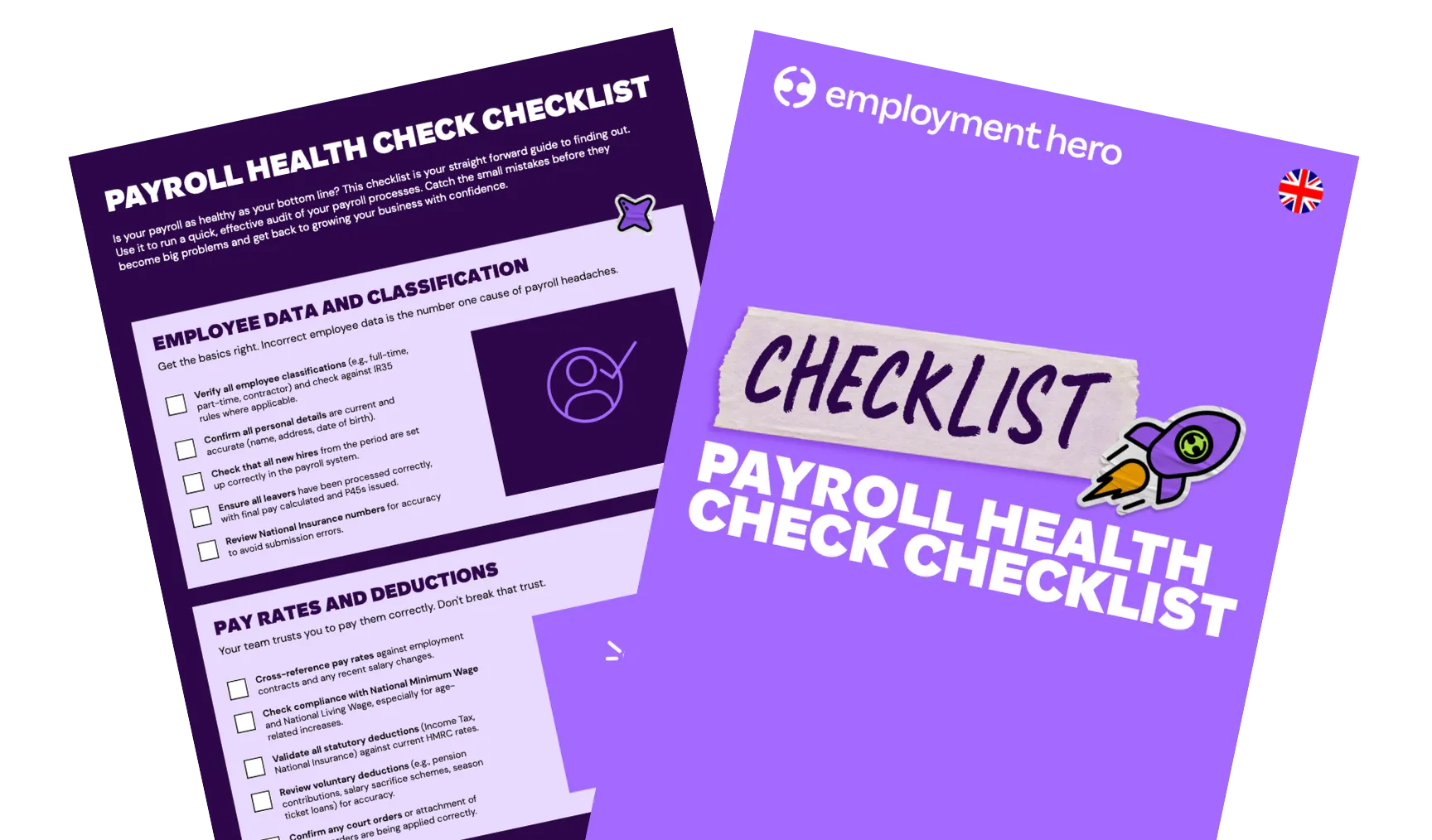 Read more: Payroll Health Check Checklist: Audit, Compliance and Review
Payroll Health Check Checklist: Audit, Compliance and Review
Is your payroll as healthy as your bottom line? Use our payroll audit, compliance, and review checklist to catch errors,…
-
 Read more: Budget & Pay Review Season: Shifting the Strategy for 2026
Budget & Pay Review Season: Shifting the Strategy for 2026
Learn how HR leaders can reward performance, boost engagement and show employees they matter.
