


















How to Build an Employee Attendance Policy in 2026
Published
How to Build an Employee Attendance Policy in 2026
Last Updated
An employee attendance policy is no longer just a record of who turns up and when. In today’s workplace, it plays a bigger role in building trust, supporting flexibility and maintaining performance.
A strong attendance policy outlines expected working hours, how absences should be reported, how attendance is recorded and how ongoing issues are managed fairly and consistently.
As work continues to evolve, many organisations are moving away from rigid rules and toward clearer, people-focused frameworks. Attendance is no longer about watching the clock, it’s about setting expectations, supporting your team and giving managers the confidence to respond consistently.
When done well, an attendance policy removes uncertainty. It helps employees understand what’s expected and gives your business a clear process for managing absence without unnecessary friction.
If you want a ready-to-use starting point, you can download our attendance policy template below.
Why an attendance policy matters
Today’s working world is dynamic, with hybrid teams, flexible hours and a sharper focus on mental health and wellbeing. That’s why your attendance policy needs to provide more than rules, it should reduce ambiguity and create consistency everyone can rely on.
When your team understands what’s expected and your managers have a structured path to follow, you can:
- Encourage consistency: Expectations are applied fairly across teams, roles and locations.
- Support efficient operations: Clear tracking helps you plan ahead, cover shifts and minimise disruption.
- Protect your business: Transparent processes help you stay compliant and resolve issues early and fairly.
Key elements of an effective employee attendance policy
A strong attendance policy doesn’t need to be complicated. Focus on clarity, support and simplicity. Here’s what to include:
1. Clear expectations
Remove uncertainty about what “attending work” means in your business.
- Working hours: Define standard hours, core hours (if relevant) and how flexible or remote arrangements work.
- Punctuality: Clarify what counts as late and how employees should communicate delays.
- Types of absence: Explain the difference between sick leave, annual leave, unpaid leave and other approved absences.
- Unauthorised absence: Outline what happens if someone is absent without approval or fails to notify their manager.
2. Reporting procedures
Your policy should make it easy for employees to do the right thing.
- Who to contact: Confirm whether employees should notify their manager, HR, or both.
- How and when to report: Set a clear timeframe and method (e.g. phone call, HR platform, or a dedicated process).
- No call, no show: Explain what happens if someone doesn’t attend work and can’t be reached.
3. Responses to attendance issues
Everyone faces challenges at times. Address attendance consistently, but with a human touch.
- Support, then solutions: Start with a non-judgemental conversation — ask, “How can we help?”
- Clear steps: Outline what happens next, such as a check-in, documented plan, or formal process if needed.
- Case-by-case approach: Treat each situation individually while applying the same framework across the business.
- Return-to-work check-ins: Consider a short check-in after extended absences to support the employee and confirm next steps.
4. Flexibility and wellbeing
Your policy should be a safety net, giving people confidence to manage life and work sustainably.
- Promote wellbeing: Encourage employees to prioritise health, including mental health support where available.
- Support real-life needs: Include options for carer’s responsibilities, emergencies and unexpected disruptions.
Best practices for managing attendance policies
Implementation turns policy into practice. Here’s how to make your policy work day to day:
Put technology to work
Modern attendance tools make it easier for employees to check in, request leave and stay aligned with their team. For employers, it means accurate records, clearer patterns and more consistent processes.
Empower and equip managers
Managers bring your policy to life. Give them the training and tools to approach attendance with empathy, clarity and confidence.
- Consistency: A shared framework ensures fair treatment across the business.
- Empathy: Encourage genuine conversations — “How can we support you?” instead of “Why were you late?”
Keep it up to date
Work environments and regulations change — so should your policy. Schedule regular reviews, gather employee feedback and stay across compliance updates to ensure your approach reflects your workplace today.
Legal considerations for attendance policies
Trust and transparency are built on a solid legal foundation. Make sure your attendance policy aligns with your local workplace laws and regulations, including:
- Fairness and accessibility: Ensure reasonable adjustments are considered for disability, caring responsibilities and protected characteristics.
- Working time protections: Follow rules around hours, breaks and fatigue management.
- Privacy and data protection: Protect employee data, especially if you use attendance tracking technology (including GDPR where applicable).
- Consistency in application: Apply the policy fairly to reduce legal and employee relations risk.
Transform attendance into a tool for high performance with Employment Hero
A clear attendance policy creates a workplace where expectations are understood and people feel supported to do their best work.
When attendance is managed with consistency and care, teams are more engaged, managers are more confident and issues are addressed earlier. It becomes less about enforcement and more about helping people perform sustainably.
With the right systems in place, managing attendance doesn’t need to be complex or time-consuming. Employment Hero makes it easier to track attendance, manage absences and stay compliant, so you can spend less time on admin and more time building a productive, people-focused business.
Simplify your attendance management with Employment Hero today.
To download the policy template, we just need a few quick details.
Related Resources
-
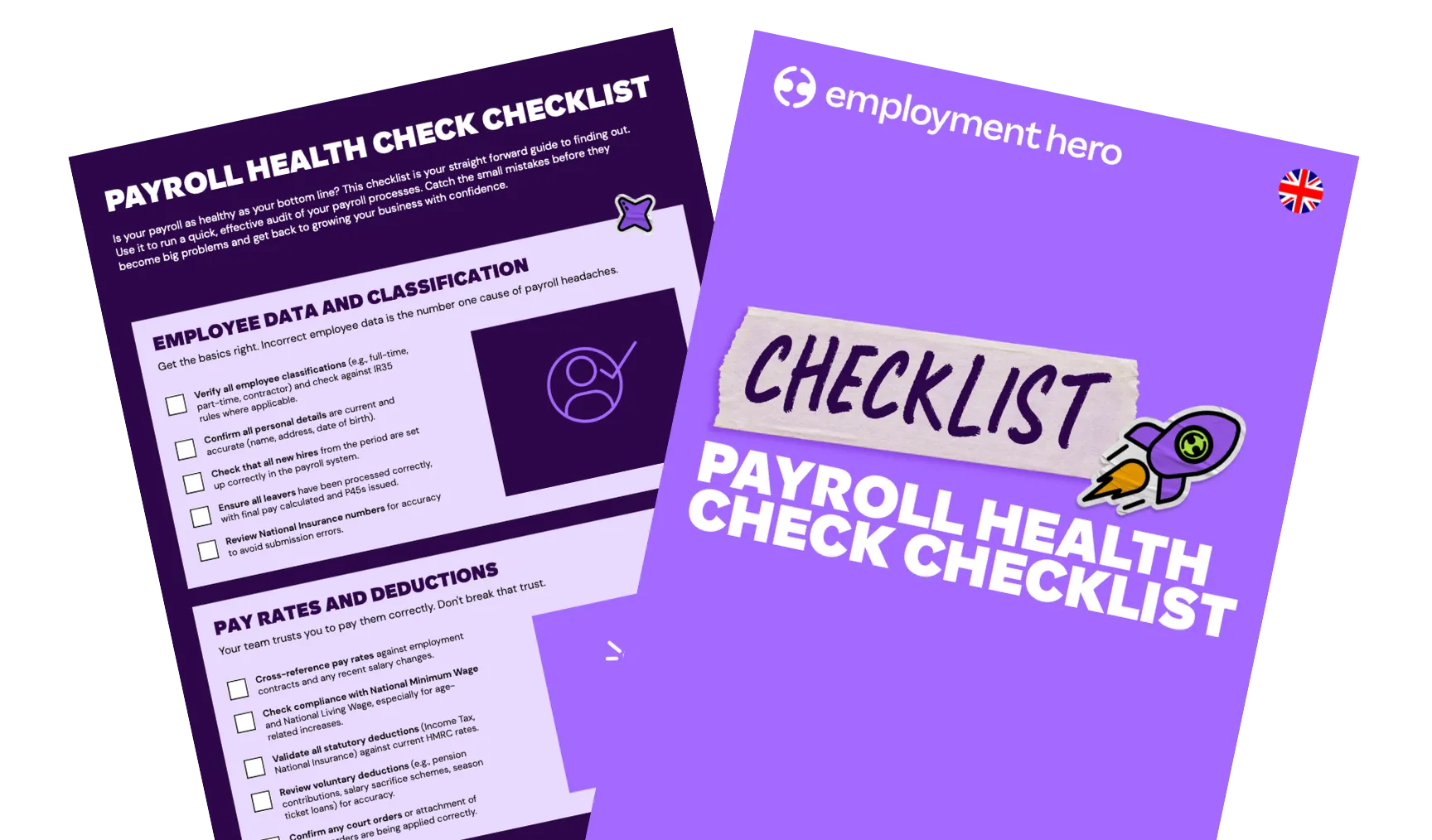 Read more: Payroll Health Check Checklist: Audit, Compliance and Review
Payroll Health Check Checklist: Audit, Compliance and Review
Is your payroll as healthy as your bottom line? Use our payroll audit, compliance, and review checklist to catch errors,…
-
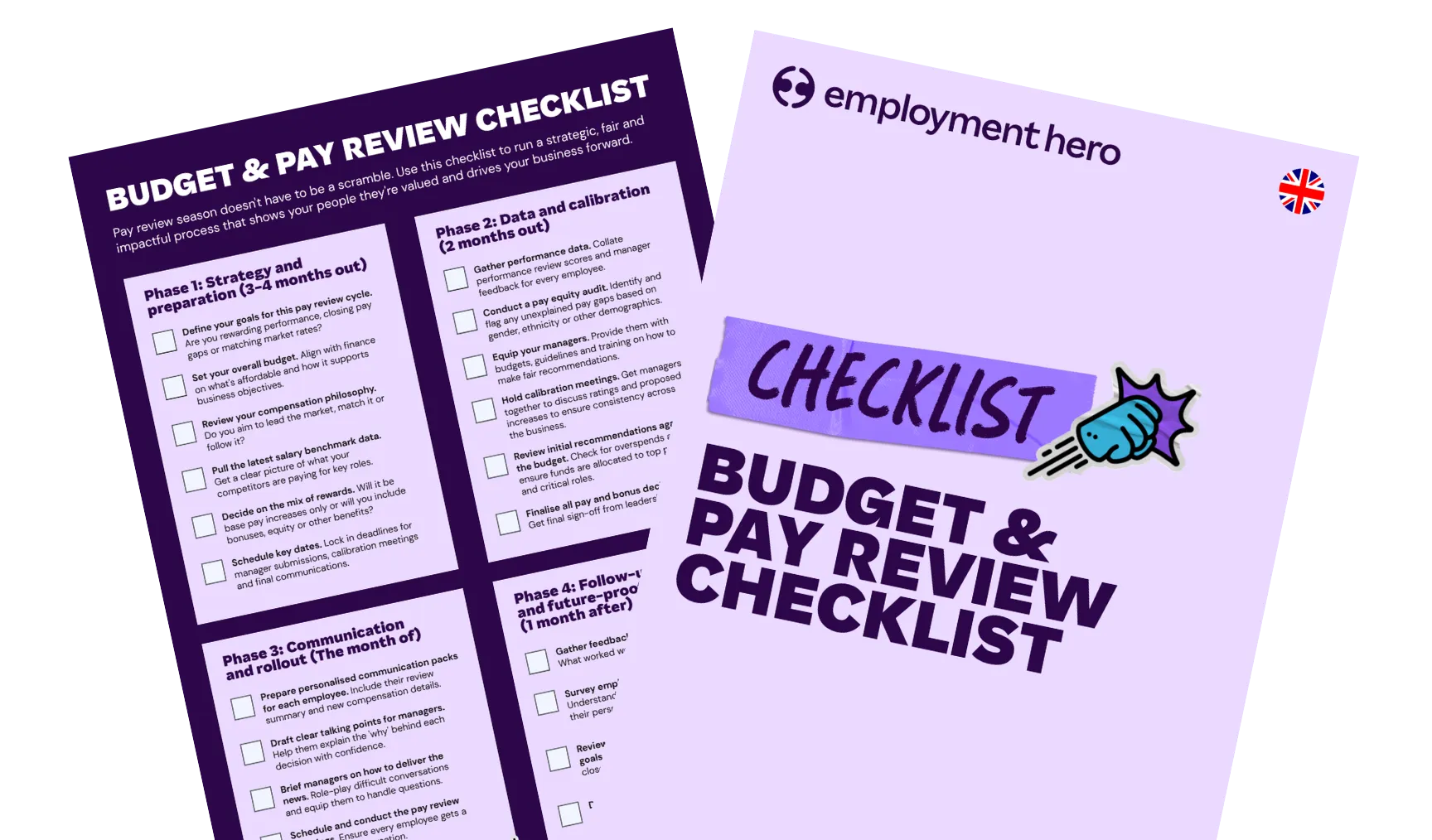 Read more: Budget & Pay Review Season: Shifting the Strategy for 2026
Budget & Pay Review Season: Shifting the Strategy for 2026
Learn how HR leaders can reward performance, boost engagement and show employees they matter.
-
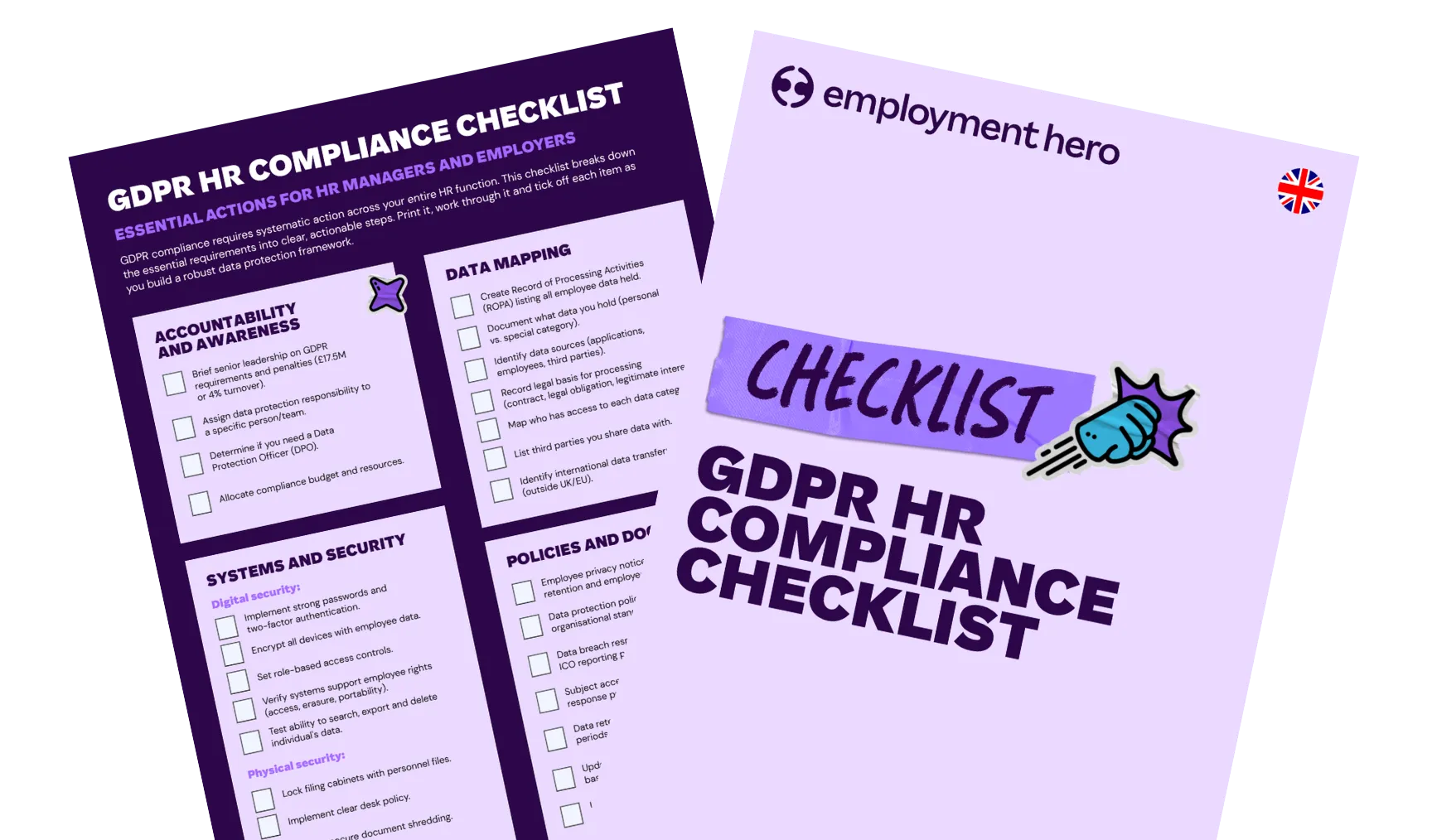 Read more: GDPR Checklist for HR Managers and Employers
GDPR Checklist for HR Managers and Employers
Check if your HR practices are GDPR compliant with our checklist.
