


















What is the HSE? Understanding the Health and Safety Executive
Learn what the HSE is and how it enforces workplace safety laws across the UK. Discover its key roles, employer responsibilities and compliance tips.

Contents
Workplace health and safety is not a ‘nice-to-have’ or a box-ticking exercise. It’s a fundamental responsibility that protects your people, your business and your reputation. In the UK, the authority setting and enforcing these standards is the Health and Safety Executive (HSE). For many employers, the HSE is a name associated with inspections, regulations and potential fines, but its role is far more proactive and supportive than you might think.
Ignoring your health and safety duties isn’t an option. The consequences of non-compliance are severe, ranging from financial penalties to criminal prosecution. But beyond avoiding penalties, building a culture of safety is about creating an environment where your team can thrive. It’s about demonstrating that you value their wellbeing above all else. This guide will demystify the HSE, breaking down its functions, your responsibilities and how you can move from reactive compliance to proactive safety leadership. Stop seeing health and safety as a burden and start using it as a tool to build a stronger, more resilient business.
What is the Health and Safety Executive (HSE)?

The HSE is Great Britain’s independent national regulator for workplace health and safety. Its core mission is to prevent work-related death, injury and ill health. Operating as a non-departmental public body, it is sponsored by the Department for Work and Pensions and holds authority across England, Scotland and Wales.
The HSE is the primary enforcer of the Health and Safety at Work etc. Act 1974 and the suite of regulations that fall under it. While it covers most industries, it works alongside local authorities, who are responsible for inspecting lower-risk workplaces like offices, shops and warehouses. In essence, if you run a business in Great Britain, the HSE’s rules and guidance define your legal obligations for keeping your employees and anyone affected by your work activities safe from harm.
Understanding its identity is one thing, but knowing what the HSE actually does is what empowers you to manage compliance effectively.
What is the role of the Health and Safety Executive?
The HSE’s role is not just to police workplaces; it is to shape the entire safety landscape. It achieves its mission through a combination of enforcement, research and partnership. The ultimate goal is to ensure that every employer understands and fulfils their duty of care, creating a system where safety is embedded in business operations, not just an afterthought.
This multi-faceted approach began decades ago, founded on a landmark piece of legislation that transformed the UK’s attitude to workplace safety.
History of the Health and Safety Executive
The HSE was formed as a direct result of the Health and Safety at Work etc. Act 1974. Before this Act, safety legislation was a fragmented patchwork of industry-specific rules that were often inconsistent and difficult to enforce. The 1974 Act revolutionised this by creating a single, overarching framework that placed the responsibility for safety squarely on those who create and manage risks—the employers.
The Act established the Health and Safety Commission to oversee policy and the Health and Safety Executive to act as its enforcer. In 2008, the two bodies merged, creating the single organisation we know today. For almost 50 years, the HSE has been at the forefront of driving down workplace accidents and fatalities, making UK workplaces among the safest in the world.
This long history has given the HSE a broad and powerful set of functions designed to protect workers and the public.
Health and Safety Executive duties and responsibilities
To achieve its mission, the HSE performs several key functions. These duties are not just about reacting to failure; they are about proactively preventing it through a strategic mix of enforcement, guidance, and policy influence. Understanding these functions helps you appreciate the seriousness of your obligations and the resources available to help you meet them.
Enforcement of legislation
This is the HSE’s most visible duty. It has the power to hold businesses and individuals accountable for breaches of health and safety law. When an organisation fails in its duties, the HSE can take a range of enforcement actions.
These actions are proportionate to the risk and the degree of non-compliance and can include:
- Improvement Notices: Requiring you to take specific actions to correct a breach within a set timeframe.
- Prohibition Notices: Ordering you to stop an activity immediately if it poses a risk of serious personal injury.
- Prosecution: Taking companies or individuals to court for serious offences, which can result in unlimited fines and even imprisonment for individuals.
Enforcement is not about punishment for its own sake; it’s about ensuring immediate risks are controlled and sending a clear message that safety failures will not be tolerated.
Inspection and investigation

HSE inspectors have the right to enter any workplace without giving notice. They conduct proactive inspections to check that you are complying with the law and have effective safety management systems in place. These visits are not random; they are often targeted at high-risk industries or businesses with a poor safety record.
The HSE also investigates workplace accidents, diseases and dangerous occurrences. The goal of an investigation is not to apportion blame but to understand the root causes of the incident and prevent it from happening again. If an investigation reveals serious breaches of the law, it can lead to enforcement action.
Guidance and education
The HSE is not just an enforcer; it is also a vital source of information and support. It produces a vast library of guidance documents, approved codes of practice (ACOPs) and online resources to help you understand your legal duties and manage risks effectively. These resources translate complex legislation into practical, actionable advice.
From free leaflets on manual handling to detailed technical standards for specific industries, the HSE aims to empower employers with the knowledge they need to create a safe working environment. It also runs campaigns and works with industry bodies to raise awareness of specific hazards, such as work-related stress or asbestos exposure.
Policy development
The Health and Safety Executive acts as the government’s primary expert on workplace health and safety. The HSE uses its research, data and frontline experience to advise on new legislation and shape national safety policy. It works to ensure that UK laws remain fit for purpose, responding to new technologies, emerging industries and changing work patterns.
This policy work ensures that the UK’s regulatory framework continues to provide world-class protection for workers while remaining practical for businesses to implement.
Licensing and approvals
For certain high-hazard industries, the HSE acts as a licensing authority. Businesses operating in sectors like nuclear energy, offshore oil and gas and major chemical processing must obtain permission from the HSE before they can begin or continue operations.
This licensing regime requires these companies to demonstrate that they have robust safety cases and can manage their significant risks to the highest possible standards. It is a critical function that protects not only workers but also the public and the environment from the potential consequences of a major incident.
For most businesses, the most direct interaction with the HSE will be during an inspection. Knowing what to expect is key to a smooth and constructive experience.
Understanding Health and Safety Executive inspections
An HSE inspection can be a daunting prospect, but it doesn’t have to be. If you are prepared and can demonstrate a positive attitude towards safety, an inspection can be a valuable opportunity to validate your systems and get expert feedback.
Here’s what you can expect:
- The Arrival: An inspector can arrive at any reasonable time and does not need to make an appointment. They will present their official identification and explain the purpose of their visit.
- The Tour: The inspector will likely ask for a tour of your premises to observe work activities, speak to employees and assess physical conditions. They will be looking for evidence of both good and bad practice.
- The Documentation Review: The inspector will ask to see your key health and safety documents, including your safety policy, risk assessments, training records and maintenance logs. This is where you prove your systems are not just on paper but are actively used. A clear, accessible WHS policy template can form the backbone of this documentation.
- The Discussion: The inspector will speak with employees and managers to gauge the safety culture within the business. They want to know if your team feels engaged, trained and empowered to raise safety concerns.
- The Feedback: At the end of the visit, the inspector will provide a verbal summary of their findings. They will highlight areas of good practice and explain any breaches they have identified.
- The Follow-Up: If any legal breaches were found, the verbal feedback will be followed by a written report and potentially a formal notice. If you are billed for the inspector’s time under the Fee for Intervention (FFI) scheme, you will receive an invoice detailing the costs.
The best way to handle an inspection is to have nothing to hide. This means embedding strong risk management into your daily operations.
Managing health and safety risks
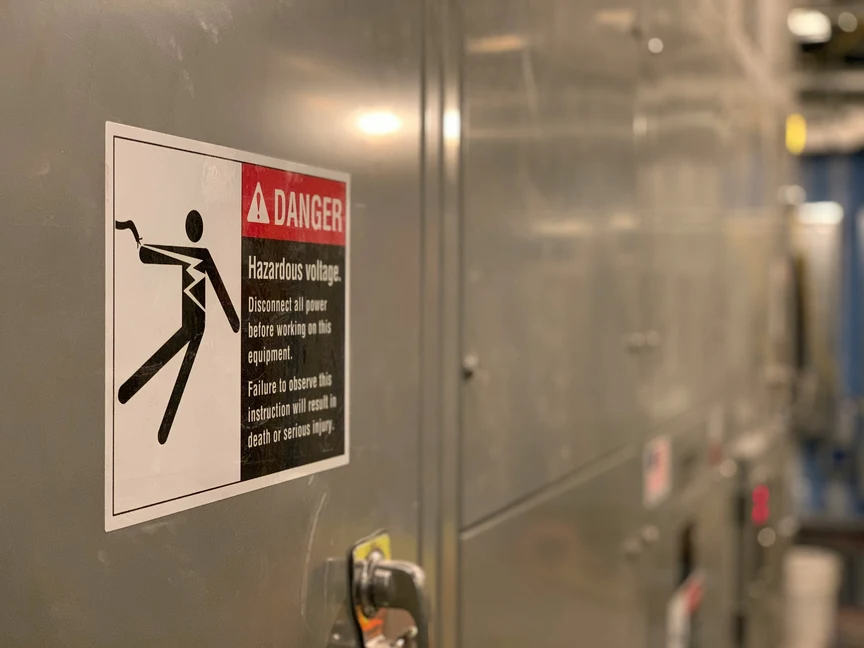
Compliance with the law isn’t about a one-off effort; it’s about creating a continuous cycle of risk management. It’s about building a system that proactively identifies hazards and controls them before they can cause harm. This is not just a legal duty—it’s the foundation of a responsible business.
Conduct regular risk assessments
A risk assessment is the cornerstone of your entire safety management system. It’s a careful examination of what could cause harm to people in your workplace, so you can weigh up whether you have taken enough precautions or should do more to prevent harm.
You must:
- Identify hazards: Pinpoint anything with the potential to cause harm (e.g., trailing cables, hazardous substances, work at height, sources of stress).
- Assess the risks: Evaluate who might be harmed and how and determine the likelihood and severity of that harm.
- Control the risks: Implement practical and effective measures to eliminate the hazard or, if that isn’t possible, control the risk.
- Record and review: Document your significant findings and review your assessment regularly, especially when there are changes in the workplace.
Employee training and engagement
Your employees are your greatest safety asset. They are on the front line, seeing the risks day in and day out. Engaging them in health and safety is crucial. This means providing clear instruction and adequate training on the risks they face and the control measures in place.
Training shouldn’t be a one-time event during induction. It needs to be an ongoing conversation, reinforced through team meetings, toolbox talks and regular refresher courses. An engaged workforce is one that actively reports hazards, suggests improvements and looks out for their colleagues. This is a key part of improving workplace health and safety and creating a resilient culture.
Adopt safety management systems
For larger or more complex businesses, a structured safety management system is essential. This moves you beyond ad-hoc measures to a planned, systematic approach. Frameworks like ISO 45001 provide a model for establishing policies, processes and objectives to manage safety performance.
A good system helps you integrate health and safety into all your business functions, from procurement to HR. It ensures clear roles and responsibilities, sets performance standards and drives continuous improvement. It transforms safety from a peripheral issue into a core business value.
Collaboration with the HSE
Finally, don’t view the HSE as an adversary. A proactive and cooperative relationship demonstrates your commitment to compliance. Engage with their guidance, use their online resources and if an inspector does visit, approach it as a learning opportunity.
Showing a willingness to work with the HSE to improve standards is far better than being seen as obstructive or negligent. A positive relationship can reduce the likelihood of formal enforcement action and ultimately helps you achieve the shared goal of a safer workplace for everyone. This includes focusing on mental as well as physical wellbeing, leveraging resources like mental health helplines and visual aids like a mental health know the signs poster.
Need more help?
Managing health and safety can feel overwhelming, especially on top of all your other responsibilities. It requires specialist knowledge, consistent effort and a deep understanding of your unique operational risks. But you don’t have to do it alone.
Your commitment to safety is a powerful statement about your company’s values. It directly impacts your team’s wellbeing and their overall employee experience. A safe and healthy workforce is an engaged, productive and loyal one.
Employment Hero provides the tools and resources to help you build that culture. From our WHS policy template and workplace wellness bundle full of employee wellness program ideas, we help you streamline processes and embed safety into your DNA. Don’t let compliance be a burden. Turn it into your competitive advantage.
Get in touch to see how Employment Hero can help you build a safer, stronger and more successful business.
Related Resources
-
 Read more: Temporary variation of employment contracts: an employer’s checklist
Temporary variation of employment contracts: an employer’s checklist
Learn how to manage a temporary variation of contract. Understand legal consent, documentation and compliance with employment law.
-
 Read more: Employment contracts for part-time employees: What employers need to know
Employment contracts for part-time employees: What employers need to know
Learn how to create a legally compliant part-time employment contract in the UK. Understand worker rights, pay and leave entitlements…
-
 Read more: Short Time Contracts: What You Need To Know
Short Time Contracts: What You Need To Know
Learn how short-time contracts work in the UK. Understand legal rules, pay entitlements and redundancy rights for compliant short-time working.

