


















What is a shift allowance? An employer’s guide
Published
What is a shift allowance? An employer’s guide
Published
Rotating schedules are a cornerstone of many industries, such as healthcare, hospitality, manufacturing and logistics. But managing pay for employees who work outside of traditional hours can be complicated. And a key component that businesses need to understand is the shift allowance.
We’ll explain what shift allowances are, how they work, the legal considerations in the UK and how you can formalize your policies to stay HR compliant and competitive.
What’s included in the resource?
- Step-by-step how to set up a shift allowance.
- Common challenges and how to avoid them.
- Checklist for employers.
What is a shift allowance?
A shift allowance is an additional payment made to employees who work hours outside the standard 9-to-5 schedule. These payments are an employee benefit that compensate workers for the inconvenience, unsociable hours or additional responsibilities that come with irregular hours.
Employers offer shift allowances to attract and retain talent, motivate employees to take on less desirable hours and ensure fairness for those who make personal sacrifices to cover irregular hours.
Is shift allowance part of salary?
Shift allowance is not typically part of an employee’s basic salary. Instead, it’s classified as an additional payment or “premium” on top of base wages.
Here’s what employers need to know:
- Basic salary vs. allowance: Basic salary is the fixed pay for contracted hours. Allowances are variable and usually apply only when specific conditions—like night work—are met.
- Pension contributions: In many cases, shift allowance is not pensionable unless explicitly included in the employment contract or the employer’s pension scheme rules.
- Holiday pay: Under UK law, regular payments (including allowances) that are intrinsically linked to work should be factored into holiday pay calculations. If employees consistently receive shift allowance, employers may need to include it when calculating paid leave.
How does shift allowance work?
Shift allowances can be calculated in several ways depending on your industry, workforce needs and budget. The most common methods include:
- Fixed-rate allowance: A set amount is paid for each eligible shift.
- Example: £20 extra per night hours worked.
- Percentage of base salary: The allowance is calculated as a percentage uplift on hourly or daily base pay.
- Example: A 10% uplift for weekend hours.
- Hourly premium: An additional rate is added to each hour worked.
- Example: £2.50 extra per hour for hours worked after 8 pm.
Each approach has its pros and cons. Fixed rates are simple to administer but may not scale well for employees with varying pay levels. Percentage uplifts are fairer for higher-paid staff but may increase payroll complexity.
Different types of shift allowance
Shift allowances can vary based on the nature of the hours. Common types include:
- Night shift allowance: Compensates employees who work overnight hours, often defined as between 11 pm and 6 am.
- Weekend shift allowance: Applies to work performed on Saturdays, Sundays, or bank holidays.
- Rotating shift allowance: For employees who regularly alternate between different shifts (e.g., mornings, afternoons and nights).
- Split shift allowance: For roles requiring staff to work two or more separate blocks of time in a single day.
- On-call allowance: Covers employees who remain available to respond to work outside normal hours.
Different types of shift patterns
Understanding working patterns is crucial to managing allowances effectively. The most common schedules include:
- Rotating shifts: Employees cycle through day, evening and night hours on a weekly or monthly basis.
- Continental shifts: Typically involve four days on followed by two or three days off, often used in industries with 24/7 operations.
- Split shifts: Work is split into two or more segments during the day, common in hospitality and transport sectors.
- Fixed shifts: Employees consistently work the same hours (e.g., always nights or always weekends).
Each pattern has its own implications for employee well-being, productivity and pay calculations. Employers should consider both operational requirements and employee preferences when determining schedules.
The law on shift patterns and pay
UK employers must comply with several key regulations when managing irregular hours:
- Working Time Regulations 1998: Employees generally cannot work more than 48 hours per week on average, unless they voluntarily opt out.
- Rest breaks: Employees are entitled to at least 11 consecutive hours of rest in each 24-hour period and a 20-minute legal work break if the working day exceeds six hours.
- Equal treatment: Part-time and irregular hours workers must not be treated less favourably than full-time staff doing equivalent work.
Failure to comply with these employment laws can result in penalties and reputational damage, so it’s crucial to align working patterns with statutory obligations.
The law on shift allowance and minimum wage
Employers must ensure that shift allowances do not inadvertently breach minimum wage laws. The National Minimum Wage (NMW) and National Living Wage (NLW) require that an employee’s total pay, including allowances, meets or exceeds the legal hourly minimum.
For example: If an employee’s basic pay is £10.50 per hour and they receive a £1.00 hourly night shift allowance, their combined hourly pay (£11.50) meets the NMW threshold.
However, deductions for uniforms or other costs can affect compliance. Employers must regularly audit pay to ensure all eligible workers receive at least the statutory minimum after allowances and deductions.
The law on shift patterns and maximum hours
Shift allowances often correlate with longer or unsociable working hours. Employers should keep these employment laws and legal limits in mind:
- Maximum working hours: The 48-hour weekly limit applies over a 17-week reference period unless an employee has signed an opt-out agreement.
- Young workers: Employees aged 16–17 cannot work more than 8 hours a day or 40 hours a week.
- Night workers: Typically limited to an average of 8 hours in a 24-hour period, calculated over 17 weeks.
- Health assessments: Employers must offer free health checks to night workers to ensure their fitness for ongoing night hours.
How Employment Hero can help
Managing shift allowances manually can be complex, especially when you’re dealing with rotating schedules, night shifts and ever-changing regulations. That’s why we’ve created An Employers Guide to Shift Allowances to give you a clear framework for documenting your policies.
To download the guide, we just need a few quick details.
Related Resources
-
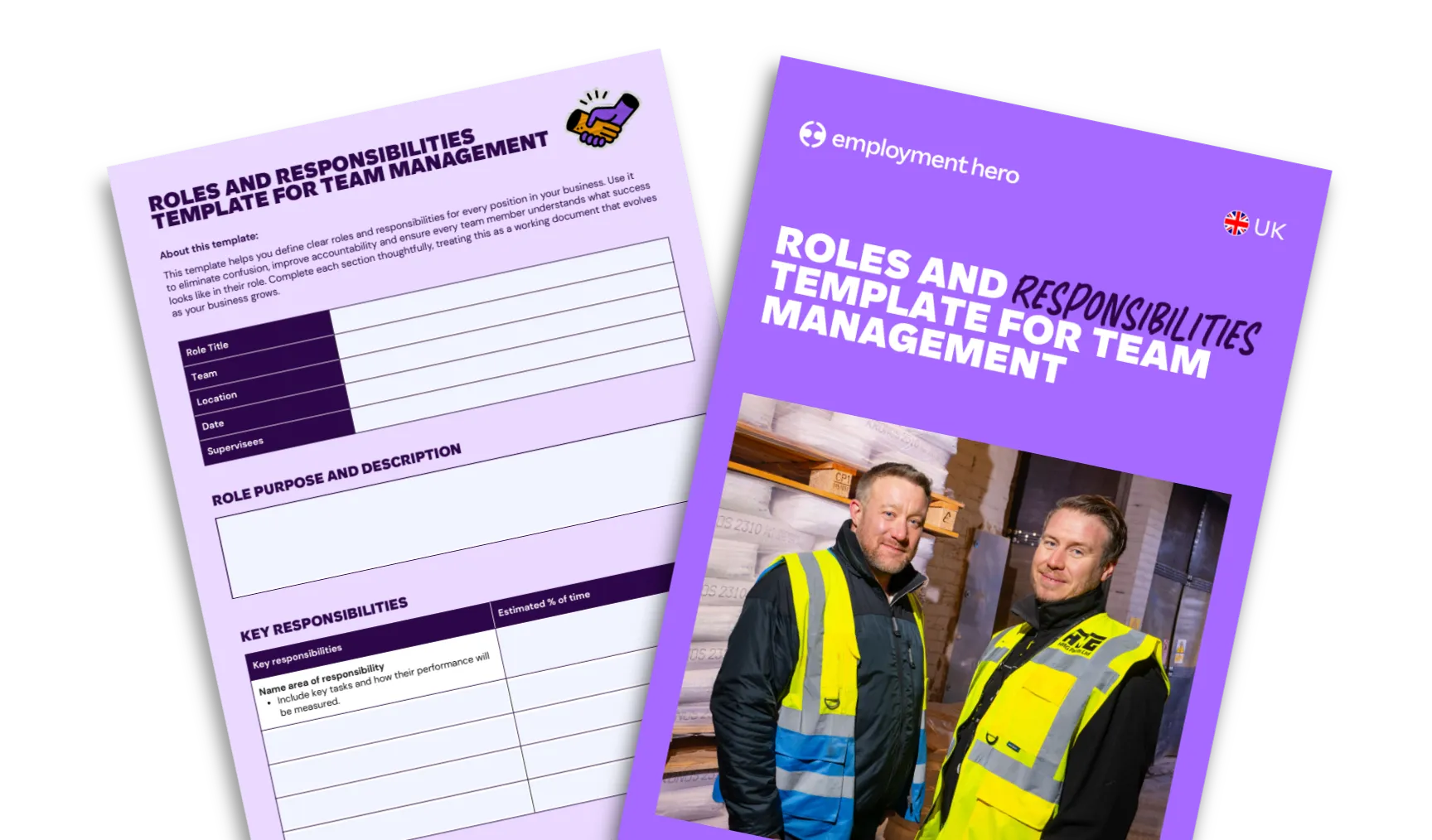 Read more: Roles and Responsibilities Template for Team Management
Roles and Responsibilities Template for Team Management
Download our roles and responsibilities template for easy and effective team management.
-
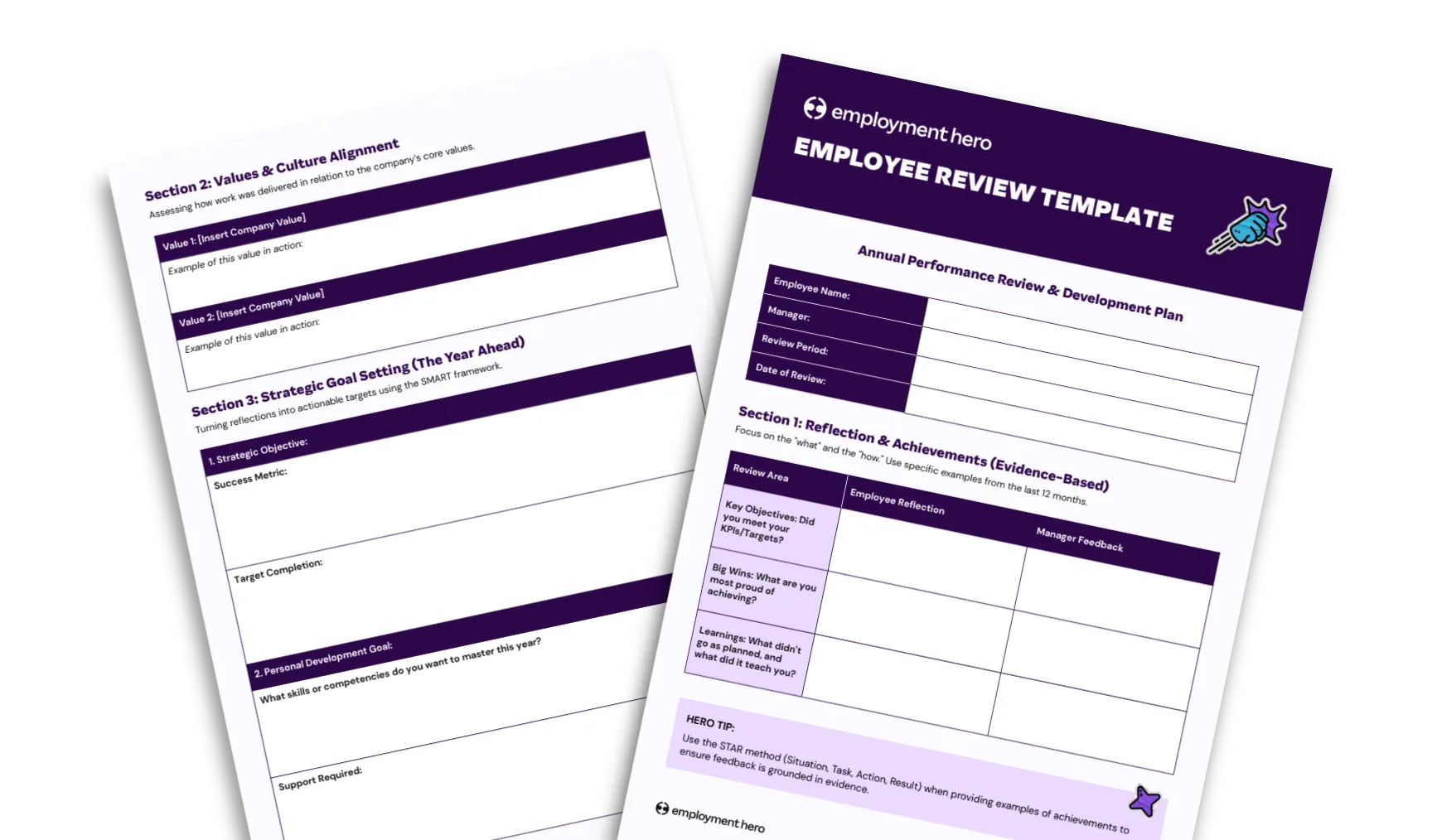 Read more: Employee Review Template
Employee Review Template
Discover the ultimate guide to employee reviews with tailored templates for every scenario.
-
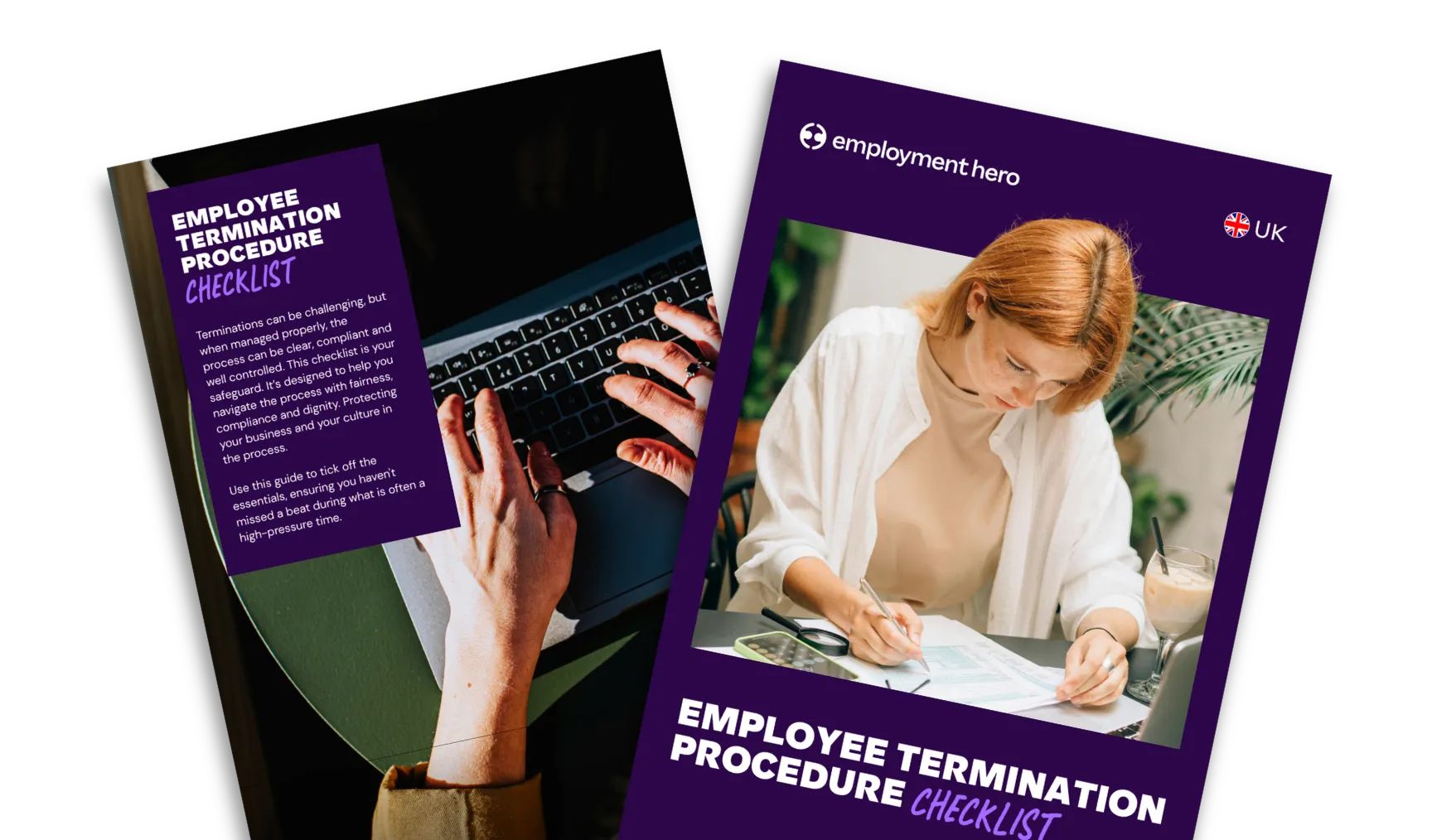 Read more: Employee Termination Process & Checklist
Employee Termination Process & Checklist
Published Setting up an employee termination process, while unpleasant, is a critical part of risk management and safeguarding in business.…

