


















What is Employee Self-Service (ESS)? How It Works & Employer Benefits
Published
What is Employee Self-Service (ESS)? How It Works & Employer Benefits
Published
How much time does your team spend on small HR admin tasks? Answering questions about payslips, updating an employee’s home address or digging out leave balances. Each request is small but they add up, pulling you and your HR team away from the work that really drives your business forward, like building culture and retaining your best people.
There is a better way. It’s called Employee Self-Service (ESS) and it’s a game-changer for growing businesses. By giving your employees the power to manage their own information, you can slash admin time, reduce errors and create a more empowered and engaged workforce.
This isn’t about offloading work. It’s about streamlining it. Let’s look at how this technology works and the transformative benefits it can bring to your business.
What is in this ESS guide?
This guide is for employers who want to break free from the admin trap. We’ll show you exactly how Employee Self-Service works, the benefits it delivers and how it boosts your HR efficiency.
Here’s what you’ll learn:
- What ESS is and how the portals function.
- The must-have features to look for in an ESS platform.
- The powerful benefits for your business, from productivity to employee empowerment.
- How to get started and overcome common hurdles.
What is Employee Self-Service (ESS)?

Employee Self-Service (ESS) is a feature within modern HR software that gives your staff direct access to manage their own personal and employment-related information. Think of it as a secure online hub where your team can handle their HR needs without having to go through a manager or your HR department for every little thing.
Instead of emailing to ask for a copy of last month’s payslip or filling out a paper form to book a holiday, they can just log in and do it themselves. It’s about empowering your people with access to their own data, giving them ownership and you more time.
What is an Employee Self-Service portal?
An ESS portal is the user-friendly interface that brings self-service to life. It’s the digital front door to your HR software, accessible from a desktop computer or a mobile app. This is where the magic happens.
Through this portal, employees can view their personal details, download payslips, request annual leave and update their bank details. It’s all protected by robust security features and permission settings, so individuals can only see their own information. You control who sees what, ensuring data remains secure and compliant with UK GDPR. This is a core part of any modern approach to taking HR digital.
How do employee self-service portals work?
The process is simple and intuitive, designed to eliminate friction. It works in a few straightforward steps:
- Login: An employee securely logs into the portal using their unique credentials.
- View and manage: They access a dashboard where they can view their information—like contact details, leave balance or recent payslips.
- Submit requests: If they need to make a change, like updating their address or requesting time off, they submit a request directly through the portal.
- Automated approval: The request is automatically routed to the correct manager for approval. The manager gets a notification, reviews the request and can approve or deny it with a click.
- System update: Once approved, the system updates the employee’s record automatically. No manual data entry, no chasing emails.
This level of automation is a huge time-saver. It turns multi-step manual processes into a seamless workflow that runs in the background.
What features should Employee Self-Service offer?
When you’re choosing the right HR software, the quality of its ESS features is crucial. Look for a platform that offers a comprehensive suite of tools to cover your team’s most common needs.
Key features include:
- Leave management: Let employees view their leave balances and submit requests online, which are then routed for approval.
- Payroll visibility: Give staff access to their payslips, P60s and payroll history whenever they need it.
- Personal data updates: Empower employees to update their own contact information, bank details and emergency contacts, ensuring your records are always accurate.
- Time tracking: Allow employees to log their hours worked, submit timesheets and track overtime digitally.
- Expense claims: Simplify expense management by letting staff upload receipts and submit claims through their mobile devices.
- Integration: The portal should connect seamlessly with your core HRIS and payroll systems to ensure data flows correctly.
What are the benefits of employee self service?

Implementing ESS is about much more than just convenience. It delivers tangible business advantages that help you run a more efficient, engaged and modern workplace. It’s a core component of any effective automated HR system.
Enhances remote working
With hybrid and remote work now standard, ESS is no longer a nice-to-have; it’s essential. It gives your team access to critical HR functions from anywhere, at any time. Whether they’re at home, in the office or on the road, they can manage their HR admin without disruption.
Improves productivity and engagement
When you remove administrative hurdles, you free up your people to focus on their actual jobs. Employees feel more trusted and in control, which boosts morale and engagement. Meanwhile, your HR team is liberated from tedious admin, allowing them to focus on strategic initiatives like training, performance management and improving company culture. It’s a win-win.
More accuracy, fewer errors
Manual data entry is a recipe for errors. A typo when updating an employee’s bank details or an incorrectly recorded leave request can cause major headaches. With ESS, employees enter their own data directly into the system. This drastically reduces the chance of human error, leading to more accurate records and a smoother payroll process. An HR audit checklist can reveal just how many records need constant updating.
Employees are empowered
People today expect a consumer-grade digital experience in all aspects of their lives, including at work. ESS meets this expectation. It puts employees in the driver’s seat, giving them autonomy over their own information. This sense of empowerment builds trust and shows that you respect their ability to manage their own affairs.
Accessibility is improved
An ESS portal centralises all personal HR information, making it accessible 24/7. No more waiting for the HR department to open on Monday morning to ask a simple question. Employees can find what they need, when they need it, fostering a sense of independence and efficiency.
Automates HR tasks
Think about the time spent on manual HR processes: printing forms, chasing signatures and re-keying data. ESS automates these workflows entirely. Leave requests, personal detail changes and timesheet submissions become streamlined digital processes, saving hundreds of hours a year and strengthening your HR compliance.
How to get started with self service HR
Making the switch to ESS is a straightforward process when planned correctly.
- Choose the right software: Select a platform that offers the features your business needs and is intuitive for your employees to use.
- Plan the roll-out: Communicate the change clearly to your team. Explain the benefits and show them how the new system will make their lives easier.
- Onboard your employees: Provide simple training or guides to help everyone get comfortable with the new portal. Lead by example and encourage managers to embrace the system.
- Ensure data compliance: Confirm that your chosen software is fully compliant with UK GDPR and has strong security measures to protect your employees’ sensitive data.
Common challenges and how to overcome them
While the benefits are huge, any change can face resistance. Some employees might be hesitant to adopt a new system or you may worry about integrating it with your existing tools.
The key to overcoming these challenges is communication. Frame the change as a positive step that empowers employees and makes processes easier for everyone. Choose a provider that offers strong customer support and can help you manage the technical integration smoothly. A gradual roll-out, starting with a tech-savvy department, can also build momentum and create internal champions for the new system.
Download Employee Self-Service (ESS) guide
Employee Self-Service is a fundamental part of modern HR management. It streamlines your operations, cuts costs, empowers your team and frees you up to focus on what you do best—growing your business. By putting the power of information into your employees’ hands, you build a more efficient, engaged and resilient workplace.
Ready to see how Employment Hero can transform your HR admin?
Download the Employer’s Guide to Employee Self-Service (ESS) today.
To download the guide, we just need a few quick details.
Related Resources
-
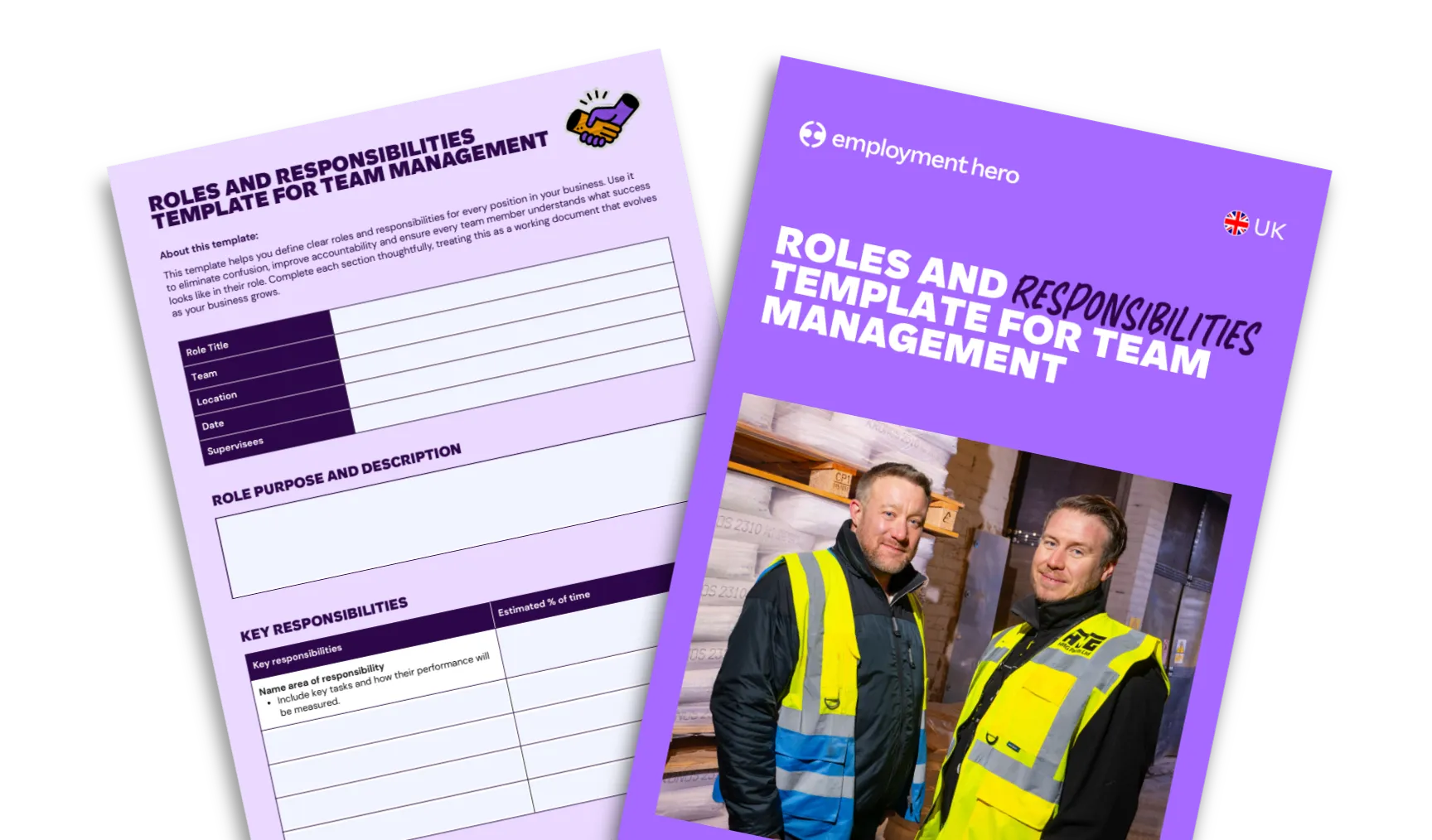 Read more: Roles and Responsibilities Template for Team Management
Roles and Responsibilities Template for Team Management
Download our roles and responsibilities template for easy and effective team management.
-
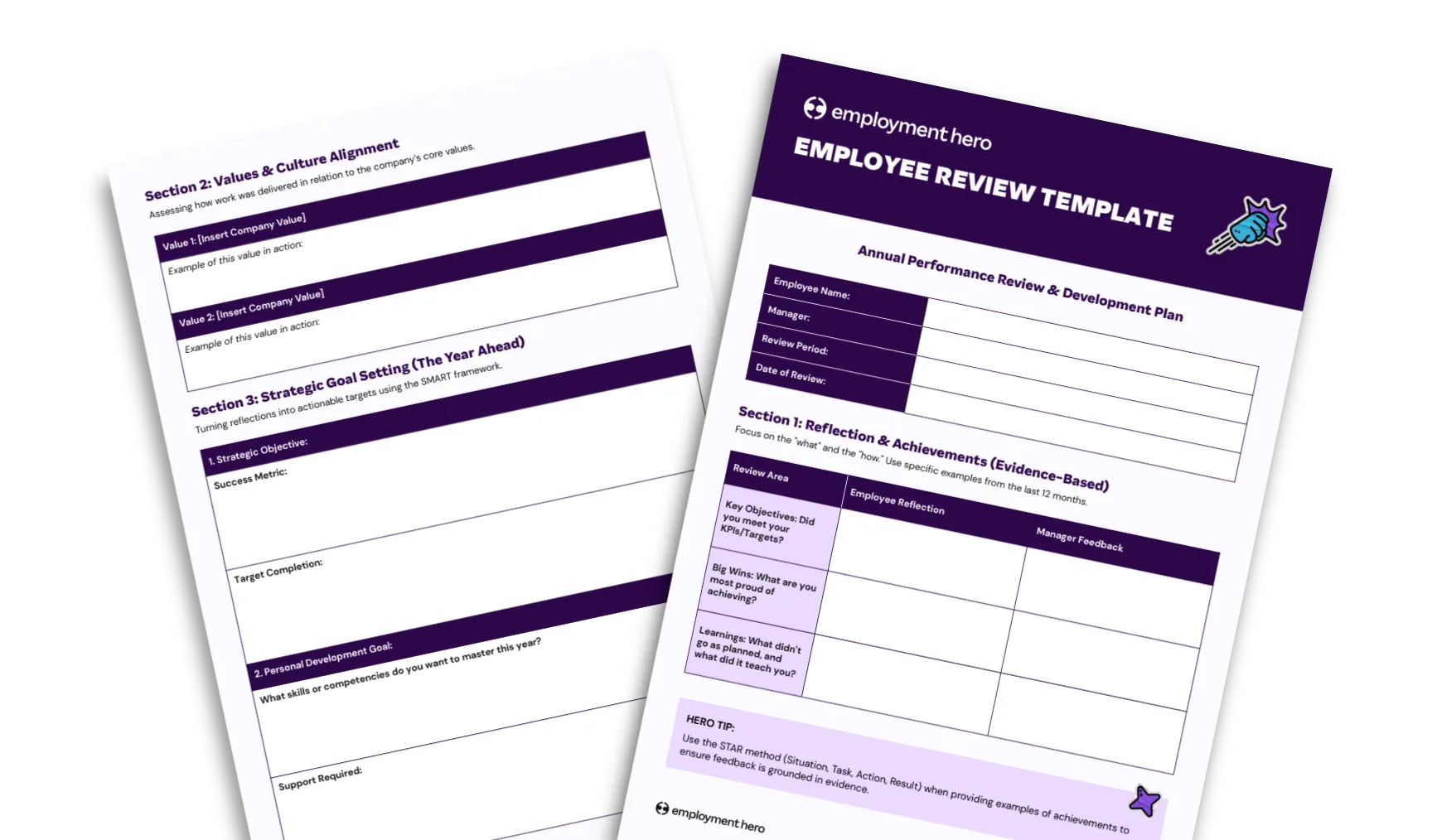 Read more: Employee Review Template
Employee Review Template
Discover the ultimate guide to employee reviews with tailored templates for every scenario.
-
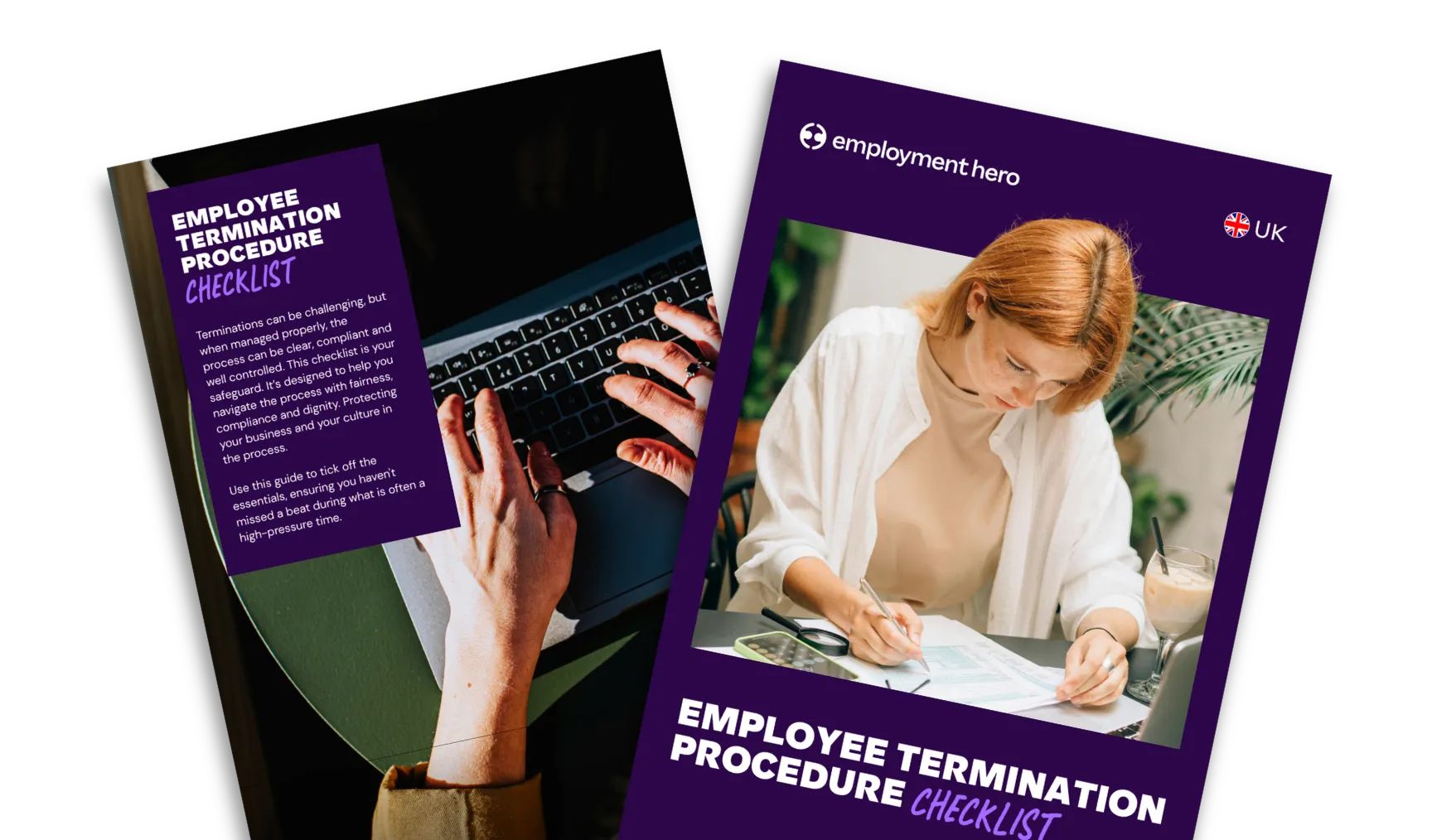 Read more: Employee Termination Process & Checklist
Employee Termination Process & Checklist
Published Setting up an employee termination process, while unpleasant, is a critical part of risk management and safeguarding in business.…
