


















Training Plan Template for Employees: Employers Guide
Published
Training Plan Template for Employees: Employers Guide
Published
As a business owner, you know your team is your biggest asset and investing in their growth is a powerful strategy for success. But in the day-to-day hustle of running a company, individual training plans often get pushed to the bottom of the list.
Creating a clear path for professional development boosts confidence, improves retention and helps you build a workforce that is engaged, productive and loyal to your vision. The challenge is turning the vague idea of “training” into a concrete plan that delivers results.
This guide will show you how to do just that. We’ll break down the process step-by-step and provide a free training plan template for employees to get you started.
What is a training plan template?

A training plan template is simply a structured document that acts as a roadmap for an employee’s professional development. It outlines the what, why, who and how of their learning journey. Think of it as a blueprint for success, detailing the specific skills they need to develop, the resources required and how you’ll measure progress along the way.
Instead of starting from a blank page every time, a template provides a consistent framework. It’s not about creating rigid, one-size-fits-all training. It’s about giving you a solid foundation to build personalised development plans that align with both individual career goals and your business objectives.
Having this structure in place turns good intentions into actionable steps. It’s the difference between saying “we support employee growth” and actually making it happen.
Why are training plans important?
Investing in your team’s growth delivers a massive return. When employees see a clear path forward within your company, their engagement and loyalty skyrocket. It sends a powerful message: “We value you and we’re invested in your future.”
Here’s why having a formal training plan is a game-changer:
- Boosts employee performance: Training equips your people with the skills and knowledge to excel in their roles. This leads to higher quality work, increased productivity and fewer mistakes.
- Skyrockets retention: Employees are more likely to stay with a company that invests in their career. Training plans show you’re committed to their long-term development, not just their short-term output.
- Enhances engagement and morale: Feeling stagnant is a major cause of disengagement. A personal training plan gives employees a sense of purpose and direction, boosting their motivation and overall job satisfaction. A great employee experience is built on these kinds of opportunities.
- Closes critical skills gaps: A strategic training plan helps you identify and address skills gaps before they become a problem, ensuring your team is ready to tackle future challenges and drive innovation.
- Attracts top talent: In a competitive market, a strong commitment to professional development is a huge differentiator. Highlighting your training programmes can help you attract ambitious candidates who are eager to learn and grow.
A structured training plan is more than just a document; it’s a commitment to building a stronger, more capable and more engaged team. It’s an essential part of a holistic training programme outline that drives business growth from the inside out.
How to create a training plan

Building a plan that delivers results doesn’t have to be complicated. It’s a logical process that turns the broad concept of “training” into a concrete schedule with clear outcomes. Let’s walk through the practical steps.
Work out who you’re training
First things first: know your audience. The training needs of a fresh-faced new hire will be vastly different from those of a seasoned manager looking to sharpen their leadership skills. One size does not fit all.
Are you training:
- New employees? They’ll need comprehensive onboarding software and training that covers company culture, role specifics and essential systems.
- An entire department? Perhaps your sales team needs to master a new CRM, or your marketing team needs to get up to speed on the latest digital trends.
- An individual employee? This could be part of a performance improvement plan or a personal development plan for a high-potential team member.
Tailoring your approach based on the audience ensures the training is relevant, engaging and respects their existing knowledge.
Understand the audience’s training needs
Once you know who you’re training, you need to figure out what they need to learn. Wasting time on training that isn’t needed is frustrating for everyone. The goal is to align training directly with your business objectives.
Start by conducting a training needs analysis. Ask yourself:
- What are our business goals for the next quarter or year?
- What skills are needed to achieve these goals?
- Where are the current gaps in our team’s skill set?
You can gather this information through performance reviews, one-on-one conversations, employee surveys or by observing teams in action. This step ensures your training investment directly supports business growth.
Set learning objectives
Now it’s time to get specific. What should the employee be able to do after the training is complete? Vague goals like “get better at sales” are useless. You need to set clear, measurable and achievable objectives.
Use the SMART framework:
- Specific: What exactly will be achieved? (e.g., “Learn to use the advanced features of our CRM.”)
- Measurable: How will you know it’s been achieved? (e.g., “Be able to create and manage custom sales reports.”)
- Achievable: Is this a realistic goal for the employee?
- Relevant: Does this align with their role and business goals?
- Time-bound: When will this be achieved? (e.g., “Within the next 30 days.”)
A clear objective might be: “By the end of Q2, you will be able to confidently build and present a sales forecast using the advanced reporting tools in our CRM.” This clarity ensures everyone knows what success looks like. For more guidance on this, explore our introduction to learning and development.
Work out how to deliver the training
People learn in different ways, so consider a variety of delivery methods. The right format depends on the topic, your budget and your team’s schedule. A blended approach often works best.
Options include:
- Instructor-led sessions: In-person or virtual workshops are great for interactive learning and group discussion.
- eLearning and online courses: An employee Learning Management System (LMS) allows you to deliver self-paced modules that employees can complete on their own time.
- On-the-job training: Shadowing a senior colleague or working on a new project with guidance is a powerful way to learn practical skills.
- Coaching and mentoring: One-on-one guidance from a manager or mentor provides personalised support.
- Reading and resources: Sometimes all that’s needed is a good book, a detailed guide or a set of online articles.
Assess the effectiveness
How do you know if the training actually worked? You need to measure its impact. Assessing effectiveness isn’t just about a “happy sheet” survey at the end of a session. It’s about checking whether the new skills are being applied on the job and delivering results.
Consider these methods:
- Post-training quizzes or tests: To check knowledge retention.
- Practical assessments: Ask the employee to demonstrate their new skill.
- Feedback surveys: Gather input from both the employee and their manager.
- Performance metrics: Track relevant KPIs. If the training was on customer service, have your satisfaction scores improved?
This feedback loop is crucial for measuring the ROI of your training and refining your approach for the future.
Why use an employee training plan template?

You wouldn’t build a house without a blueprint, so why build a training programme without a template? Reinventing the wheel every time an employee needs training is a massive waste of administrative time and effort.
Using a standardised template offers several key advantages:
- Ensures consistency: It guarantees that all training plans cover the essential elements, from objectives to evaluation. This creates a fair and consistent experience for all employees.
- Saves time: A template streamlines the planning process, allowing managers to focus on the quality of the training rather than the paperwork.
- Improves tracking and reporting: When all plans follow the same structure, it becomes much easier to track progress and report on key performance indicators across the entire business.
- Creates a clear record: A completed template serves as a formal record of an employee’s development, which is useful for performance reviews and career progression discussions.
Our template provides a practical structure you can swipe and adapt, so you can start building effective plans immediately.
Start building your team’s future today with Employment Hero
Investing in your team’s development is one of the most powerful moves you can make. A structured training plan turns that investment into tangible results, building a more skilled, engaged and loyal workforce. When your people grow, your business grows with them.
Ready to get started?
Download our free Training Plan Template for Employees. It’s a customisable, easy-to-use resource designed to help you create personalised development roadmaps that deliver real impact. Stop talking about training and start building a better future for your team.
To download the template, we just need a few quick details.
Related Resources
-
 Read more: Is Your HR System Holding You Back? The HR Digital Transformation Readiness Assessment
Is Your HR System Holding You Back? The HR Digital Transformation Readiness Assessment
Most HR systems haven’t kept up with business growth. Find out if yours is holding you back with our free…
-
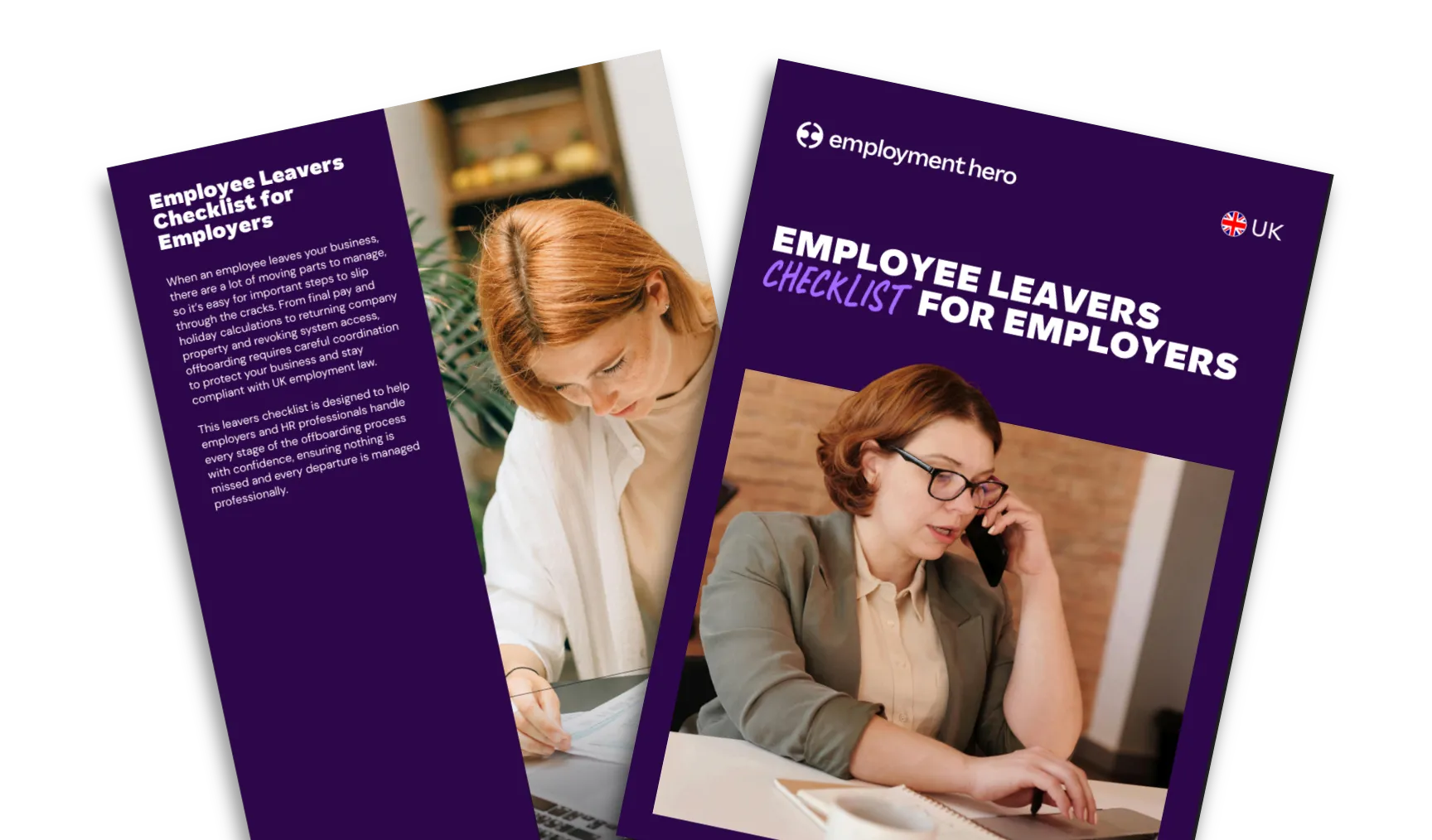 Read more: Employee Leavers Checklist for Employers
Employee Leavers Checklist for Employers
Ensure a seamless transition for departing employees with our leavers checklist.
-
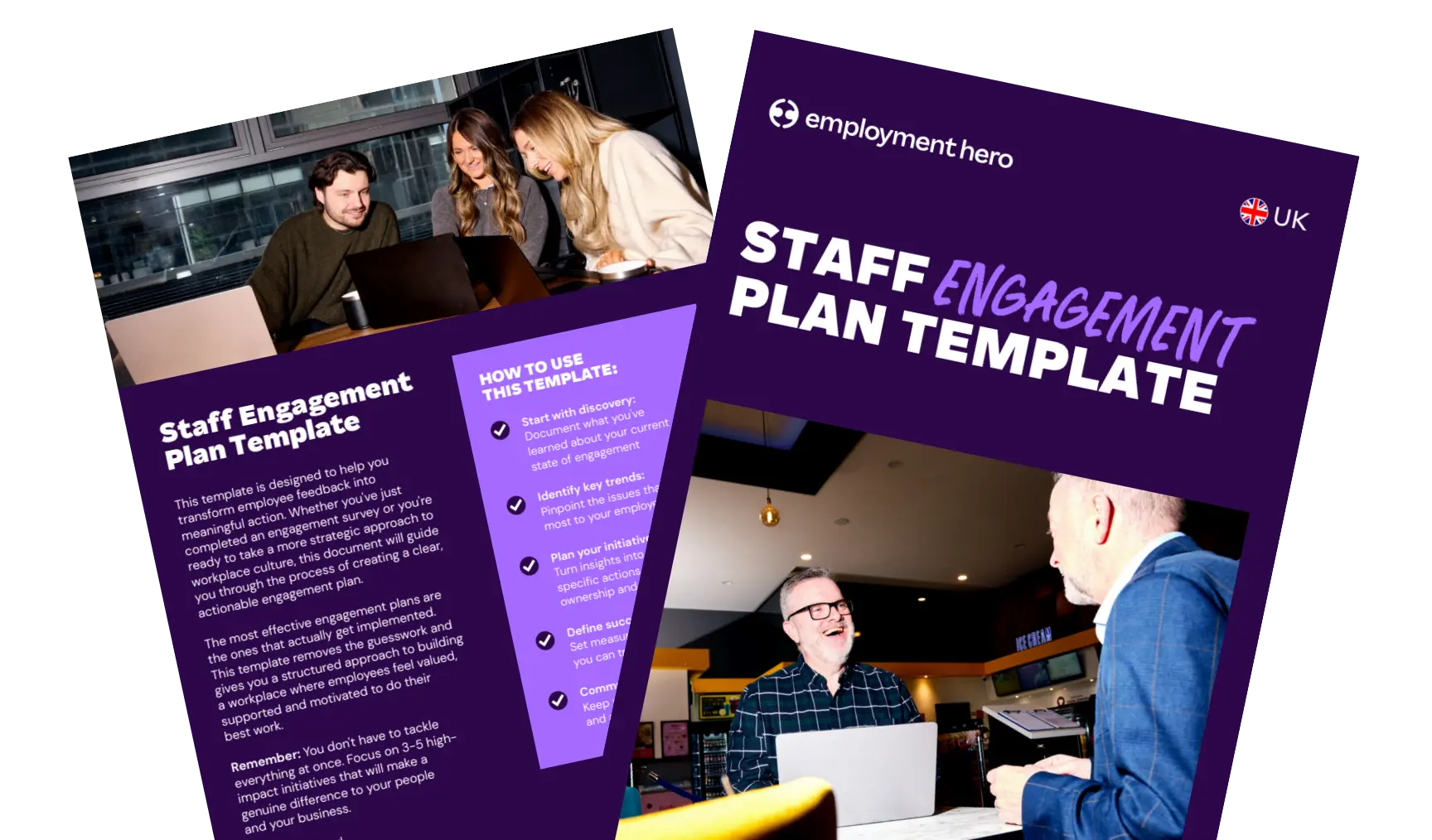 Read more: Staff Engagement Plan Template
Staff Engagement Plan Template
Discover effective strategies for creating a staff engagement plan that drives results. Download our template and guide.
