


















Temporary variation of employment contracts: an employer’s checklist
Published
Temporary variation of employment contracts: an employer’s checklist
Last Updated
Business never stands still. Whether you’re navigating a quiet spell, testing a new operational model or adapting to a team member’s changing needs, flexibility is your superpower. Sometimes, that flexibility requires a temporary change to an employee’s contract.
But this is where things get tricky. An employment contract is a legally binding document, not a casual agreement you can tweak on a whim. Making changes, even temporary ones, without following the correct process can land you in serious legal trouble. The golden rule? You cannot force a change on an employee. Consent is everything.
This isn’t about creating barriers; it’s about building trust. When you handle contract changes with transparency and respect, you reinforce your commitment to your team. Let’s walk through how to do it right.
What is in this checklist?
This guide explains when, why and how to make lawful temporary contract changes, including:
- How to assess and justify a temporary variation.
- What to review in existing contracts.
- How to define the change and its duration.
- Key legal and discrimination risks to check.
- How to consult with employees and gain consent.
- What to include in a variation letter and how to document it.
- How to manage the change period and reinstate original terms.
When you can make changes to employee contracts
The need for a temporary contract change can arise from various business scenarios. Perhaps you’re facing a short-term downturn and need to reduce hours across the board to avoid redundancies. Maybe a project requires a team member to take on different duties for a few months or an employee has requested a temporary move to a different location for personal reasons.
While these situations are normal parts of running a business, your ability to make changes is limited. You can’t just impose new terms. Any change must be proposed, discussed and agreed upon. The only exception is if your employee’s employment contract contains a specific, well-drafted “variation clause,” which allows you to make variations without an employee’s consent, but even these have their limits.
Types of contract changes you might consider
Contract changes can be temporary or permanent. For this guide, we’re focused on temporary adjustments that have a clear start and end date. Common examples include:
- Hours of work: Reducing hours during a quiet period or increasing them for a specific project.
- Duties: Asking an employee to cover a different role or take on new responsibilities temporarily.
- Place of work: Allowing a temporary move to another office or a shift to remote work.
- Pay: Agreeing to a temporary reduction in salary, often to navigate financial challenges as an alternative to layoffs.
Clarity is essential. A temporary change should always be documented in writing with a defined timeframe. This ensures the original terms of the contract automatically resume once the period ends, preventing any confusion.
Managing contract changes during TUPE transfers
Things get more complex during a Transfer of Undertakings (Protection of Employment) or TUPE, transfer. If you’re acquiring a business, the employees’ contracts transfer over to you on their existing terms.
Under TUPE, you cannot make changes to an employee’s contract if the main reason for the change is the transfer itself, unless there is an Economic, Technical or Organisational (ETO) reason involving changes in the workforce. Any changes unrelated to the transfer are still subject to the normal rules of consultation and consent. TUPE is a highly complex area of employment law and getting it wrong is costly, so always seek legal advice.
Understanding variation clauses in your contracts

Some employment contracts include a “variation clause” or “flexibility clause,” giving you the right to change certain terms. However, you can’t rely on these clauses to make unreasonable changes. An employment tribunal will look very dimly on a company using a vague clause to, for example, slash pay or force a relocation without good reason.
These clauses must be clear, specific and used reasonably. For instance, a clause allowing for minor changes to job duties is more likely to be enforceable than one that claims to allow changes to any term at any time. Crucially, they never give you a blank cheque to bypass the need for genuine consultation with your employee.
What to do when an employee disagrees with a change
So, you’ve proposed a temporary change and your employee has said no. What now? First, don’t panic and definitely don’t force the issue. This is a moment for open conversation, not authority. You need to enter into a meaningful consultation process to explore their concerns and look for a solution together.
Recognising when an employee is working ‘under protest’
An employee might not say “no” explicitly. Instead, they might continue working but make it clear they do not agree with the change. This is known as “working under protest.” They might send an email stating their objection or raise a formal grievance. This is a red flag. If you ignore it and carry on, you are at high risk of a breach of contract claim.
Responding to employee objections
If an employee objects, your first step is to listen. Arrange a meeting to understand their reasons. Are they worried about the financial impact of a pay cut? Does the change in hours clash with childcare responsibilities? Once you understand their perspective, you can respond constructively. Document everything—your proposal, their objections and any counter-offers. Using a central system like an HR software can help keep these records organised and secure.
Negotiating an agreement with your employee
Often, the path forward is through compromise. If you need to reduce costs, could you offer a smaller pay reduction combined with fewer hours? If new duties are the issue, could you provide extra training and support? The goal is to find a middle ground that works for both sides. Once you reach an agreement, put it in writing and have both parties sign it.
Identifying potential discrimination issues

When proposing contract changes, you must consider the impact on your entire team. A seemingly neutral change could indirectly discriminate against a group of employees with a protected characteristic under the Equality Act 2010.
For example, a change from flexible start times to a rigid 9-to-5 schedule might disproportionately affect working mothers. If a change puts a particular group at a disadvantage and you cannot justify it as a proportionate means of achieving a legitimate business aim, you could face a discrimination claim. Always analyse the potential impact before you propose a change.
Handling pay rate reductions legally
Temporarily reducing pay is one of the most sensitive changes you can make. It directly impacts your employee’s livelihood, so it must be handled with the utmost care. It is only lawful with the employee’s explicit, written consent.
You must also ensure that any reduction does not take their pay below the National Minimum Wage or National Living Wage for the hours they are working. This is a legal baseline you can never fall below. Transparency about why the reduction is necessary and for how long is key to gaining agreement.
Considering dismissal due to contract change refusal
What if, after extensive consultation, you can’t reach an agreement and the business has a critical need for the change? In very limited circumstances, you might consider dismissing the employee and offering them re-engagement on the new terms.
Understanding the dismissal process
This is a high-risk path. To avoid an unfair dismissal claim, you must demonstrate a fair reason for the dismissal (usually ‘Some Other Substantial Reason’ or redundancy) and follow a procedurally fair dismissal process. This includes consultation, giving proper notice and exploring all alternatives.
Dismissal and re-engagement (‘fire and rehire’) procedures
The practice of “fire and rehire” is legally fraught and carries significant reputational risk. It should only ever be a last resort after all other avenues have been exhausted. It can destroy employee morale and damage your brand. The legal and financial consequences of getting this wrong can be severe, so it’s a step that demands specialist advice, especially as the ability to ‘fire and rehire’ will become much more difficult following changes being made under the Employment Rights Act 2025.
When an employee may resign over contract changes

If you impose a significant contract change without consent, you are in breach of contract. This may entitle the employee to resign and claim “constructive dismissal.” This is where the employee treats your actions as having terminated the contract. To succeed, they must show that your breach was serious and that they resigned in response to it. A successful claim is treated as an unfair dismissal and it’s a situation you can avoid by prioritising consultation and consent.
Implementing temporary contract variations
If your employee agrees to the change, the final step is to document it properly. This ensures everyone is protected and clear on the terms. A seamless onboarding checklist can inspire a similar process for variations.
- Get it in writing: Draft a simple letter or addendum confirming the variation.
- State the terms clearly: Detail exactly what is changing (e.g., hours, pay, duties).
- Confirm the duration: Specify the start and end dates of the temporary period.
- Confirm the return to normal: State that the original contract terms will be reinstated after the end date.
- Get it signed: Both you and the employee should sign and date the document. Each party should keep a copy.
This clear, written record is your evidence of mutual consent and a key part of your HR compliance toolkit.
Download the checklist
Managing changes to employment contracts doesn’t have to be a source of stress. By leading with empathy, communicating openly and following a fair process, you can adapt to business needs while strengthening trust with your team.
To help you get it right every time, we’ve created a simple checklist that summarises the key steps for a lawful temporary contract variation.
To download the checklist, we just need a few quick details.
Related Resources
-
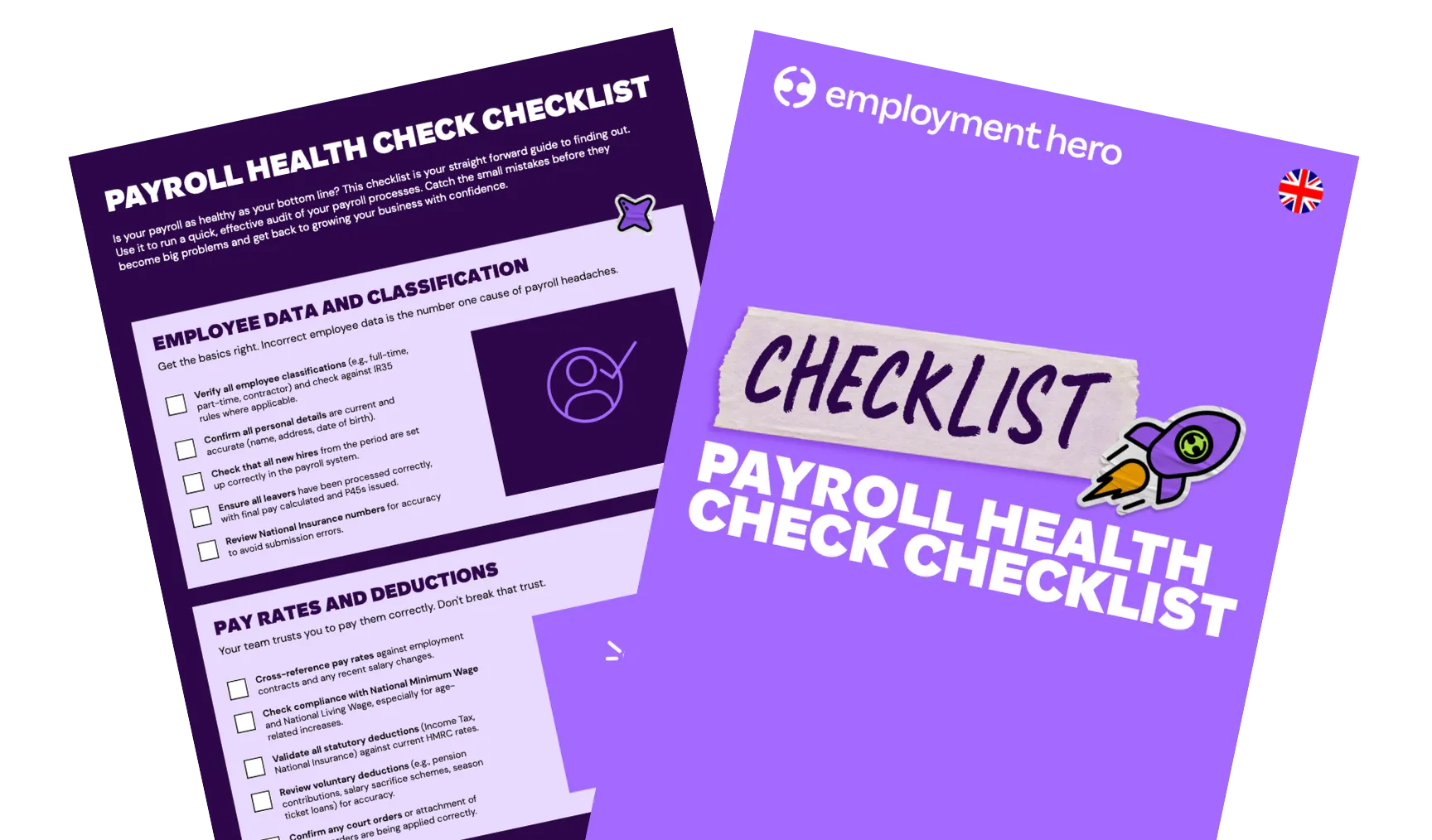 Read more: Payroll Health Check Checklist: Audit, Compliance and Review
Payroll Health Check Checklist: Audit, Compliance and Review
Is your payroll as healthy as your bottom line? Use our payroll audit, compliance, and review checklist to catch errors,…
-
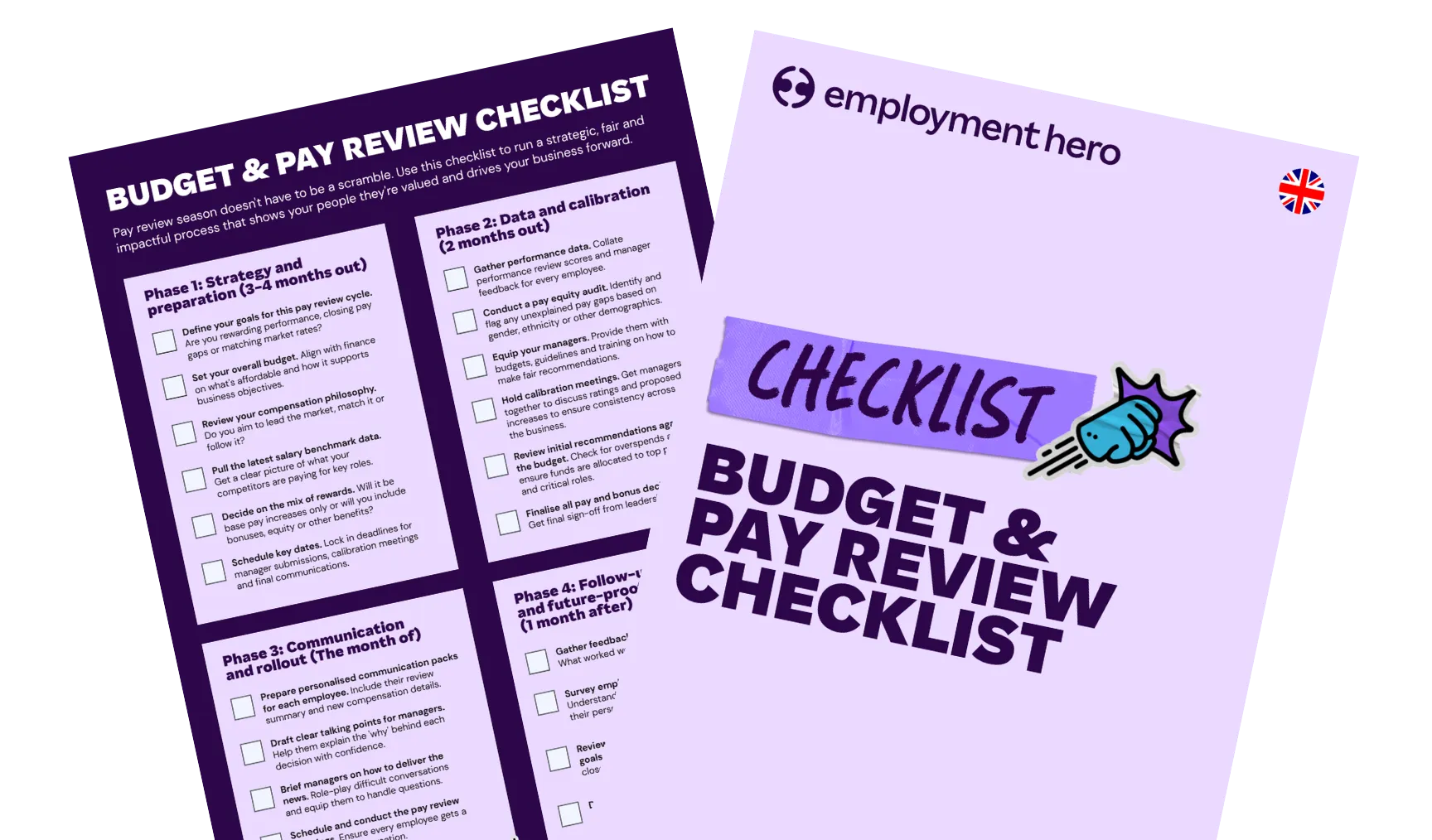 Read more: Budget & Pay Review Season: Shifting the Strategy for 2026
Budget & Pay Review Season: Shifting the Strategy for 2026
Learn how HR leaders can reward performance, boost engagement and show employees they matter.
-
 Read more: GDPR Checklist for HR Managers and Employers
GDPR Checklist for HR Managers and Employers
Check if your HR practices are GDPR compliant with our checklist.
