














Right to Work Checks: A Complete Employer’s Guide (2025 Update)
Published
Right to Work Checks: A Complete Employer’s Guide (2025 Update)
Last Updated
Hiring a new employee is a huge moment for your business. It’s a shot of fresh energy, new skills and untapped potential. But before you can get to the good stuff, there’s a critical, non-negotiable step you have to take: the Right to Work check.
For many employers, it feels like just another piece of admin in an already overwhelming hiring process. It’s easy to see it as a box-ticking exercise, but getting it wrong can have devastating consequences, including massive fines and even prison time. The rules are strict and the Home Office doesn’t accept “I didn’t know” as an excuse.
This guide will cut through the confusion. We’ll break down exactly what you need to do to conduct compliant Right to Work checks in 2025, from manual document verification to the latest digital methods. We’re here to give you the confidence to hire the right people, the right way.
What are Right to Work checks?

Let’s start with the basics. A Right to Work check is the process all UK employers must follow to confirm that a potential employee has the legal right to work in the United Kingdom. This isn’t optional; it’s a legal requirement. You must conduct this check for every single person you plan to hire, regardless of their nationality or how long you’ve known them.
The purpose is to prevent illegal working. By ensuring everyone you employ has the correct permissions, you are doing your part to uphold UK immigration laws and avoid severe penalties. It’s a fundamental part of any compliant guide to hiring employees.
Why Right to Work checks are essential for UK employers
Beyond the obvious legal obligation, these checks are an essential part of your risk management strategy. Failing to conduct a proper check can result in fines of up to £60,000 per illegal worker. For a small or medium-sized business, a mistake like this can be catastrophic.
By completing these checks correctly, you establish a “statutory excuse.” This means that if it turns out one of your employees was working illegally despite your best efforts (for example, they used fraudulent documents), you have a legal defence against a civil penalty. It’s your proof that you did everything by the book.
When did Right to Work checks start in the UK?
This isn’t a new piece of red tape. The requirement for employers to check an employee’s right to work was introduced by the Asylum and Immigration Act 1996. The system has evolved significantly since then, especially with the introduction of digital and online systems, but the core principle has remained the same for decades.
With the rules constantly being updated, it’s crucial to know which methods are currently valid and how to use them correctly.
Types of Right to Work checks
There isn’t a single way to do a Right to Work check. The Home Office has approved four main methods and the one you use depends on the nationality and immigration status of the person you are hiring.
Manual Right to Work checks
This is the traditional, in-person method. You, as the employer, must obtain the person’s original, physical documents from the government’s approved list. You then have to check that they are genuine and that the person presenting them is the rightful holder, in their presence.
This method is still valid for British and Irish citizens who have a physical passport or Irish passport card, but it’s becoming less common as digital options become more accessible. A complete onboarding checklist should specify which documents are required for this.
Digital Right to Work checks for British and Irish citizens
As of April 2022, employers can now use a certified Identity Service Provider (IDSP) to conduct digital Right to Work checks for British and Irish citizens who hold a valid passport. This is a game-changer, especially for remote hiring.
An IDSP uses identity verification technology to confirm the person’s identity and eligibility to work. While you have to pay for this service, it can streamline your onboarding process and reduce the risk of human error associated with manual checks. This move towards digital ID for right to work checks is a key part of modernising the hiring process.
Home Office online Right to Work check
This is a free online service provided by the Home Office. It’s the required method for checking the right to work of anyone who holds a biometric residence permit, biometric residence card or has been granted status under the EU Settlement Scheme.
You cannot accept a physical card from these individuals; you must use the online service. The person provides you with a “share code” and their date of birth, which you then enter into the Home Office’s online portal to view their real-time immigration status and right to work details.
Employer Checking Service (ECS)
What if someone has an outstanding application or appeal with the Home Office? They might have the right to work, but no current documentation to prove it. In this case, you must use the Employer Checking Service (ECS).
You submit a request to the ECS and they will respond (usually within five working days) to confirm the person’s right to work. This gives you a statutory excuse for six months while their application is being processed, after which you’ll need to conduct a follow-up check.
How to conduct a compliant Right to Work check (step-by-step)

The Home Office lays out a clear, three-step process that you must follow to establish a statutory excuse. Getting any of these steps wrong can invalidate the entire check.
Step 1 – Obtain the worker’s original or digital documents
First, you must obtain the worker’s documents. For a manual check, this means seeing their original passport or other approved documents. You cannot accept photocopies or photos on a phone. For an online check, you need their share code and date of birth. It’s crucial that you obtain these documents before their first day of employment.
Step 2 – Check the validity of the documents
This is where you play detective. For a manual check, you must verify that the documents are genuine and belong to the person in front of you. Check that photos match, dates of birth are consistent and that there are no obvious signs of tampering. For an online check, you must still verify that the photo on the online profile matches the person presenting themselves for work.
Step 3 – Make and keep a record
This step is just as important as the first two. You must make a clear, legible copy of the documents you have checked and keep it securely. For manual checks, you must sign and date the copy to record when you conducted the check. For online checks, you must save a PDF of the profile page. You need to keep these records for the duration of the person’s employment and for two years after they leave.
Step 4 – Conduct follow-up checks (if applicable)
If an employee has a time-limited right to work (e.g., they are on a visa), your job isn’t done. You must conduct a follow-up check just before their current permission expires. Failing to do this means your statutory excuse will expire, leaving you liable if they continue to work without the right permissions. Set a reminder and treat this follow-up with the same seriousness as the initial check.
Avoiding common Right to Work mistakes
Many employers make simple, avoidable mistakes that put them at risk. Here are the most common pitfalls to watch out for.
Relying on expired documents
A passport that expired last month is not a valid document for a Right to Work check. You must check the expiry dates on all documents. If a passport has expired or is “clipped”, the person will need to provide an alternative document from the approved list.
Not recording the check properly
Just looking at a passport isn’t enough. If you don’t make a clear, dated copy of the document (or save the online profile), you have no evidence that you ever did the check. In the eyes of the Home Office, a check that isn’t recorded is a check that never happened.
Failing to recheck time-limited permissions
This is a huge one. Forgetting to conduct a follow-up check for an employee on a visa is one of the easiest ways to end up with an illegal worker on your payroll and a massive fine. Your statutory excuse is time-limited, just like their visa.
Conducting your own digital right to work check
Document checks conducted via video call are no longer a valid method for right to work checks, following the cessation of temporary COVID-19 measures on 30 September 2022. You can no longer rely on your own remote document checks.
Any remote right to work check must now be completed either through an Identity Service Provider (IDSP) or via the Home Office online right to work service.
Penalties for failing to conduct Right to Work checks
The consequences for getting this wrong are severe and they are not just financial.
Civil penalties and fines
As mentioned, the civil penalty for hiring an illegal worker can be up to £60,000 per person. This is designed to be a serious deterrent and the Home Office is not shy about issuing these fines.
Criminal liability and reputational risks
If you are found to have knowingly employed someone who does not have the right to work or a repeat offender of hiring illegal workers for failing to conduct right to work checks of employees, you could face criminal charges, leading to an unlimited fine and up to five years in prison. The reputational damage of being named and shamed as a non-compliant employer can also be devastating.
Avoiding discrimination when checking Right to Work
It’s vital to handle these checks in a fair and non-discriminatory way. You must check every single prospective employee, not just those who you think might not be British. Making assumptions based on someone’s accent, name or appearance is unlawful under the Equality Act 2010 and can lead to a discrimination claim. A consistent process for everyone is your best defence.
Right to Work checks: Key takeaways for UK employers
Right to Work checks are not just another hoop to jump through in the hiring process. They are a fundamental part of being a responsible and compliant UK employer. By understanding the different methods, following the correct steps and keeping meticulous records, you can protect your business and build your team with confidence.
Don’t leave compliance to chance. Streamline your onboarding process and manage your Right to Work obligations effortlessly with Employment Hero. Explore our tools today and see how we can help you hire smarter and safer.
How Employment Hero can help with Right to Work compliance
Managing all this manually is a huge administrative burden, especially as your team grows. Keeping track of visa expiry dates in a spreadsheet is a recipe for disaster.
Employment Hero’s HR platform helps you manage compliance with confidence. You can securely store digital copies of Right to Work documents in employee files, set automated reminders for follow-up checks and integrate it all into a seamless onboarding workflow. This helps you reduce manual admin and minimise the risk of human error, freeing you up to focus on welcoming your new hire.
FAQs about Right to Work checks
An online check using a share code is almost instant. A manual check can be done in a few minutes. A check using the Employer Checking Service (ECS) can take up to five working days.
Manual checks and the Home Office online service are free. If you choose to use a certified IDSP for digital checks on British and Irish citizens, you will have to pay a fee to the provider.
To comply with UK law, prevent illegal working and establish a statutory excuse to protect your business from penalties.
You leave yourself open to severe financial penalties (up to £60,000 per illegal worker) and potential criminal charges if you are found to have hired someone without the legal right to work in the UK.
To download the guide, we just need a few quick details.
Related Resources
-
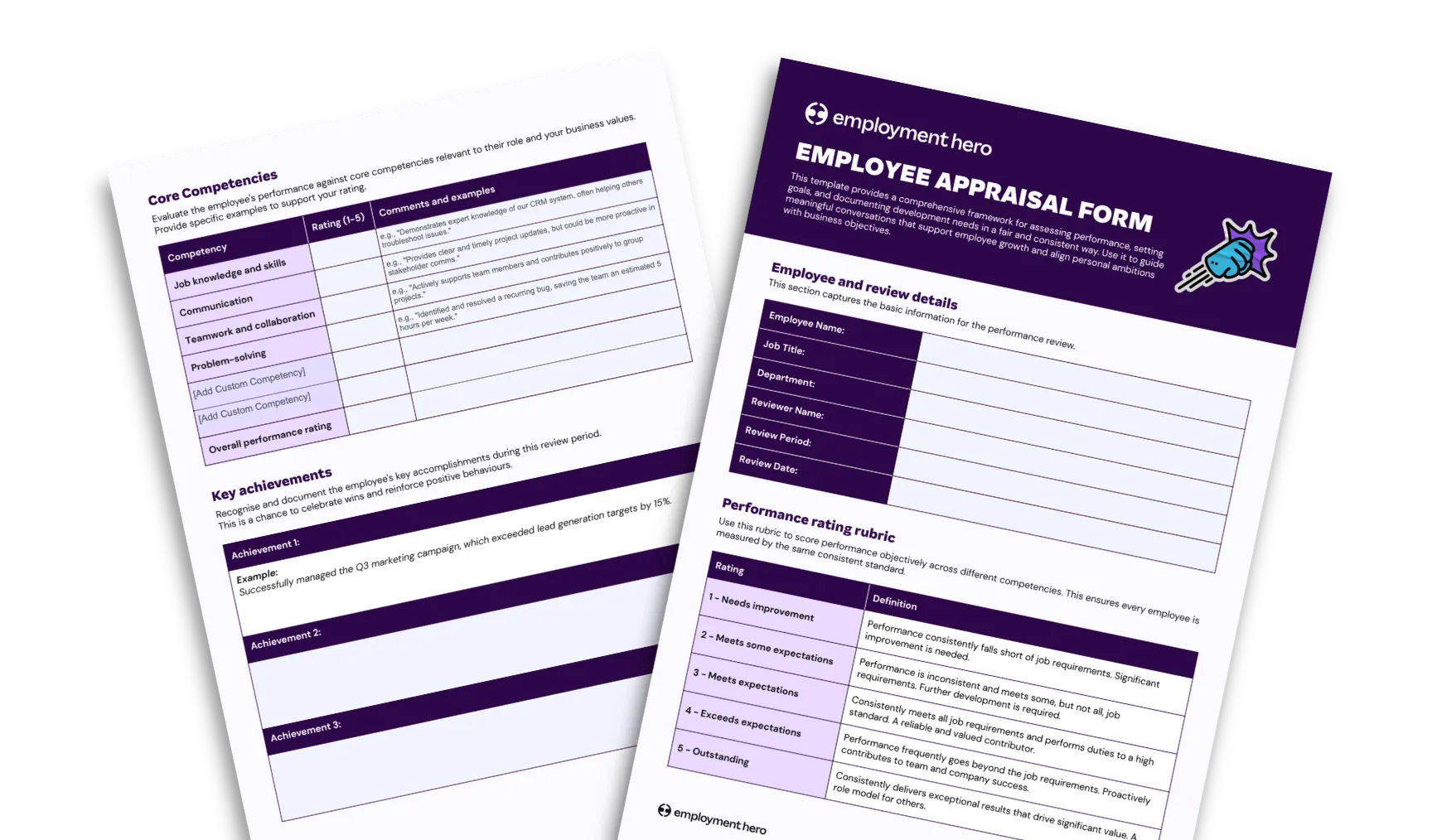 Read more: Performance appraisal form template and guide
Performance appraisal form template and guide
Download our appraisal form template to enhance employee performance reviews. Improve feedback processes and growth.
-
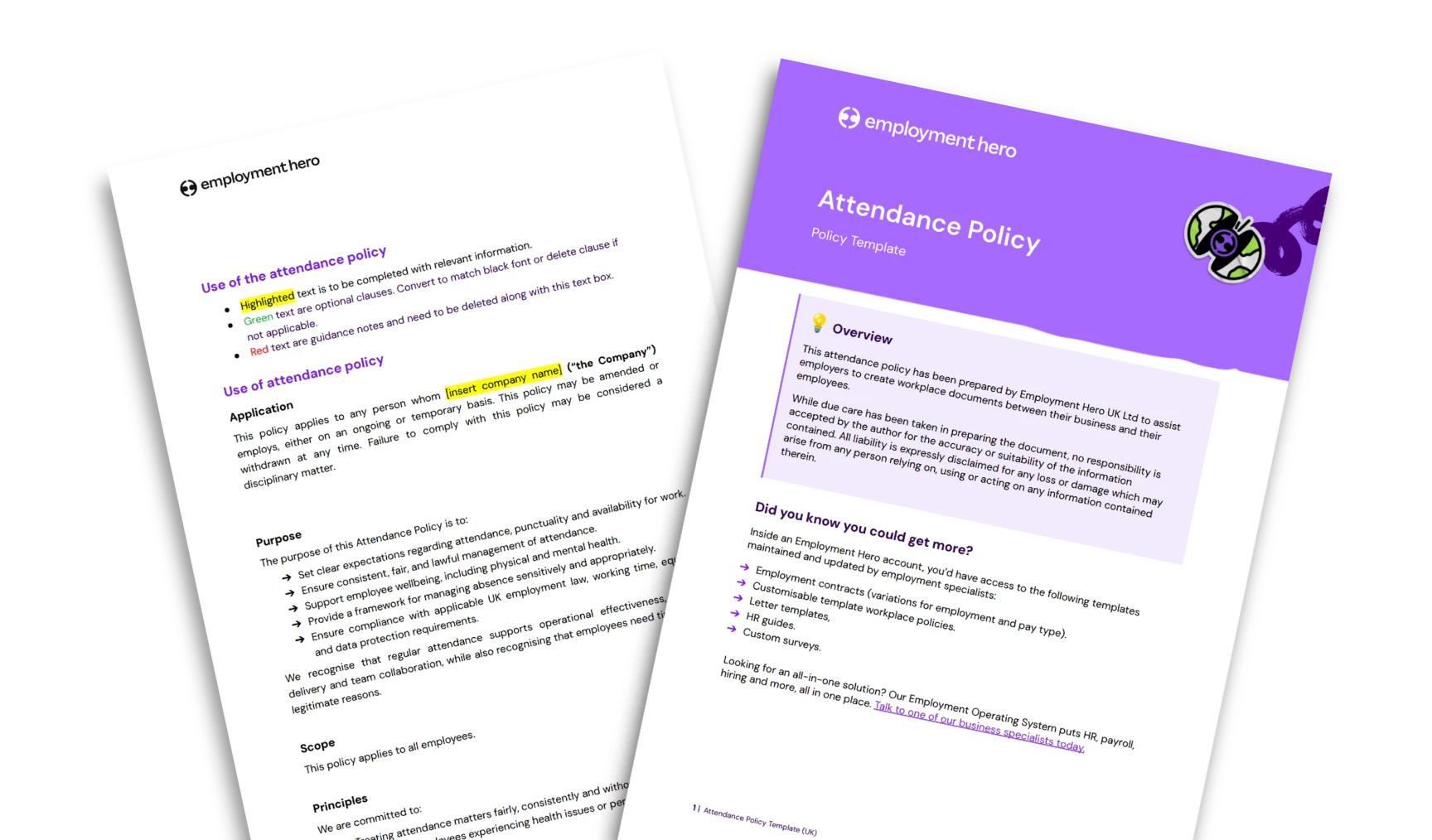 Read more: How to Build an Employee Attendance Policy in 2026
How to Build an Employee Attendance Policy in 2026
Learn how to create a fair and effective employee attendance policy in 2026. Discover strategies for managing attendance policies that…
-
 Read more: EOFY HR Audit: What to Review in March
EOFY HR Audit: What to Review in March
Complete a EOFY HR audit with our practical checklist. Review compliance, people processes and compliance to reduce risk before the…
