


















Employment contracts for part-time employees: What employers need to know
Published
Employment contracts for part-time employees: What employers need to know
Last Updated
Your part-time employees are essential. They bring skills, flexibility and dedication that help you serve your customers and grow your business. But when it comes to their contracts, things can get complicated. It’s not just a case of using a full-time contract and hoping for the best.
Getting the employment contract for a part time employee right is about more than just ticking boxes; it’s about fairness, respect and protecting your business. The law is crystal clear: part-time workers must not be treated less favourably than their full-time colleagues. Mess this up and you risk damaging team morale and facing costly legal claims.
But it doesn’t have to be a headache. With the right approach, you can create contracts that are fair, compliant and set your part-time team members up for success. Let’s break down exactly what you need to know.
What is in this checklist?
This guide is designed for UK employers who are drafting or reviewing part-time employment contracts. We’ll walk you through all the essentials, from defining part-time work and understanding key legal requirements to calculating pro-rata entitlements like holiday pay. We’ll also cover the different types of part-time contracts and how to choose the right one for your business. Think of this as your practical guide to creating fair and legally sound agreements.
From here, you’ll have the clarity and confidence needed to ensure your contracts are robust and your part-time employees feel valued.
Part-time contracts: key features and legal requirements
In the UK, a part-time worker is simply someone who works fewer hours than a comparable full-time employee at the same business. There’s no specific number of hours that defines it, it’s all relative to your full-time staff.
The cornerstone of part-time employment law is the Part-time Workers (Prevention of Less Favourable Treatment) Regulations 2000. This legislation is your guiding star. It establishes the principle that you cannot treat part-time workers less favourably than their full-time equivalents just because they work fewer hours.
According to ACAS guidance, “less favourable treatment” can include:
- Paying a lower hourly rate.
- Excluding them from company benefits like health insurance or bonuses.
- Overlooking them for training and promotion opportunities.
- Providing less holiday entitlement on a pro-rata basis.
If a part-time employee feels they’re getting a raw deal, they can compare their situation to a full-time employee doing broadly similar work for you. To avoid a claim, you must be able to prove any difference in treatment is “objectively justified.” We’ll explore what that means later.
Fixed hours vs. variable hours part-time contracts

Not all part-time roles are the same. The structure of your employee’s working week will determine the type of contract you need. The two main options are fixed hours and variable hours.
Fixed hours part-time contract
This is the most straightforward approach. A fixed-hours contract is for employees who work the same, predictable set of hours each week—for example, 9 am to 1 pm, Monday to Wednesday.
- Pros: It offers predictability for both you and the employee, making it easier to plan rotas, manage payroll and calculate leave.
- Cons: It lacks flexibility. If your business has fluctuating demand, you might find this structure too rigid.
When drafting a fixed-hours contract, you must clearly specify the set days and times of work, the pay frequency and the rules around any overtime.
Variable hours part-time contract
Variable-hours contracts are for employees whose work patterns change from week to week. This is common in sectors like retail, hospitality and events, where workloads can be unpredictable. While this offers great flexibility, it comes with legal risks if not managed carefully. These are not the same as zero-hours contracts; there is usually an expectation of a minimum number of hours over a longer period.
To manage these contracts fairly, you need a clear system for scheduling. This often involves providing rotas with a reasonable notice period. You also need robust record-keeping to track the hours worked for calculating holiday pay and ensuring compliance with minimum wage laws. Communication is everything; without it, you risk leaving your employees feeling unsettled and undervalued.
Choosing between fixed and variable hours part-time contracts
So, which one is right for you? The answer depends on your business needs.
- If your workload is stable and predictable, a fixed-hours contract is usually the simplest and safest option.
- If you need to adapt to seasonal peaks, cover shifts at short notice or manage fluctuating demand, a variable-hours contract can provide the necessary agility.
Consider your operational needs but also talk to your employees. They may have a preference that aligns with your business goals, creating a win-win situation.
Part-time workers’ rights
Under UK law, part-time worker entitlements are clear. They have the right to the same treatment as comparable full-time employees, just on a pro-rata basis. This means their entitlements are proportional to the hours they work.
This includes:
- Equal pay rates: They must receive the same hourly wage as a full-time worker doing the same job.
- Annual leave: They are entitled to at least 5.6 weeks of paid holiday per year, calculated on a pro-rata basis.
- Pensions: If they meet the eligibility criteria for auto-enrolment, you must enrol them in a workplace pension scheme.
- Training and development: They must have the same access to training opportunities as full-time staff.
- All other benefits: This extends to contractual benefits like enhanced sick pay, maternity/paternity leave and bonuses.
Getting the pro-rata calculations right is where many employers slip up. It’s a core part of your HR compliance duties.
Due to recent changes to the law it is also possible for employers to choose to provide part-time employees who work irregular hours with “rolled-up” holiday pay. IE This is when an employer spreads holiday pay over the year, by adding an amount on top of someone’s normal pay. This is instead of paying someone for their holiday when they take it.
When employers can treat part-time workers differently
The rule against less favourable treatment isn’t absolute. There are very limited circumstances where a difference in treatment can be lawful, but only if you can show it is “objectively justified.”
To meet this test, you must prove that the different treatment is a necessary and appropriate way to achieve a legitimate business aim. For example, offering private health insurance only to employees who work over a certain number of hours might be justified if the provider’s scheme has that restriction. However, simply saying “it’s cheaper” is not a valid justification. This is a high bar to clear and you should always seek legal advice before relying on it.
Risks of unfavourable treatment of part-time workers
Failing to treat part-time workers fairly isn’t just bad for morale—it exposes your business to significant risks. An employee who believes they have been treated less favourably can bring a claim to an employment tribunal. If successful, you could be ordered to pay compensation.
Furthermore, since the majority of part-time workers in the UK are women, policies that disadvantage part-time staff can also lead to claims of indirect sex discrimination under the Equality Act 2010. This carries the risk of uncapped compensation awards and serious damage to your reputation as an employer. The bottom line: fairness isn’t just a nice-to-have; it’s a legal necessity.
Contract types and employer responsibilities

A well-drafted electronic employment contract is your first line of defence. It ensures clarity and helps you meet your legal obligations. Your part-time contract must include all the key terms of employment, such as:
- Job title and description of duties.
- Start date.
- Pay rate and pay schedule.
- Hours of work (specifying if they are fixed or variable).
- Holiday entitlement and holiday pay calculation.
- Details of any other benefits (e.g., pension, sick pay).
- Notice periods for termination.
- Probationary period details, if applicable.
Having a robust template and a smooth onboarding software to deliver it can save you countless hours and prevent mistakes.
Full-time and part-time contracts
The fundamental difference between full-time and part-time contracts lies in the hours of work. However, your legal obligations as an employer remain largely the same. Let’s compare:
| Feature | Full-time contract | Part-time contract |
| Hours | Specifies the standard full-time hours for your business (e.g., 37.5 hours/week). | Specifies hours that are less than the standard full-time hours. Must state if hours are fixed or variable. |
| Pay | States the annual salary or hourly rate. | Must be the same hourly rate as a comparable full-time worker. |
| Holiday | Entitled to at least 5.6 weeks of paid leave per year. | Entitled to at least 5.6 weeks of paid leave, calculated on a pro-rata basis. |
| Benefits | Entitled to all contractual benefits offered. | Entitled to the same benefits, often on a pro-rata basis where applicable. |
| Rights | Full statutory employment rights. | Same statutory employment rights. |
Using a comprehensive HR software can help you manage these different contract types and their associated entitlements seamlessly.
Managing pro-rata entitlements correctly
Calculating pro-rata entitlements is a common pain point. Let’s demystify it.
Annual leave calculation (fixed hours):
If a full-time employee working 5 days a week gets 28 days of leave (the statutory minimum of 5.6 weeks), a part-time employee working 3 days a week is entitled to:
(3 days / 5 days) * 28 days = 16.8 days of leave.
Annual leave calculation (variable hours):
For workers with no fixed pattern, you must calculate their holiday pay based on their average pay over the previous 52 paid weeks.
As noted above, it is also possible for employers to choose to instead provide “rolled-up” holiday pay.
Benefits:
If a full-time employee receives a £500 annual bonus, a part-time employee working half the hours should receive a pro-rata bonus of £250, unless the bonus is not linked to hours worked (e.g., a flat-rate Christmas bonus for all staff).
These calculations require careful attention to detail. Automating them through an HR platform can eliminate errors and ensure fairness.
Download the full checklist
Building a diverse and flexible team with part-time employees is a smart move for any growing business. Getting their contracts right from the start shows you value their contribution and are committed to being a fair and compliant employer. It’s a foundation for a strong, trusting relationship.
To help you put all this into practice, we’ve created a detailed checklist covering every essential clause for your part-time contracts. Use it to draft new agreements or review your existing ones with confidence.
To download the checklist, we just need a few quick details.
Related Resources
-
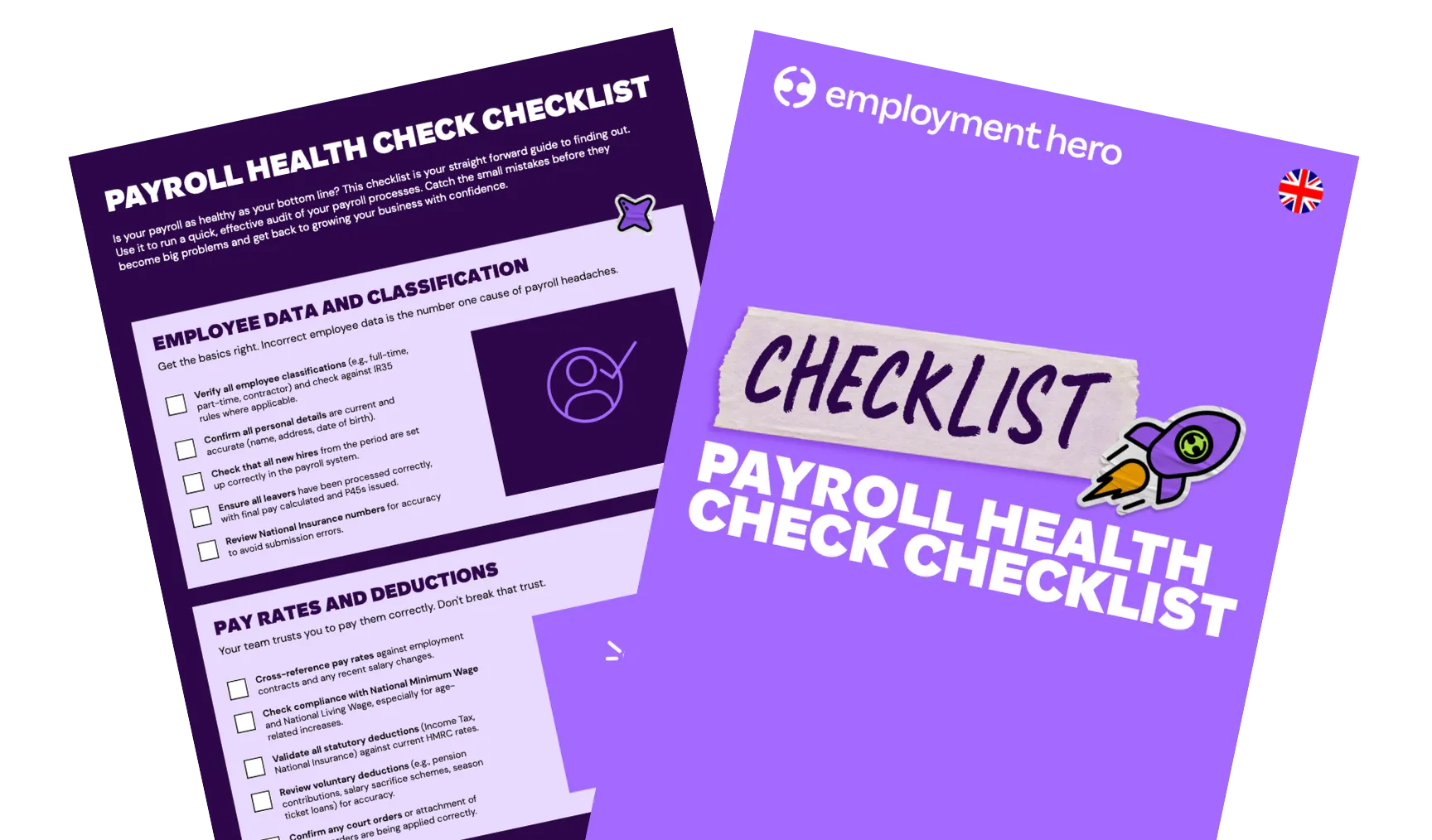 Read more: Payroll Health Check Checklist: Audit, Compliance and Review
Payroll Health Check Checklist: Audit, Compliance and Review
Is your payroll as healthy as your bottom line? Use our payroll audit, compliance, and review checklist to catch errors,…
-
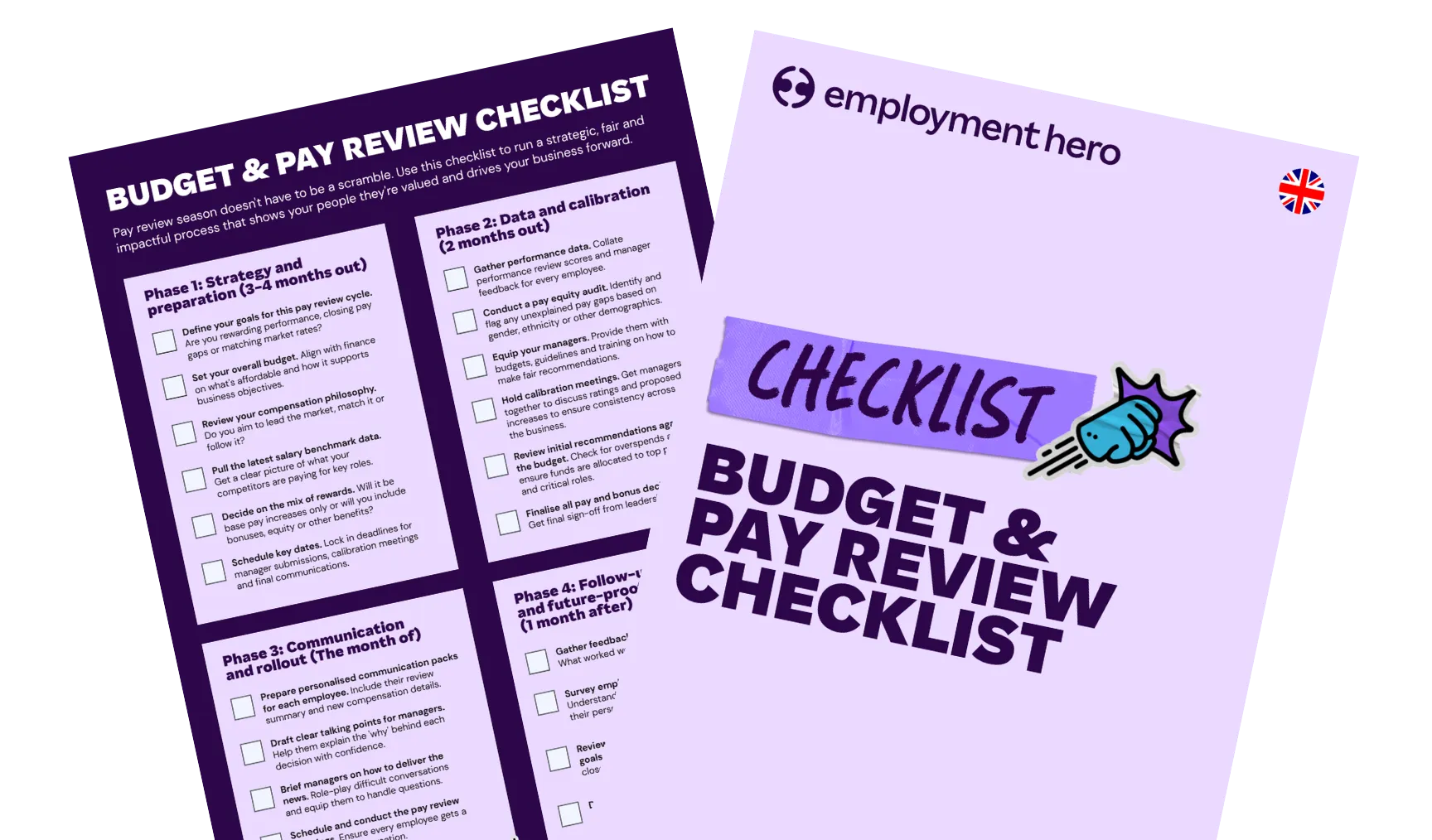 Read more: Budget & Pay Review Season: Shifting the Strategy for 2026
Budget & Pay Review Season: Shifting the Strategy for 2026
Learn how HR leaders can reward performance, boost engagement and show employees they matter.
-
 Read more: GDPR Checklist for HR Managers and Employers
GDPR Checklist for HR Managers and Employers
Check if your HR practices are GDPR compliant with our checklist.
