


















Employee Review Template
Published
Employee Review Template
Last Updated
Let’s face it, the words “employee review” usually make people shudder. For managers, it means hours of paperwork and awkward conversations. For employees, it feels like sitting in the principal’s office waiting for a report card. But here’s the thing, it doesn’t have to be that way.
Performance reviews are the heartbeat of your business growth. They’re not just about ticking boxes or pointing out mistakes; they’re your biggest opportunity to align your team, spark motivation and build a culture where everyone thrives.
Whether you’re a startup founder wearing twenty hats or an HR leader scaling a team, you need a process that’s simple, fair and actually useful. We’ve built a complete bundle of employee review templates to help you ditch the dread and start having conversations that matter.
A complete bundle of performance review templates
One size rarely fits all in business and it definitely doesn’t where performance review templates are concerned. For example, a quick check-in with a new starter needs a completely different approach and structure to a deep-dive annual review for a senior manager. Using the same stale form for everything is a recipe for vague feedback and disengaged employees. We can do better than this.
That’s why we’ve created a comprehensive bundle that covers different types of performance review templates. This includes:
- Annual reviews.
- Quarterly check-ins.
- Peer feedback.
- Self-evaluations.
- New-hire reviews.
Each template is designed to cut through the noise and get straight to the point, making it easy for you to build a process that works for your specific needs. Ready to transform your review process? Let’s dive in.
The annual review template
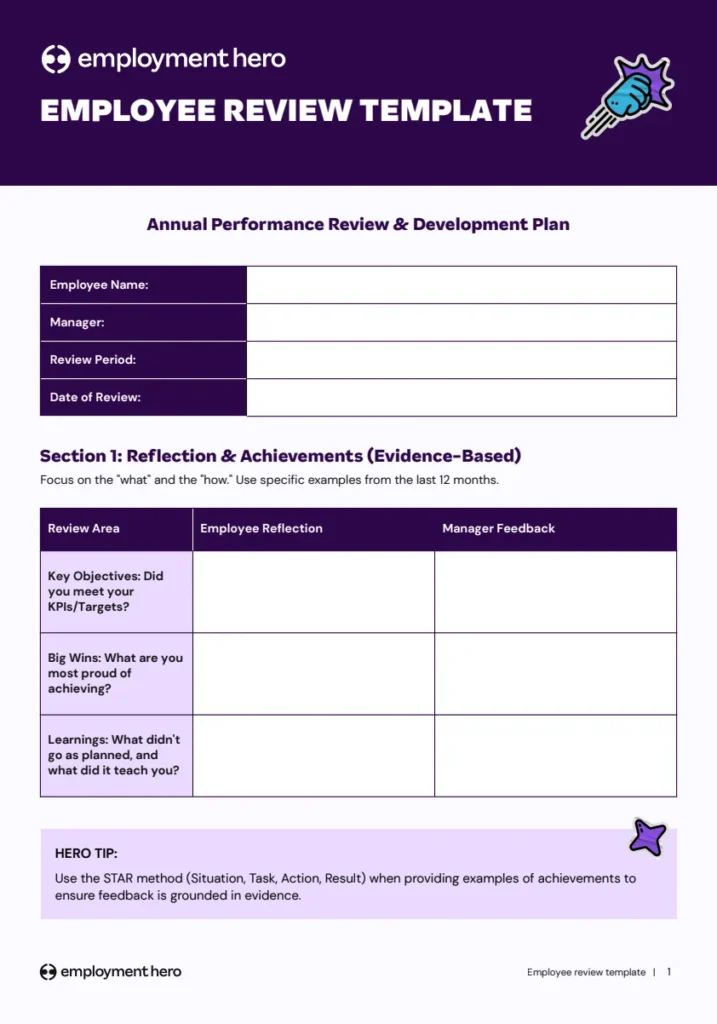
When to use this template:
Starting off with the most commonly used, yep you guessed it, the annual review template. This is for your classic end-of-year appraisal conversations. It’s the ideal framework for reflecting on the prior twelve months, providing a reference point for discussing achievements, missed targets and professional growth.
This template helps to:
- Realign expectations.
- Recognise top performers.
- Set strategic goals for the year ahead.
Notable template features:
- Structured sections for reviewing annual objectives, aligning on company values and capturing both wins and learnings.
- Prompts for managers and employees to prepare real, evidence-based examples, not just gut instincts.
- Built-in goal-setting tools to turn insights into clear development plans and next steps for the coming year.
- Space to track ongoing support and outline action items for accountability.
- Designed to spark open dialogue and meaningful feedback, not just tick-box compliance.
Need more guidance? Explore our Performance Review Guide.
The quarterly check-in template
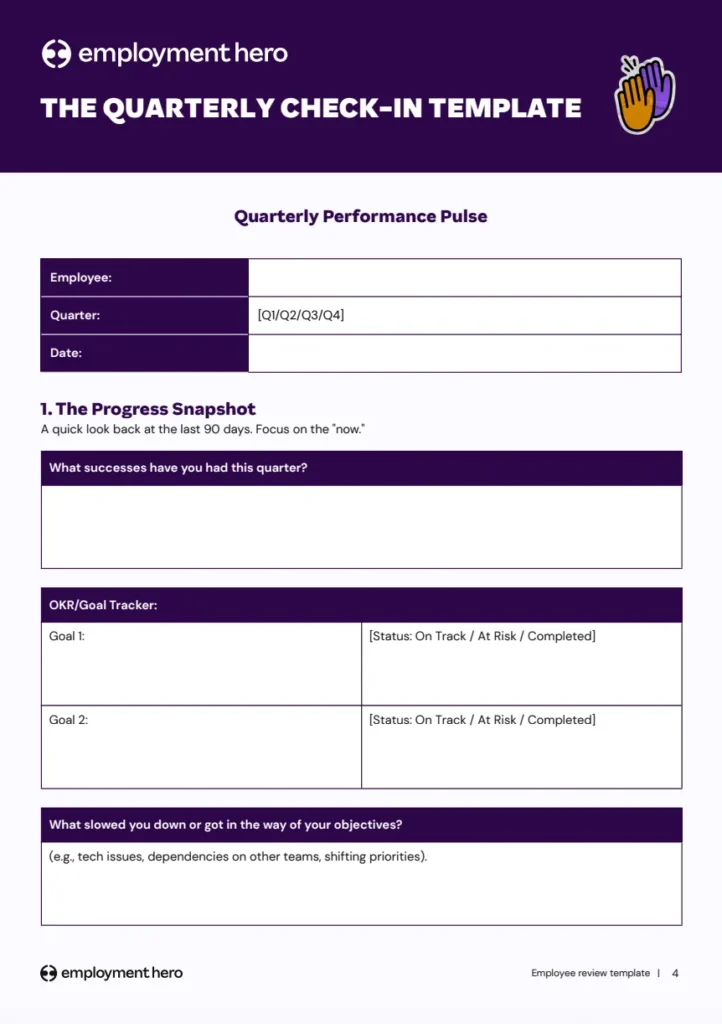
When to use this template:
The quarterly performance review template helps to keep your team moving in sync with changing business needs. It’s perfect for fast-growth environments where annual reviews just can’t keep up.
Use it at the end of each quarter to:
- Review progress against short-term objectives and key results (OKRs).
- Tackle roadblocks head-on and make swift, informed adjustments.
Notable template features:
- Short-term goal setting that keeps everyone focused and agile, not overwhelmed by year-long targets.
- Built-in ‘progress snapshot’ sections to celebrate wins, address challenges and surface any blockers in real time.
- Space for immediate action steps, driving continuous improvement before small issues snowball.
- Connects to your broader business productivity goals for real, measurable momentum.
Regular check-ins using this template help build trust, encourage honest feedback and empower your people to reach business goals, one quarter at a time.
The new hire (90-day) review template
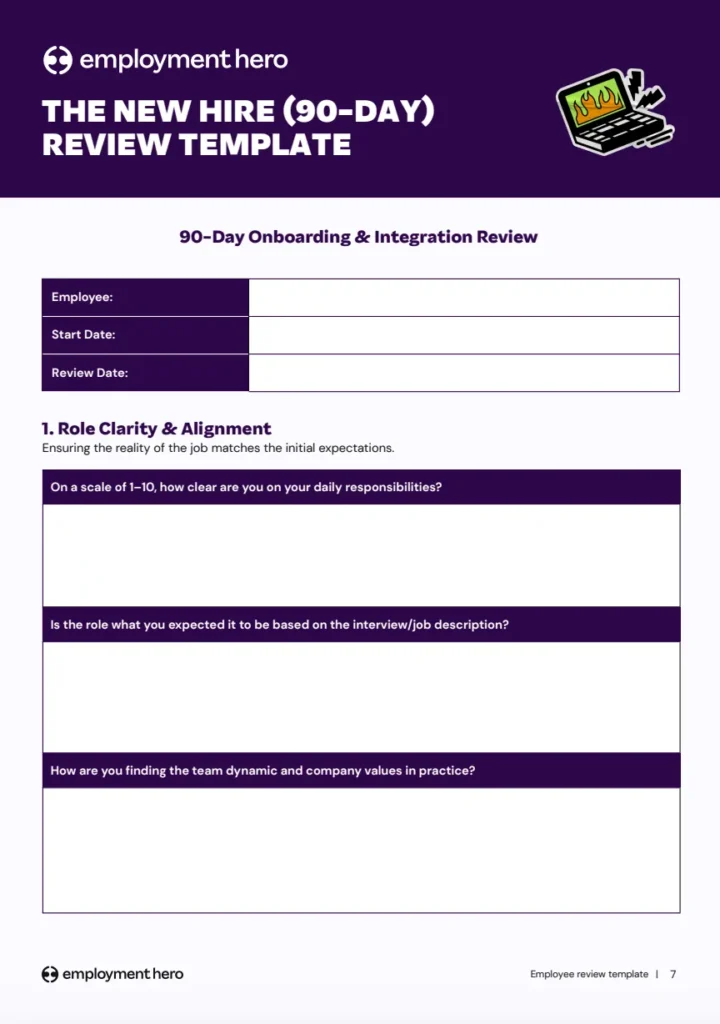
When to use this template:
New hires shouldn’t have to wait until the end of the year before they have a check-in. This new hire 90-day performance review template is designed to check in on their transition, cement role clarity and spot early wins or hurdles before they become bigger issues.
This style of appraisal ensures that:
- New joiners feel supported, aligned with your culture and set up for long-term success, dramatically improving retention rates.
- Any roadblocks or challenges are addressed early on.
Notable template features:
- Dedicated sections to confirm understanding of responsibilities and day-to-day goals.
- Prompts to capture early achievements and highlight initial contributions to the business.
- Embedded tools for identifying training needs and creating personalised action plans for ongoing development.
- Integration points with our onboarding software to make onboarding seamless from paperwork to progress review.
- Employee engagement checklists, ensuring that feedback flows both ways and new starters feel heard and valued.
The peer review template
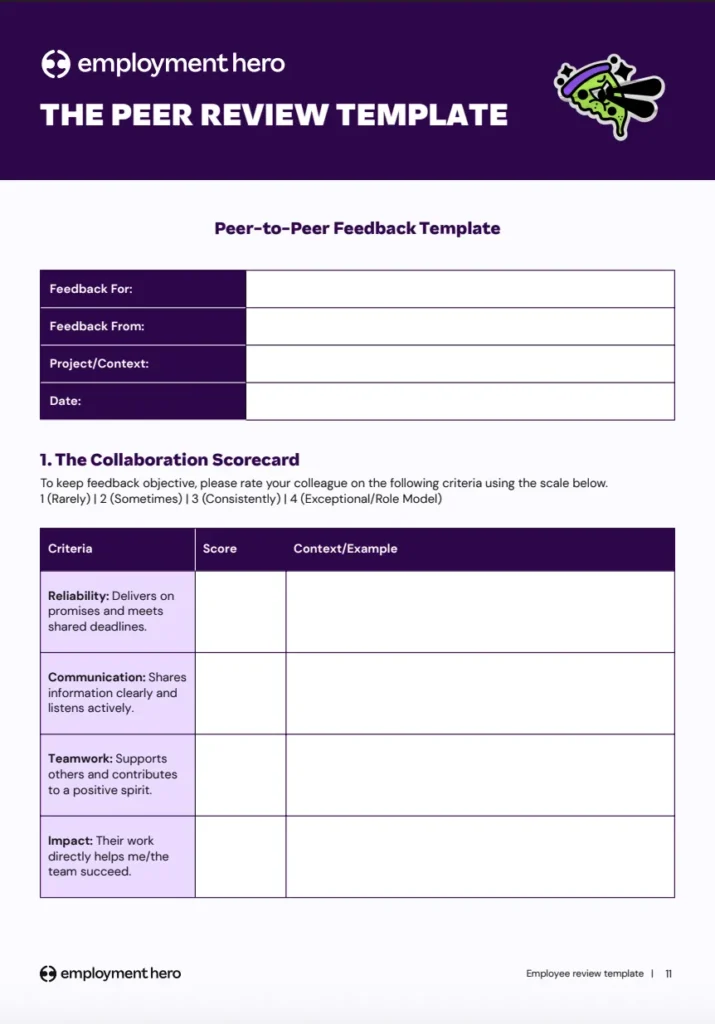
When to use this template:
Feedback shouldn’t always be top down. In some cases it’s important to gather well-rounded feedback from colleagues who work closely with an employee.
It’s ideal for:
- Mid-year check-ins.
- Annual reviews.
- Any time you want to encourage a culture of collaboration and trust within your team.
Notable template features:
- Structured prompts to guide peer input, promoting honest and constructive feedback.
- Dedicated sections for highlighting unsung strengths and valuable contributions that managers may overlook.
- Scoring guidance to ensure feedback remains objective, not just a popularity contest.
- Clearly defined criteria to encourage meaningful insights around teamwork, collaboration and impact.
- Tips for integrating peer feedback with larger review cycles and a link to our Communication in the Workplace guide to help you harness the power of 360-degree reviews for culture-building.
The self-evaluation template
When to use this template:
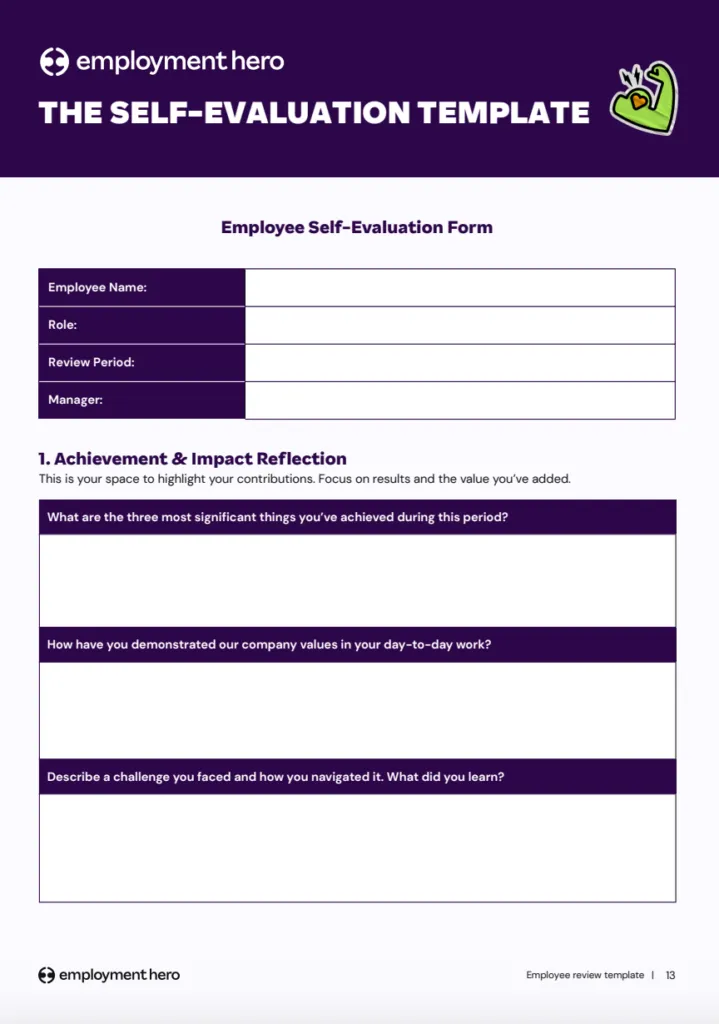
Most appraisals are done by someone else, but don’t forget the value of a self-evaluation employee review template. These are a great way of encouraging your team to take ownership of their learning and development.
Use self-evaluations:
- Before a formal performance review.
- As part of your regular review cycle.
- When an individual is preparing for a role change or professional development discussion.
Notable template features:
- Guided prompts covering personal achievements, key lessons and areas for growth.
- Dedicated sections for reflecting on skill gaps and requesting support, tools, or training.
- Space to articulate future goals, career aspirations and next steps.
- Complements our Professional Development Plan template for integrated career planning and ongoing employee growth.
What is the purpose of a performance review?
Appraisals are a time investment for business owners and HR professionals, but what is the purpose of doing them?
It’s simple really, the objective is to align individual effort with business goals. It’s about ensuring that every single person in your boat is rowing in the same direction. When done right, performance reviews boost engagement, clarify direction and create a culture of continuous improvement.
It’s also about communication in the workplace. It’s a space to talk about career aspirations, personal development and the future.
How to create a performance review process that works
Building a review process doesn’t need to be complicated. In fact, the simpler it is, the more likely you are to stick to it.
- Set clear timelines: Don’t leave it vague. Put the dates in the calendar for the whole year. Whether it’s quarterly or annual, consistency builds trust.
- Communicate expectations: Tell your team why you are doing this. Frame it as development, not judgement.
- Standardise the format: Use our templates. Having a standard structure ensures fairness. You can’t compare apples to pears.
- Prepare, prepare, prepare: Winging a performance review is disrespectful. Both managers and employees need to come prepared.
By turning this into a repeatable cycle, you remove the fear factor. It becomes just another part of how you work, a regular rhythm that keeps everyone focused and motivated
How to evaluate an employee’s performance effectively
Evaluating a colleague’s work can be tricky, and it’s important to not let bias come into play. To do it effectively, you need to strip away the emotion and focus on the evidence.
Objectivity is key. Don’t rely on your memory of the last two weeks, look at the data from the whole period. Use specific examples. Instead of saying “you need to communicate better,” say “in the project meeting last Tuesday, the update on X was unclear, which caused a delay.”
Measure real impact. Did they meet their goals? Did they live the company values? By focusing on facts and outcomes, you move away from personality critiques and towards performance coaching. This makes the feedback harder to argue with and easier to act on.
What should you include in a performance review?
Regardless of which template you use, every solid review needs a few essential ingredients to be effective.
- Review of past goals: Did they achieve what was agreed upon last time? If not, why not? Dig into the root causes.
- Specific examples: Vague feedback is useless. “Good job” is nice, but “Great job handling that difficult client request on Friday” is actionable.
- Balanced feedback: It’s rarely all good or all bad. Highlight strengths to build confidence, but don’t shy away from areas for improvement. Radical candour is kind.
- Two-way dialogue: This isn’t a monologue. Ask questions. “How do you feel about that?” “What could I have done to support you better?”
- Forward-looking action plan: Never end a review without clear next steps. What happens tomorrow?
How to use performance reviews for employee development
The best reviews pivot quickly from “what you did” to “how you can grow”. This is your chance to prove that you care about your employee’s future, not just their output.
Use the review to identify skill gaps and map out a professional development plan. Ask them where they want to be in two years. If they want to be a manager, what skills do they need to learn now and how can the business support that?
When you link performance to career progression, you unlock a new level of loyalty. Employees stay where they grow. Show them that development is at the heart of your business and they’ll pay you back with engagement and retention.
Employee evaluation template: A step-by-step guide
To get real value out of every performance review template, start with thoughtful prep. Set up the document before your meeting and make sure you share it in advance, so both you and your team member can arrive with reflections, evidence and honest feedback ready to go.
As you move through each section, use specific examples and connect comments to clear outcomes. Don’t just tick boxes, use the scoring and comment fields to spark focused, actionable conversations. After walking through all areas, always wrap up by setting concrete goals and next steps. This way, every template becomes a springboard for genuine growth, not just another admin task.
Peer review: Gathering balanced feedback from colleagues
Peer reviews unlock truly fair and well-rounded performance conversations. Lean on structured peer appraisals templates to collect input from the colleagues who see day-to-day strengths and challenges up close. This approach helps surface hidden talents, pinpoint areas for development, and support more objective decision-making, especially for roles where collaboration and team impact matter.
Run these reviews regularly to strengthen trust, boost accountability and encourage open, honest conversations.
Supporting employee development through performance reviews
Use your appraisal process as a launchpad for development, not just a retrospective report. Each conversation is a chance to uncover strengths, explore gaps and map out the learning and support that keeps your best people energised for the future. Structure reviews to highlight opportunities, celebrate effort and set growth actions together. When you connect the dots between feedback, skill-building and broader career paths, you’re building a business where development is central.
The role of continuous feedback in employee growth
Real progress comes from frequent, honest feedback. Make regular check-ins and mini-reviews a cornerstone of your performance culture. A continuous feedback loop means issues get addressed early, wins are celebrated in the moment, and no one’s left guessing how they’re tracking. Set reminders to share insights and updates in real time; this steady rhythm of communication builds confidence and encourages everyone to level up, all year round.
Encouraging employee input during performance evaluations
Performance reviews work best when they’re real conversations—not one-way lectures. Use the templates to invite your team to self-assess, share achievements and own their next steps. Ask genuine, open questions and listen carefully to what matters most. Empower your people to shape their own goals alongside yours, so the review becomes a shared plan of action that inspires accountability, engagement and a real sense of partnership.
Aligning performance reviews with company culture
If you want your culture to stick, you need to walk the talk in your reviews. Craft your criteria to highlight not just what gets done, but how it gets achieved and reward behaviours, attitudes and results that truly matter to your business. Celebrate teamwork, creativity and innovation alongside hitting targets.
By putting your values at the core of every assessment, you shape a performance culture that’s authentic, energising and uniquely yours.
Download the employee review template bundle
Your reviews should do more than tick a box, they should power growth. So take the guesswork out of performance reviews and set your team up for real progress. Our complete bundle brings structure, clarity and meaningful feedback to every conversation.
Start building high-performing teams and a more dynamic workplace today with support from Employment Hero.
To download the template, we just need a few quick details.
Related Resources
-
 Read more: Employee Review Template
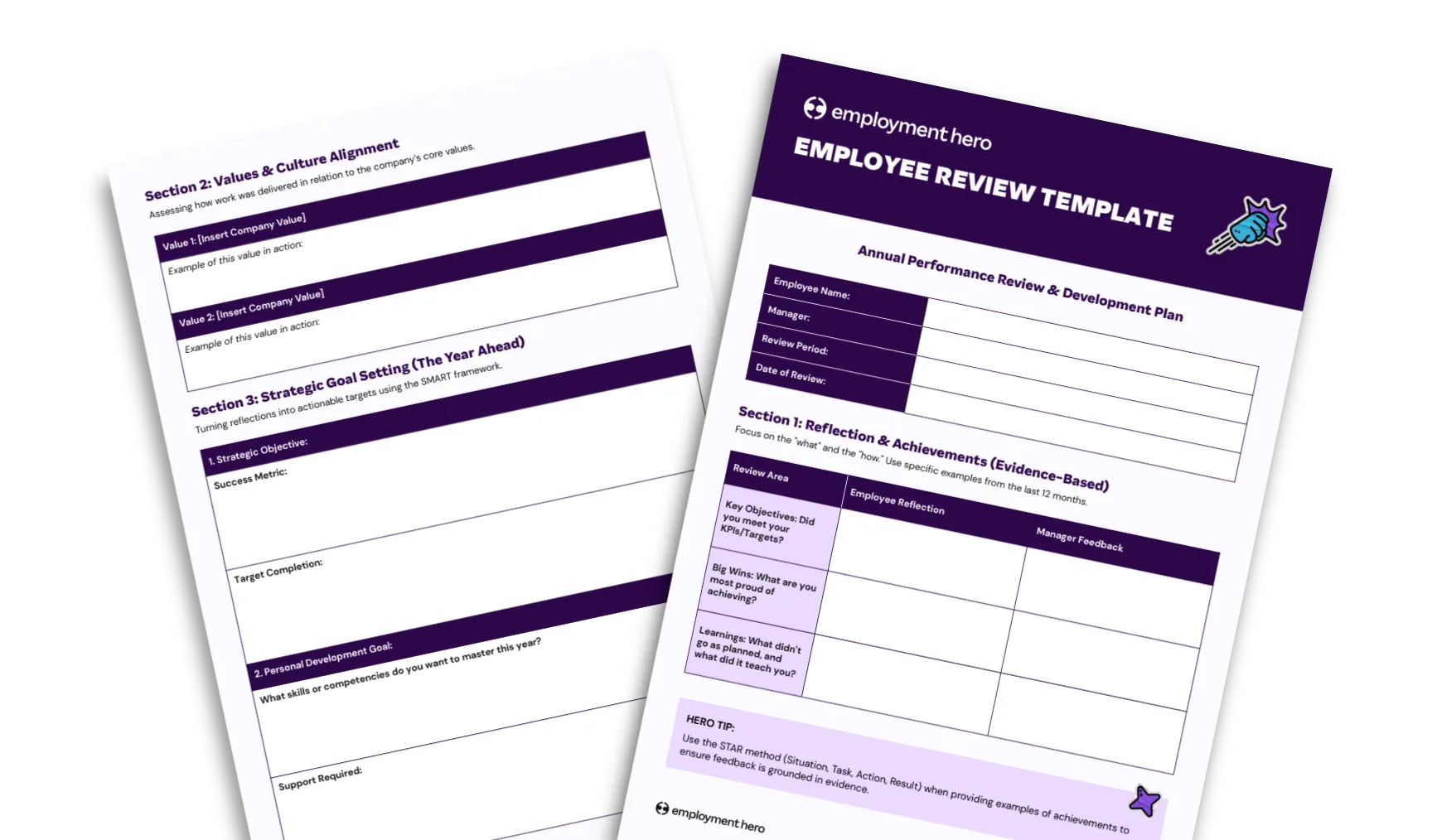
Employee Review Template
Discover the ultimate guide to employee reviews with tailored templates for every scenario.
-
 Read more: Employee Termination Process & Checklist
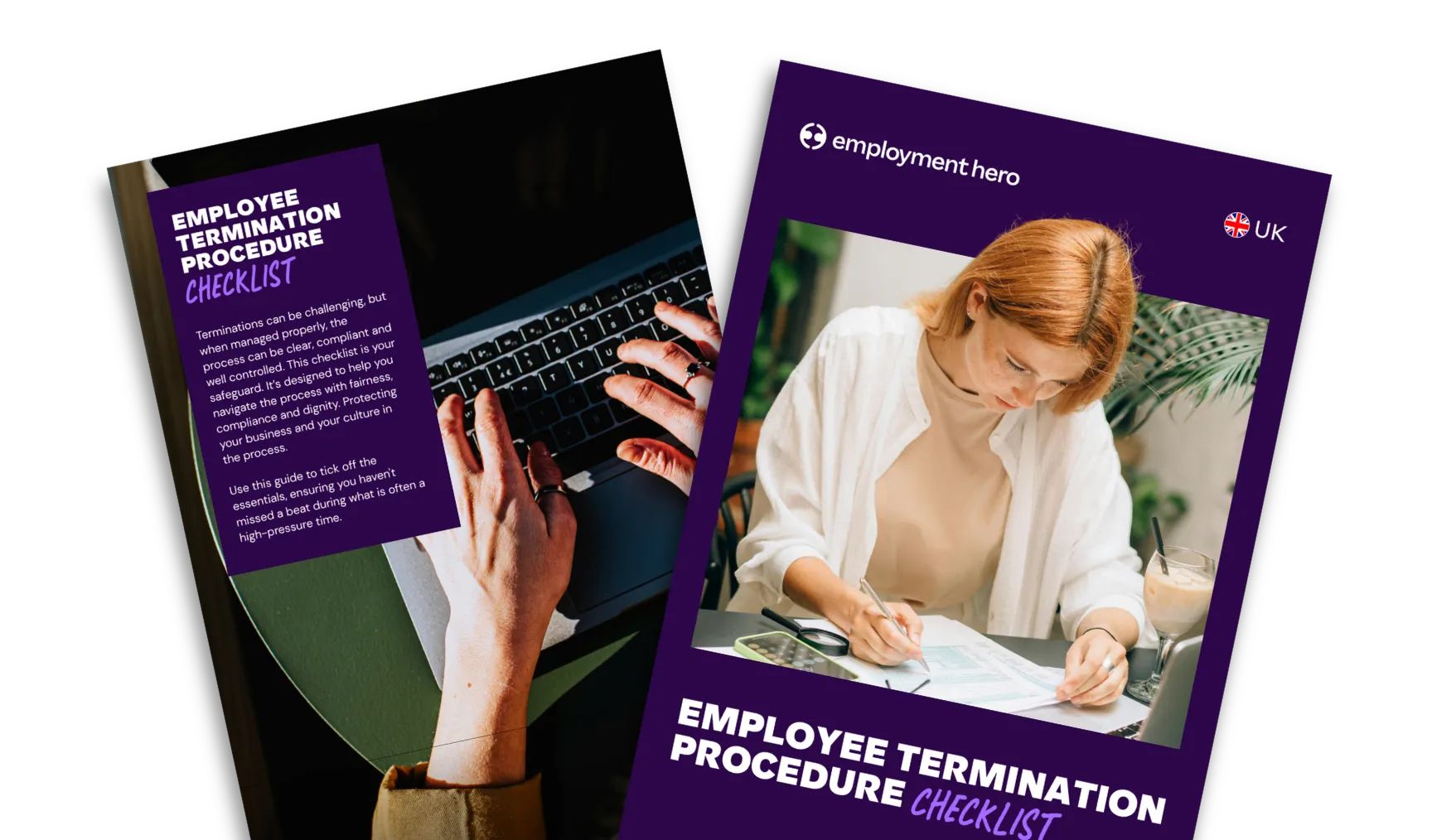
Employee Termination Process & Checklist
Published Setting up an employee termination process, while unpleasant, is a critical part of risk management and safeguarding in business.…
-
 Read more: Internship agreements: What to include
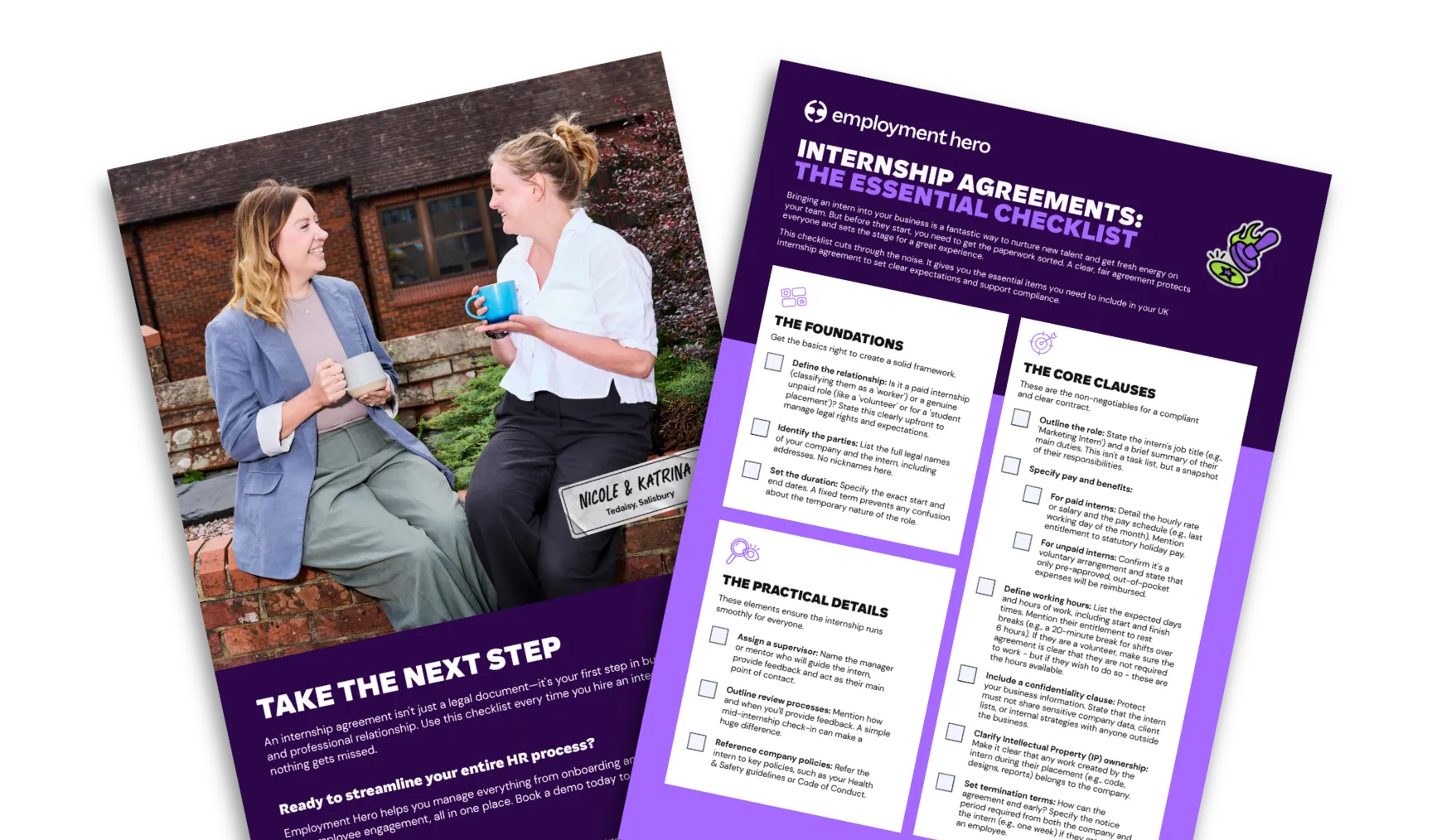
Internship agreements: What to include
Learn what to include in an internship contract agreement in the UK. Define expectations and protect your business with key…
