














Key Employee Onboarding Metrics and KPIs to Track
Published
Key Employee Onboarding Metrics and KPIs to Track
Published
You’ve done it. After weeks of searching, interviewing and negotiating, you’ve hired a brilliant new person for your team. But the work doesn’t stop there. In fact, the most critical part of their journey with you is just beginning.
Your onboarding process is more than just a first-day welcome and a pile of paperwork. It’s your one and only chance to make a great first impression. It sets the tone for your new hire’s entire experience, impacting everything from their productivity to how long they stay with you.
But how do you know if it’s actually working? Guesswork won’t cut it. You need data. Tracking the right employee onboarding metrics turns your process from a hopeful shot in the dark into a powerful, data-driven strategy for retention and growth. Let’s get into what you should be measuring.
What is in the factsheet?
This is your guide to measuring what matters. We’ll show you:
- Which Key Performance Indicators (KPIs) to track.
- How to set benchmarks and how to turn those insights into a better onboarding experience.
We’ll cover everything from new hire turnover to calculating your return on investment, so you can build a process that truly delivers.
KPIs to measure the success of your onboarding program

To understand if your onboarding is hitting the mark, you need to look beyond gut feelings. These KPIs will give you the hard data you need to see what’s working and what isn’t.
90-day onboarding survey
Feedback is a gift. A survey at the 30, 60 and 90-day marks gives your new hire a voice. Ask them about their experience, their manager’s support and how well they understand their role. This qualitative data is gold for pinpointing friction points in your process.
Time to productivity
How long does it take for a new employee to get up to speed and start contributing effectively? A shorter time to productivity means your training is working and they’re integrating well. Track this by setting clear 30, 60 and 90-day goals and measuring their completion.
Employee engagement
Are your new hires enthusiastic and involved or are they quiet and disconnected? Low engagement is a major red flag. Use pulse surveys or engagement tools to measure their connection to the team and the company culture.
New hire turnover
This is the big one. How many of your new hires leave within their first year? A high turnover rate is a costly sign that your onboarding is failing. If people are walking out the door soon after they arrive, you need to find out why—fast.
Communication and engagement
This is a measure of how connected a new hire feels. Are they participating in team meetings? Are they engaging on company communication channels? You can track this informally through manager feedback or more formally with engagement platform data.
Retention and turnover
Looking at your retention rate beyond the first year gives you a long-term view of success. If new hires who go through your onboarding process stay with you longer than those who didn’t, you’re clearly doing something right.
Why use onboarding metrics?
Tracking these metrics isn’t just about creating charts. It’s about making smarter business decisions. When you measure your onboarding, you can:
- Improve efficiency: Identify and fix bottlenecks in your process.
- Boost retention: Understand why new hires leave and take action to make them stay.
- Strengthen your culture: Ensure your onboarding truly reflects your company values.
- Prove your ROI: Show the leadership team how a great onboarding experience contributes directly to the bottom line.
A well-designed onboarding checklist can be your starting point, but the metrics tell you if the checklist is actually effective.
How to set onboarding benchmarks
You can’t know if you’re winning if you don’t know what the scoreboard looks like. Start by looking at your own historical data. What has your new hire turnover rate been over the last two years? That’s your internal benchmark.
Then, look externally. What are the industry averages for retention and time to productivity in your sector? This gives you a target to aim for and helps you set realistic but ambitious goals for your programme.
Early warning signs in onboarding data
Your data will tell you a story and sometimes it’s a warning. Keep an eye out for these red flags:
- Low survey scores: Consistently poor feedback on manager support or role clarity points to a specific problem area.
- Missed 30-day goals: If new hires are struggling to hit their initial targets, your training or goal-setting might be off.
- High early turnover: If you’re losing people within the first three months, your onboarding is likely the culprit.
Spotting these signs early allows you to intervene before a small issue becomes a major problem.
Measuring onboarding ROI

Onboarding isn’t a cost; it’s an investment. To calculate its return, you need to connect your onboarding efforts to business outcomes.
Start by calculating the cost of a bad hire (recruitment fees, lost productivity, training costs). Then, measure how your improved onboarding process reduces new hire turnover. The money you save by not having to replace people who leave is a direct return on your investment. A better employee onboarding guide doesn’t just feel good; it pays for itself.
Quality of hire metrics
This metric links onboarding success directly to performance. A ‘quality hire’ is someone who not only stays but also excels. You can measure this by looking at the performance review scores of new hires after their first six to twelve months. Are they meeting or exceeding expectations? A high quality of hire score shows your onboarding is successfully setting people up for success.
Cultural integration indicators
A new hire can have all the skills in the world, but if they don’t feel like they belong, they won’t stick around. Measure how well new starters are integrating into your team culture. This is harder to quantify, but you can track it through:
- Manager feedback on their collaboration and teamwork.
- Inclusion in social events and non-work activities.
- Peer feedback from their immediate team members.
How often to review onboarding metrics
Don’t wait for the annual review. You should be looking at your onboarding data regularly.
- Monthly: Review short-term metrics like survey feedback and goal completion.
- Quarterly: Look at trends in time to productivity and early turnover.
- Annually: Analyse your long-term retention rates and overall ROI.
A regular review cycle allows you to be agile and make continuous improvements to your process, whether it’s for full-time staff or you’re using a guide for onboarding casual employees.
Turning onboarding insights into action

Data is useless if you don’t do anything with it. If your surveys show that new hires feel disconnected, it’s time to improve your communication plan or buddy system. If time to productivity is lagging, review your training materials. Use the insights to make targeted, evidence-based improvements. This is how you improve your onboarding process from good to great, especially with a distributed team using a remote onboarding checklist.
Best practices for onboarding measurement
To get the most out of your metrics, follow these simple rules:
- Be consistent: Measure the same things, in the same way, every time.
- Combine data types: Use both quantitative data (like turnover rates) and qualitative data (like survey comments) for a full picture.
- Benchmark: Compare your results against your own history and industry standards.
- Act on it: Don’t just collect data. Use it to make your onboarding better.
Download the factsheet
A great onboarding experience is your secret weapon for building a committed, high-performing team. It shows your new starters that you’re invested in their success from day one. And by tracking the right metrics, you can ensure that investment pays off every single time.
Ready to build an onboarding process that works? Our onboarding software gives you the tools you need to create an amazing experience and track your success.
To download the factsheet, we just need a few quick details.
Related Resources
-
 Read more: EOFY HR Audit: What to Review in March
EOFY HR Audit: What to Review in March
Complete a EOFY HR audit with our practical checklist. Review compliance, people processes and compliance to reduce risk before the…
-
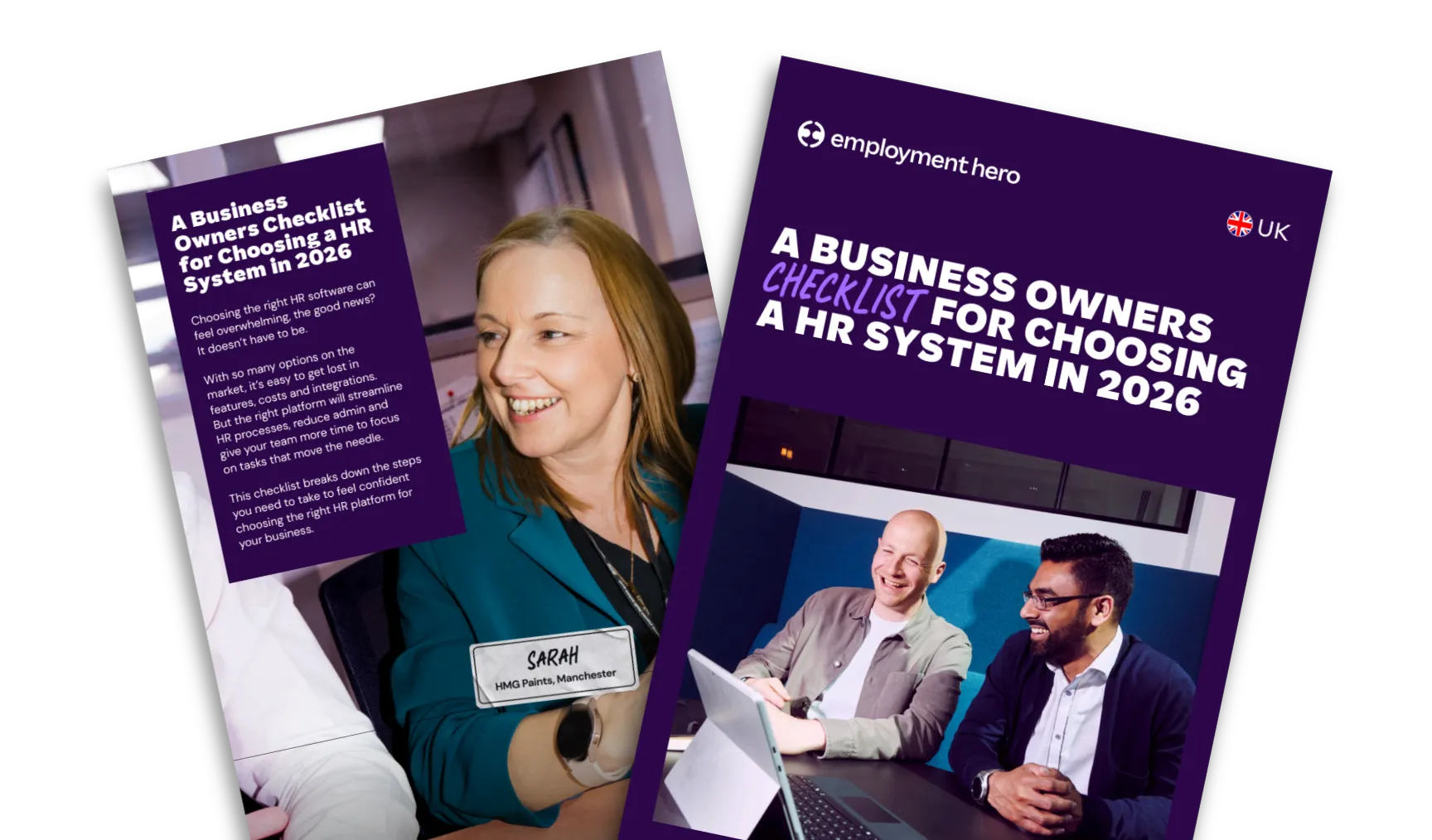 Read more: How to Choose an HR System: A 2026 Buyer’s Checklist
How to Choose an HR System: A 2026 Buyer’s Checklist
HR software is more than features. Discover how the right system can streamline operations, boost efficiency and future-proof workforce management.
-
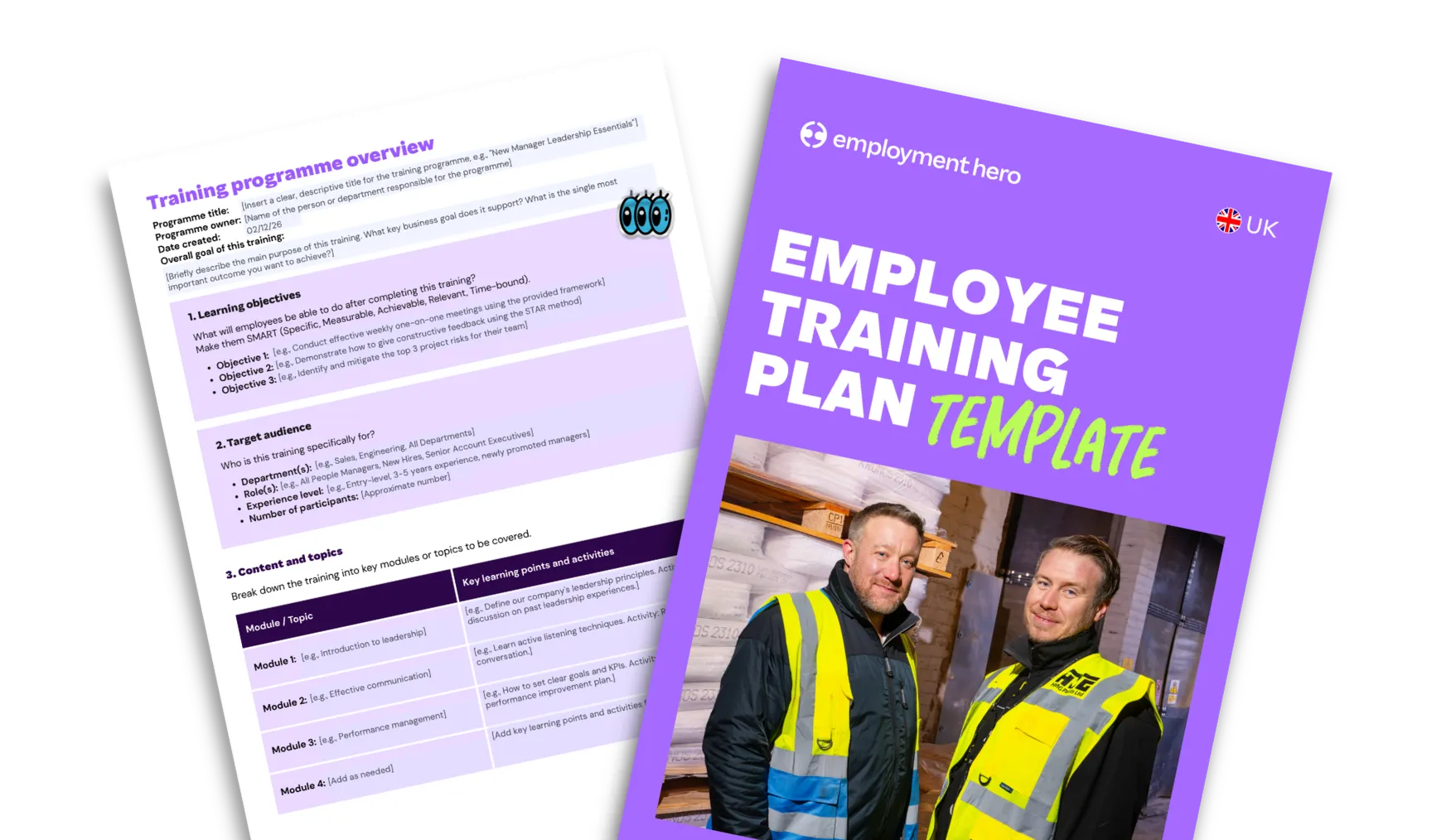 Read more: How to Create an Employee Training Plan: Template & Guide
How to Create an Employee Training Plan: Template & Guide
Ready to build a training program that drives results? Learn how to create an effective employee training outline that aligns…
