














Onboarding Automation: Redefine Your Process With AI
Published
Onboarding Automation: Redefine Your Process With AI
Published
They say you only get one chance to make a first impression and for businesses that first impression is the onboarding process. So it’s important for HR managers and business owners to make sure it’s a good one.
New hires are coming in feeling excited, energised and ready to make a positive impact on your company. So the last thing you want is to dampen this by not having everything prepared for them to hit the ground running.
The problem is that new-starter processes are often manual, which leaves room for mistakes. On top of this, a manual process buries your HR team in low-value admin and sends a clear message to your new hire: “You’re just another piece of paperwork.”
It’s time to stop leaving first impressions to chance. You can replace paperwork with progress and give every new starter the seamless, welcoming experience they deserve. The answer is onboarding automation.
What is employee onboarding automation?
Employee onboarding automation means using technology, particularly AI, to eliminate repetitive admin and create a seamless, engaging experience for new starters. It’s about creating a smooth journey from the moment they sign their contract to their first 90 days and beyond.
Think of it as a smart system that orchestrates everything behind the scenes. It sends the right information at the right time, gets the right equipment ready and ensures your new hire feels connected and prepared. It’s the engine that powers a world-class first impression and lets you improve your onboarding process for good.
The real cost of your manual onboarding process
Your manual new-hire process is costing you more than you think. It’s a silent killer of productivity, a drain on HR resources and a direct threat to new hire retention. Sticking to the old way of doing things isn’t just inefficient; it’s actively harming your business by creating unnecessary risks and a poor employee experience.
The cold and impersonal employee experience
A mountain of paperwork and a string of disjointed emails make new hires feel like a number, not a valued team member. The excitement they felt after accepting your offer quickly turns to anxiety and doubt. This cold, impersonal start undermines their confidence and makes them question their decision before they’ve even logged on for the first time.
The administrative burden slowing down HR
Chasing forms, re-keying data from one system to another and coordinating with IT and payroll—this low-value admin consumes countless hours. This is precious time your HR team could be spending on strategic initiatives that actually drive the business forward, like leadership development, culture projects and employee wellbeing.
The security and legal risks
Manual processes are magnets for human error. A single typo can lead to payroll mistakes. A misplaced document could lead to a GDPR breach. Failing to complete Right to Work checks correctly can expose your business to significant fines and legal trouble. These aren’t just administrative headaches; they are serious compliance risks. In fact, according to our Work That Works report, more than half of SMEs are spending an entire day every week on HR, payroll and employment admin — increasing both the likelihood and impact of errors.
Day one delays: The productivity killer
Nothing is more demoralising for a new starter than arriving on day one to find their laptop isn’t ready and their system access is missing. They can’t do their job, their manager is frustrated and you’re paying a salary for someone who is stuck in limbo. These delays are a direct hit to productivity and a complete waste of time and money.
Stop the admin: Essential onboarding tasks to automate now
Ready for some quick wins? By automating these core tasks, you can reclaim hours of admin time each week and create a first impression that wows every new hire. This is your hit list for instant efficiency gains.
Automate your pre-boarding workflows before day one
The time between contract signing and day one is critical. Automation can turn this waiting period into a powerful engagement opportunity. Automatically send a welcome email from the CEO, share links to company values and team intros and drip-feed useful information to make new hires feel part of the team before they even walk through the door. A great pre-boarding experience is a cornerstone of any employee onboarding experience.
Automate HRIS profile creation and setup
Stop the soul-destroying task of manually typing new hire information into your HR system. With automation, data from the signed offer letter can instantly create a new starter’s profile in your HRIS. This eliminates manual data entry, drastically reduces the risk of errors and ensures all employee information is accurate and secure from the very start.
Automate application and software access
Say goodbye to day-one access issues. Automation allows you to trigger requests to your IT department the moment a contract is signed. Based on the new hire’s role and department, the system can automatically request the right laptop, software licences and system permissions, ensuring they have the tools they need to be productive from minute one.
Automate document review and e-signature collection
Ditch the printer, scanner and filing cabinets. You can send, track and securely store employment contracts, policy documents and handbooks digitally. Using e-signatures not only eliminates paperwork but also creates a secure, compliant audit trail, giving you peace of mind that you’re meeting UK employment law requirements.
Automate equipment and swag distribution
A welcome kit with a company laptop, monitor and some branded swag is a great touch. Automation ensures it happens seamlessly. The act of a contract being signed can trigger a workflow that notifies your office manager or logistics partner to dispatch the necessary equipment, creating an impressive and organised start for every employee, whether they’re in-office or part of your remote onboarding process.
5 key onboarding automation use cases
Onboarding automation isn’t just for large corporations. It’s a game-changer for businesses of all shapes and sizes. Here are five real-world scenarios where it makes a massive difference:
- High-volume retail or hospitality hiring: When hiring dozens of casual staff for peak season, automation ensures every new starter gets a consistent, compliant and professional casual employee onboarding experience without overwhelming your HR team.
- Onboarding a remote-first workforce: For remote teams, automation is essential for shipping equipment, managing digital paperwork and creating a sense of connection for employees you may never meet in person.
- Integrating a new team after an acquisition: When bringing a new team into the business, automated workflows can standardise the onboarding process, ensuring everyone receives the same information and feels welcomed into the new company culture.
- Annual graduate scheme intakes: Managing a large cohort of graduates is complex. Automation can handle everything from contract distribution to scheduling induction sessions, freeing up your team to focus on mentoring and development.
- Executive onboarding: A seamless, high-touch onboarding experience is crucial for senior leaders. Automation can manage the complex logistics (like share options and benefits enrolment) so your HR team can focus on providing personalised, strategic support.
How to build powerful onboarding workflows in your HR software
Onboarding automation might sound complicated, or only for big companies with tech teams. The good news is, this isn’t the case. Building these workflows is not about coding; it’s about logic. Modern onboarding software allows you to create custom, trigger-based workflows using a simple “if this, then that” structure.
For example:
- When a contract is signed.
- Then send the welcome email from the CEO.
- Then create a profile in the HRIS.
- Then notify the IT department to provision a laptop and software.
- Then schedule a 30-day check-in with their line manager.
This is how you make the technology work for you, creating a powerful, automated process that runs flawlessly in the background.
The undeniable benefits of automated onboarding
The “why” behind automation is clear. This is not just about making HR’s life easier; it’s about delivering powerful business outcomes. The key benefits include:
- Slashing admin time: Free up hundreds of hours for your HR team to focus on strategic, high-impact work.
- Boosting new hire engagement: A seamless, professional experience from day one gets employees excited and motivated.
- Improving retention: Great onboarding is proven to increase first-year retention rates, saving you thousands in recruitment costs.
- Ensuring bulletproof compliance: An automated process with a digital audit trail minimises human error and helps you manage compliance with UK employment law.
Why technology integration is non-negotiable
A siloed system is a broken system. To unlock the true power of onboarding automation, your software must integrate with your wider HR and IT ecosystem. The data needs to flow seamlessly between your recruitment platform, your HRIS, your payroll software and your IT service desk. This integration is what eliminates manual data entry completely and creates a single source of truth for all employee information.
Your step-by-step guide to implementing onboarding automation
Ready to make the change? Follow this simple, four-step action plan.
- Step 1: Map current process: Whiteboard your entire onboarding journey from offer to end of probation. Identify the bottlenecks, the manual tasks and the points of friction.
- Step 2: Choose the right tool: Look for a platform that is user-friendly, customisable and integrates with your existing systems.
- Step 3: Build and test new workflows: Start with the quick wins identified earlier. Build your trigger-based workflows and test them thoroughly to ensure they work as expected.
- Step 4: Train your team and launch: Train your HR team and hiring managers on the new process. Communicate the changes clearly and launch your new, automated onboarding experience.
How to measure the success of your automation efforts
If you can’t measure it, you can’t manage it. To prove the ROI of your investment, track these key metrics:
- Time-to-productivity: How quickly are new hires able to perform their core duties?
- New hire satisfaction scores (eNPS): Survey new starters at the 30, 60 and 90-day marks to gauge their satisfaction with the onboarding process.
- Offer acceptance rate: A great onboarding experience can be highlighted in the recruitment process and can help improve offer acceptance rates.
- First-year retention: This is the ultimate measure of success. Track the percentage of new hires who stay with you for at least 12 months.
What’s next? A look at advanced AI-driven onboarding
This is just the beginning. The next wave of AI employee onboarding is taking automation to a whole new level. Emerging features to watch out for include:
- Personalised learning paths: AI that analyses a new hire’s role and skills gaps to recommend specific training modules.
- Automated check-in scheduling: Intelligent bots that schedule regular check-ins between a new hire and their manager and even prompt discussion topics.
- Predictive analytics: AI that analyses engagement data to identify new hires who may be at risk of leaving, allowing you to intervene proactively.
Download your complete onboarding automation checklist
It’s time to transform your onboarding process from a manual chore into your secret weapon for talent retention. Our free, actionable checklist gives you a head start, guiding you through every step of planning and implementing a world-class automated onboarding system.
To download the checklist, we just need a few quick details.
Related Resources
-
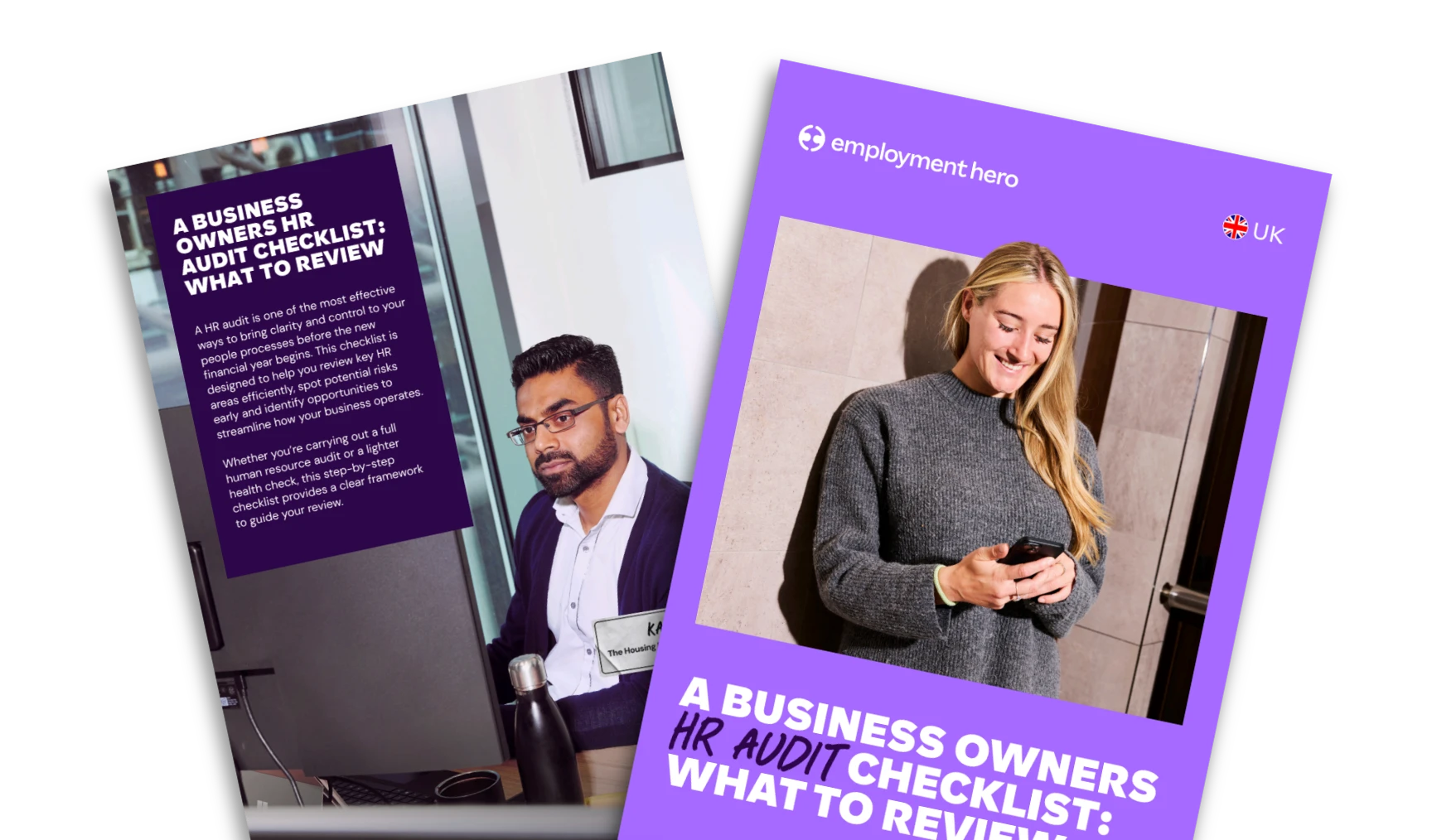 Read more: EOFY HR Audit: What to Review in March
EOFY HR Audit: What to Review in March
Complete a EOFY HR audit with our practical checklist. Review compliance, people processes and compliance to reduce risk before the…
-
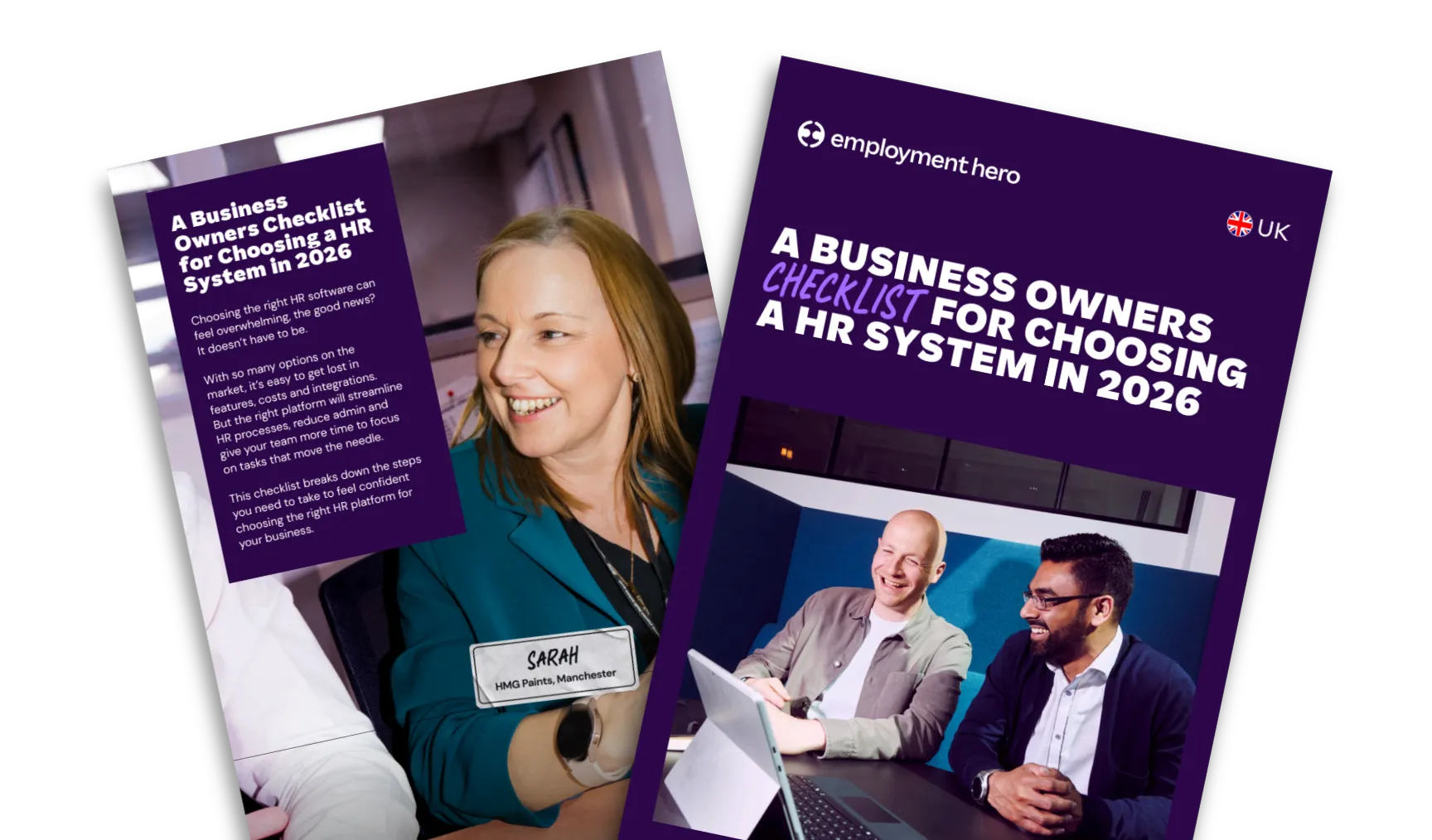 Read more: How to Choose an HR System: A 2026 Buyer’s Checklist
How to Choose an HR System: A 2026 Buyer’s Checklist
HR software is more than features. Discover how the right system can streamline operations, boost efficiency and future-proof workforce management.
-
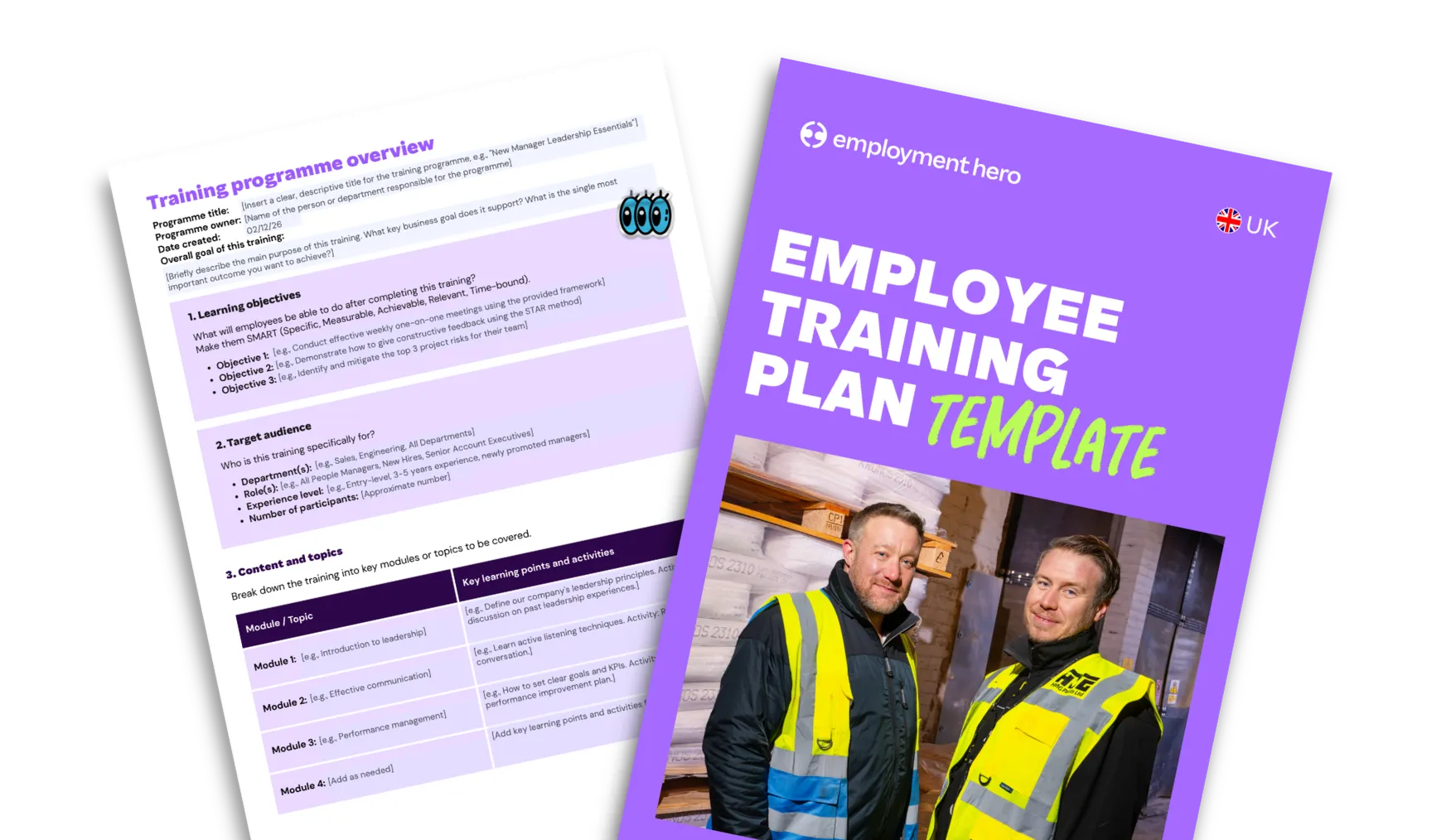 Read more: How to Create an Employee Training Plan: Template & Guide
How to Create an Employee Training Plan: Template & Guide
Ready to build a training program that drives results? Learn how to create an effective employee training outline that aligns…
