














Directors’ Service Agreement Checklist: What to Include
Published
Directors’ Service Agreement Checklist: What to Include
Published
Appointing a director is a huge move. You’re not just hiring an employee; you’re entrusting someone with the future of your business. So with stakes this high, a standard employment contract simply won’t cut it.
This is where a directors’ service agreement comes into play. This is a powerful document that protects your company and provides absolute clarity.
Not sure where to start with directors’ service agreements? Don’t worry, we have you covered. We’ll walk you through drafting a contract that is robust, compliant and tailored to the unique role of a member of the senior leadership team. We’ll break down why it’s non-negotiable, what sets it apart from a regular contract and the essential clauses you must include. Forget ambiguity and legal grey areas; it’s time to build a foundation of confidence.

What is a directors’ service agreement?
Starting off with the basics; a directors’ service agreement is a specialised legal contract that defines the relationship between a company and its director. It goes far beyond a typical employment contract by setting out not only the rights and responsibilities as an employee but also their significant duties and obligations as a senior member of the company.
Think of it as the ultimate rulebook for your leadership team. It formalises their appointment, clarifies their powers and sets clear boundaries. This document is your primary tool for ensuring good governance and protecting the company’s interests from the very top.
But how is it really different from a standard contract? Let’s break that down.
What’s the difference between a directors’ service agreement and a contract of employment?
While both are legally binding contracts, a directors’ service agreement is a far more complex and protective document. A standard employment contract focuses on the relationship between an employer and an employee. A directors’ service agreement governs the dual role a member of the senior leadership team holds: an employee and a key decision-maker with legal duties to the company.
Key distinctions include:
- Fiduciary duties: Senior leadership have legal responsibilities (fiduciary duties) to act in the company’s best interests. The contract makes these duties explicit.
- Enhanced confidentiality: Members of the senior team have access to highly sensitive commercial information. The contract contains much stricter and more detailed confidentiality clauses.
- Restrictive covenants: To protect the business after a member of the senior leadership team leaves, these contracts include robust post-termination restrictions, such as non-compete and non-solicitation clauses.
- Corporate governance: The document outlines the director’s role in board meetings, their decision-making authority and their responsibilities under company law.

Why does your business need a directors’ service agreement?
Relying on an informal arrangement for a member of senior leadership is a high-risk gamble you can’t afford to take. A formal contract is crucial for four key reasons:
- Clarity: It removes all ambiguity about the role, remuneration and responsibilities. Everyone knows where they stand.
- Legal protection: It protects your business’s confidential information, intellectual property and client relationships, both during and after the director’s tenure.
- Good governance: It establishes a clear framework for decision-making and accountability, which is vital for investors, shareholders and regulatory compliance.
- Dispute prevention: By setting out clear terms from the start, you dramatically reduce the risk of future disagreements and costly legal battles.
Ultimately, it’s a non-negotiable part of ensuring your business is HR compliant and a sign of a well-run business. So, what needs to go into it?
What should a directors’ service agreement include?
Knowing what a director’s service agreement is and why it’s important is one thing, but it’s also essential to know how to create one.
A robust contract is built on a series of essential clauses. Each one serves a specific purpose in protecting your business and defining the relationship.
Terms of appointment and basic provisions
This is the foundation. It should clearly state the role, the start date of the appointment and the notice period required from either side to terminate the contract. Notice periods for members of senior leadership are often significantly longer than for other employees, typically ranging from six to 12 months.
Place of work
Don’t leave room for assumptions. Specify the primary place of work, whether it’s a specific office, hybrid or a remote role. You should also include expectations around national and international travel if it’s a requirement of the job.
Holiday and other paid leave entitlements
Like all employees, senior leadership are also entitled to statutory holiday leave. This clause should outline their total annual leave entitlement, including bank holidays and the procedure for booking time off.
Benefits
Here, you’ll detail the full remuneration package beyond their basic salary. This includes everything from pension contributions and private medical insurance to a company car, share options and performance-related bonuses. Getting this right is vital for your payroll compliance.
Duties and responsibilities
This is a critical section. It details the specific responsibilities of the role and their overarching legal duties under the Companies Act 2006 (such as the duty to promote the success of the company). It should also require them to dedicate their full time and attention to the business during working hours.
Warranties
A warranty clause requires the director to confirm that they are legally entitled to act in this role and are not disqualified for any reason. This is a crucial check to ensure they are fit to serve and protects the company from appointing someone ineligible.
Restrictive covenants
These clauses are your shield after a senior member of staff leaves. They are designed to prevent a former director from immediately competing with your business, poaching your clients or employees or using your supplier relationships for their own gain. These must be reasonably drafted to be enforceable.
Confidential information
Senior leaders have access to confidential company information. This clause must impose a strict, legally binding duty to keep all confidential information (like financial data, client lists and strategic plans) private, both during and after their time with the company.
Company policies and procedures
It’s important to remember that no member of staff is above the rules. This clause should state that they are expected to comply with all company policies and procedures, as outlined in the employee handbook and other internal documents. This ensures consistency and accountability.
Grounds for termination
This section defines the circumstances under which you can terminate the contract without notice (summary dismissal). This typically includes gross misconduct, serious breach of contract, fraud or bankruptcy.
Severability
This is a small but mighty legal clause. It states that if any part of the contract is found to be unenforceable by a court, the rest of the contract remains valid. This prevents the entire contract from collapsing due to one faulty clause.
Corporate responsibilities
Finally, this section should cover the duties related to corporate governance. This includes their responsibilities in board meetings, their voting rights and their role in upholding the company’s legal and ethical standards. For complex governance issues, seeking expert HR advisory services is a wise move.
This might seem like a lot to cover, but each clause plays a vital role. This leads to some common questions.

Is a directors’ service agreement legally required?
While there is no specific law in the UK that mandates a written directors’ service agreement, operating without one is a massive risk. In the absence of a written contract, terms are implied by law and conduct, creating uncertainty and leaving your business exposed. It is considered essential best practice for any well-governed company.
Can a director be terminated without a service agreement?
Yes, but it’s messy and high-risk. Without a written contract, you will have to rely on statutory minimum notice periods and you will have no contractual protection against them competing with you or soliciting your clients immediately after they leave. Terminating a member of senior leadership without a clear contractual framework is an open invitation for a legal dispute.
Do all directors need a service agreement?
Yes. It is best practice for all directors, including executive and non-executive directors (NEDs), to have a formal document. While the terms for an NED will be different (focusing on their advisory role and limited time commitment), a written contract still provides crucial clarity on their duties, fees and confidentiality obligations. Formalising every directorship is a core part of any robust HR compliance bundle.
Now, it’s time to put this knowledge into action.
Download the full checklist
Drafting a directors’ service agreement is a critical act of leadership. It sets the tone for governance, protects your company’s future and provides the clarity your senior team needs to perform at their best. Stop leaving your company’s most important relationships to chance.
To ensure you cover every angle, we’ve created a comprehensive checklist. It will guide you through each essential clause, helping you build a contract that is compliant, clear and powerful.
To download the checklist, we just need a few quick details.
Related Resources
-
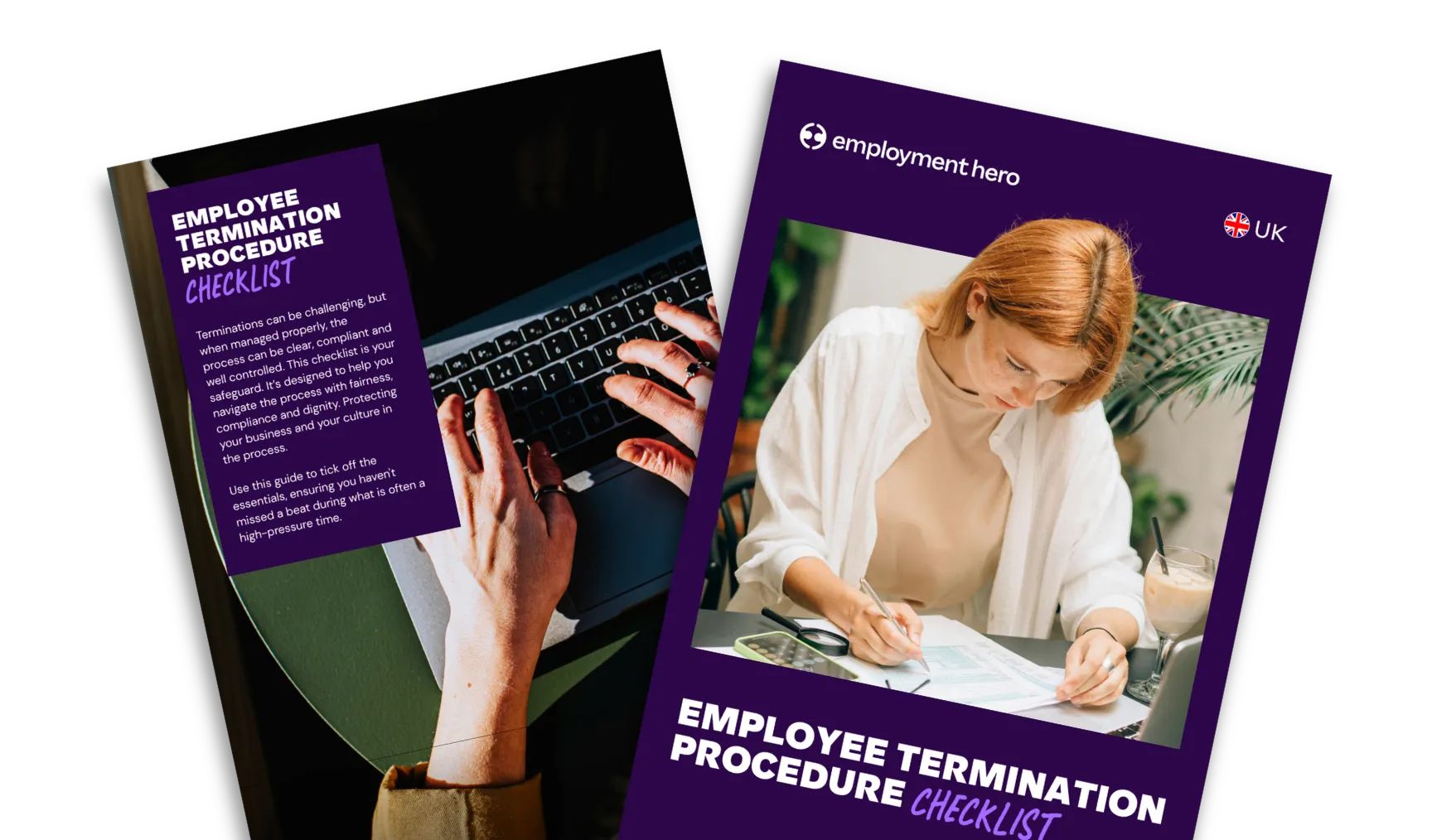 Read more: Employee Termination Process & Checklist
Employee Termination Process & Checklist
Published Setting up an employee termination process, while unpleasant, is a critical part of risk management and safeguarding in business.…
-
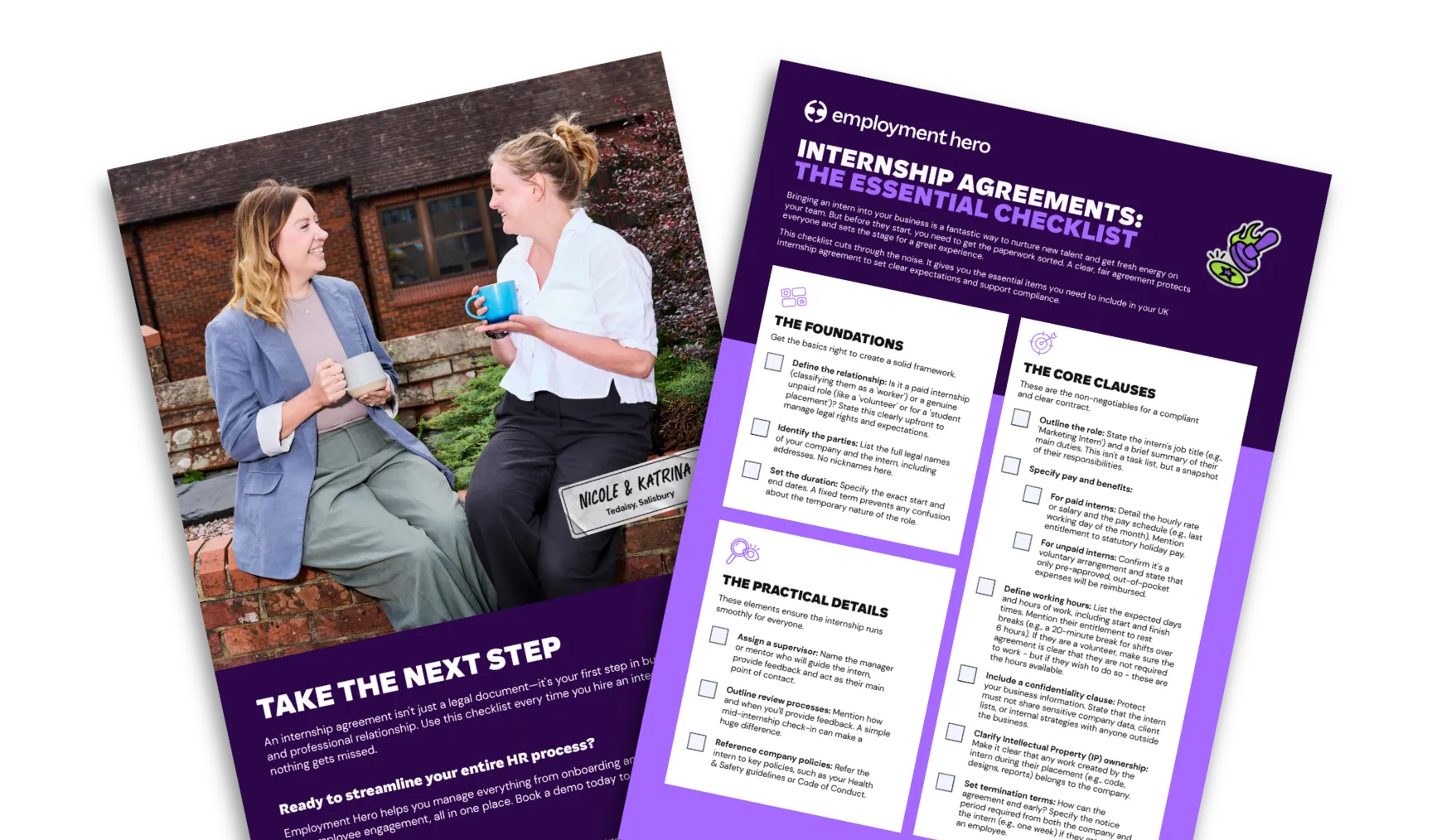 Read more: Internship agreements: What to include
Internship agreements: What to include
Learn what to include in an internship contract agreement in the UK. Define expectations and protect your business with key…
-
 Read more: How to Turn EOFY into a Strategic Advantage
How to Turn EOFY into a Strategic Advantage
Join our expert led EOFY webinar to learn how to use payroll reports, legislative updates, and cost optimisation in 2026.…
