














Apprenticeship agreements: What to include
Published
Apprenticeship agreements: What to include
Published
Hiring new talent is one of the most exciting parts of growing a business, but it comes with its fair share of challenges. When you’re bringing an apprentice on board, you’re not just filling a role; you’re investing in someone’s future and the future of your industry. It’s a big deal. To get it right, you need an apprenticeship agreement that’s crystal clear and covers all the bases. This guide will walk you through exactly what an apprenticeship agreement is, why it’s so important and what you need to include to protect both your business and your new hire.
What is in this checklist?
We’ve put together a handy checklist to help you navigate the world of apprenticeship agreements. It’s designed to give you peace of mind, covering all the legal requirements, essential clauses and compliance guidance for your apprenticeship programme. Think of it as your roadmap to creating fair, comprehensive and effective agreements.
Before we dive into the details of the agreement itself, let’s start with the basics.
What is an apprenticeship?
An apprenticeship is a genuine job that combines hands-on work with formal learning. It’s a unique opportunity for an individual to gain qualifications, practical skills and invaluable experience all at once. For you, the employer, it’s a powerful way to develop talent that’s perfectly moulded to your business needs. Apprentices split their time between their workplace and a training provider, like a college or university, putting their newfound knowledge into practice immediately. This blend of theory and application is what makes apprenticeships such a dynamic and effective way to build a skilled workforce.
So, where does the apprenticeship agreement fit into this picture?
What is an apprenticeship agreement?

An apprenticeship agreement is a formal contract between you and your apprentice. It outlines the terms and conditions of their employment and training. While it shares some DNA with a standard employment contract, it has a distinct purpose: to formally document the commitment to training that defines the apprenticeship. It’s the legal foundation that protects both you and the apprentice, ensuring everyone is on the same page about what’s expected.
Understanding its purpose is key to appreciating why this document is more than just a piece of paper.
Why are apprenticeship agreements important?
Having a valid apprenticeship agreement isn’t just good practice; it’s a legal requirement under the Apprenticeships, Skills, Children and Learning Act 2009. Without one, you could face serious compliance risks. Think of it as your business’s shield. It ensures the apprenticeship is officially recognised, which is essential for accessing government funding. More importantly, it provides clarity and security for your apprentice, outlining their rights and the support they’ll receive. For your business, it formalises the training plan and sets clear expectations, helping to avoid misunderstandings down the line. It’s a cornerstone of good HR compliance and protects the integrity of your programme.
This naturally leads to a common question about the weight this document carries.
Are apprenticeship agreements legally binding?
Yes, absolutely. An apprenticeship agreement is a contract of employment. To be legally enforceable, it must meet specific statutory conditions. This means it’s not just a set of guidelines; it’s a legally binding document that holds both parties accountable. The apprentice commits to working for you and completing their training, while you commit to employing them and providing the structured learning they need to succeed. This legal status ensures the arrangement is taken seriously by everyone involved.
The binding nature of the agreement brings its differences from a standard contract into sharp focus.
How is an apprenticeship contract different to a general employment contract?
While both are employment contracts, an apprenticeship agreement has some key distinctions. The most significant difference is the legal obligation to provide training. A standard contract focuses on the work to be done, but an apprenticeship agreement is built around the apprentice’s learning journey. It must specify the skill, trade, or occupation for which the apprentice is being trained. Other differences include its duration—which is tied to the length of the training programme—and specific rules around termination, which often provide extra protection for the apprentice.
Who manages apprenticeship agreements?
As the employer, you are the primary manager of the apprenticeship agreement. You are responsible for creating it, ensuring it’s signed and keeping it on file. However, you’re not alone. You’ll work closely with a registered training provider who helps deliver the formal learning component of the apprenticeship. The training provider will help you shape the training plan and monitor the apprentice’s progress. Effective management means maintaining clear records and open communication between you, the apprentice and the training provider, ensuring your payroll and compliance processes are aligned. For businesses needing extra support, services like HR advisory can provide expert guidance.
So, what are the non-negotiables that must be in the agreement?
What should an apprenticeship agreement cover?
A robust apprenticeship agreement leaves no room for ambiguity. It should clearly outline all the essential elements of the arrangement. This includes the duration of the employment and training, the apprentice’s rate of pay and the working hours. It must detail the training schedule, including the amount of off-the-job training they will receive. The agreement should also cover the apprentice’s role, their responsibilities and what’s expected of them. Don’t forget to include clauses on confidentiality, grievance procedures and how any disputes will be resolved. A thorough agreement is a sign of a well-run programme.
What process is typically used to manage apprenticeship agreements?
Managing an apprenticeship agreement is a journey with several key stages. It starts with recruitment and onboarding, where you find the right candidate and get the agreement signed. Once they’re on board, the focus shifts to training and monitoring. This involves regular check-ins to track their progress against the training plan, both in the workplace and with the training provider. The final stage is the end-point assessment (EPA), where the apprentice demonstrates they’ve gained the knowledge, skills and behaviours required to complete their programme. Successfully navigating these stages ensures the apprentice is fully competent and ready for the next step in their career.
Download the full checklist
Getting apprenticeship agreements right is crucial for building a successful programme that nurtures talent and supports your business growth. To make sure you don’t miss a single detail, we’ve created a comprehensive checklist. It’s designed to help you ensure all legal requirements are met and that your agreements are consistent across the business.
Download our free Apprenticeship Agreement Checklist today and start building your future workforce with confidence.
To download the checklist, we just need a few quick details.
Related Resources
-
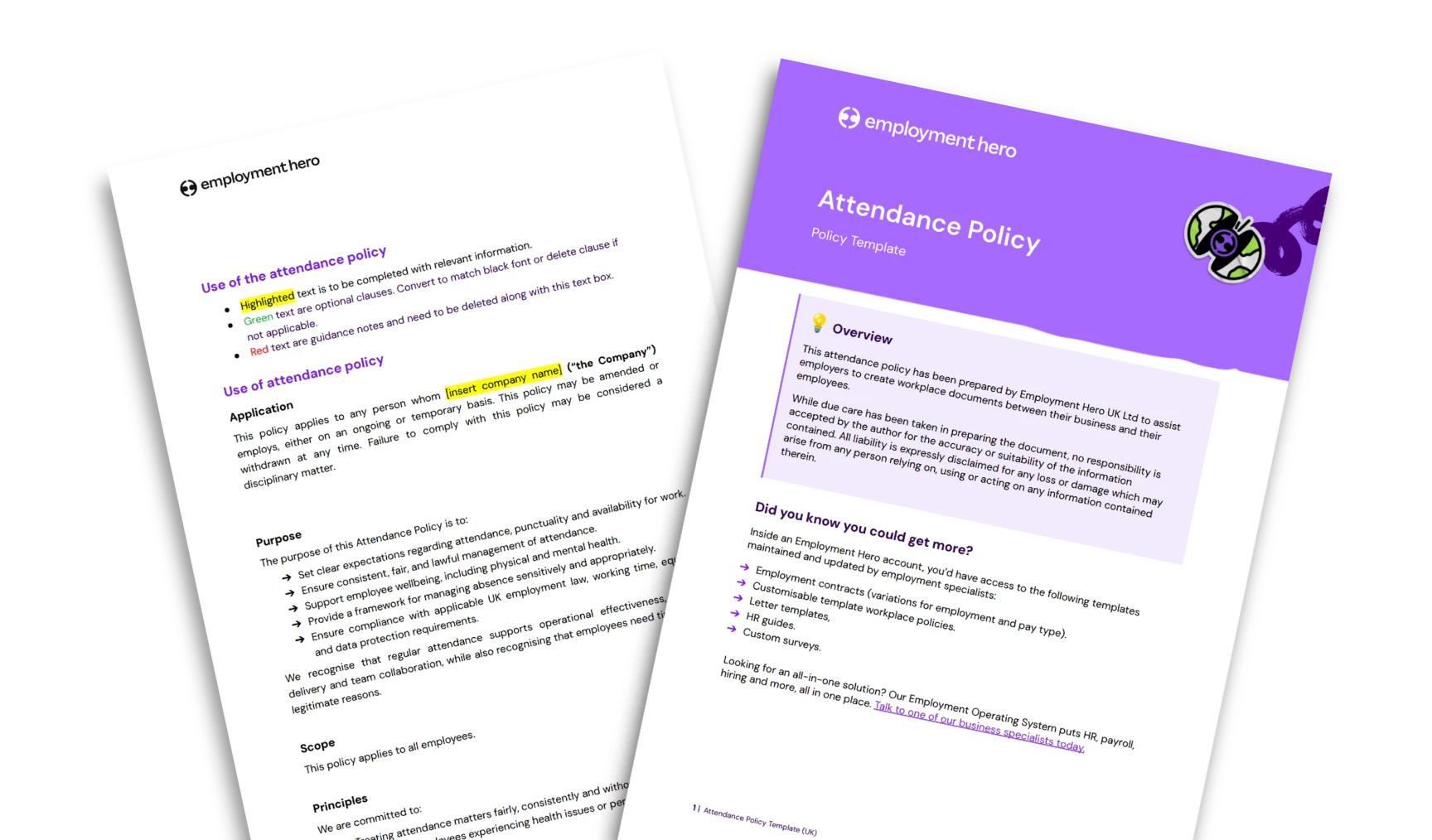 Read more: How to Build an Employee Attendance Policy in 2026
How to Build an Employee Attendance Policy in 2026
Learn how to create a fair and effective employee attendance policy in 2026. Discover strategies for managing attendance policies that…
-
 Read more: EOFY HR Audit: What to Review in March
EOFY HR Audit: What to Review in March
Complete a EOFY HR audit with our practical checklist. Review compliance, people processes and compliance to reduce risk before the…
-
 Read more: How to Choose an HR System: A 2026 Buyer’s Checklist
How to Choose an HR System: A 2026 Buyer’s Checklist
HR software is more than features. Discover how the right system can streamline operations, boost efficiency and future-proof workforce management.
