














Your 90 day onboarding plan: The free template for turning new hires into top performers
Published
Your 90 day onboarding plan: The free template for turning new hires into top performers
Published
You’ve fought the battle for talent. You’ve scrolled through endless CVs, sat through interviews and finally found “the one”. The contract is signed. The start date is set. But the hard work isn’t over; it’s just beginning.
The first three months of a new job are the most critical. This is the danger zone where enthusiasm can either be cemented into long-term loyalty or crumble into doubt. Yet, far too many businesses treat onboarding as a one-week affair—a quick tour, a laptop handover and a “good luck!”
That’s not onboarding; that’s abandonment. To turn a promising new hire into a high-performing asset, you need a strategy that extends well beyond the first week. You need a 90 day plan. This isn’t about hand-holding; it’s about empowering your new team member to hit the ground running, understand your culture and start delivering real value faster.
What is in this template?
This isn’t just another document to file away in a dusty digital folder; it’s your action plan for new hire success. We know that scaling businesses don’t have time for fluff, so we’ve created a template that cuts straight to the chase.
This template provides:
- A complete, customisable framework for the first 90 days.
- Clear breakdown of goals, activities and success metrics.
- Defined expectations for success at 30, 60 and 90 days.
- Clarity and purpose for new hires from day one.
- Guidance so new hires never need to guess what they should be doing.
- Clear visibility into how they are performing.
What is a 30-60-90 day plan?

A 30-60-90 day plan is a strategic framework that kills onboarding ambiguity dead. It sets out clear, phased goals and priorities for a new employee’s first three months. It’s the roadmap that transforms them from a nervous new hire into a confident, productive member of your team at record speed.
Think of it as a three-act play. Act one is about learning the ropes. Act two is about starting to perform. And act three is about taking the lead. By breaking the onboarding journey into these distinct phases, you prevent overwhelm and provide a steady, achievable path to competence. It aligns the new hire’s trajectory with your business goals, ensuring that every week brings them closer to being the top performer you hired them to be.
This structure is essential because it acknowledges that integration takes time. You can’t expect someone to know everything on day one, but you can expect them to follow a path that gets them there efficiently.
How to create a 30-60-90 day plan that delivers
Building an effective plan is not about mindlessly filling in boxes; it’s about intentional design. You need to reverse-engineer the result you want. If you want a fully autonomous, high-impact employee by day 90, you have to plan the steps that will get them there. This is your guide to creating a plan that aligns your new hire with your business goals and sets them on a trajectory for high performance.
The key components of the plan
A great plan has three non-negotiable elements. If you miss one, the whole structure wobbles.
First, you need clear priorities. What must be achieved in each phase? This prevents the “busy work” trap where new hires spend time on things that don’t matter. Second, you need SMART goals: specific, measurable, achievable, relevant and time-bound objectives. Don’t say “learn the software”; say “complete the advanced certification module by week 4.” Third and perhaps most importantly, you need success metrics. How will you know they’ve won? This is about defining what success looks like, in black and white. It removes subjectivity and gives both you and your employee a clear target to aim for.
The structure: First 30 days » Days 31-60 » Days 61-90
The magic of the plan lies in its progression. You break the journey into three distinct phases, each with a different focus.
The first 30 days: The learning phase
This is the sponge phase. The focus here is on absorbing information, understanding the culture and building relationships. They are learning the systems, meeting the key players and understanding the “why” behind your company. Success here looks like asking the right questions, not necessarily having all the answers.
Days 31-60: The contribution phase
Now, the training wheels start to come off. They are applying that knowledge and starting to take ownership of smaller tasks. They should be comfortable with the core tools and processes and beginning to add value to the team. They move from “watching” to “doing” under supervision.
Days 61-90: The independence phase
This is where they start to fly solo. By the third month, they should be executing independently, driving initiatives and perhaps even suggesting improvements. They are fully integrated, confident and operating at full capacity. This phased approach ensures they build a solid foundation before you add the weight of expectation.
The benefits of a solid 30-60-90 day plan
A structured plan isn’t a “nice-to-have”; it’s a strategic necessity for any business that wants to scale without breaking. It’s the most powerful tool you have to maximise the ROI on your new hire and ensure the great candidate you hired becomes a great employee. Without it, you’re gambling with your recruitment budget.
Faster integration and productivity
Stop leaving new hires to sink or swim. The “throw them in the deep end” approach might work for some, but for most, it just leads to drowning. A clear plan gives them the structure and focus to get up to speed faster. It accelerates their learning curve and shortens their time-to-productivity.
When a new hire knows exactly what they need to learn and by when, they don’t waste time wandering aimlessly or waiting for instructions. They can take charge of their own learning. This means they start delivering value to your business sooner, paying back the investment you made in hiring them. In a fast-moving SME, that speed is competitive advantage. Using dedicated onboarding software can automate this, ensuring consistency every time.
Crystal clear expectations and metrics
Ambiguity is the enemy of performance. Nothing kills motivation faster than not knowing what “good” looks like. A 90 day onboarding plan eliminates guesswork entirely. It provides new hires with a clear understanding of their role, what’s expected of them and how their performance will be measured.
It facilitates better conversations. Instead of vague feedback like “you need to be more proactive,” you can point to specific goals in the plan: “We agreed you’d lead the weekly stand-up by week 6; let’s work on getting you there.” It’s the foundation for a culture of accountability. When everyone knows the score, the game is much easier to play. This clarity is vital whether they are in the office or part of a remote onboarding process.
How to customise your 90 day onboarding plan for any role

One size does not fit all. A sales shark needs a different diet than a coding wizard. While the structure of the 30-60-90 day plan remains the same, the content must be tailored to the specific role to be effective.
For a sales role, the first 30 days might focus heavily on product knowledge, understanding the buyer persona and shadowing top performers. By day 60, they might be making their first calls and by day 90, they should have a quota to hit.
For a developer, the first month might be about setting up the environment, understanding the tech stack and reviewing code. Month two could involve fixing bugs and picking up small tickets. By month three, they should be shipping features.
For a managerial role, the focus shifts to people. Month one is about meeting the team and understanding the dynamics. Month two involves assessing processes and identifying gaps. Month three is about implementing strategy.
Adapt the template for different functions and seniority levels. A junior employee needs more task-based goals, while a senior hire needs strategic objectives. This customisation shows you understand their specific challenges and value their unique contribution.
Common mistakes that cripple onboarding plans (and how to avoid them)
Even with the best intentions, onboarding plans can fail if they fall into common traps. Don’t let your plan fail before it starts.
The biggest mistake is setting vague or unrealistic goals. “Get up to speed” is not a goal. “Complete the SEO audit of the blog” is a goal. Be specific. Another pitfall is failing to assign an owner. Who is responsible for this plan? It must be the manager. HR can facilitate, but the manager must own the process.
Finally, treating the plan as a one-time checklist instead of a living document is a recipe for failure. A plan that is written on day one and never looked at again is useless. The solution is simple: clarity, ownership and regular check-ins. Review the plan weekly. Adjust it if priorities shift. Make it a working document that guides your weekly 1:1s. This is crucial for all staff, including casual employees who often get overlooked in structured planning.
The manager’s role in the 90 day plan
An onboarding plan is a partnership and the manager is the lead partner. This isn’t an HR document; it’s a manager’s tool. If you hand this off to HR and walk away, you’ve already failed.
The manager must co-create the plan with the new hire. This buy-in is essential. They need to conduct weekly check-ins to monitor progress, celebrate wins and remove blockers. They need to provide the coaching and resources needed to succeed.
Think of yourself as a coach, not a boss. Your job is to clear the path so your new hire can run. You are there to answer questions, provide context and open doors. When a manager is actively engaged in the 90-day plan, retention rates soar and engagement deepens. It builds a bond of trust that lasts well beyond the probationary period. This human connection is vital, especially when supporting neurodiverse employees who may require specific adjustments to thrive.
Download the template and start building your high-performance team
You wouldn’t build a house without a blueprint, so why build a team without a plan? It’s time to stop guessing and start engineering success.
A structured, thoughtful 90 day plan is the best welcome gift you can give a new employee. It shows them they are valued, supported and set up to win.
Download our free 90 day onboarding plan template now. Stop guessing and start building a structured process that guarantees new hire success.
To download the template, we just need a few quick details.
Related Resources
-
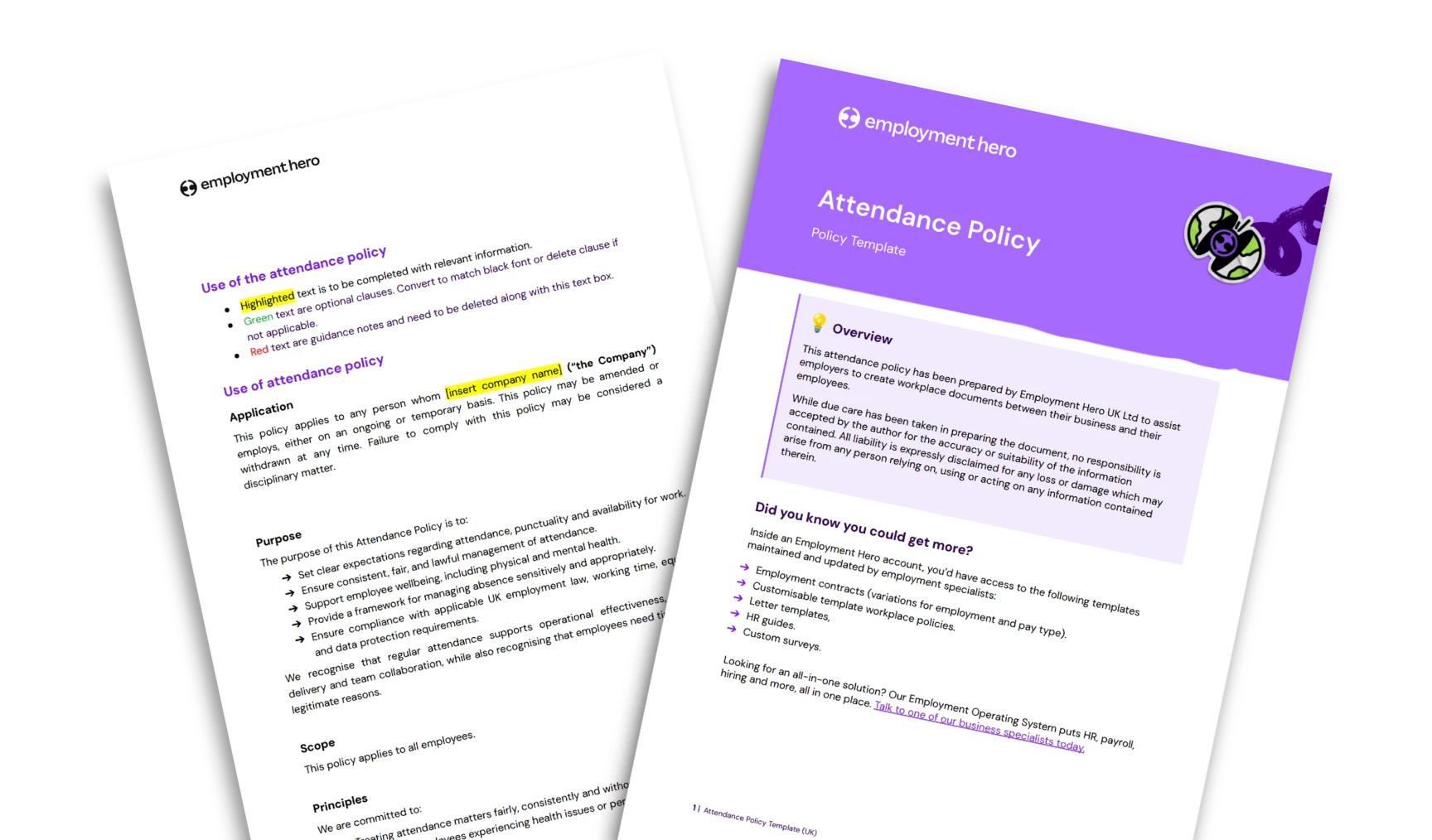 Read more: How to Build an Employee Attendance Policy in 2026
How to Build an Employee Attendance Policy in 2026
Learn how to create a fair and effective employee attendance policy in 2026. Discover strategies for managing attendance policies that…
-
 Read more: EOFY HR Audit: What to Review in March
EOFY HR Audit: What to Review in March
Complete a EOFY HR audit with our practical checklist. Review compliance, people processes and compliance to reduce risk before the…
-
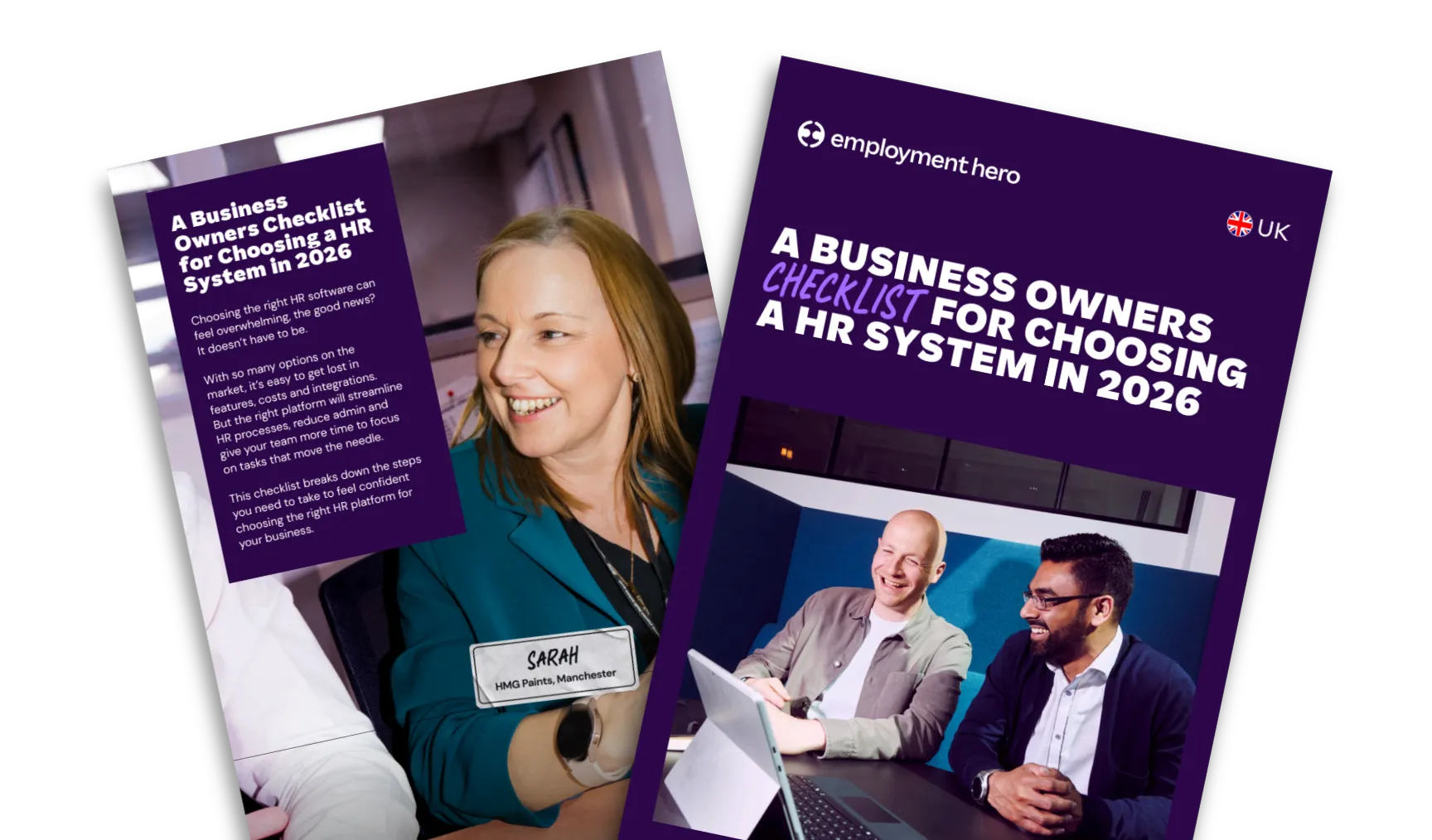 Read more: How to Choose an HR System: A 2026 Buyer’s Checklist
How to Choose an HR System: A 2026 Buyer’s Checklist
HR software is more than features. Discover how the right system can streamline operations, boost efficiency and future-proof workforce management.
