














30 day onboarding plan: The free template for rapid impact
Published
30 day onboarding plan: The free template for rapid impact
Published
A new hire’s first month is a make-or-break moment. They arrive full of potential and excitement, ready to make their mark. But without a clear plan, that initial energy can quickly turn into confusion and uncertainty. You’ve done the hard work of finding and hiring a great person; now is your chance to show them they made the right choice.
Leaving their first month to chance is a gamble you can’t afford to take. It’s time to ditch the ambiguity and give your new starters the structure they need to succeed from day one. A focused plan isn’t just about ticking boxes; it’s about making a powerful statement that you are invested in their success.
What is in this template?
This template is your blueprint for a powerful first month. It’s a customisable framework that breaks down the first 30 days into:
- Clear goals.
- Essential activities.
- Measurable outcomes.
It’s designed to provide a clear path to productivity from day one, so your new hire knows exactly where to focus their energy.
Forget confusion and guesswork. This guide will help you create a structured, supportive and impactful start for every new person who joins your team, setting them on a trajectory for long-term success.
What is a 30 day plan?

A 30 day plan is a focused, high-impact framework that kills first-month ambiguity. It’s a strategic roadmap that outlines exactly what a new hire should learn, do and achieve in their first four weeks. This isn’t just another checklist of administrative tasks; it’s a tool for accelerating their journey to becoming a confident and valuable contributor.
Think of it as a mutual agreement between you and your new hire. It sets clear expectations, defines priorities and maps out the key relationships they need to build. For the new starter, it provides clarity and purpose. For the manager, it creates a structure for providing support and measuring progress. This proactive approach transforms onboarding from a passive orientation into an active, goal-driven experience.
By defining the path forward, you empower your new hire to hit the ground running with confidence.
The benefits of a game changing 30 day plan
The first month sets the tone for a new hire’s entire career with you. A structured 30 day plan is your secret weapon to make it count. It’s the difference between a new starter feeling overwhelmed and feeling empowered. When you replace uncertainty with clarity, you give them the confidence to engage fully from their first day.
This focused approach dramatically accelerates their time-to-productivity. Instead of spending weeks trying to figure things out, they can focus on activities that deliver value. More importantly, it proves to them that you are invested in their success. It shows you’ve thought about their journey and are committed to supporting their growth. This fosters loyalty and engagement, making them feel like a valued part of the team right away, which is a critical part of a successful onboarding process.
This initial investment in their success pays dividends in retention, performance and overall team morale.
The key components of a well-crafted 30 day plan
A great plan isn’t complicated; it’s built on clarity and purpose. To create a 30-day plan that drives performance, you need to build it on three core pillars. These elements work together to provide a comprehensive foundation for a new hire’s first month.
- Weekly focus: This breaks the month down into manageable sprints, preventing overwhelm.
- Specific role-based goals: These should align with team objectives, be learning-oriented and foundational, not overwhelming performance targets.
- Clear metrics: Clearly define what ‘good’ looks like. This helps both the new hire and their manager track progress and celebrate early wins.
Together, these pillars create a robust foundation for performance, turning good intentions into a tangible plan for success.
What new hires must accomplish in their first 30 days
To make the first month truly effective, you need a non-negotiable list of accomplishments. These aren’t just tasks, but key experiences that ensure a new hire is properly integrated. Breaking this down into themes provides structure and ensures all bases are covered. A comprehensive employee onboarding guide should always include these areas.
Here are the four key themes for the first 30 days:
- Company immersion: They should understand the company’s mission, vision and values. This isn’t about memorising a slide deck; it’s about seeing how the culture comes to life in day-to-day work.
- Role clarity: They must know what success looks like for their specific role. This includes understanding their core responsibilities, key performance indicators (KPIs) and how their work contributes to the team’s goals.
- Relationship building: Onboarding is a team sport. They need to meet the key people they’ll be working with, both on their immediate team and across other departments.
- Early wins: Nothing builds confidence like accomplishment. They should complete a first, meaningful task. This could be a small project or a specific deliverable that allows them to contribute early on.
How to write a 30 day plan that actually works

Don’t just fill in a template and hope for the best. A powerful plan is a collaborative tool, co-created by the manager and the new hire to ensure total alignment and buy-in. This is your guide to building a plan with purpose, one that adapts to the individual and the role.
An effective plan isn’t rigid; it’s a dynamic guide that fosters communication and sets the stage for a successful working relationship from the very beginning.
Step 1: Start with questions, not answers
Before you write a single goal, you need to understand the context. A great plan is built on insight, not assumptions. Take the time to think deeply about the role and what the new hire needs to succeed.
Ask yourself:
- What are the biggest challenges of this role in the first three months?
- What does success look like at the 90-day mark?
- Who are the absolute essential people they need to connect with to be effective?
- What is the one thing they need to learn that will have the biggest impact?
The answers to these questions will form the strategic foundation of your 30-day plan. This is especially vital when onboarding casual employees who need to integrate quickly.
Step 2: Set sharp, realistic goals
Vague goals lead to vague results. The first 30 days should focus on learning and foundational tasks, not ambitious performance targets. You want to build confidence, not create pressure. Set achievable, SMART (Specific, Measurable, Achievable, Relevant, Time-bound) goals.
Good examples for the first month include:
- “Complete all mandatory compliance and company policy training by the end of Week 1.”
- “Shadow three senior team members on customer calls to understand our communication style.”
- “Successfully set up all development environments and complete one small, non-critical bug fix.”
Avoid goals like “Increase sales by 20%.” The aim is to build a solid foundation for future performance.
Step 3: Define weekly milestones
Breaking the 30 days into four distinct, one-week sprints makes the plan feel manageable and provides a clear sense of progression. Each week should have its own theme, guiding the new hire’s focus and activities.
- Week 1: Orientation and Learning. Focus on company immersion, meeting the team and understanding the tools and systems.
- Week 2: Active Listening and Relationship Building. Shift to understanding team processes, attending meetings and connecting with key stakeholders across the business.
- Week 3: Initial Contributions. This is the time for their first “early win” project. They start applying what they’ve learned to a meaningful, low-risk task.
- Week 4: Feedback and Future Planning. The final week is for reviewing progress, gathering feedback on the onboarding experience and co-creating the plan for the next 30-60 days.
This structure provides a rhythm to the first month, ensuring momentum is built steadily.
Step 4: Measure progress and stay agile
A plan is a guide, not a straitjacket. Emphasise that this is a living document. The most effective onboarding plans are reviewed and adjusted in weekly check-ins. These regular conversations are crucial for success.
Use these sessions to track progress against milestones, celebrate wins and proactively tackle roadblocks. It’s also an opportunity for the new hire to ask questions and provide feedback. This agile approach ensures the plan remains relevant and that the new hire feels supported and heard. Using dedicated onboarding software can help automate the tracking and feedback process, making it even more effective.
Use frequent check-ins to identify gaps early
Don’t wait 30 days to find out there’s a problem. Weekly, informal check-ins are non-negotiable. They are your early-warning system, allowing you to spot challenges before they become serious issues. These conversations are vital for building trust and ensuring your new hire feels connected.
Use these check-ins to ask open-ended questions like, “What’s one thing that surprised you this week?” or “Is there anything blocking your progress?” This creates a safe space for them to raise concerns. Regular check-ins ensure that support is provided when it’s needed most, which is especially important for neurodiverse employees or those working in a remote onboarding environment.
The manager’s role in the 30 day plan
A plan is useless without a great coach. The manager owns the success of the 30 day plan. Their role goes far beyond passive oversight; it requires active leadership. It’s the manager’s job to co-create the plan with the new hire, ensuring it aligns with their skills and the team’s needs.
Throughout the month, the manager must provide the resources needed to achieve the goals, from making key introductions to ensuring access to the right tools. Most importantly, they need to offer consistent feedback and encouragement along the way. This hands-on approach shows the new hire they are supported, valued and being set up to win.
Download the template and take control of your onboarding
Ready to create a structured, impactful first month for every new hire? It’s time to stop leaving onboarding to chance and start building a process that delivers results. A well-executed 30-day plan is one of the most powerful tools you have to turn a promising candidate into a high-performing team member.
Download our free 30 day onboarding plan template now. Take control of your onboarding and give every new starter the clear, supportive and empowering welcome they deserve.
To download the guide, we just need a few quick details.
Related Resources
-
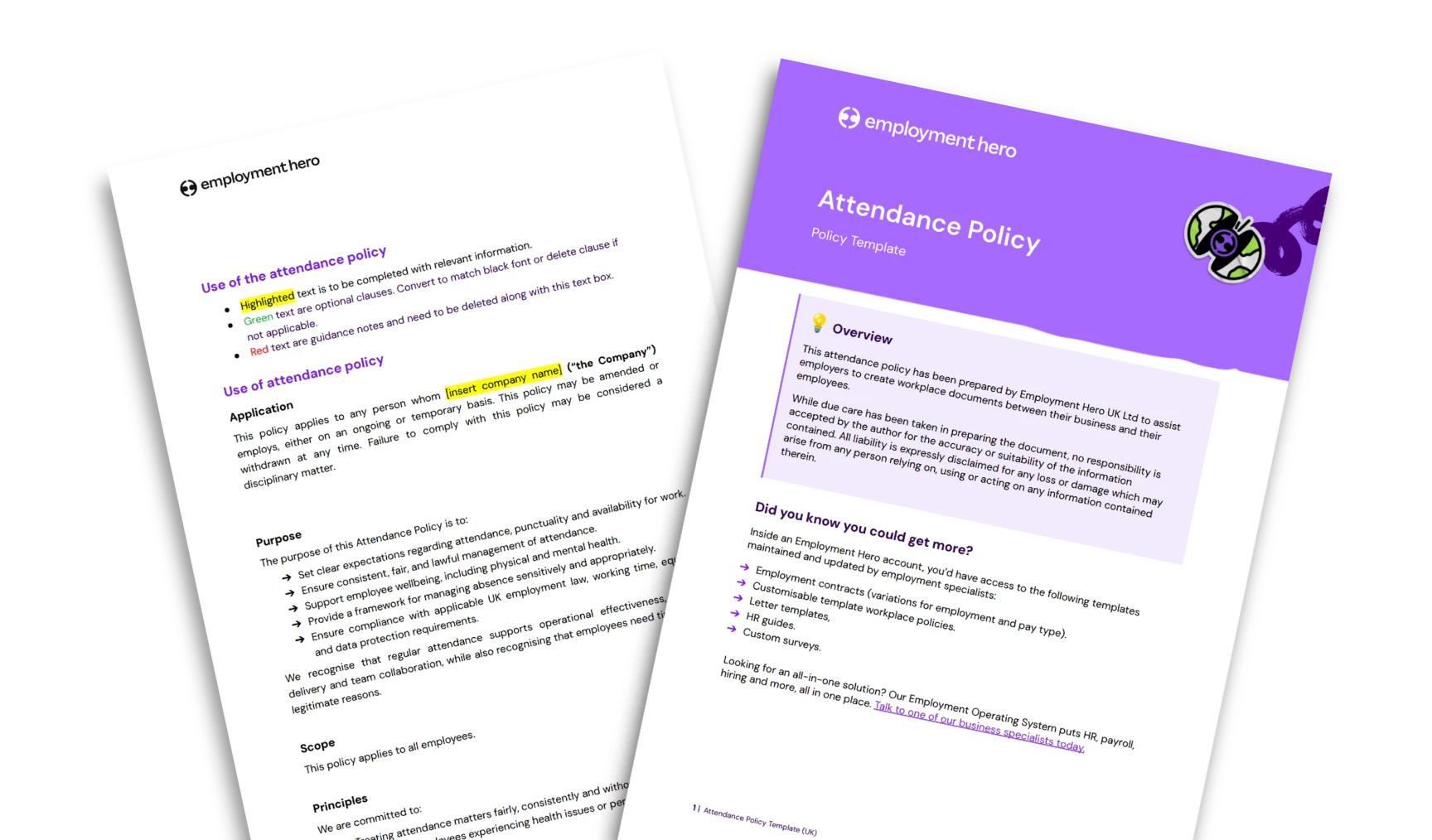 Read more: How to Build an Employee Attendance Policy in 2026
How to Build an Employee Attendance Policy in 2026
Learn how to create a fair and effective employee attendance policy in 2026. Discover strategies for managing attendance policies that…
-
 Read more: EOFY HR Audit: What to Review in March
EOFY HR Audit: What to Review in March
Complete a EOFY HR audit with our practical checklist. Review compliance, people processes and compliance to reduce risk before the…
-
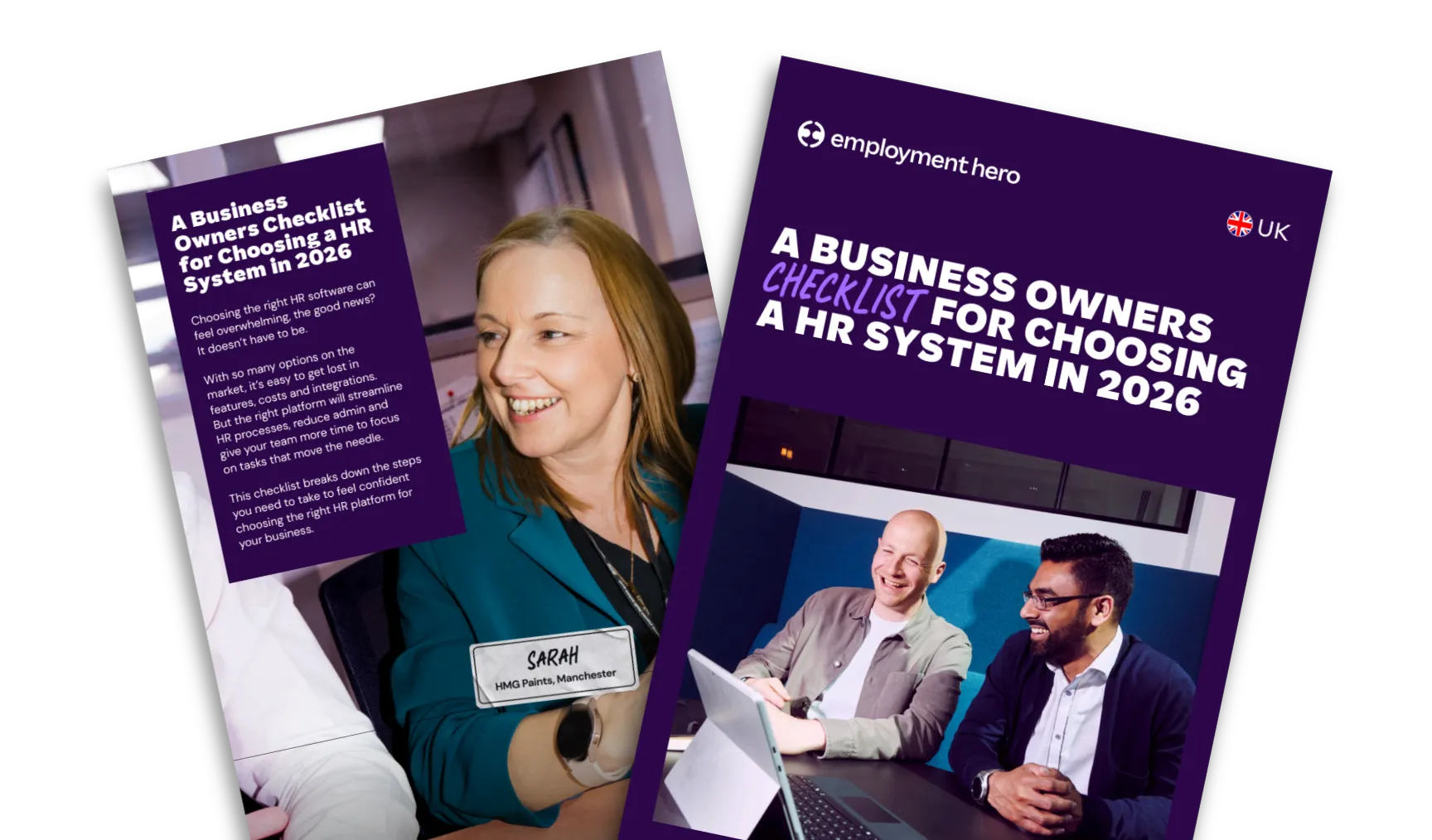 Read more: How to Choose an HR System: A 2026 Buyer’s Checklist
How to Choose an HR System: A 2026 Buyer’s Checklist
HR software is more than features. Discover how the right system can streamline operations, boost efficiency and future-proof workforce management.
