

















AI in HR: How to keep the human in Human Resources and payroll with AI

Contents
Artificial intelligence is no longer science fiction; it’s a powerful tool that’s reshaping how we work, hire and lead. For you as an employer, the rise of AI in HR presents a massive opportunity. It can slash admin, streamline payroll and deliver insights that were once out of reach. But it also raises a crucial question: how do you embrace this technology without losing the most important part of Human Resources—the human?
The fear is that AI will turn people management into a cold, robotic process. But that’s a failure of imagination. When used correctly, AI doesn’t replace the human touch; it frees you up to be more human. By automating the grunt work, it gives you back the time to focus on what really matters: your people.
Let’s cut through the hype and look at how you can use AI to build a more efficient, strategic and genuinely connected workplace.
What is an AI use policy?
Before you dive in, you need a rulebook. An AI use policy is a formal document that outlines how your business will use AI technologies responsibly, ethically and transparently. It’s not just a nice-to-have; it’s essential for building trust and managing risk.
This policy should align with the UK’s AI regulation roadmap and your obligations under GDPR. It sets clear boundaries, defines accountability and ensures that any AI-assisted decisions are fair and explainable. It’s your public commitment to using technology as a force for good.
Communicating an AI use policy to the workforce

Introducing Artificial Intelligence can make employees nervous. They might worry about job security or being managed by an algorithm. Clear communication is your best tool to turn that fear into confidence.
When you introduce your AI policy, be transparent. Explain the ‘why’ behind the change, focusing on how it will help the business and make their jobs better. Train your managers to answer questions and lead by example. Reassure your team that AI is a sidekick, not a replacement—a tool to help them work smarter, not harder. Our AI adoption guide can help you navigate this change.
Using AI to perform tasks in the HR function
The most immediate impact of AI in HR is on the administrative tasks that eat up your day. Think about the hours spent on payroll, benefits administration and compliance checks. This is where AI delivers a quick and powerful win.
Automation driven by AI can process timesheets, calculate pay and flag potential errors with incredible accuracy, reducing the risk of costly mistakes. It can manage benefits enrollment and answer common employee questions, freeing your HR team from the repetitive queries that fill their inbox. The result is a more efficient, accurate and streamlined back-office operation.
Applying AI to the employee lifecycle
The power of AI extends far beyond admin. It can enhance every single stage of your employee’s journey, from the first application to their long-term career growth.
Attraction, selection and onboarding
AI tools can transform your recruitment process. They can screen CVs to identify top candidates based on skills and experience, reducing manual review time. This helps you find the right people faster and supports your efforts to build a team for small business growth.
However, you need to be careful. Algorithmic bias is a real risk. To support compliance with the UK Equality Act 2010, you must ensure your AI tools are programmed to make decisions based on merit alone, without discriminating. Human oversight is non-negotiable here.
Compliance and policy management
Staying on top of ever-changing employment law is a huge challenge. AI can act as your compliance co-pilot. It can monitor legislative updates, flag potential risks in your processes and help ensure your record-keeping is accurate and secure.
Crucially, your AI implementation must be aligned with key data protection and privacy legislation globally. This includes regulations like the General Data Protection Regulation (GDPR) as well as similar laws in other regions. Compliance ensures the secure handling of sensitive employee data, which is paramount when leveraging AI.
This strengthens your data protection practices and gives you peace of mind that you’re meeting your obligations.
Reward and wellbeing
How do you know if you’re paying your people fairly? AI-driven tools can analyse market data to provide real-time pay benchmarks, helping you create competitive and equitable reward strategies.
Beyond pay, AI can also offer powerful insights into employee wellbeing. By analysing anonymised data on engagement and work patterns, it can help you spot early signs of burnout and take proactive steps to support your team. Personalised wellbeing resources, delivered through AI, can significantly improve the AI and employee experience.
Learning and development, talent assessment and career progression
AI can create a more dynamic and personalised approach to employee growth. AI-enabled platforms can map your team’s existing skills, identify gaps and recommend tailored training content. Adaptive learning platforms adjust to an individual’s pace and style, making development more effective. For career progression, AI can help visualise potential career paths within the company, showing employees what opportunities are available and what skills they need to get there.
Management and performance management
AI enhances performance management by providing data-driven insights rather than relying solely on subjective opinion. It can track progress against goals, analyse performance metrics and even provide prompts to managers for coaching conversations. The key is to use this data to start conversations, not replace them. Over-reliance on metrics can feel like surveillance, so it’s vital to maintain fairness and human judgement.
What are the risks of implementing AI in the HR process?

Embracing AI isn’t without its challenges. The biggest risks include:
- Algorithmic bias: If the AI is trained on biased data, it can perpetuate and even amplify unfairness in hiring or promotions.
- Data privacy: You are handling sensitive employee data, so you must ensure your AI systems are secure and GDPR-compliant. The ICO has clear guidance on this.
- Over-surveillance: Using AI to monitor employees can erode trust and create a toxic culture if not handled with complete transparency.
- Lack of human oversight: AI makes predictions, but humans make judgments. Relying on AI for final decisions without a human review is a recipe for disaster.
As the CIPD recommends, the solution is transparency, ethical design and keeping a human in the loop at all times.
What are the benefits of implementing AI?
When managed responsibly, the upsides of AI are transformative. You can expect:
- Massive efficiency gains: Automating repetitive tasks saves hundreds of hours.
- Reduced costs: Fewer errors in payroll and more efficient processes lead to direct cost savings.
- Improved accuracy: AI is far less prone to human error in data-heavy tasks.
- Strategic decision-making: With data-driven insights at your fingertips, you can make smarter, more informed decisions about your people strategy.
- Empowered HR: Freeing your HR team from admin allows them to become the strategic partners you need them to be.
How to keep the human in HR management
So, how do you get the best of both worlds? The key is to view AI as a tool that augments human connection, rather than replacing it. Use the time AI saves you to have better conversations. Analyse the data, but use your empathy and experience to interpret it. Celebrate successes in person, handle difficult conversations with care and build a culture where technology serves people, not the other way around.
Preparing your HR team for AI transformation
Your HR team is central to this journey. You need to bring them with you. Start by providing training on AI literacy and ethical considerations. Involve them in testing and selecting new HR software. Encourage them to experiment with new tools in a safe environment. This isn’t just about learning new skills; it’s about shifting mindsets from administrative support to strategic partnership.
The future of AI in HR and payroll
This is just the beginning. The AI work guide shows a future where AI will become even more integrated into our daily work lives, offering predictive insights and hyper-personalised experiences. The businesses that thrive will be those that master the balance—using technology to drive efficiency while doubling down on the human connection that makes a workplace great.
With AI-enhanced HR, you have an incredible opportunity to build a more strategic, efficient and people-focused business.
Are you ready to explore what AI can do for you? Let’s talk.
Related Resources
-
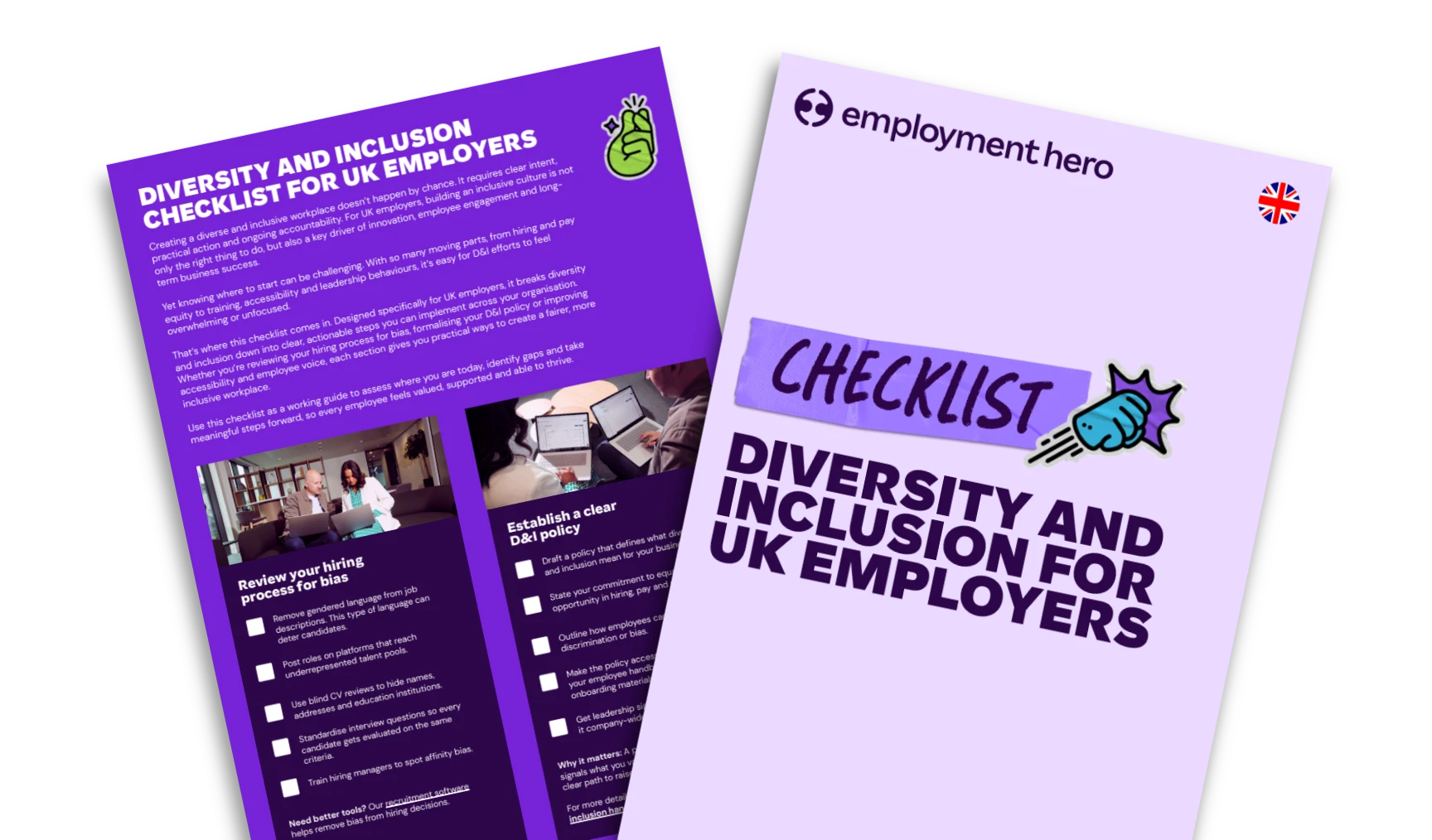 Read more: Diversity and Inclusion Checklist for UK Employers
Diversity and Inclusion Checklist for UK Employers
Create a truly inclusive environment with our diversity and inclusion checklist.
-
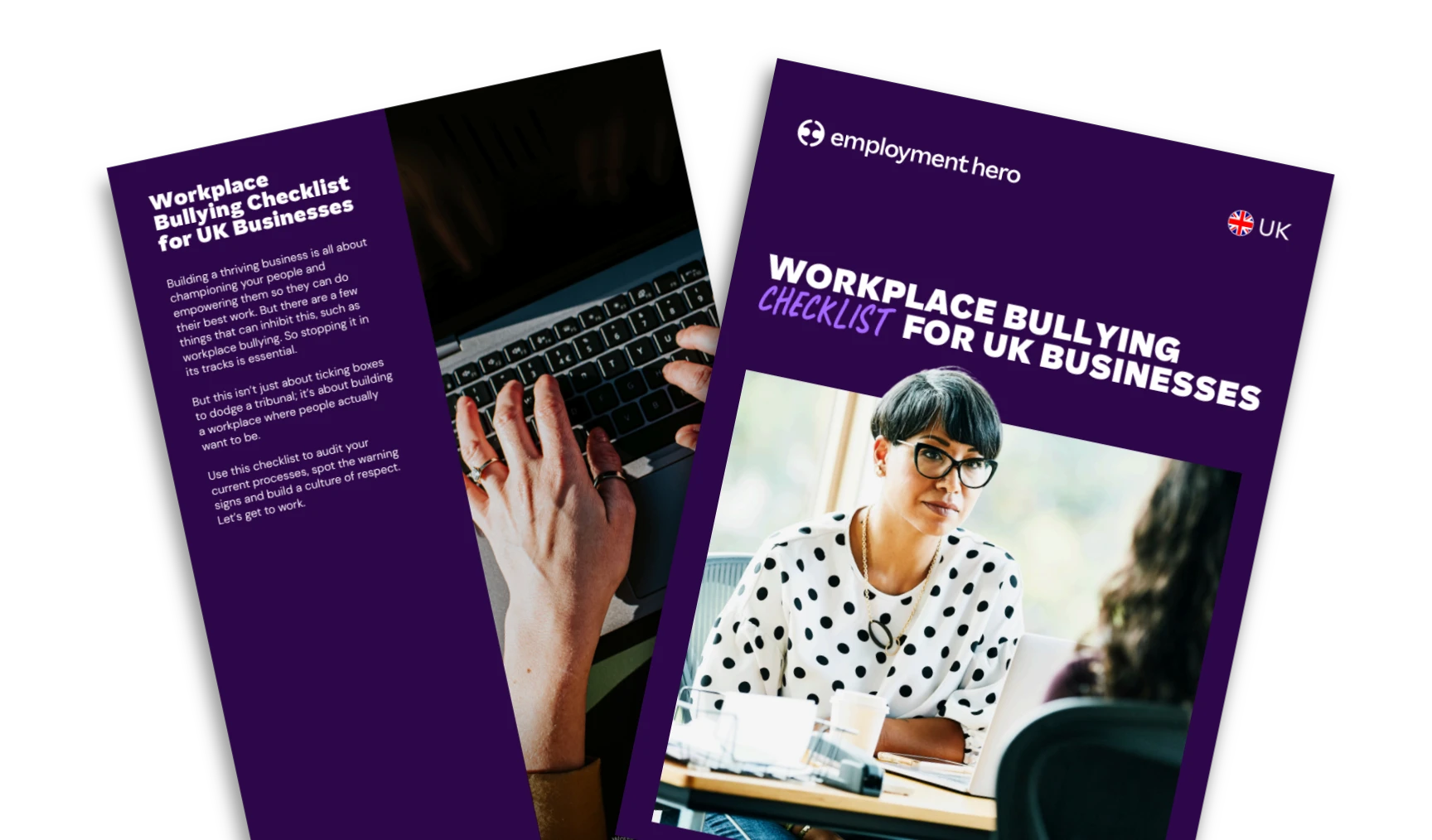 Read more: Workplace Bullying Checklist for UK Businesses
Workplace Bullying Checklist for UK Businesses
Are your employees protected from workplace bullying? Review your processes and learn how to handle arising issues with this checklist.
-
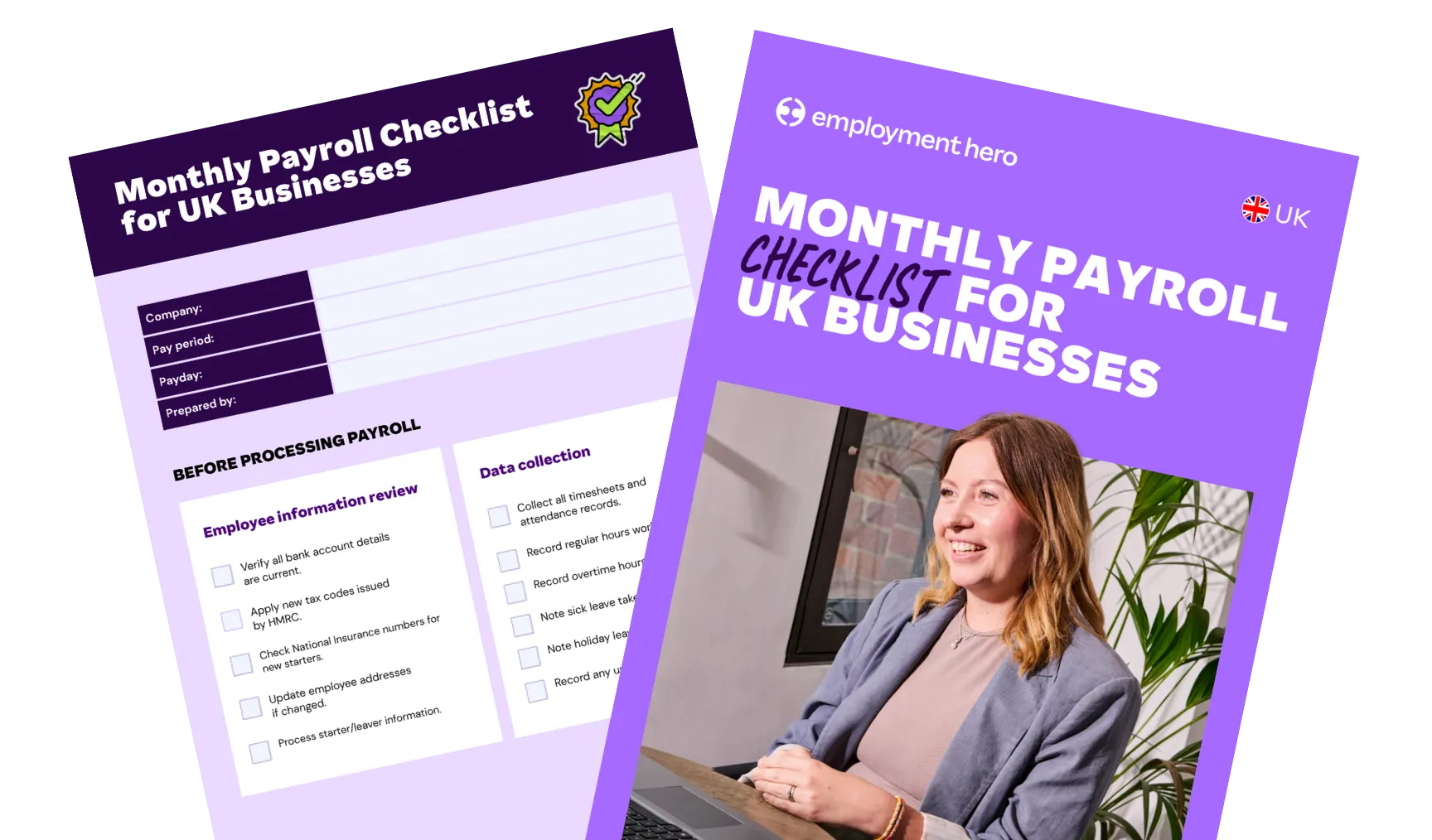 Read more: Monthly Payroll Checklist for UK Businesses
Monthly Payroll Checklist for UK Businesses
Manage your payroll processing with our monthly checklist. Streamline your tasks and improve efficiency.

