


















Minimum Wage & Statutory Pay Increases: Turn Compliance Into a People Win

Contents
For many HR leaders and business owners, every April means only one thing: the annual scramble to update payroll for the new tax year. It’s easy to view statutory pay increases as just another administrative headache, a mandatory box to tick so you don’t fall foul of the law.
But what if you rethink the approach?
Instead of treating these updates as a compliance chore, savvy leaders are using this moment as a powerful opportunity for engagement. By positioning pay updates strategically, you can boost morale, reinforce fairness and strengthen your team’s commitment to the business. Here’s how to turn a routine legal requirement into a genuine people win.
The current landscape of minimum wage and statutory pay increases
The cost of living is still a major talking point at dinner tables across the UK. When the government announces changes to the National Living Wage (NLW) and National Minimum Wage (NMW), employees pay attention.
Recent increases have been significant, aiming to keep pace with inflation. For a business with 50 or 100 employees, these changes can have a substantial impact on the bottom line. But beyond the spreadsheet, there’s also a human element.
Thousands of workers across the country will see their pay packets change this April. For your employees, this isn’t just a statutory update; it’s about their livelihood. If you simply process the numbers silently, you miss a massive opportunity to connect with your workforce on a topic that matters deeply to them.
Why compliance should be more than a legal requirement
Treating pay updates as a “tick-box” exercise is a missed opportunity. You update the payslip, maybe send a generic email, and move on.
If employees only hear about wage increases from the news and not from you, they might wonder if you’re doing the bare minimum because you have to, not because you value them.
On the other hand, aligning pay increases with your company culture transforms the narrative. It shows you aren’t just complying with the law; you are committed to fair pay. Companies that proactively communicate these changes see a boost in trust. It signals that the business is stable, organised and actually cares about whether its people can pay their bills.
Strategic HR approaches to statutory pay increases
So, how do you move from “compliance chore” to “HR strategy”? It starts with how you frame the conversation.
Communication strategies
Don’t let the payslip do the talking. A silent update is a wasted opportunity.
Be transparent and get ahead of the April deadline. Send out communications explaining exactly what is changing and why. If the increase is purely statutory, be honest about it, but frame it positively.
- A standard approach might look like: “Your pay has been updated to meet government requirements.”
- But a better approach may look like: “We are committed to ensuring fair pay for all our team members. In line with the new National Living Wage rates, we are updating salaries effective from 1st April.”
Even better, if you can afford to pay slightly above the statutory minimum, shout about it. It differentiates you from competitors who are merely toeing the line, and may influence employees considering other opportunities.
Linking pay increases to employee engagement
Fairness is a huge driver of employee engagement. When the gap between the lowest-paid and highest-paid shrinks, morale often dips.
Use this time to review your entire pay structure, not just the roles affected by the minimum wage. If the floor rises, what happens to the people just above it? This is known as “pay compression.” If a supervisor is suddenly earning only pennies more than a new starter, you’re going to have an engagement problem.
Addressing this proactively, helps reinforce fairness across your business, letting people know that it isn’t just about the bottom line; it’s about showing your team that experience and responsibility are valued. Acknowledging this, even if you can’t fix it all overnight, goes a long way.
Leveraging technology for compliance and engagement
Let’s face it, manual calculations are a nightmare. If you’re managing 50+ employees on spreadsheets, the risk of error during statutory updates is high, and nothing kills engagement faster than a wrong payslip.
In fact, 84% of UK businesses have experienced payroll errors, and just over half say these are a significant, recurring challenge. How companies tackle payroll is changing—2 in 3 UK businesses now manage payroll in-house using software, while 1 in 3 still outsource to a third-party provider.
Yet, a third of businesses are still relying on spreadsheets or forms, opening themselves up to even greater risk and wasted time. (Source: Employment Hero commissioned research with One Poll, UK, May 2025, n=1000, business leaders/owners in companies of 5-249 employees)
This is where your tech stack becomes your best friend. Modern HR and payroll software doesn’t just automate the maths; it frees you up to focus on the strategy. Instead of spending three days wrestling with Excel, you can spend that time crafting the right communication plan for your team.
Real results prove what’s possible. The Booksellers Association, managing payroll and HR for a team of 45, transformed their processes using Employment Hero. By moving from manual calculations and disjointed systems to an integrated digital solution, they cut payroll processing time by a staggering 75%, saving three days every month, without paying a penny more than their old provider.
The switch didn’t just streamline admin, it brought HR and compliance into one secure, central hub, laying the groundwork for scalable growth and better support for their team. Faster, error-free payroll and robust HR management meant more time to focus on what mattered most: serving their members and building a thriving workplace culture.
Tools like Employment Hero can automate these updates, ensuring you remain compliant without the stress. For many small businesses, the reality is stark. Rising wage costs don’t exist in a vacuum. They’re landing alongside higher National Insurance contributions, increased pension costs and soaring energy bills. It’s a challenging environment that puts real pressure on margins and momentum.
That’s why a streamlined approach to compliance isn’t just convenient; it’s essential. Automating pay updates gives you back hours each pay cycle and protects your business against costly mistakes. This allows you to scale without the admin burden crushing your spirit (or your weekend).
The role of HR in shaping workplace culture
HR plays a vital role in supporting and empowering the organisation. You are the architects of culture. Statutory pay increases are a perfect time to demonstrate your values in action.
If your company values “transparency” or “people-first,” this is your chance to prove it. Align your pay strategy with your broader organisational goals. For example, if you are pushing for better retention, use the pay review period to remind staff of the total value of their employment package: benefits, flexibility, and development opportunities, not just the hourly rate.
When you treat financial wellbeing as a core part of your culture, you build a workforce that feels secure and supported. That’s how you turn a regulatory requirement into a competitive advantage.
Practical tips for HR leaders
Ready to turn this April into a win? Here is your game plan:
- Start early: Don’t wait until the last week of March. Run your reports now to see who is affected.
- Check the “ripple effect”: Look at employees earning just above the new minimum. Do you need to adjust their pay to maintain differentials?
- Draft your comms: Prepare clear, human-sounding emails or letters. Ditch the jargon.
- Audit your tech: Is your current payroll system up to the task? If you are dreading the process, it might be time to look for a scalable solution that automates compliance.
- Train managers: Your line managers will be the ones fielding questions. Give them a simple FAQ sheet so they can answer confidently.
Ready to turn pay rises into a win with Employment Hero?
Statutory pay increases don’t have to be a headache. They are a yearly opportunity to reinforce trust, demonstrate fairness and engage your team.
By shifting your mindset from “compliance” to “culture,” you can turn a mandatory update into a moment that strengthens your business. Don’t let the opportunity slip by. Plan strategically, communicate openly and use the tools available to make the process seamless.Ready to make compliance easier? Explore how Employment Hero can help you automate pay updates and focus on what really matters, your people.
FAQs
For growing businesses, statutory increases can impact cash flow and budget planning. However, they also provide a chance to improve retention. The cost of replacing staff often outweighs the cost of wage increases, making fair pay a smart retention strategy.
Failing to pay the correct National Minimum Wage is a criminal offence. It can lead to heavy fines, being named and shamed by the government, and significant reputational damage. Using automated payroll software helps mitigate this risk.
No. The National Minimum Wage must be paid in money. Benefits in kind (like meals or transport) cannot usually count towards minimum wage pay, with the specific exception of accommodation in some circumstances.
HR software automates complex calculations, ensures you are using the latest tax tables, and reduces the risk of human error. It saves significant administrative time, allowing HR leaders to focus on strategy and employee support.
Related Resources
-
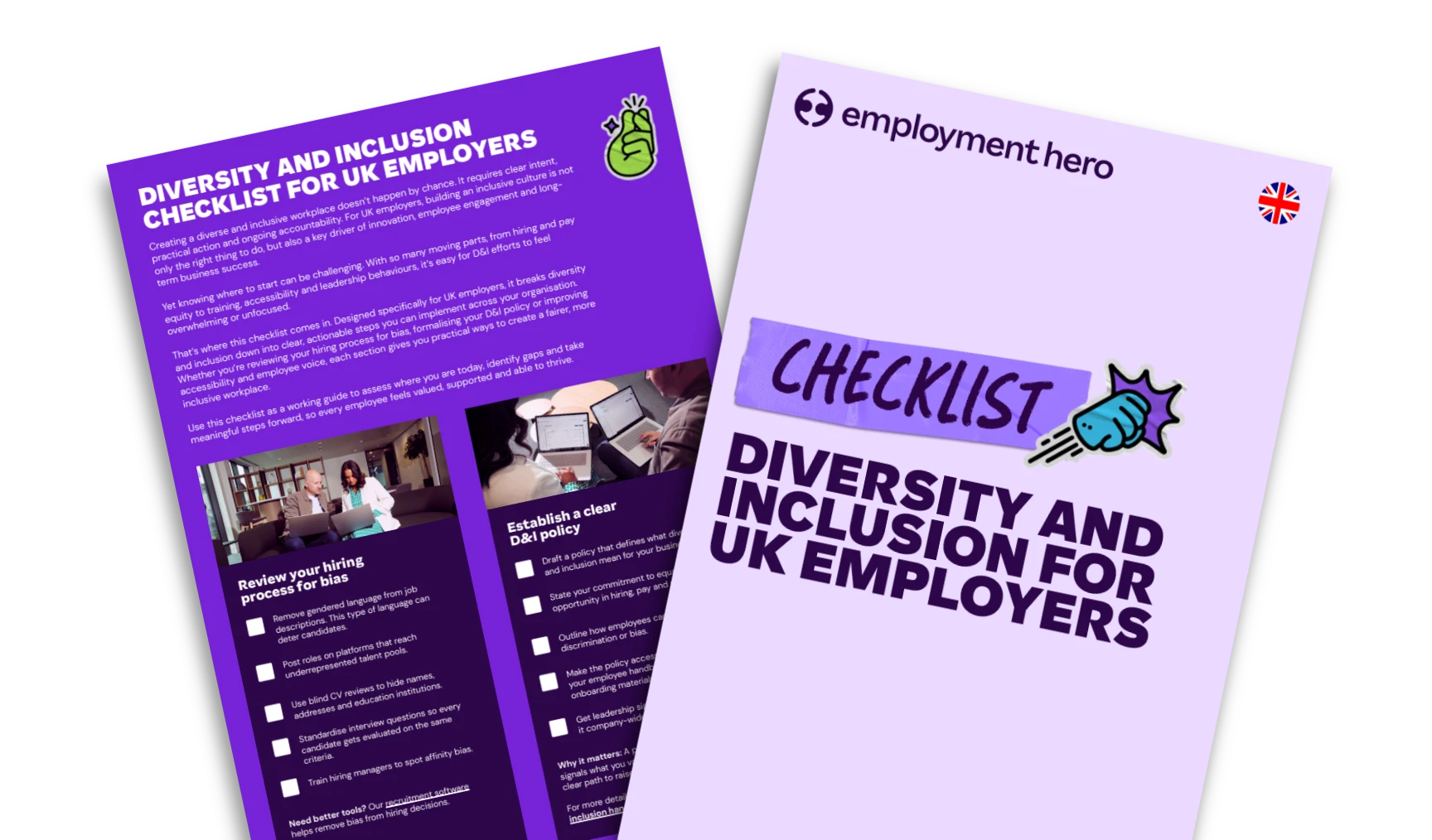 Read more: Diversity and Inclusion Checklist for UK Employers
Diversity and Inclusion Checklist for UK Employers
Create a truly inclusive environment with our diversity and inclusion checklist.
-
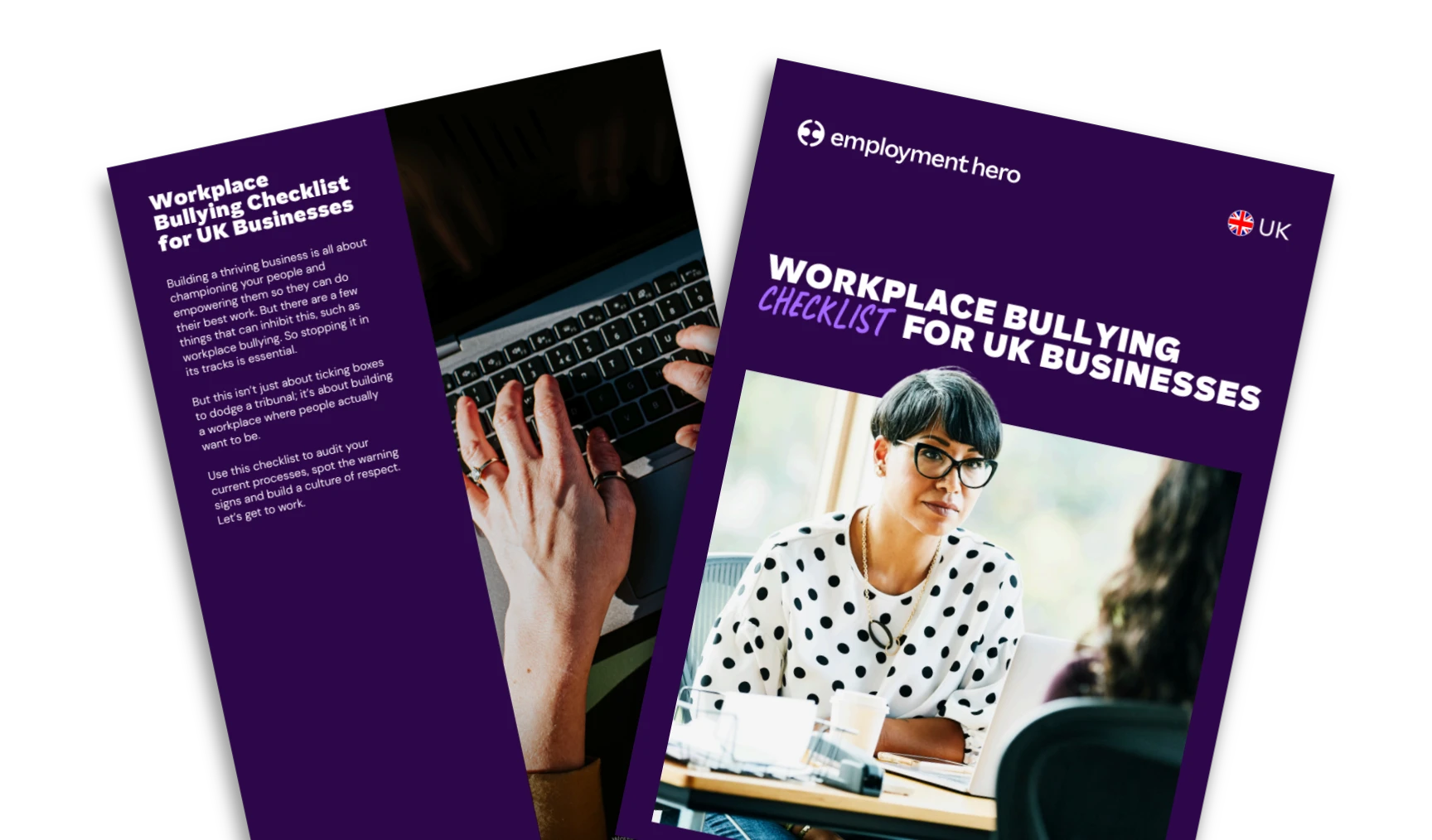 Read more: Workplace Bullying Checklist for UK Businesses
Workplace Bullying Checklist for UK Businesses
Are your employees protected from workplace bullying? Review your processes and learn how to handle arising issues with this checklist.
-
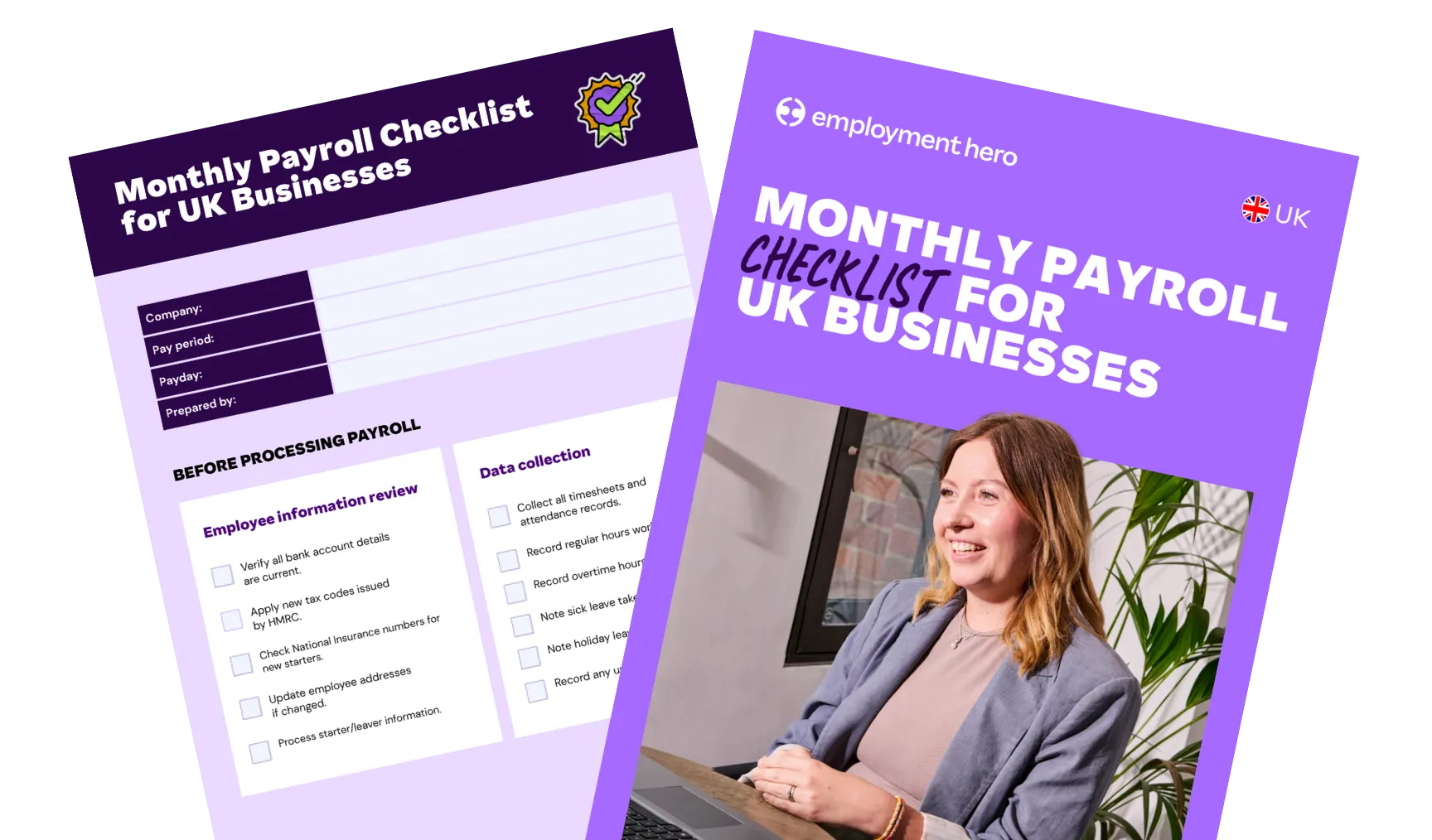 Read more: Monthly Payroll Checklist for UK Businesses
Monthly Payroll Checklist for UK Businesses
Manage your payroll processing with our monthly checklist. Streamline your tasks and improve efficiency.

