


















Payroll Contingency Planning: What to Do If Your Payroll Manager Leaves Suddenly

Contents
It’s a scenario that can make any business owner’s stomach drop. Your payroll manager, the one who holds the keys to paying your team, suddenly leaves. Questions like “how will everyone get paid” or “what about tax compliance and deadlines” are floating around in your mind. We get it, it’s not an ideal situation. But before you spiral, there is a solution. And it’s called payroll contingency planning.
Having a process or backup in place helps businesses turn unexpected challenges into opportunities. For business owners and HR professionals, it’s an opportunity to build a more resilient system that keeps running smoothly, no matter what.
Sounds good, right? We’ll dive into the basics of payroll contingency planning and how you can implement it in your business.
What is a payroll contingency plan?
As a business owner or HR professional, you know better than anyone that having a backup for everything is essential. This is what a payroll contingency plan is, it’s there for when things go sideways. Think of it as your business’s emergency payroll playbook. It outlines exactly what to do when your normal payroll operations are disrupted, so you can keep everything running smoothly.
The purpose is simple: to be prepared. Whether it’s a technical glitch, a key person leaving suddenly or a major system failure, it ensures your team gets paid correctly and on time, no matter what.
It’s important to remember that none of this is negative or planning to fail. No. It’s simply about building a resilient business. It’s a way of protecting business continuity, safeguarding the trust you’ve built with your employees and helping you to manage your legal responsibilities during a disruption.
In simple terms, payroll continuity transforms a potential disaster into a manageable situation, giving you the confidence to handle any challenge that comes your way.
Why UK businesses need to have a payroll contingency plan
Payroll is one of the most critical functions for any business and it plays a huge role when it comes to building trust between employer and employee. Yet it’s often something that is taken for granted or “set and forget” until something goes wrong. But with 70% of businesses running it in house, not having a backup plan seems like a rookie mistake.
Anything from system failures to key staff absences and unexpected disruptions can quickly turn payroll into a major risk, affecting employees, compliance and business continuity. In case you’re still on the fence about investing valuable time into creating a payroll contingency plan, here’s exactly why having one in place is essential for UK businesses.
Protect employee trust and morale
We don’t need to tell you that your employees are your most valuable asset because you already know, so looking after them should be top of your priority list. And the simple fact is that they rely on you to pay them on time, every time. This is one of the best ways for you as an employer to build trust and show that you value your team.
But we also know that 67% of businesses are concerned about employee complaints when it comes to payroll; a missed or delayed payday creates immediate stress and uncertainty.
A payroll contingency plan demonstrates that you respect your team and have their backs, no matter what challenges arise. This fosters loyalty and keeps your team focused and motivated. When your team isn’t concerned about getting their next payslip, they’re able to put more focus on the job they’re paid to do.
Stay compliant
This is a big one; compliance. Anyone who has run payroll before knows that managing it comes with a lot of responsibility. From tax contributions to GDPR, the rules are complex and mistakes are costly… and let’s be honest, mistakes are something you want to avoid like the plague.
The unfortunate reality is that disruption can easily lead to missed deadlines, incorrect filings and, yep you guessed it, hefty fines. Having a backup plan helps you manage your obligations, protecting your business from legal trouble and damage to your reputation.
Keep your business running smoothly
The sudden departure of a payroll manager, a system outage or any other crisis can bring operations to a grinding halt. It’s not ideal. So having a payroll contingency plan in place is your key to business continuity. It maps out who steps in and what they need to do to keep the process moving. This prevents a single problem from derailing your entire operation, minimising downtime and financial loss.
Build resilience and a competitive edge
As a business owner, you know all about being resilient. And you’ll also know that how your business handles a crisis says a lot about its strength. Nothing says resilience more than a company that can navigate disruptions without missing a beat.
It instills confidence not just within your team, but also with external stakeholders and future talent. In a competitive market, being the employer who is always prepared gives you a powerful advantage. It helps you attract and retain the best people, who want to work for a stable and reliable business.
How to create a payroll contingency plan
So we know why having a payroll contingency plan is important, but that’s not particularly helpful without knowing how to create one. Don’t worry, we’ve got that covered too.
Identify payroll risks and dependencies
The first step is to take a look at your current processes and establish where your payroll function is most vulnerable. Because, let’s be real, you can’t fix something when you aren’t sure what elements are broken.
Look for cracks in your current process and identify every potential point of failure. Ask yourself the tough questions, such as:
- What happens if your payroll manager is off sick on payday?
- What if your internet goes down, your payroll software fails or your systems are compromised by a cyber incident?
Map out your entire payroll workflow from start to finish, highlighting every person, system and tool involved. If any step relies on a single individual or a single piece of technology, you’ve identified a risk.
Common vulnerabilities include:
- Having one payroll manager with no trained backup.
- System outages or software failures.
- Loss of access to HMRC or banking platforms.
- Poorly documented processes.
Being honest about these weaknesses is essential. Understanding where your real risks lie allows you to design a payroll contingency plan that addresses real-world disruptions and ensures payroll can continue even when the unexpected happens.
Document payroll processes
A core part of payroll contingency planning is comprehensive documentation. Yep, you guessed it, this means getting every part of your process out of your manager’s head and onto paper.
This document should outline how payroll runs from start to finish, including:
- Data collection and approval workflows: Lay out how timesheets, overtime, expenses and leave are collected, approved and processed each pay cycle. Spell out who signs off at each stage and where that information lives.
- Pay calculations, deductions and statutory payments: Break down pay calculations, including handling base pay, overtime, bonuses, deductions and statutory payments. Be specific about which calculations are automated and which need a manual check. Include links or screenshots for payroll software and list common issues or exceptions you run into.
- PAYE, RTI submissions and pension reporting: Cover statutory requirements in detail. Document how you process PAYE, make RTI submissions and manage pension reporting. Include file formats, upload steps and reporting frequencies. Highlight who is responsible for each compliance step.
- Key deadlines and payroll calendars: Add a section on key deadlines and create a payroll calendar every backup can reference. This should flag dates for data submission, approval deadlines, paydays and HMRC reporting.
Backup systems
Technology is great (we are huge advocates for technology and automation), but the reality is that things can and do go wrong occasionally. Therefore, you need redundancy built into your infrastructure. This means having secure backups of your payroll data that are independent of your main system. If you use on-premise software, move backups to the cloud. If you are already cloud-based, understand your provider’s backup protocols.
Establish alternative workflows for payment processing. If your primary banking portal is down, do you have a secondary method to transfer funds? Having a Plan B for the technical side of things keeps the engine running when the main road is blocked.
Appoint and train backups
Relying on just one “payroll wizard” is a risky move. If that person leaves, goes on holiday or falls ill, your payroll knowledge may leave with them. The answer? Spread the expertise and build real backup into your system.
Identify exactly who will take over payroll responsibilities if your manager is unavailable. This could be someone from HR, finance or operations or even a trusted external payroll provider.
But it’s not enough to simply name a backup on paper. In order for a backup to be successful, you need to give them real, practical training. Bring your backups into the payroll process ahead of time. Let them shadow, run test pay cycles and tackle different scenarios so they’re ready to step in without missing a beat. The right handover can mean the difference between a smooth payday and an operational mess.
Regular training and exposure to the full payroll process ensures that your backups are not only ready in theory but confident and capable when it really matters. This step is what transforms contingency planning from a tick-box exercise into a true operational safeguard.
Define communication and escalation procedures
It’s all well and good having procedures in place for what to do when something goes awry, but without effective communication all this hard work amounts to very little in your team’s eyes. This is why clear and proactive communication is non-negotiable. Silence or mixed messages can quickly erode employee trust, spark rumours and leave your team feeling unsupported. Therefore, your payroll contingency plan needs to make communication with the wider team a priority, not an afterthought.
How can you do this? We’ll show you.
- Assign a main point of contact: Typically someone in HR or a senior leader. This is the person who is responsible for informing employees if pay is delayed, payroll changes are happening or issues have cropped up. This person becomes the trusted source for accurate, timely updates, stopping misinformation before it starts.
- Be clear on how updates will be delivered: This will vary business to business, so opt for what works best for you, but examples include; using email for urgent company-wide notifications, keeping a dedicated channel in your HR platform for payroll news or making quick announcements in team meetings. Choose the method your team already relies on, and don’t be afraid to repeat key messages to make sure everyone gets the memo.
- Prioritise transparency: Transparency makes a difference. Be honest about what happened, what’s being done, and when employees can expect resolution. Even a short update saying, “We’re on it, here’s what you need to know,” can reduce stress and show you’re in control. Simples.
But communication goes beyond just informing your team. It’s also essential to have a backup contact in finance or operations to deal directly with HMRC, pension providers or software vendors. This division of roles means employees get focused support, while technical issues are handled by the right expert.
Assigning these responsibilities upfront keeps information flowing, avoids finger-pointing and strengthens your team’s trust in tough moments. When people know exactly who to turn to and what to expect, you turn potential chaos into calm, confident leadership.
Test and review
A plan in theory is fine, but you need to know it works in practice. So schedule a time to test your contingency plan at least once a year. You can do this by running a simulation where your primary payroll professional steps aside and the backup team runs a mock payroll.
By testing and reviewing your payroll contingency plan, you can establish where the gaps are and find ways to fix them before the event actually happens. It’s important to remember that you need to update your procedure whenever you change software, update internal processes or when legislation changes. Keep it living, breathing and ready for action.
Steps to take when your payroll manager leaves
You’ve got a payroll contingency plan in place, but it’s still pretty daunting when your payroll manager leaves unexpectedly. Because we all know that just because something hasn’t gone according to plan, it doesn’t mean paying employees on time and compliance go out the window. Acting quickly and methodically will help you maintain control, avoid disruption and protect your business.
We’ve broken down the steps you need to take to ensure everything keeps running smoothly if your payroll manager leaves suddenly.
Immediate actions
Your first move is to stabilise the ship. You can’t fix everything in five minutes, but you can stop the situation from spiraling.
Assess the state of operations
First things first, don’t panic. Before you dive straight into “fixing mode” take a moment to get a clear understanding of where you stand. A few things you should prioritise include:
- Logging into your payroll system: Do you have access? If not, getting administrative rights is your number one priority.
- Checking the status of the current pay cycle: Are you mid-run? Have hours been approved? Are there tax deadlines looming in the next few days? You need to know exactly what is due and when.
- Identifying any critical gaps: This includes gaps in data or access so you can address them before payday arrives.
Communicate with transparency
We’ve said it before and we’ll say it again: be transparent. As soon as the team hears the payroll person has gone, the rumour mill kicks in with talk of missed pay and cash flow issues.
So get ahead of the narrative and make sure your team knows what’s happening. It’s important to remember that you don’t need to share every detail, but you should reassure your employees that payroll is under control and they will be paid on time. Be honest with your stakeholders and department heads too. Showing you are proactive builds trust and keeps everyone calm while you sort out the logistics.
Short-term solutions
Once you’ve dealt with the immediate concerns, it’s time to think about short term solutions.
Activate your backup support
This is when you’ll really feel the benefits of having a backup team trained and ready to go. Clear their other responsibilities and move them into the payroll function immediately, this gives them the time to focus on ensuring everyone is getting paid on time and things are running smoothly.
If you don’t have an internal backup, don’t try to wing it. Reach out to an external payroll bureau, an accountant or a freelance specialist and opt to outsource payroll. Paying for expert help now is far cheaper than fixing mistakes later.
Lean on your documentation
Remember earlier we told you to document everything? Well this is when you’ll be grateful for it. Follow the documented processes step-by-step. Do not deviate or try to “improve” things right now. Your goal is to replicate the standard process to support compliance and accuracy.
Long-term strategies
Surviving the crisis is great, but preventing the next one is better. Once the dust settles, use this experience to build a more resilient business.
Hire a new payroll specialist
You’ve made it past the initial hurdles and things are running as they should, but you also know the current situation isn’t a permanent solution. So what next?
Now is the time to bring in a skilled payroll professional who can take ownership of the process. The specific person you hire and the job description you put out will be personal to your business. But a few things to look for include:
- A specialist with experience handling payroll for businesses of your size.
- Someone who understands PAYE, RTO submissions and UK specific requirements.
- Great organisational skills and attention to detail.
- Familiarity with your existing payroll software.
During onboarding, give your new hire access to all documentation, encourage shadowing with key team members and set clear expectations from day one. A strong onboarding plan helps them hit the ground running so your payroll process doesn’t miss a beat.
Invest in technology
We live in a tech-first world and businesses can be taking advantage of this to make their lives (and the lives of their team) easier.
While technology can never replace people, it can be an integral support if the worst happens and your payroll manager leaves. Move toward and implement cloud-based payroll platforms that automate calculations, tax filings and reporting. Modern tech stacks reduce the manual workload and make it easier for anyone to step in and manage the process. By investing in automation, you reduce your reliance on individuals and protect your business against future disruptions.
Review and update your plan
Treat this event as a live stress test for your business continuity. Consider:
- What went right?
- Where did you stumble?
- Did you have the passwords you needed?
- Was the documentation accurate?
Be honest about the failures and use them to update your payroll contingency plan. A plan that sits in a drawer is useless; it needs to evolve based on real-world challenges.
Turning payroll challenges into confidence
When a part of your payroll process falters, it’s easy to feel like chaos will ensue. But with the right approach, you can flip that feeling on its head. Strategic payroll contingency planning is more than just insurance, it’s a blueprint for reliability and resilience.
Failing to put a payroll contingency plan in place is not only opening your business up to missed pay deadlines and compliance headaches, but it’s also a missed opportunity to showcase strong leadership.
Instead, map out every step in your payroll process, use cloud-based systems to centralise records to ensure that information is accessible, even if someone leaves. And don’t forget that payroll software can do a lot of the heavy lifting, but effective communication keeps your team confident.
The long-term impact is clear. You cushion your business from unexpected shocks, keep your people paid on time and foster a culture that values planning over panic. That’s not just compliance, that’s confidence and it’s how you set your business apart as a place where people know they matter.
Looking to streamline and enhance your current payroll processes? Discover how Employment Hero can help.
Related Resources
-
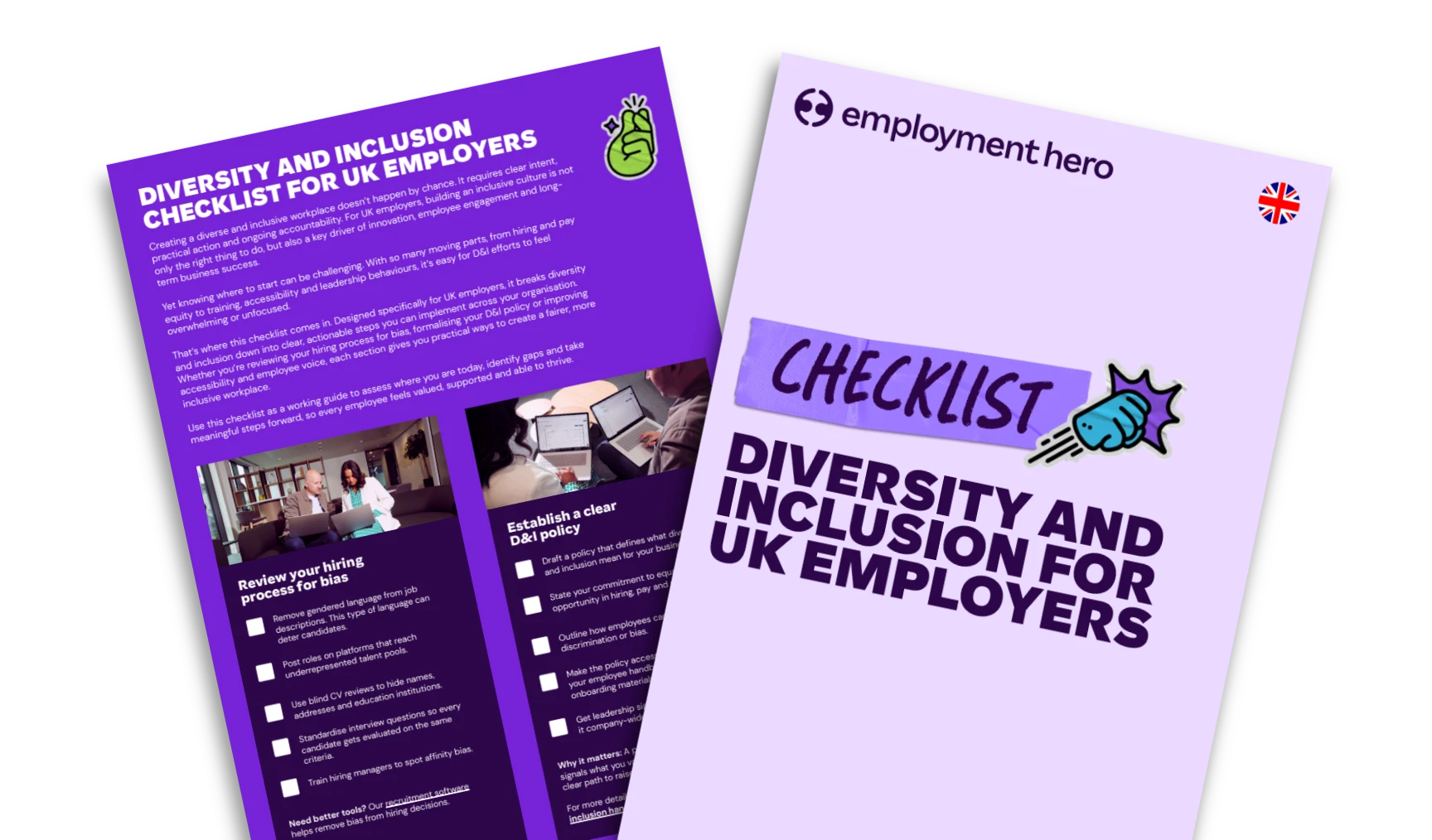 Read more: Diversity and Inclusion Checklist for UK Employers
Diversity and Inclusion Checklist for UK Employers
Create a truly inclusive environment with our diversity and inclusion checklist.
-
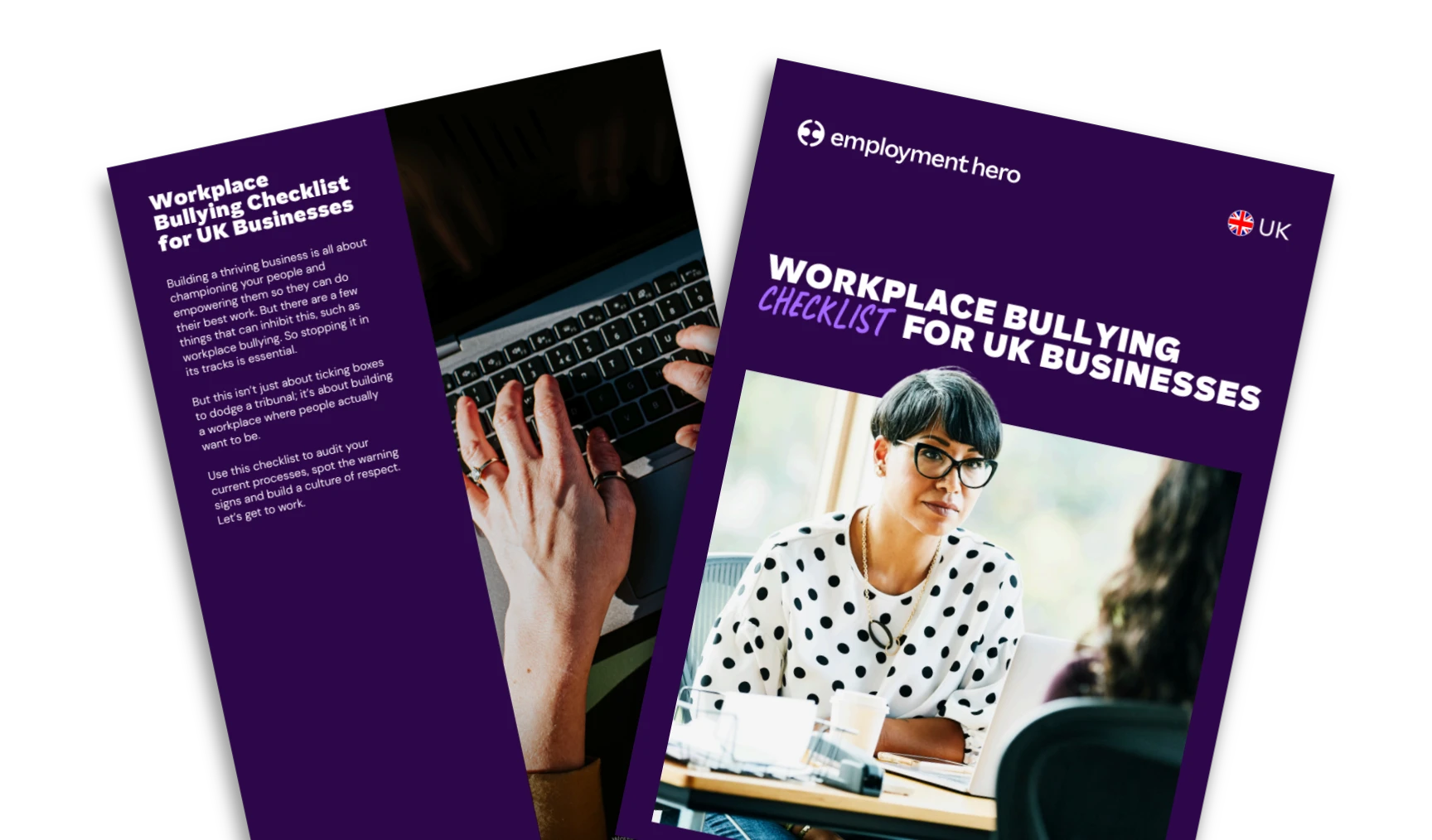 Read more: Workplace Bullying Checklist for UK Businesses
Workplace Bullying Checklist for UK Businesses
Are your employees protected from workplace bullying? Review your processes and learn how to handle arising issues with this checklist.
-
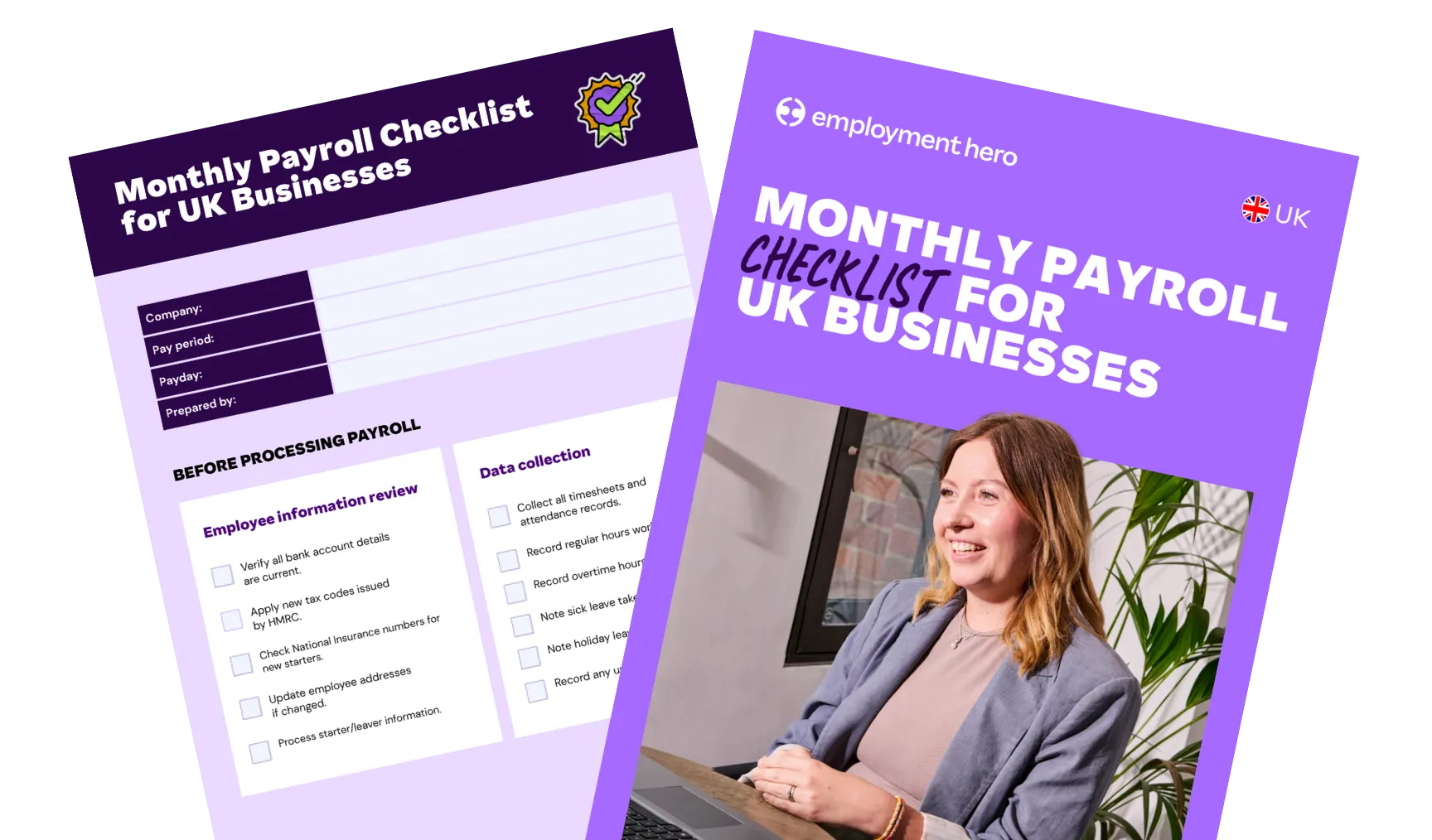 Read more: Monthly Payroll Checklist for UK Businesses
Monthly Payroll Checklist for UK Businesses
Manage your payroll processing with our monthly checklist. Streamline your tasks and improve efficiency.

